Every inline speed skater eventually asks the same question in the pit box. My wheels still roll, they still grip, but are they actually finished? Unlike a broken bearing that grinds and screams for attention, a worn race wheel fades quietly. It loses diameter, it loses profile, and it loses the snap it had when it was fresh, and it does all of this so gradually that many skaters carry on for months on urethane that is well past its best. This guide is a clear, skater to skater walk through of how to read wheel wear, what to look for on the urethane and the hub, and exactly when a wheel has given all it can. We will use the wheels we actually stock at LiveLica so every number here is real and nothing is invented.
Why worn wheels quietly cost you speed
A race wheel does three jobs at once. It carries your weight, it grips through the corner, and it returns energy on every push. As the urethane wears down all three of those jobs get harder. A smaller wheel rolls fewer millimetres per revolution, so you have to stride more often for the same speed. A rounded off profile changes how the wheel bites into the corner, so your lean feels vague and you scrub speed at the apex. And once the outer skin of good urethane is gone, the wheel stops rebounding cleanly and starts to feel dead underfoot. None of this shows up as a dramatic failure. It just means you work harder for a slower lap, which is the worst kind of problem because you rarely notice it happening.
A worn wheel keeps the same hub but loses diameter and profile, so it rolls less per stride and grips less cleanly.
How to read a wheel: the four wear signals
You do not need any tools to judge most of this. You need a clean wheel, good light and a couple of minutes. Take the wheels off the frame, wipe them, and look at four things in turn.
1. Diameter loss
This is the easiest to measure and the most honest signal. A fresh 110mm wheel starts life at 110mm. As it wears it shrinks, and once a race wheel drops several millimetres it has lost a meaningful slice of its roll and most of its best urethane. If you have a spare fresh wheel of the same model, stand them side by side. The difference is usually obvious. Many skaters retire a 110mm race wheel somewhere around the low 100s of millimetres, sooner for a front wheel that has coned, because by then the shape has changed as much as the size.
2. Coning and uneven wear
Look at the wheel end on. A healthy wheel wears evenly across its width and keeps a rounded crown. A tired wheel often wears to one side, leaving a sloped, cone shaped edge. This is called coning, and it is completely normal because the inner edge of the wheel takes more load through corners. Coning is not an instant death sentence, and rotating your wheels slows it down, but once a wheel is heavily coned it will never present a clean contact patch again and it is time to move it out of your race set.
A coned wheel has worn to one side and can no longer sit flat on the ground, so it grips unevenly through the corner.
3. The urethane surface
Run your thumb across the rolling surface. Good urethane feels smooth and slightly grippy. A worn wheel can feel glassy, chalky or hard, and you may see fine tearing, chunking or a shiny glazed band where heat has cooked the surface. Chunks torn out of the edge, deep cuts from grit, or a wheel that has gone visibly out of round all point to retirement. A wheel that has been left to bake in a hot car boot can also harden right through and never feel alive again.
4. The hub and the bond
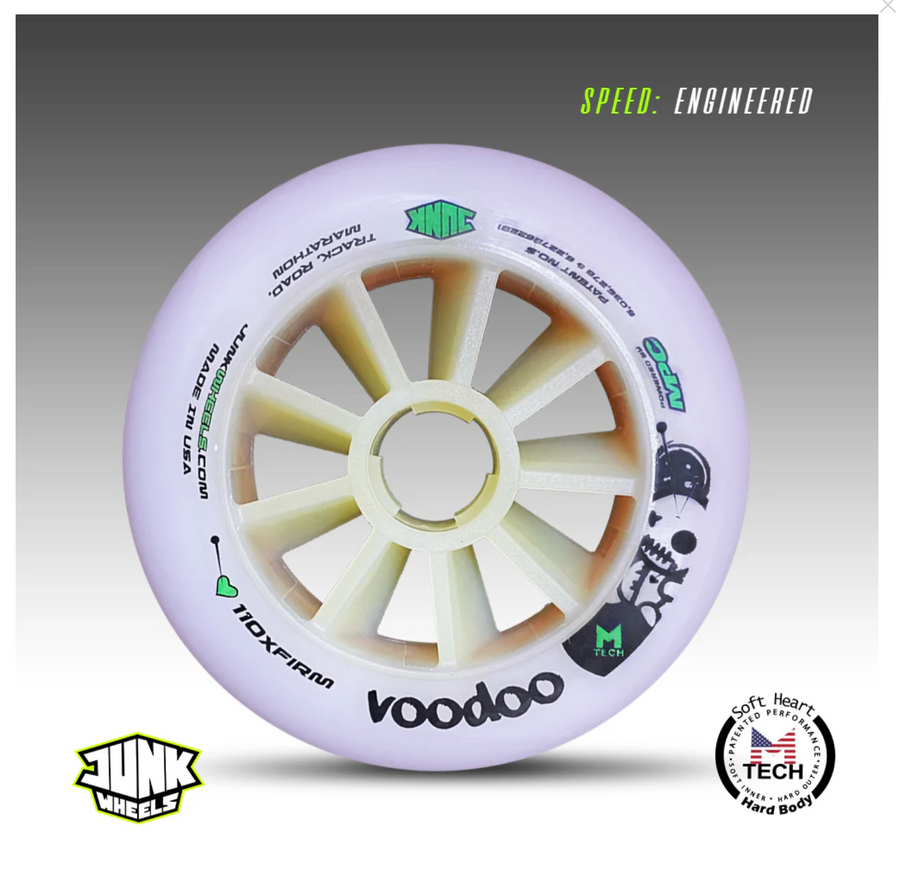
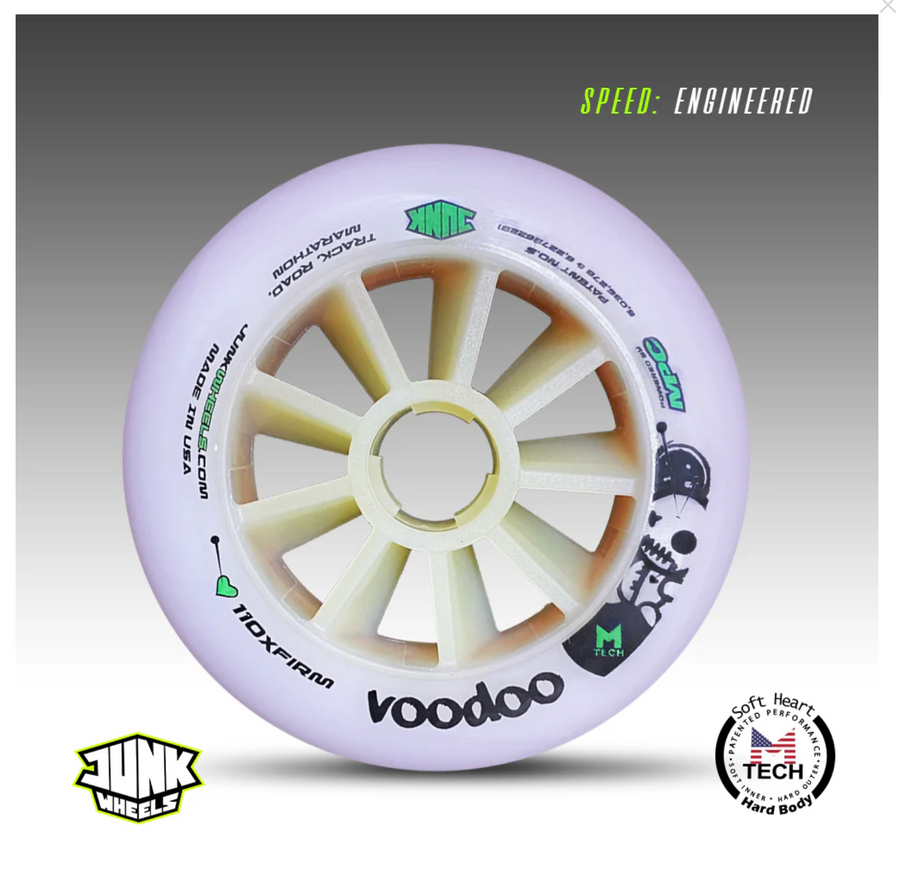
Finally, check where the urethane meets the hub. On a quality race wheel like the pigment free natural hub used on the JUNK Voodoo and the Killer JUNK, the urethane is bonded to the core so it returns energy cleanly. If you ever see the urethane lifting, cracking or separating from the hub, the wheel is done immediately, whatever diameter is left. A separated wheel is unpredictable at speed and simply not worth the risk.
Rotate first, replace second
Before you bin a set, remember that rotation buys you a lot of even, usable life. Wheels in different positions wear at very different rates, so swapping them around keeps the set wearing evenly and delays the point where any single wheel cones out. A common approach is to move each wheel to a new position and flip it so the worn inner edge faces out. Good rotation habits can meaningfully extend the life of an expensive set, and we cover the full routine in our guide on rotating and caring for inline wheels. Replacement is the right call only once rotation can no longer give you a clean, even contact patch across the set.
Light even wear means keep skating and rotate. Coning, chunking or a lifting hub bond means replace the wheel.
Choosing your next set
When it is time for fresh urethane, match the wheel to your surface, your weight and your discipline rather than simply buying the same thing again. Firmer compounds roll faster and last longer on smooth, hard surfaces, while slightly softer compounds grip better and forgive rougher tracks. On the JUNK side, the JUNK Voodoo XFirm uses the middle compound rated 84 to 86A for hard, smooth, dry surfaces, and the 110mm Killer JUNK XFirm pairs a stiffer natural hub with the same 84 to 86A urethane for extra drive through distance and sprint finishes. If you want maximum roll on glassy surfaces, the harder XXFirm versions step up to a firmer compound. For an alternative feel, the MPC Black Magic XFirm is a proven race wheel with its own loyal following. You can compare the full range in the JUNK wheels collection.
Do not forget the rebuild
Wheels are sold on their own, so a new set is also a chance to service the parts that live inside them. Every fresh wheel needs bearings and spacers pressed in, and worn wheels are the perfect moment to clean or replace tired bearings at the same time. Sixteen 608 bearings and spacers cover a standard four wheel per foot setup, and you will find both in the speed bearings collection. Fitting fresh wheels onto grinding bearings wastes half the benefit, so treat the two as one job.
How long should a set last?
There is no single mileage figure, because wheel life depends on your weight, your surface, how hard you push and how well you rotate. A heavier skater training daily on rough tarmac will wear a set far faster than a lighter skater on a smooth indoor track. Rather than counting sessions, get into the habit of a quick wheel check every few weeks. Wipe them, look for coning, feel the surface and glance at the hub bond. If you do that regularly you will always retire a wheel at the right moment, before it quietly slows you down and never in the middle of a race you cared about.
Frequently asked questions
Can I just sharpen or resurface a worn inline wheel?
No. Unlike a blade you cannot restore a wheel by grinding it. Once the urethane has worn, coned or hardened, the material is simply gone and the only fix is a fresh wheel. Rotation is what extends life, not resurfacing.
Is it fine to replace only one or two wheels?
For training you can, but mixing a fresh wheel with worn ones gives you different diameters and grip across the frame, which feels uneven. For racing, run a matched set so every wheel behaves the same way through the corner.
How do I slow down coning?
Rotate your wheels regularly and flip them so the worn inner edge faces out. This spreads the load across the whole set and keeps every wheel presenting a cleaner contact patch for longer.
Do harder wheels always last longer?
Firmer compounds usually wear more slowly on smooth, hard surfaces, but on a rough surface a very hard wheel can chunk or skip instead. Match the compound to your surface first, then enjoy the extra life as a bonus.
The bottom line
A worn wheel rarely fails in a way you can hear, so the skater who wins the pit box is the one who looks. Check diameter, watch for coning, feel the surface and trust the hub bond. Rotate hard, replace once rotation runs out of road, and rebuild with fresh bearings when you do. Keep that simple habit and your race set will always be working with you rather than quietly holding you back.