Most conversations about short track speed skating injuries jump straight to the dramatic ones: the crash into the pads, the blade that found a thigh, the concussion. Those are real, and the sport has built a whole layer of cut resistant kit around them. But the injuries that actually interrupt a season are usually far quieter. They are the ache in the groin that appears in week six of the ice block, the outside of the knee that complains on the fourth set of crossovers, the lower back that is fine on the ice and stiff in the car afterwards. Nobody falls over. The skater just gets slower and more careful, and often says nothing until it is bad.
This guide is about those niggles. Why short track produces them, what the common ones tend to be, how training load and gear setup feed them, and what to do when one shows up. None of this replaces a physiotherapist or a doctor, and anything that is sharp, swollen, getting worse, or still there after a week of sensible rest needs a professional rather than a blog. What follows is the context that helps you have a better conversation with that professional, and the habits that mean you need them less often.
Why short track loads a body unevenly
Almost every sport has a dominant side. Short track has a dominant direction, which is a different and more demanding thing. Every corner turns left. Every crossover drives the right leg across the body. Every deep lean puts the left hip, knee and ankle through a range they would never see anywhere else, hundreds of times per session, at speeds and lean angles that make the loads substantial.
Add the position itself. A skater holds a deep, flexed, seated posture with the trunk folded forward for the whole session. The hip flexors are shortened and working, the lower back is holding an isometric position, the glutes and quadriceps are producing force through a narrow and unusual range, and none of it looks anything like walking around.
Put those two together and you have the shape of the problem. This is a sport of repeated, one sided, deep range loading. That is not a flaw in the sport, it is simply what makes short track look the way it does. But it does mean the body needs help balancing out, and when it does not get that help, the same handful of places start to complain.
The left leg lives at the end of its range while the right leg repeatedly drives across the body. Hundreds of times a session, in only one direction.
The usual short track speed skating injuries, and what loads them
These are the complaints that come up again and again among short track skaters. The descriptions below are about where and when things tend to hurt, and what in the sport loads that area, not about telling you what is wrong with you.
The groin and inner thigh
The classic short track niggle. The adductors on the inside of the thigh are heavily involved in the crossover, pulling the leg across the body under load, and they are also working to stabilise a deeply flexed hip. Skaters usually describe it as a deep tightness high on the inner thigh that warms up and disappears during the session, then stiffens afterwards. It very often shows up on one side only, and it is a classic response to a sudden increase in ice volume.
The outside of the knee and around the kneecap
Sitting deep with the knee held in a bent position and the foot angled underneath you asks a lot of the structures around the knee. Pain on the outer side, or a diffuse ache around the front of the kneecap that is worse going down stairs, tends to track with volume rather than with one specific moment. Alignment matters here too, and a blade that sits in the wrong place under the boot can change the path your knee travels on every single stroke, which is covered further down.
The front of the hip and the hip flexors
A short track position is a deeply flexed hip held for a long time. The hip flexors shorten and work hard, and the complaint is usually stiffness at the front of the hip and a feeling of being unable to stand up straight easily after a session. This one often connects to the lower back, because a tight front of hip changes how the pelvis sits.
The lower back
The trunk is holding a folded forward position against the forces of the corner for the whole session, which makes the lower back and the deep trunk muscles an endurance structure in this sport. Skaters typically report a band of stiffness across the low back after sessions rather than pain during them. Fatigue is the usual driver: as the trunk tires, the position collapses slightly and the load shifts onto passive structures.
Shins, ankles and the top of the foot
These are often boot problems rather than training problems. Pain across the top of the foot, a burning line down the front of the shin, or a hot spot at the ankle bone usually points to pressure, movement inside the boot, or lacing, and they tend to appear quickly after a change of boots or a change of lacing rather than building slowly.
Load is usually the trigger, not technique
Here is the pattern worth internalising. Most overuse niggles in short track do not appear because a skater's technique got worse. They appear two to four weeks after the training load went up quickly, and the most common moments are entirely predictable: the ice block opens after a break, a camp adds three sessions in a week, exams end and a skater goes from one session a week to five, or a junior grows several centimetres and keeps the same programme.
Tissue adapts to load, but it adapts on a slower timetable than fitness does. Your heart and lungs will happily accept a big jump in training before your tendons and your groin have agreed to it. The practical consequence is simple. Increase ice volume, dryland volume and intensity in steps you can hold for a couple of weeks before stepping again, and treat the first fortnight after any break as a rebuilding phase rather than a catching up phase.
Fitness accepts a jump in load long before tendons and muscles do, which is why the cause and the symptom are usually weeks apart.
Three gear faults that quietly cause pain
Load explains most niggles. Setup explains most of the stubborn ones, the pain that will not settle however sensibly you train, because the problem is being rebuilt on every stroke.
A boot that does not lock the heel
If your heel lifts, your foot slides forward a few millimetres on every push. Your toes then grip to stabilise, your arch works overtime, the front of your shin takes the load of holding you back, and your ankle never finds a consistent position for the blade to work from. Skaters feel this as arch cramp, clawed toes, shin burn and sore ankles, and they usually blame the sock.
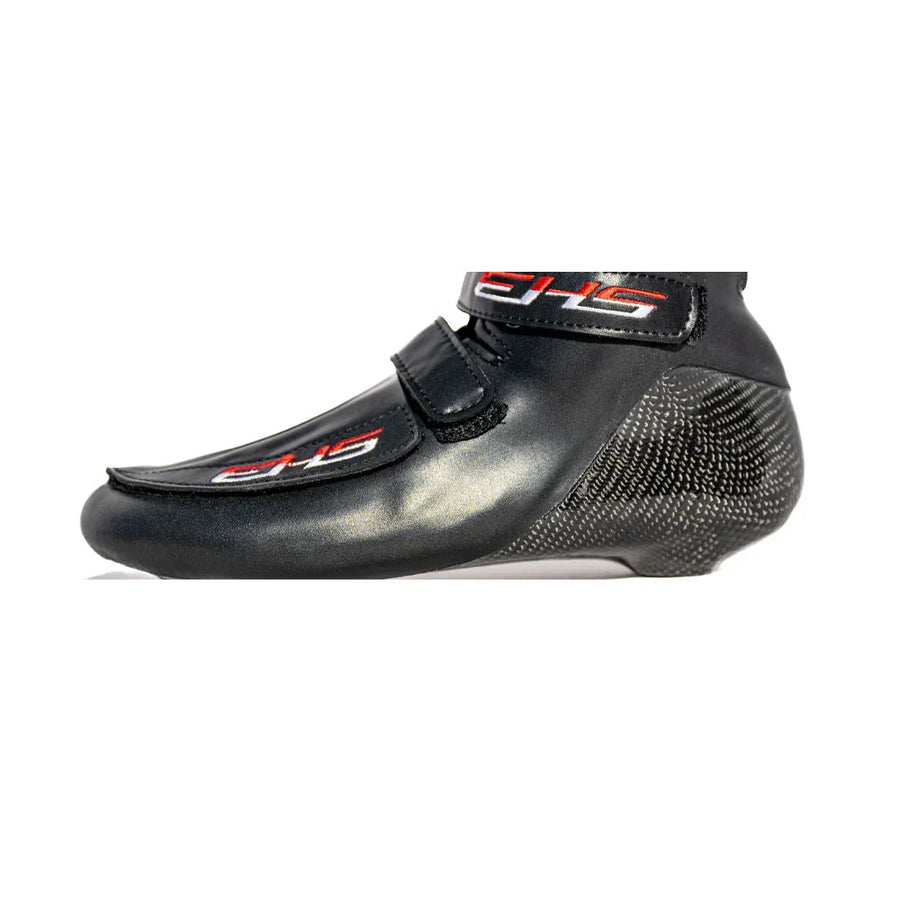
The fix is fit, in this order: lace from the bottom with real tension across the instep, then check whether the boot shape actually matches your foot. A heat mouldable shell is the strongest tool here. The EHS Short Track Boots use a carbon fibre and Diolene shell with a thermoplastic epoxy resin and Rhenoflex reinforcement that can be heat moulded, on lasts developed specifically for short track so the ankle and heel are supported where this sport needs them. The pre shaped contoured tongue follows the curve of the foot, which is aimed squarely at lace bite and hot spots, and they run from size 32 to 48. Have the moulding done by a qualified fitter rather than attempting it at home.
The foot on the left is being asked to stabilise itself with its own muscles. The foot on the right is being held by the boot, which is what the boot is for.
Blade alignment and cup height
Blade position under the boot sets the path your knee travels on every stroke. A blade mounted too far one way makes you fight to get onto an edge, and that fight is a repeated load with your name on it. The usual tells are obvious once you know them: pain on one side only, a feeling that one foot slips while the other grips, or an edge you can hold comfortably in one direction and never in the other.
Height matters alongside lateral position, because cup height changes your lean angle and how much ankle range each corner demands. Hardware that lets you adjust deliberately, and record what you did, is worth far more than guesswork. The StayBent Short Track PRO Mounting Cups are machined from 6061 aluminium billet, come in thirteen sizes in one millimetre increments from 0 to plus 12, and are engraved with their size, which means you can make a one step change, skate on it, and know exactly what you changed. Blades, cups and adapters all sit together in the short track setup collection. Change one thing at a time, write it down, and give it at least two sessions before judging.
A dull or uneven edge
This one surprises people, but a blade that is not holding is an injury risk, not only a speed problem. When your edge slips, you unconsciously brace: you grip with your toes, you tense your groin to stop the leg sliding away, and you take the corner with your body instead of your blade. Do that for a session and something will be sore afterwards.
Keeping your own edges consistent is the fix, and consistency comes from clamping the blade truly straight. The EHS Short Track and Long Track Sharpening Jig is CNC machined with precise mounting points for exactly this reason, because any twist in the clamp shows up as an uneven edge along the blade. It takes apart for travel and reassembles in about five minutes using its four central screw knobs, and it is worth wearing cut resistant gloves whenever you sharpen.
What to do when something starts to hurt
The worst response is the common one, which is to say nothing and quietly take the corners more gently for a month. Early niggles respond well to small changes. Established ones do not.
- Name it. Where exactly, what movement brings it on, when it started, and what changed in training two to four weeks before that. The timeline is usually the diagnosis.
- Reduce the specific load rather than stopping everything. Fewer hard corner repetitions, shorter sessions, lower lean, and keep the easy skating.
- Check the gear chain in the order above: lacing and heel lock first, then blade alignment and cup height, then edges.
- Keep it warm and keep it moving. A proper warm up matters most on the days you feel stiff, not least.
- Get it looked at if it is sharp, swollen, giving way, worse at night, or still there after a week of sensible modification. A physiotherapist who has seen skaters is worth travelling for.
- Never race through pain that changes how you skate. Compensating at race pace is how a small niggle becomes a long absence.
The weekly habits that prevent most of it
Prevention in this sport is mostly about giving the body the things short track never asks for. The sport only turns left, only goes deep, and only folds forward, so your off ice work should turn right, stand tall and extend.
Work both sides deliberately, and do your single leg strength work on the weaker side first and for one extra set. Give the adductors real strength work rather than only stretching them, because strength is what makes a muscle tolerate load. Spend time extending the hips and opening the front of the hip after every session, since that is the position the sport never puts you in. Build trunk endurance rather than trunk power, because the job your back is actually doing is holding a position for minutes at a time. And treat ankle mobility as a performance item as much as a health one, because a skater who cannot get the ankle range will find it somewhere else, usually in the knee or the back.
Add two unglamorous habits. Warm up properly, which for a cold rink means raising your temperature off the ice before you step on, not using the first two laps as the warm up. And sleep, which is where adaptation actually happens, and which is the first thing to go when exams and training collide.
And the acute injuries, briefly
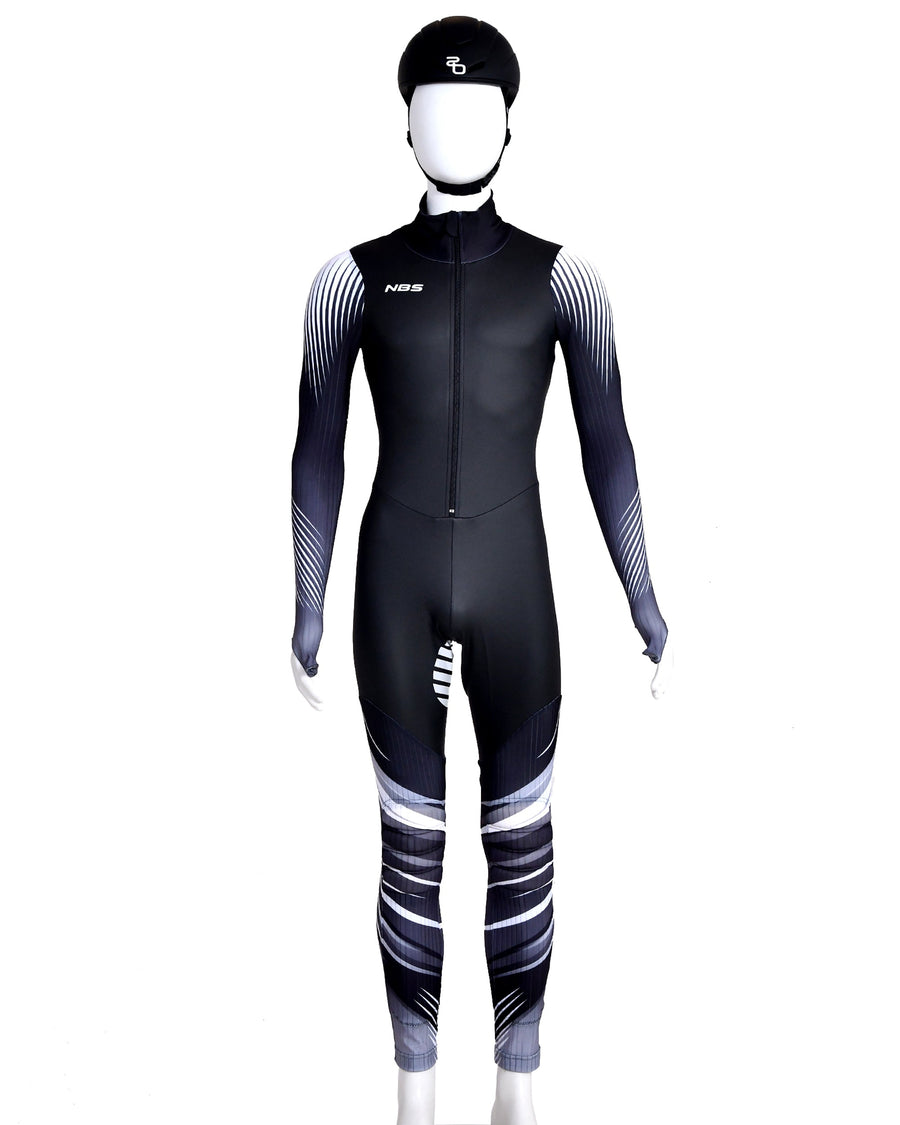
None of the above should distract from the sharp end. Short track is raced on fine steel at high lean angles in a pack, so lacerations and impacts are a real category of their own, and they are handled with equipment rather than with mobility work. Cut resistant protection, a short track specific helmet, a neck guard and cut resistant socks and gloves are the standard answer, and most federations require cut resistant protection at competition. The full protective range sits in the LiveLica short track accessories collection, and learning to fall compactly, with hands to the chest and blades ahead of you, is the technique that goes with it.
Frequently asked questions
Why is my groin always sore after short track?
The adductors on the inside of the thigh pull the leg across the body in every crossover and also stabilise a deeply flexed hip, so they take a large and repeated load in this sport. Soreness that follows a recent increase in ice volume is the most common pattern. Strengthening the adductors, rather than only stretching them, and stepping volume up gradually are the two things that help most. Persistent or sharp groin pain should be assessed properly.
Why does only one side hurt?
Because short track only turns one way. The two legs do genuinely different jobs in a corner, so one sided soreness is the expected pattern rather than a surprise. It is a reason to build deliberate balance into your off ice work, and a reason to check blade alignment if the difference is large.
Should I skate through a niggle?
You can usually keep skating with a reduced load, which is better than complete rest for most minor overuse complaints. What you should not do is keep skating at full intensity while changing how you move to avoid the pain, because the compensation creates the next problem. If it alters your technique, the load is too high.
Can my boots or blade setup actually cause pain?
Yes, and this is the most commonly missed cause. A heel that lifts makes your foot stabilise itself with muscles that should not be doing that job, and a blade mounted in the wrong place changes your knee path on every stroke. Both repeat thousands of times a session. Always check fit and alignment before concluding that you simply need to train harder.
How much should I increase my training when the ice block starts?
In steps you can hold comfortably for a couple of weeks before stepping again, and treat the first fortnight back as rebuilding rather than catching up. The exact numbers depend on the skater, so this is a conversation for your coach, but the principle holds for everyone: tissue adapts more slowly than fitness.
Do juniors need a different approach?
Growing skaters need more attention, not less. A growth spurt changes limb lengths, boot fit and blade position all at once while the same programme carries on, which is a classic recipe for knee and heel complaints. Recheck boot fit and blade alignment regularly through a growth phase, and take any new pain in a growing skater to a professional early rather than waiting it out.
The short version
Short track asks a body to go deep, fold forward and turn left, over and over. The injuries that come from that are mostly predictable, mostly load driven, and mostly preventable. Ramp your training in steps you can hold. Lock your heel, align your blade and keep your edges sharp so you are not bracing against your own equipment. Do the off ice work that turns the other way and opens the front of your hips. Say something early when a niggle appears, and get it looked at properly if it does not settle. That is a far better season than one spent quietly skating around a sore hip.