Race seriously and ceramic Power Bearings such as Swiss Ceramic or Gold Ceramic earn their price, because they spin up faster, run cooler and hold their speed deeper into a long effort. Train most days, or want the most speed for your money, and a precision steel set such as Red or Super is the better buy and leaves you budget for wheels.
That is the short version of the ceramic vs steel question, and for most skaters it is the whole answer. What follows explains why, what the word ceramic actually means on a skate bearing box (it is rarely what skaters assume), how much speed is genuinely on the table, and how to keep whichever set you buy fast.
Why bearings matter
Every push you make has to travel through your bearings before it reaches the ground. Lower friction means more roll for each stride, less energy wasted as heat, and a bearing that stays fast deeper into a long race. Eight bearings sit inside a single four wheel skate and sixteen in a pair, and every one of them is turning for as long as you are rolling. How they perform comes down to two things only: how the bearing was built, and how well you look after it. You control the second completely, which is why the maintenance section further down earns more of your attention than it usually gets.
The anatomy of a skate bearing
A bearing is made of an inner race and an outer race, a set of balls that roll between them, a cage that keeps the balls evenly spaced, and seals that keep dirt and water out. The quality of each part, and how precisely they are made and finished, is what separates a fast, durable bearing from a cheap one. A well made cage positions each ball accurately, which reduces friction and extends life, while good seals protect the polished surfaces that let the bearing spin freely.
A 608 skate bearing in cross section. Eight of these sit in one skate, two per wheel, and the quality of the races, balls, cage and seals decides how freely each one spins.
Almost every inline speed wheel takes the 608 size, which measures 8 mm on the bore, 22 mm on the outside and 7 mm wide. Quad skaters are the exception, since many quad hubs use the smaller 627 bore instead, so always confirm your size before you order because the two are not interchangeable. A standard pair of four wheel inline skates needs sixteen bearings, two in each wheel.
Ceramic versus steel
This is the choice most skaters agonise over, so let us make it simple. Ceramic balls are lighter and harder than steel balls. Because they are lighter, they spin up faster and carry less inertia. Because they are harder and smoother, they run cooler and last longer. That is why ceramic is the classic race upgrade. Steel bearings, when they are made to a high standard, still roll beautifully and cost less, which makes them a superb choice for training and for skaters who want strong performance without the premium price. Neither is wrong, which is why the honest answer depends on how much you race rather than on which material is better.
How the two choices stack up. Ceramic leads on spin up, cool running and life, while good steel is the value pick for training and everyday skating.
Hybrid ceramic or full ceramic: what you are actually buying
Here is the part almost nobody explains before you spend the money. When a skate bearing is sold as ceramic, it nearly always means hybrid ceramic, which is ceramic balls running in steel races. A fully ceramic bearing, where the races are ceramic as well, is a different thing altogether, and it is not what a skate shop is selling you. Our own Gold Ceramic page puts it plainly: ceramic balls in steel races is the usual and sensible build for skate ceramic.
That matters in practice. The steel races can still corrode if you put your skates away wet, so ceramic does not make a bearing rust proof. And the bearing still needs light oil, because the races and the cage still need lubrication even though the balls themselves are harder and smoother than steel. A ceramic bearing run dry is just an expensive slow bearing.
Our own sets are built this way and say so openly on their product pages. The Swiss Ceramic is sold as a hybrid ceramic bearing, with silicon nitride balls that the maker cryogenically treats at minus 300 degrees Fahrenheit, and its product page refers to the balls not galling against the steel races the way steel on steel can. The Gold Ceramic pairs zirconia balls with steel races carrying a protective gold titanium coat, which is why its own product page calls it the gentlest way into ceramic.
Grey rings are steel, blue rings are ceramic. Almost every ceramic skate bearing on sale is the one on the left, which is why oil and dry storage still matter.
Laid out as a table, the four main Power Bearings sets compare like this. All four are the standard 608 size, 8 mm bore by 22 mm outer by 7 mm wide, so sixteen of any of them will fit a pair of four wheel skates.
| Set | Balls | Races | Size | Best for |
|---|---|---|---|---|
| Swiss Ceramic | Silicon nitride (Si3N4), cryogenically treated | Steel, precision race | 608 | Racing, long distance, when kit is the limit |
| Gold Ceramic | Zirconia (ZrO2) | Steel with gold titanium coat | 608 | A first ceramic set after outgrowing steel |
| Super | Precision steel | Precision steel | 608 | One set that trains all week and races, rated ABEC 9 |
| Red | Precision steel | Precision steel | 608 | First season racers and club skaters |
Silicon nitride and zirconia
You will see two ceramic materials in skate bearings. Silicon nitride, written as Si3N4, is prized for elite speed because it is extremely hard, light and smooth. Zirconia, written as ZrO2, trades a little outright speed for toughness, which is why it is the ball material in our more forgiving ceramic set. Both feature in our range.
How much speed does ceramic actually buy you?
Less than the marketing implies, and more than the sceptics claim. The maker of our Swiss Ceramic states a saving of 0.8 to 1.0 watts per bearing against a typical precision steel bearing. Spread across the sixteen bearings in a pair of four wheel skates, that works out at roughly 13 to 16 watts on the manufacturer's own figures, which is a real number over a marathon and a much smaller one over a 500 m sprint.
Read that number in context before you reach for your wallet. Those figures compare a top tier ceramic against a typical precision steel bearing in controlled conditions, not against a well maintained premium steel set on a dusty Indian road. A bearing that has gone gritty and dry also gives speed back faster than any upgrade can buy it, whatever its balls are made of. Maintenance is the bigger lever and it costs you almost nothing. If your current bearings feel gritty, cleaning them will do more for your lap times than anything you can buy on this page.
The same manufacturer quotes the Swiss Ceramic as 50 percent lighter than steel equivalents and 40 percent more robust, with a twist rate of up to 100,000 rpm under load. The Gold Ceramic zirconia balls are quoted at around 30 percent lighter than conventional steel and 40 percent tougher. Lower rotating weight at the wheel is the part most skaters genuinely notice, and they notice it most in the first few strides off the line rather than at full speed.
How many balls?
Most bearings use seven balls. Some of our Power Bearings use six. Fewer balls means fewer points of contact, which reduces friction and can raise top end speed, while slightly larger balls keep strength and bearing life high. It is a design choice aimed at skaters who want every last bit of roll, and it is one reason a six ball bearing can feel noticeably free under a clean, experienced stride.
What ABEC ratings really tell you
ABEC is a rating of manufacturing tolerance, not a rating of speed. A higher ABEC number means the bearing was made to tighter dimensional precision, which is useful, but it says nothing about ball material, cage design or lubrication, which have a bigger effect on how a bearing feels under your feet. Treat ABEC as one helpful clue rather than the whole story, and judge a bearing by how it is built and how it performs.
The LiveLica Power Bearings range
We keep both ceramic and steel options so you can match the bearing to your goals. Browse the full Power Bearings range, or start with these.
Ceramic options
- Swiss Ceramic is a cryogenically treated silicon nitride bearing that the maker rates at around 50 percent lighter than steel, built for demanding high speed inline racing.
- Gold Ceramic pairs tough zirconia balls with a durable gold titanium coat over steel races for a smooth, long lasting spin, and it is the gentlest way into ceramic.
- 6-Ball Ceramic uses six larger silicon nitride balls instead of the usual seven, which suits experienced racers with a clean technique who want the freest possible roll.
- Speed Minimizer is the flagship of the range, a complete mini bearing system with its own aluminium axles, adaptors and in line spacers rather than a standard bearing.
Steel options
- Super carries an ABEC 9 rating and is faster, quieter and smoother than Red, while staying lightweight and durable, so it happily trains all week and races at the weekend.
- Red is our best value set, precision built for skaters who want reliable performance at a friendly price.
How to choose by use case
If you are training most days and want the best value, start with a high quality steel set such as Red or Super. If you race and want every advantage, move up to Swiss or Gold ceramic. If you are new to ceramic, Gold is the softest landing, while seasoned racers chasing the freest roll will look at the six ball layout. The Speed Minimizer sits above all of it and is not a sensible first upgrade. If you skate quad or need a specific size, check the product page for fitment before you buy, and reach out if you are unsure.
Maintenance: the free speed most skaters ignore
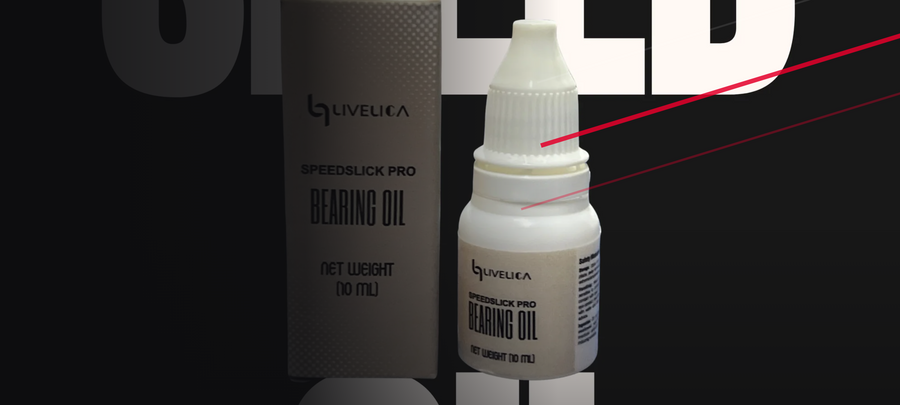
Clean, well oiled bearings roll faster and last far longer than neglected ones. Dirt and water are the enemies of a fast spin, so wipe your bearings down, keep them dry, and re oil them regularly. Light, regular oiling with Speedslick Pro bearing oil reduces friction and protects the internals between cleans. Looking after your bearings is the cheapest speed upgrade there is, and it works just as well on ceramic as on steel.
Common mistakes to avoid
Four mistakes cost skaters real money. Ordering the wrong bore is the expensive one, because 608 and 627 are not interchangeable, so check which size your wheels take before you pay. Buying ceramic while technique is still the limiting factor is the most common one, and our own Swiss Ceramic page says as much: for beginners, good steel is usually the smarter spend. Waiting until the roll has already gone short or noisy before re oiling is the slow one. And putting skates away wet is the one that quietly ruins a ceramic set, because the races are steel whatever the balls are made of.
Frequently asked questions
Are ceramic bearings worth it?
For racing, yes. Ceramic balls are lighter and harder, so they spin up faster, run cooler and last longer. For training and value, a high quality steel set is still an excellent choice.
Do ceramic skate bearings rust?
The ceramic balls do not corrode, but almost every ceramic skate bearing is a hybrid with steel races, and steel races rust. Store your skates dry, wipe them down after wet sessions and keep a light film of oil inside, exactly as you would with a steel set.
Do ceramic bearings still need oil?
Yes. This is the most expensive myth in skating. Ceramic copes better with heat and moisture than steel, but the races and cage still need lubrication, and a dry ceramic bearing will feel slower than a clean, oiled steel one.
Are ceramic bearings fragile?
Not in the way the myth suggests. Our suppliers rate both ceramic sets as tougher than their steel equivalents, by 40 percent on their own figures. What actually ends a skate bearing's life is grit, water and a dry race, not a broken ball.
Should a beginner buy ceramic bearings?
Usually not yet. Until your technique and fitness are the thing holding you back, a set of Red or Super will give you most of the feel for a fraction of the outlay, and the money saved is better spent on wheels or coaching. Move to ceramic when your kit becomes the limit rather than your legs.
How often should I oil my bearings?
Re oil whenever the spin starts to feel slow or noisy, and always after skating in wet or dirty conditions. A light, regular routine beats an occasional heavy clean.
Does a higher ABEC number mean a faster bearing?
Not necessarily. ABEC measures precision, not speed. Ball material, cage design and lubrication matter more for how the bearing actually feels.
So, two honest routes out of here. Buy steel and clean it and you will be quick. Buy ceramic and still clean it and you will be quicker. Skip the cleaning either way and you have wasted the money.