Inline speed skating is not a cheap sport to enter, and in India the cost of a full setup stops a lot of talented skaters before they start. That is why the second hand market matters. A club mate upgrading to a new frame, a racer clearing out last season's wheels, a coach selling on a junior's outgrown kit: these are all real opportunities to build a competitive setup for a fraction of the retail price. They are also real opportunities to buy someone else's problem.
The difference between a bargain and a waste of money is knowing what to inspect and what each type of wear actually means. Some damage is cosmetic and irrelevant. Some looks trivial and makes the part unusable. This guide takes you component by component through wheels, bearings and frames, tells you what to check with your hands and eyes before any money changes hands, and is honest about the items you should simply buy new. It is written for skaters buying from other skaters, which is how most used speed gear changes hands.
Start by Deciding What Is Worth Buying Used at All
Not every part of a skate ages the same way. Some components are almost risk free second hand because their failure modes are visible. Others hide their condition well, or cost so little new that the saving is not worth the gamble. Before you go looking at anyone's kit, be clear in your own mind about which category each item sits in.
Frames are the safest used purchase, because aluminium either is straight and crack free or it is not, and you can check both. Wheels are next, provided you understand wear. Bearings are the riskiest, because a bearing that spins beautifully in your fingers can still be worn, and a bearing that feels rough might just need cleaning. Bolts, spacers and axles cost very little new and are not worth buying used at all.
Spend your inspection time where the risk actually is, which is bearings and boots.
Wheels: Read the Shape Before You Read the Price
A used set of race wheels can be excellent value, because a wheel with plenty of urethane left performs almost exactly like a new one once it is broken in. The catch is that wheels rarely wear evenly, and the shape of the wear tells you what the previous owner's skating and rotation habits were.
Look at the Profile From the Front
Pick each wheel up and look straight down its rolling surface. A healthy wheel keeps a symmetrical profile, rounded evenly across the centre. A coned wheel has been worn heavily on one side, leaving a slanted profile that looks like a ramp. Coning is normal and is exactly why skaters rotate their wheels, but a badly coned set means the seller was not rotating, and there may be very little usable material left on the worn side.
Some coning can be lived with by rotating and flipping the wheels so they wear back towards even. Severe coning cannot, because you will be skating on an edge that never fully recovers, and grip through a corner will feel unpredictable.
Check for Flat Spots and Chunking
Run a fingertip along the rolling surface of each wheel with your eyes closed. Flat spots from heavy braking or a locked slide feel like a step under your finger, and they will thump on every rotation once you are rolling. Chunking, where small pieces of urethane have torn away, usually comes from rough outdoor surfaces and is a sign the wheel has had a hard life. Small nicks are cosmetic. Missing chunks near the core are not.
Profile shape is the fastest way to judge a used set of race wheels.
Test the Core Bond
Grip the hub firmly in one hand and twist the urethane with the other. There should be no movement at all between the two. Any sense that the urethane rotates independently of the core means the bond has failed, and that wheel is finished no matter how much rubber is left on it. Also press the urethane near the core with a thumbnail. It should feel resilient and spring back. Urethane that feels dead and does not rebound has aged badly, often through long storage in heat, which is a genuine concern in Indian conditions.
Count the Set
Race wheels are sold as sets for a reason. A mixed bag of wheels from different sets, different production runs or different levels of wear will never roll consistently underfoot. If a seller offers you eight wheels, check that they are genuinely the same model and hardness. Compare a fresh set such as the JUNK Voodoo XFirm wheels or the MPC Black Magic XFirm wheels against what you are being offered, so you know what the model markings should look like.
Bearings: Why the Spin Test Is Almost Useless
Everyone does the same thing when handed a used bearing. They hold it by the inner race and flick the outer race to see how long it spins. It is a satisfying test and it tells you very little. A bearing with no lubricant left in it will spin freely for a long time in your hand and then be destroyed within a few sessions under load. A perfectly good bearing with a thick oil in it will stop quickly and feel slow. Spin time mostly measures drag from the lubricant, not the health of the balls and races.
What to Feel and Listen For Instead
Hold the bearing and rotate the outer race slowly, with light pressure, while you concentrate on what you feel through your fingers. You are hunting for roughness, not speed. Smooth resistance is fine. A gritty, notchy or catching feeling means contamination or damage to the raceways. Then hold it close to your ear and turn it. A quiet hiss is normal. A crunching or grinding sound is not, and it usually means the bearing has run with dust or water inside it.
Finally, look at the outside. Rust anywhere on the races or shields is a red flag. Surface marks on a shield are cosmetic, but rust bleeding out from under a shield means moisture has been sitting inside and the raceways will be pitted. Pitted races never come back, whatever you clean them with.
Feel and sound tell you far more about a used bearing than a stopwatch does.
What a Clean and Oil Can Actually Rescue
Plenty of used bearings feel disappointing simply because they are dirty and dry. If the races are smooth and free of rust, a proper strip, clean and fresh lubrication will transform them. That is a genuine bargain, and it is worth budgeting for a bottle of decent oil such as Speedslick Pro bearing oil as part of any used bearing purchase, because you should never trust the previous owner's lubricant. What cleaning cannot fix is pitting, cage damage or a bent shield. If the seller cannot tell you when the bearings were last serviced, assume they have not been and price accordingly.
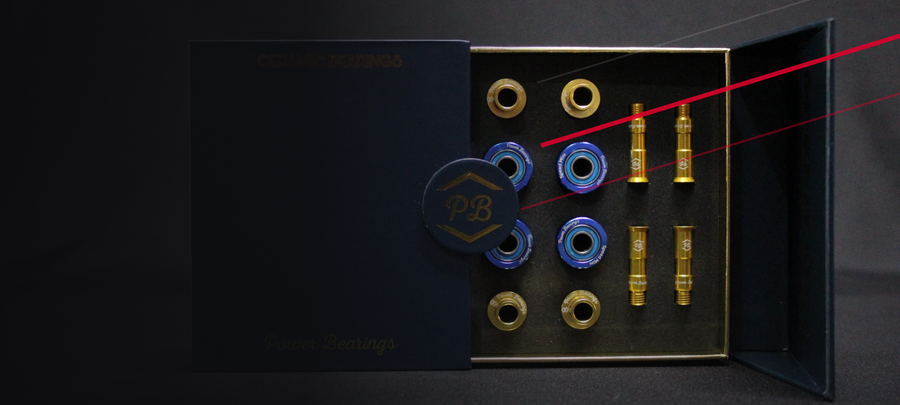
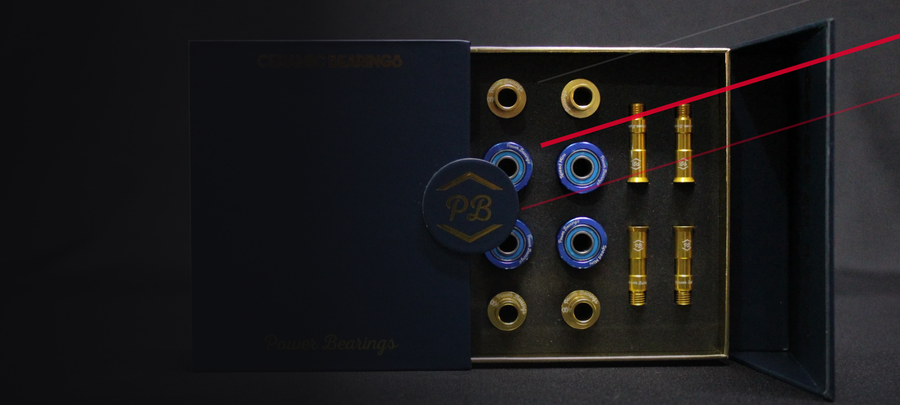
If the used option turns out to be marginal, compare it honestly against the value end of a new range. Sometimes a modest new set from the Power Bearings range costs little more than a tired used set and comes with none of the doubt.
Frames: The Safest Buy If You Check Four Things
An aluminium speed frame has a long life and few moving parts, which makes it a strong second hand purchase. Scratches on the outside of a frame are meaningless. Structural problems are what you are looking for, and there are four places they hide.
First, check straightness. Sight down the frame from the front with the wheels removed. The two rails should look parallel and even. Second, look closely around the axle bosses, which is where the wheels bolt through, since this is the highest stress area and cracks start there. Third, inspect the mounting block area where the frame bolts to the boot, because an overtightened mount can distort or crack this region. Fourth, check the threads by winding an axle bolt in by hand. Damaged or cross threaded holes are a real problem to repair.
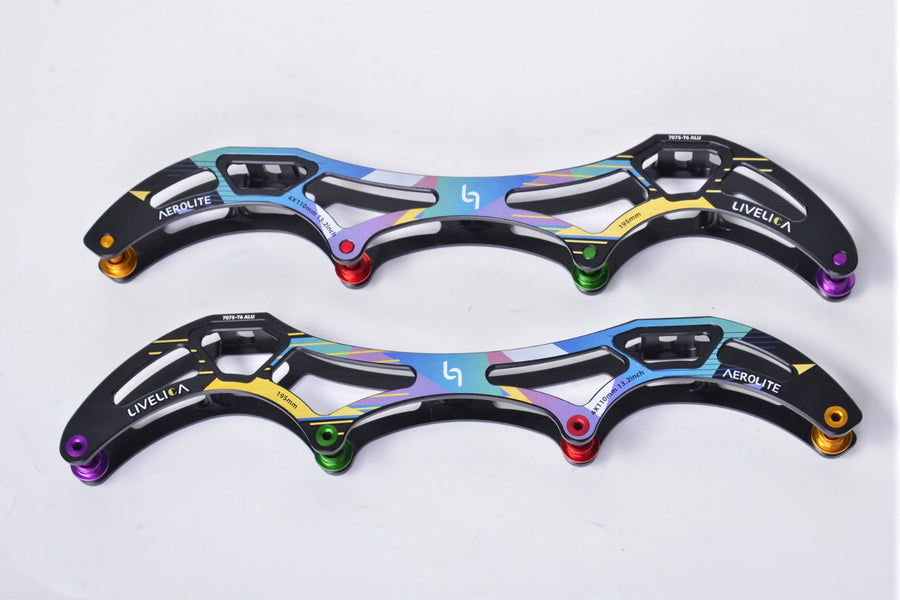
Ask whether the frame has ever been in a crash. Impact damage often leaves the frame looking fine while a rail has moved out of true, and the symptom afterwards is a skate that constantly pulls to one side. If you are comparing what you are offered against current options, the LiveLica Aerolite frame range gives you a reference for lengths and wheel setups so you know what will actually fit your boots and your discipline.
Boots: The One Place to Be Ruthless
A used boot has been heat moulded to somebody else's foot. That is the whole issue. The shell has taken a shape, the liner has compressed in their pressure points and the sole has settled. If their foot is close to yours, a remould can work. If it is not, you will spend the season fighting hot spots that never go away.
The rule is simple: only buy a used boot if it fits well before any remoulding. If it needs significant reshaping to be tolerable, it is the wrong boot. This is also the item where junior skaters get the best deals, because children outgrow boots long before the boots wear out, and a lightly used junior boot in the correct size is often excellent value.
Working Out a Fair Price
Used pricing in skating is not a formula, but a few principles keep you honest. Wheels should be priced against the material left on them, so a set at half its usable life is worth well under half the new price once you account for the risk. Bearings that have not been serviced should be priced as a project, not as a working component. Frames hold their value best because they last, and a straight, crack free frame from a good range is worth paying for.
Always ask three questions before agreeing a price: how many seasons has this been used, indoor or outdoor, and when was it last serviced. Outdoor use is much harder on wheels and bearings than indoor track use, and a seller who answers those questions clearly is usually a seller worth buying from.
Red Flags That Mean Walk Away
- Rust visible on bearing shields or races, which almost always means pitting underneath.
- Urethane that twists against the wheel core, because the bond has already failed.
- Any crack near a frame axle boss or mounting block, however small it looks.
- A mixed set of wheels sold as a matched set.
- A seller who will not let you handle the parts or remove a wheel to inspect it.
- Boots that only feel acceptable with the laces pulled painfully tight.
Frequently Asked Questions
Are used race wheels ever worth it?
Often yes. Wheels that have been rotated properly and still have plenty of urethane will perform close to new. The saving comes with the condition that you inspect the profile, the core bond and the rebound of the urethane before you buy.
Can I clean rusty bearings back to life?
Light surface rust on the outside of a shield can be cleaned off, but rust that has formed on the raceways leaves pits behind. Those pits stay after cleaning and you will feel them as roughness forever, so a rusty bearing is best avoided.
How do I know if a frame is bent?
Remove the wheels, sight down the rails from both ends and look for any twist or convergence. Then fit two wheels at opposite ends and roll the frame on a flat surface to see whether it tracks straight. Combine that with a careful look for cracks around the axle bosses.
Is it safe to buy used bearings if I plan to service them anyway?
It can be, provided you check for grit and rust first and budget for fresh lubricant. Servicing fixes dirt and dry running, but it cannot repair damaged races, so the inspection still matters even if you intend to strip them.
What should I always buy new?
Axles, spacers, mounting bolts and lubricant. They cost little, they are safety critical or performance critical, and there is no meaningful saving in buying them used.
Buy With Your Eyes Open
Second hand gear has put a lot of Indian skaters onto competitive setups they could not otherwise afford, and there is no shame at all in racing on someone else's old wheels. The skaters who do it well are simply the ones who inspect properly. Learn to read a wheel profile, stop trusting the spin test, know the four places a frame cracks, and be strict about boot fit. Do that, and you will spend your money on speed rather than on somebody else's neglect.