Getting to the race is usually harder than the race. Indian skaters travel constantly, often for a single weekend, often on budget airlines with tight baggage allowances, and often with a bag full of equipment that is expensive, fragile and shaped nothing like the neat rectangles that airline handlers prefer. A frame arriving bent, a wheel arriving flat spotted or a set of bearings arriving contaminated can undo months of preparation before you have taken a single stride.
The good news is that inline speed skates travel very well if you strip them down thoughtfully and pack them with a bit of intent. This guide covers what to carry with you and what to check in, how to protect frames and wheels, how to keep bearings clean and dry on the road, how to handle bearing oil under liquid rules, and how to reassemble everything at the other end so you are not building a skate an hour before your first heat. Airline policies change and vary by carrier and route, so treat this as gear guidance and always confirm the specifics with your airline before you fly.
Decide what actually needs to travel
The first mistake is packing everything. A weekend trip does not need three wheel sets, two frames and a full workshop. It needs the setup you will race on, a small tool roll, a spare of anything that is cheap and would end your weekend if it failed, and nothing else. Every extra kilogram is either an excess baggage charge or something else you had to leave behind.
A sensible weekend load looks like your boots, your race frames, one race wheel set, your bearings already in the wheels, a small tool roll, one spare axle, a spare wheel, and your suit and protective gear. That is it. If your event runs across several surfaces or you genuinely expect very different conditions, one additional wheel set is defensible. Two is almost never necessary.
Cabin bag or checked luggage
Where possible, boots and frames should travel with you in the cabin. They are the expensive, irreplaceable, fit critical parts of your kit, and they are exactly the parts you cannot borrow at the venue. A pair of boots takes up a fair amount of cabin space but it is the single best insurance you can buy for a race trip.
Tools are the awkward part. Anything with a blade or a point, and often even plain metal tools, may be refused in the cabin depending on the airline and the airport, so tools generally belong in checked luggage. That means your allen keys, your bearing press or puller, and any pointed implement should be planned into the checked bag rather than discovered at the security queue.
A simple split. Confirm the details with your airline, because policies differ between carriers and between domestic and international routes.
Protecting your frames
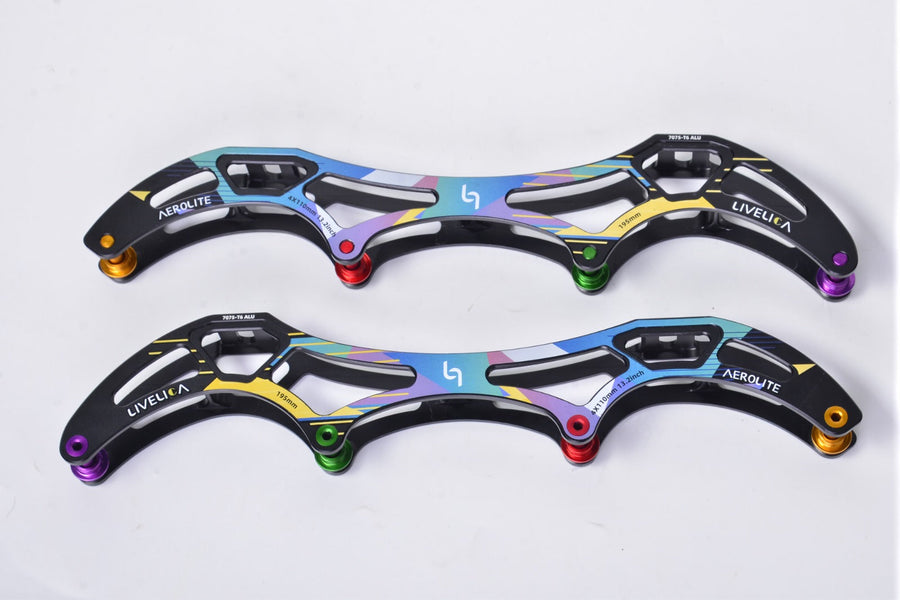
Frames are the part most likely to be damaged in transit and the part where damage matters most, because a frame that has taken a knock can sit subtly out of true and quietly ruin your alignment. Modern speed frames such as the LiveLica Aerolite frames are built to be light, and light means they do not enjoy having a suitcase dropped on them.
If you are travelling with the frames still bolted to the boots, leave them bolted. Fewer disassembly cycles means fewer chances to get the mounting position wrong at the other end. Wrap the frame in a soft layer, stand the boots upright rather than lying them on their side, and pack soft clothing around them so nothing presses directly on the rails.
If you are carrying a spare frame such as a LiveLica Aerolite 4x110, wrap it separately and pack it flat in the middle of your bag, surrounded by clothing on all six sides. Never let a bare frame sit against the outer wall of a soft bag.
Wheels: prevent flat spots and deformation
Urethane takes a set. If a wheel is loaded on one point for many hours in a hot cargo hold, you can arrive with a wheel that is not quite round any more. It is not always dramatic, but you will feel it as a vibration at speed, and on a race weekend that is a needless distraction.
The simple prevention is to keep wheels loose in the bag rather than compressed under something heavy, and to bag them in pairs so they cannot rub against each other or against hard edges. Race compounds like JUNK Voodoo XFirm are soft enough to be worth this small courtesy. Keep them out of direct sun while you wait at the airport, and keep them out of a car boot parked in the sun at the other end.
Heat and sustained point loading are what deform a wheel in transit. Loose bagging and shade solve almost all of it.
Bearings on the road
Bearings hate two things while travelling: grit and moisture. Both are easy to pick up in a bag that has been on an airport floor, a hotel room floor and the back of an autorickshaw.
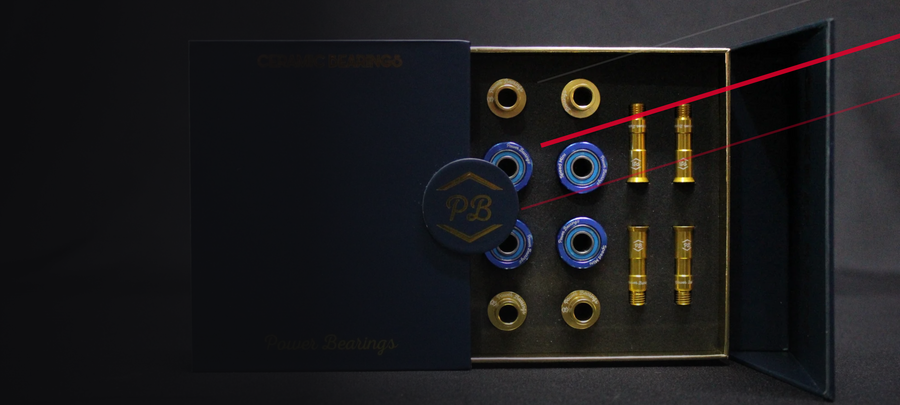
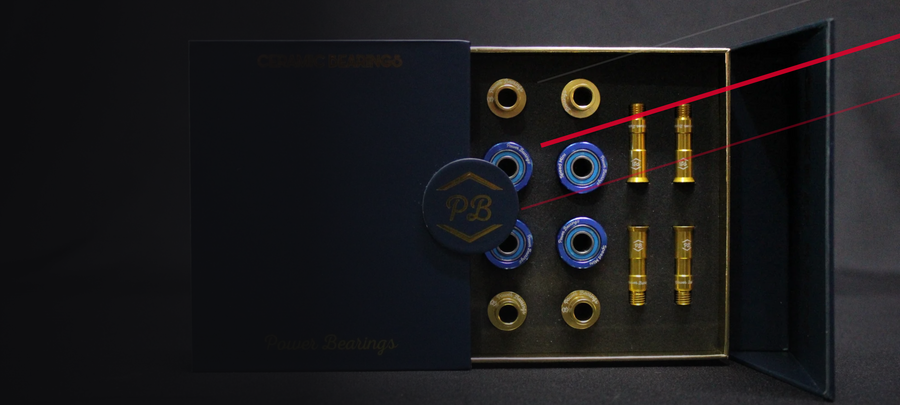
If your bearings are staying inside the wheels, which is usually the sensible choice, simply bag the wheels. If you are carrying spares, keep them in a small sealed container or a zip pouch rather than loose in a pocket where they will collect dust and fluff. A spare set of something reliable from the Power Bearings range weighs almost nothing and has saved plenty of race weekends.
Resist the urge to clean bearings the night before a race in an unfamiliar room. Cleaning is a workshop job with proper solvent, proper drying and proper light. A rushed clean in a hotel bathroom, with a bearing dried imperfectly and reassembled in the dark, is a far more common cause of a slow race than a bearing that was simply left alone.
Bearing oil and liquid rules
Bearing oil is a liquid, and liquids in cabin baggage are restricted. Cabin rules commonly limit each container to a small volume inside a clear resealable bag, and the exact figure and format vary by airport and airline, so check before you pack. The straightforward answer for most skaters is to put the oil in checked luggage instead.
Wherever it travels, seal it properly. Put the bottle inside a zip bag of its own, then inside another bag, and keep it away from your race suit and anything absorbent. A bottle of Speedslick Pro Bearing Oil that opens in transit will not ruin the trip, but it will certainly ruin whatever it lands on. Pressure changes in a hold are real, so a bottle that is merely finger tight at home may not be at altitude.
Reassembling at the other end
Do this the evening you arrive, not on race morning. You want time to discover a problem while there is still a shop open or a teammate awake.
Rebuild in the correct order and do not improvise. Each wheel takes a bearing on each side with the spacer between them, and the axle passes through the whole stack. A missing or wrong length spacer is the classic travel mistake, because it lets the axle clamp the bearing inner races unevenly and the wheel will bind as soon as you tighten it.
A cross section of one wheel. Get the order and the spacer right and the wheel spins free. Get it wrong and no amount of good bearings will help.
Once it is together, run through a short check. Spin every wheel by hand and listen for anything rough. Check that every axle is snug but not overtightened, because an overtightened axle preloads the bearings and kills your roll. Check that the frame mounting bolts are tight and that the frame position has not shifted. Then take ten minutes of easy skating outside the venue rather than trusting the first check to your first lap of the race.
A short pre travel checklist
- Clean and oil bearings at home, several days before you fly, never the night before the race.
- Check your axles and carry one spare axle plus one spare wheel.
- Photograph your frame position on the boot before any disassembly, so you can restore it exactly.
- Bag wheels in pairs and keep them out of heat and out of compression.
- Seal bearing oil in a double bag and put it in checked luggage.
- Keep boots, frames and race suit in the cabin if the allowance permits it.
- Reassemble and test skate the evening you arrive, not on race morning.
Frequently asked questions
Can I take inline skates in my cabin bag
Skates themselves are generally accepted as cabin baggage by most airlines, subject to size and weight allowance, but tools are a different matter and are usually best checked in. Policies differ between carriers, so confirm with your airline before you travel rather than finding out at the security queue.
Should I remove the wheels before flying
Usually not. Keeping the wheels in the frame protects the bearings from dust and saves you a rebuild at the other end. Remove wheels only when you need the packing space or when you are travelling with more than one wheel set.
How do I stop bearings rusting on a humid trip
Keep them dry and sealed. Do not pack skates that are still damp from a session, keep spare bearings in a sealed pouch rather than loose, and open the bag out as soon as you reach your accommodation instead of leaving it zipped in a humid room for two days.
My wheels vibrate after the flight. What should I check
Check three things in order. First, whether an axle is loose or overtightened. Second, whether a spacer is missing or has slipped. Third, whether a wheel has developed a flat spot from being compressed in the bag. The first two are free to fix and cover the large majority of cases.
The short version
Travel light, protect the expensive parts with your own hands in the cabin, keep wheels loose and cool, keep bearings sealed and dry, put oil and tools in checked luggage, and rebuild the night before rather than on race morning. Do those six things and your skates will arrive in the same condition they left, which is the whole point of the exercise.