Most skaters own one setup and race everything on it. That is completely normal, and for a while it is the right thing to do, because technique is worth far more than equipment. But there comes a point in a racing season where the same pair of skates is being asked to do two contradictory jobs. On Saturday it has to explode off the line and hold a tight banked corner over 300 metres. On Sunday it has to roll for an hour without punishing your legs. Those are not the same machine.
This guide walks through what actually changes as race distance increases, and which parts of your setup are worth adjusting for it. It is not an argument for owning four pairs of skates. It is an argument for understanding what each choice costs you, so that when you do buy your next frame or your next set of wheels, you buy the one that suits the racing you actually do.
The three demands, and why they conflict
Every inline speed setup is a compromise between three things. Acceleration, which is how fast you can get the skate moving from slow. Control, which is how confidently you can load the skate in a corner or in a pack. And sustained roll, which is how much of your energy stays in the skate over long stretches of steady effort.
Short races reward the first two. A 300 metre time trial or an indoor final is won in the start and in the corners, and there is barely any time spent at a constant cruising speed. Long races reward the third above everything. In a marathon you will spend the vast majority of your time in a pack rolling at a fairly steady pace, and every watt lost to friction or to a wheel that is not carrying speed compounds over tens of thousands of strides.
The trouble is that the choices which help acceleration and control tend to hurt sustained roll, and the reverse. Bigger wheels roll better and accelerate more slowly. Longer frames are stable but less willing to turn. Grippier compounds hold the corner and cost you a little speed. There is no setup that wins on all three axes, which is why race distance is such a useful lens for making the decision.
Race distance is the simplest way to decide which end of the grip and roll scale your setup should sit on.
Frame choice by distance
The frame sets the character of the whole skate before you have chosen a single wheel. Two numbers matter most: how long the platform is, and how big the wheels it is built around are. Both push the same way, which is why frame length and wheel size tend to move together.
Sprint, track and tight indoor courses
Short, technical racing wants a short frame close to the ground. The LiveLica Aerolite 4x90 is the clearest example in our range. It runs four 90mm wheels on a compact 10.86 inch platform and weighs 124 grams in 7075 T6 aluminium. Four wheels means four points of contact and predictable handling when you load the skate hard into a start or a corner, and the smaller diameter keeps your centre of gravity low so direction changes are quicker. On a banked track or a tight indoor circuit that responsiveness is worth more than a long rollout you never get to use.
Middle distance and mixed courses
Most club racing lives in the middle, on courses with real corners and real straights. This is where a four wheel setup on 100mm or 110mm makes sense, because you still get four contact patches for the corners but with enough diameter to carry speed down the straights. If you race a broad calendar rather than a single specialism, this is the sensible middle ground and the setup most skaters should own first.
Marathon and long road racing
Long road racing rewards a frame that tracks straight and stays composed for an hour. The Aerolite 4x110 is built exactly for this: four 110mm wheels on a 13.2 inch platform, the longest in the range, at 159 grams. The long wheelbase is deliberate, because it lets you commit to a hard sustained push without the skate feeling twitchy underneath you. The trade against a big wheel triskate such as the Aerolite 3x125 is a familiar one: four wheels give more grip and stability, three big wheels give a lighter and more playful skate. Plenty of serious road skaters own both and pick by course and conditions on the day.
The same four wheel layout on two platform lengths behaves very differently, which is why the course matters as much as the wheel size.
Wheels: where distance really shows up
If you only change one thing between a sprint setup and a distance setup, change the wheels. They are cheaper than a frame, they wear out anyway, and hardness has an immediate effect on how the skate feels.
Hardness, grip and the surface you are on
The rule that trips people up is that softer does not simply mean slower and harder does not simply mean faster, because grip is what lets you put power down at all. Take the JUNK Road Reaper 110 XFirm, which sits at 84 to 86A. It is the softer of the two Road Reaper options, and that extra grip is what you want when the surface is hard, smooth and dry, because a harder wheel can start to slip in exactly those conditions. The XXFirm version at 86 to 88A gives up some of that grip in exchange for more roll and outright speed.
MPC splits the same decision three ways. Black Magic comes in Firm for rough or slick race conditions where grip is the priority, XFirm for hard, smooth and dry surfaces, and XXFirm tuned for the most roll and top speed. The XXFirm also uses MPC's MTech build, a softer inner ring inside a harder outer urethane, so it flexes for grip while the harder body keeps it rolling.
Choosing hardness by race length
For short races on a good surface, err towards grip. You spend a large proportion of a sprint accelerating and cornering, and a wheel that lets go under load costs you far more than a marginal difference in roll would have gained. For long races, err towards roll, because you are spending most of your time at a steady cruising speed where the extra grip is doing nothing except costing you energy. On rough or wet surfaces, ignore the distance argument and choose grip regardless, since a skater sliding out at kilometre thirty is not racing at all.
Softer urethane grips and harder urethane rolls, so the length of the race tells you which of the two you can afford to prioritise.
Bearings and the cost of friction over time
Bearing choice is the one area where the distance argument is cleanest, because friction is a cost that accumulates with every rotation. Over a 300 metre sprint the total energy lost to bearing drag is small. Over a marathon it is not.
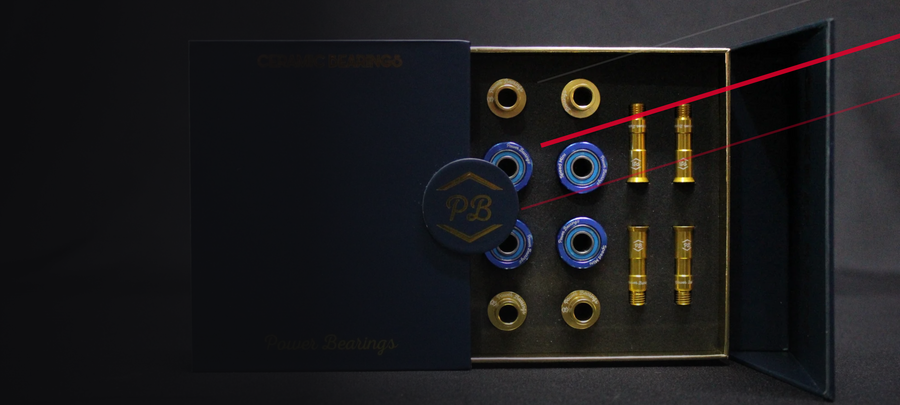
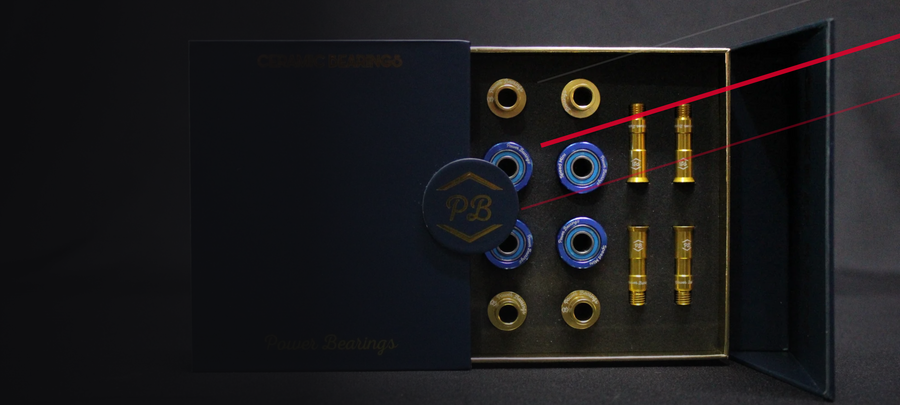
The Power Bearings Swiss Ceramic is a hybrid ceramic built for exactly this problem, using silicon nitride balls in a precision race. According to the manufacturer it saves 0.8 to 1.0 watts per bearing against typical precision steel, which across sixteen bearings in a pair of four wheel skates is a figure that becomes meaningful over a long race rather than a short one. Ceramic also runs cooler on sustained efforts and copes better with heat and moisture, which matters for anyone racing long distances in Indian conditions.
None of that means a sprinter should not use good bearings. It means the honest priority order changes. For short races, clean, well maintained bearings of decent quality will not hold you back. For long races, bearings are one of the few places where the equipment genuinely returns time. And in both cases a dirty bearing is slower than any brand choice can fix, so cleaning and oiling comes before upgrading.
The suit, the body and the last few percent
Aerodynamic drag rises steeply with speed, and it is paid continuously rather than in bursts. That makes a well fitted skinsuit a distance item as much as a sprint item, since an hour spent at cruising pace is an hour of paying that cost. A suit that fits closely without restricting the low position is worth more over a marathon than most component upgrades, and it costs nothing in handling.
Building one setup that covers most of your racing
Very few skaters need three complete setups. Here is a practical way to cover a mixed calendar without buying everything.
- Choose the frame for the racing you do most often, not the racing you aspire to. If two thirds of your season is on the road, buy the road frame.
- Own two wheel sets rather than two frames, since wheels are the cheaper and more effective lever and you will wear them out anyway.
- Keep a grippier set for rough, wet or technical courses and a harder, faster rolling set for smooth long distance days.
- Run your best bearings in the wheel set you race long distances on, and keep a well maintained second set for training.
- Rotate and inspect wheels between races so you are not starting a marathon on a coned set that has already lost its profile.
- Change one variable at a time between races, otherwise you will never learn which change actually did anything.
Frequently asked questions
Do I really need a different setup for sprints and marathons?
Need is a strong word. Most skaters are better served by one good setup and more training. But if you race seriously at both ends of the distance range, the frame and wheel choices that suit a 300 metre time trial are measurably not the ones that suit an hour of road racing, and at that point a second wheel set is the cheapest way to bridge the gap.
Are bigger wheels always faster?
No. Bigger wheels give a longer rollout and carry speed better once they are up to pace, but they take more effort to spin up and they raise your centre of gravity. On a course with constant accelerations and tight corners, a smaller wheel on a shorter frame can be the quicker way around.
Should I choose wheels by hardness or by diameter first?
Diameter is usually decided for you by your frame, so hardness is the choice you actually make each time you buy. Pick it from the surface and the conditions first, then from the race length.
Are ceramic bearings worth it for a short race?
They are worth most where friction has time to accumulate, which means long distances. For short races, clean and well oiled bearings matter more than the material. If your budget is limited, spend it on wheels and maintenance before you spend it on ceramic.
What if I race on rough Indian roads rather than a smooth track?
Then surface beats distance in the decision. Choose the compound that grips and survives the surface first, and treat the distance argument as the tie breaker between two options that both work on that road.
The short version
Short races want a short frame, smaller wheels, grip and agility. Long races want a long frame, bigger wheels, roll and stability. If you have to choose one, choose the one that matches the majority of your calendar, and use a second wheel set to cover the rest. If you are unsure which frame or compound suits the racing you do, message us with your usual courses and conditions and we will help you narrow it down.