Plenty of India's short track skaters started life on wheels. If you have raced inline speed, on the road or the rink, and you are eyeing the ice, you are in a strong position. A big part of what makes a short track skater fast is the engine and the instincts you have already built, and those come across almost for free. What changes is the surface under you, the equipment on your feet, and the safety kit you are now expected to wear. This guide walks an inline speed skater through exactly what carries over to ice short track, what is genuinely new, and the boots, blades and protection you need to make the switch cleanly.
The good news, what carries over from inline
Your fitness is the biggest win. The aerobic base and leg strength you built on wheels transfer directly to the ice, so you are not starting from zero. Your low basic position transfers too. Short track is skated in a deep, seated stance with a long flat back, exactly the shape a good inline racer already lives in, so you will feel at home the moment you sink into it.
Your cornering instinct is another gift. Inline oval racing and short track are both about carrying speed through a bend by leaning in and crossing the outside leg over, so the crossover pattern and the feel of committing to a lean are already wired into you. And your race craft, reading a pack, sitting in a slipstream, choosing when to pass, is a huge advantage in a discipline decided by tactics as much as by pure speed. In short, the skater you already are is most of the way there.
What is genuinely different on the ice
The first and biggest change is how you grip. An inline wheel is a wide band of urethane that squashes onto the ground and holds through friction. An ice blade grips in a completely different way, with a thin steel edge that bites into the ice. There is far less material touching the surface, and it holds because it cuts a tiny groove rather than because it is soft and sticky. That means your edges have to be sharp and square, and it means the feeling of grip is sharper and less forgiving than urethane. The diagram below shows the difference.
The urethane wheel grips through a wide soft contact patch, while the steel blade grips by cutting a fine groove with a thin sharp edge.
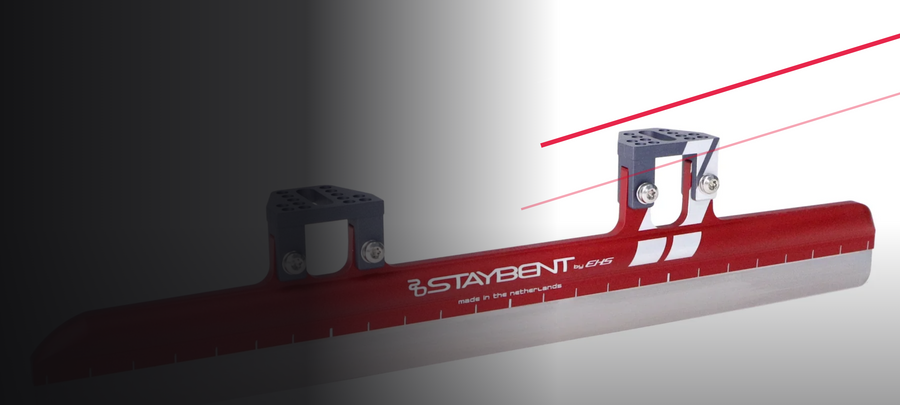
The second difference is the blade itself. A short track blade is not straight and flat like the line of an inline frame. It has a rocker, a gentle lengthwise curve so only a small part of the edge touches the ice at once, and it is bent to the left so it naturally arcs around the anticlockwise corners of the oval. That bend and rocker are set deliberately and can be tuned, which is a whole craft that inline skating simply does not have. The third difference is that short track always runs one way around a tight oval, so your body learns to load the left edge hard, lap after lap.
The rocker is a shallow curve along the blade so only a small point rides the ice at a time, which lets you steer and hold the corner.
Your boots, the biggest new purchase
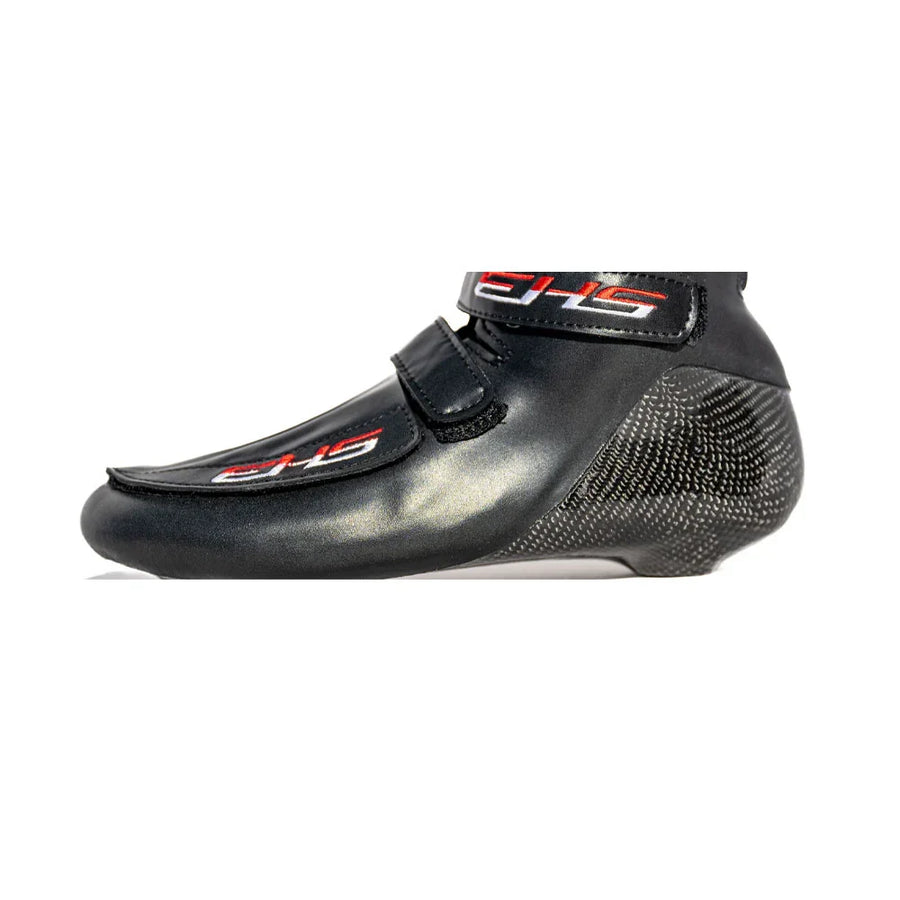
You cannot bolt an ice blade to an inline boot, so a proper short track boot is the first thing to buy. A short track boot is built on a last shaped specifically for ice racing, holding your ankle and heel in the position the sport demands through crossovers, starts and high speed turns. The EHS Short Track Boots use a carbon fibre and Diolene shell for a light, stiff platform, and the carbon shell is heat mouldable, so a qualified fitter can warm it and shape it to the exact contours of your foot for a locked in fit with no pressure points. They come in sizes 32 to 48 and ship with the mounting hardware and Canadian waxed laces you need to fit your blades. As an inline skater you already understand why stiffness and heel hold matter, so you will appreciate a boot that transfers power the way a good speed frame does.
The blades, and how to choose your first pair
Blades are bought separately from boots and mounted on with the included hardware. The main choices are which model and which length. Our short track range centres on StayBent blades, and the two most sensible starting points are the StayBent QCS and the StayBent JaeBee. The QCS carries the smooth, flexible Q family feel with even stiffness along the full length of the tube, which gives a stable, confident ride at a more accessible price, so it suits developing skaters well. The JaeBee is the most flexible blade in the range, with a tapered tube that gives progressive flex for skaters who like to read a corner and skate it with touch. For a top level flagship built in the Netherlands with StayBent's Precise Bend Technology, there is also the StayBent XC Flex Weapon.
Each blade comes in a run of lengths so you can match it to your boot and style. As a general guide, shorter blades feel quicker and more agile, while longer blades track straighter and carry more speed on the straights. You also choose the steel. Bimetal at 62 HRC is a little softer, easy to sharpen and forgiving day to day, while full PM at 64 HRC is a harder powder metallurgy steel that holds an edge longer between sharpenings, which suits skaters who train heavily. If you are unsure of length, send your boot size to the team and they will help you choose.
Safety kit is not optional in short track
This is the part that surprises many inline skaters. On the road you might race in little more than a suit and a helmet. Short track is different, because sharp blades pass low and close in a tight pack, and most national federations require cut resistant protection to compete. That means a proper protective layer is part of racing safely and legally, not an optional extra.
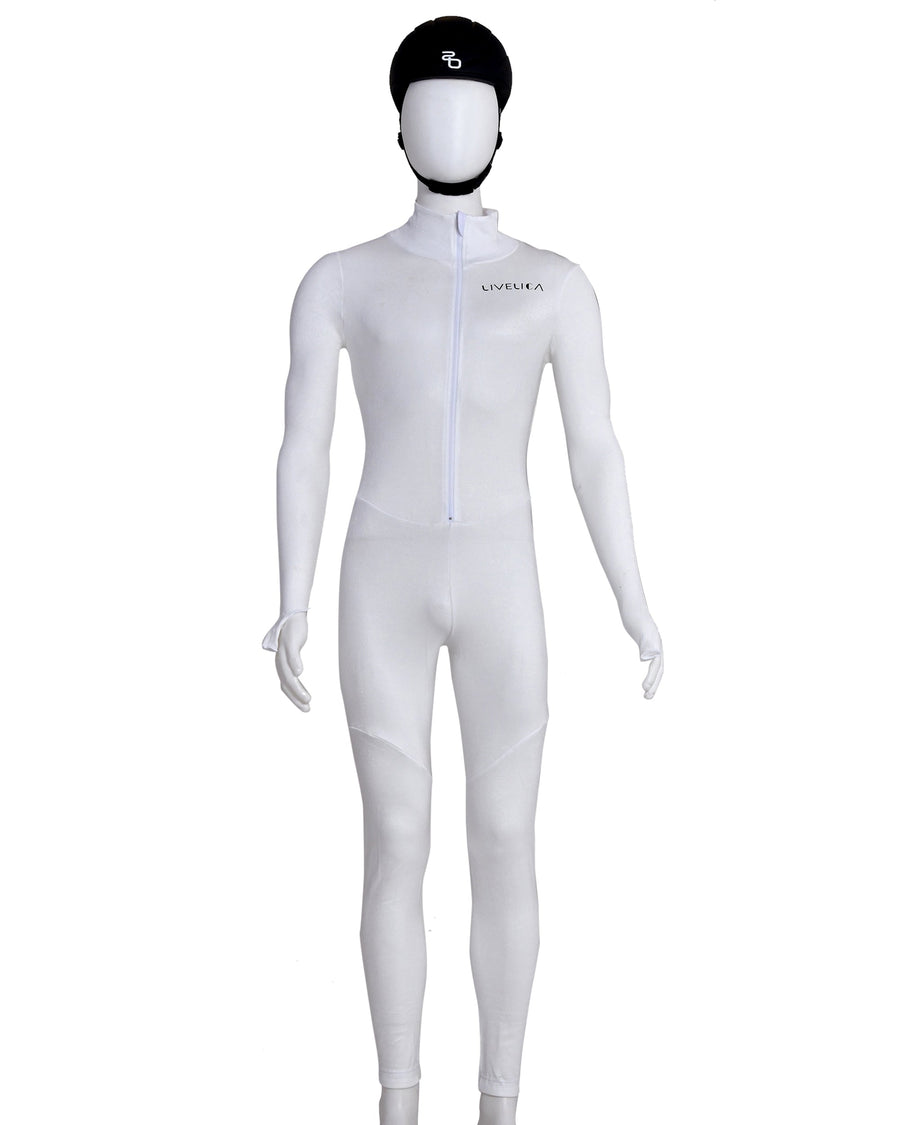
A sensible protective set starts with a base layer like the LiveLica Level 3 Cut Resistant Kevlar Undersuit, worn under your normal race suit, which puts a full layer of Kevlar between you and the ice with reinforcement at the knees and ankles. Add a cut resistant neck guard and cut resistant ankle socks to protect the two areas a suit and boot leave exposed, and wear cut resistant gloves, which double as the gloves you put on when you sharpen blades. Finish with a hard shell helmet made for the oval. You can see the full protective range in the short track accessories collection. Do not treat any of this as optional. It is basic kit.
One more small but important detail. Short track racers glue hard, low friction tips to the fingers of the inside hand, so that when you touch the ice through the corner your hand slides instead of dragging and scrubbing off speed. It is a tiny piece of kit that every serious skater runs.
Blade care you never needed on wheels
Urethane wheels ask very little of you between sessions. Steel blades ask more, because steel rusts and a dull or nicked edge ruins your skating. The routine is simple once you learn it. Wipe your blades completely dry the moment you step off the ice, slip on hard guards to walk anywhere off the mats, and store the blades in soft soakers that draw moisture away so they do not rust in the bag. When the edge dulls, you sharpen on a proper short track jig that holds the blade dead straight so the edge stays even along its length. As an inline skater this is the genuinely new habit to build, and it becomes second nature quickly.
A simple order for the switch, sort your boots, then blades, then your cut resistant safety kit, then build the blade care habit.
A sensible first short track setup
Putting it together, a solid first ice setup for an inline skater making the move is a heat moulded short track boot, a forgiving blade in your correct length such as the QCS, a full cut resistant protective set of undersuit, neck guard, socks and gloves, a hard shell helmet, glove tips for the inside hand, and blade care basics of guards, soakers and access to a sharpening jig. You can browse everything you need in one place in the short track setup collection. Start with a comfortable, stable blade rather than the stiffest flagship, get the fit and the safety kit right, and let your existing engine and race craft do the rest.
Frequently asked questions
Will my inline fitness really transfer to the ice?
Yes. Your aerobic base, leg strength, low position and race craft all carry over, which is why skaters with an inline background often progress quickly. The learning curve is mostly about edges and balance on a thin blade, not about building fitness from scratch.
Can I use my inline helmet and suit?
A skate helmet may be usable, but short track additionally requires cut resistant protection that inline racing does not, so you will need a cut resistant undersuit, neck guard, ankle socks and gloves. Always check your competition regulations, because a protective layer is a standard requirement for short track.
Do the boots and blades come together?
No. Boots and blades are sold separately, though the EHS boots include the hardware to mount your blades. This lets you match a blade model and length to your boot and your style rather than being locked into a fixed pair.
How is skating a bent, rockered blade different from an inline frame?
An inline frame holds the wheels in a straight line, while a short track blade is rockered along its length and bent to the left, so it naturally steers into the oval's corners and rides on a small contact point. You steer with edge and lean rather than by simply pointing a flat line of wheels.
What should I buy first?
Boots, because everything else mounts to or works around them. Get a short track boot fitted and heat moulded, then choose a blade and length, then complete your cut resistant safety kit before you race.
Ready to make the switch
Moving from inline to ice short track is less of a fresh start than it looks. You bring the engine, the low position, the cornering instinct and the tactical brain, and you add ice specific boots, a rockered and bent blade, a proper set of cut resistant protection, and a simple blade care habit. Get those pieces in the right order and you will feel at home on the oval sooner than you expect. Sort a properly fitted pair of ice boots first, add a forgiving blade in your length, complete your cut resistant protection, and your inline background will carry you the rest of the way.