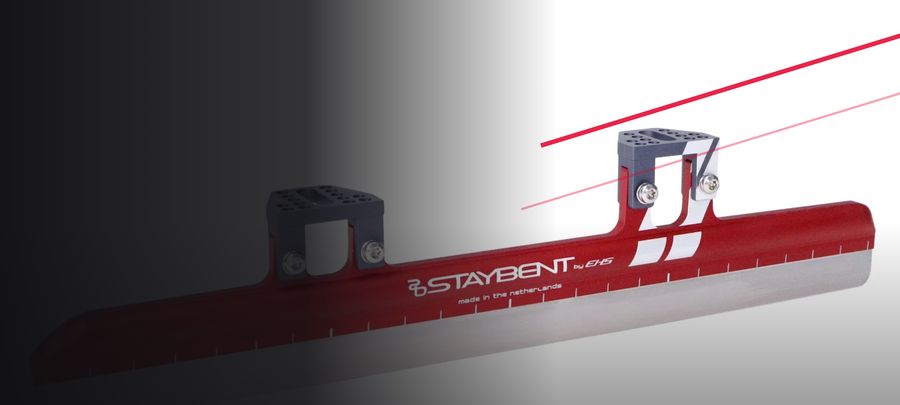
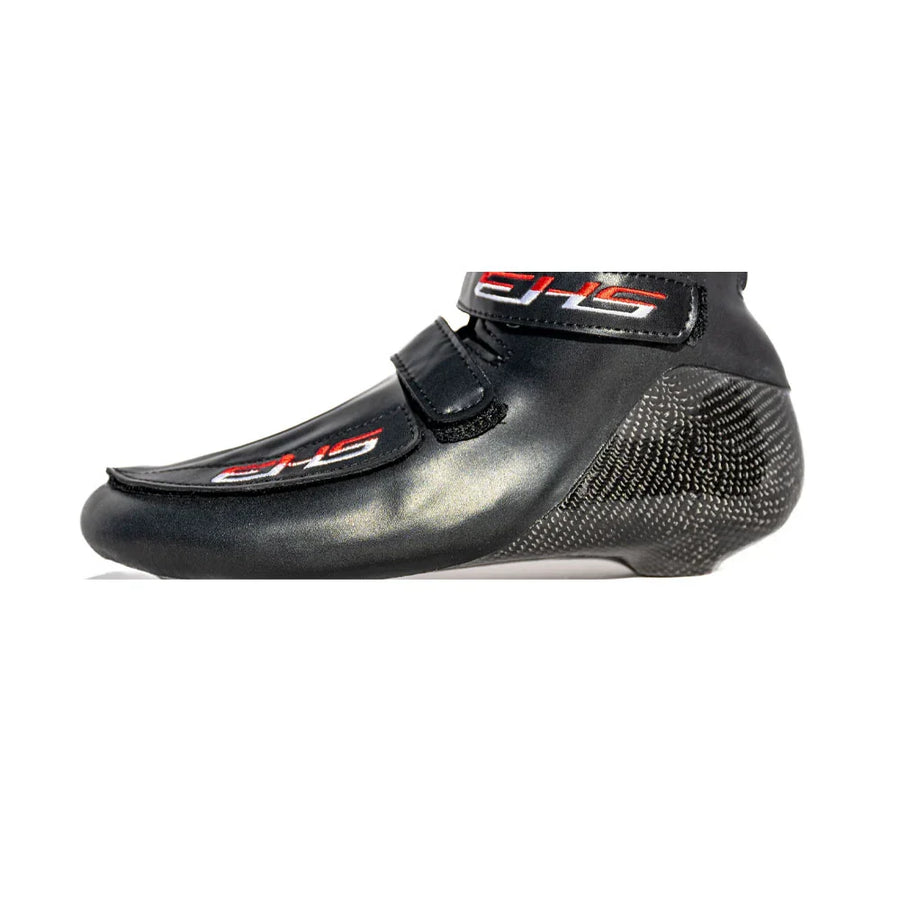
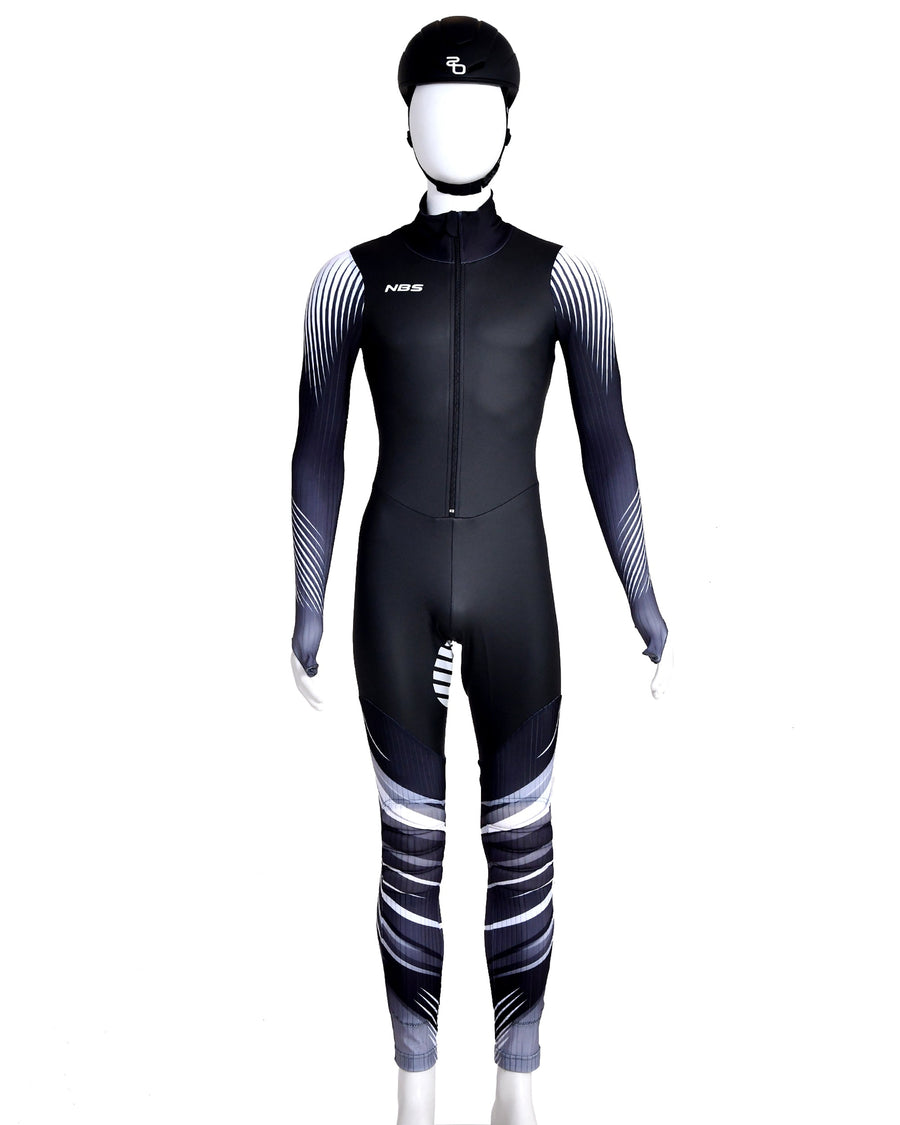
Your blades are the single most important part of your short track setup. They are the only contact point between you and the ice, and they decide how you carry speed, how you hold a line through a corner, and how confident you feel when you commit to an apex. A blade that suits your style feels like an extension of your body. A blade that does not will fight you on every lap. This guide walks through everything that matters when you choose a short track speed skating blade, so you can buy once and buy well.
Why the blade matters more than almost anything else
Boots, bearings and suits all play a part, but the blade is where power becomes motion. A good blade transfers your push cleanly into forward speed, keeps a stable edge when you load it in the corner, and releases smoothly as you move from one stride to the next. Because short track is raced on tight radius corners at high speed, small differences in flex, bend and steel quality produce large differences in how the skate behaves under pressure.
Understanding flex
Flex describes how much the blade bends along its length when you load it. It is the characteristic most skaters notice first. A more flexible blade moves with your push. It absorbs small imperfections in technique, feels forgiving, and lets the skate flow through a corner with a natural rhythm. Many technical skaters and creative racers prefer this feel because it rewards touch and finesse. A stiffer blade returns energy more directly. It feels sharp and aggressive, holds a very firm line, and gives immediate response when you drive hard. Neither is better in absolute terms. The right amount of flex depends on your weight, your power, and how you like a corner to feel. As a general rule, lighter and more technical skaters enjoy more flex, while heavier and more powerful skaters tend to want a firmer platform.
The three StayBent blades placed on a single flex scale, from the soft, forgiving JaeBee to the firm, planted XC Flex Weapon.
Blade length and sizing
Blade length is chosen to match your boot size, your height, and your racing style. Shorter blades change direction quickly and feel lively, which suits tight, reactive skating. Longer blades track straighter and carry more speed on the straights, which suits smooth, powerful skaters who like stability. Most skaters settle within a narrow window that fits their boot, then fine tune from there. StayBent blades are offered across a spread of lengths, for example the XC Flex Weapon runs from 16.5 to 18.0, so you can match the platform to your feet and your style rather than compromising.
Steel: bimetal and full PM
The runner is the part that touches the ice, and the steel it is made from decides how long your edge lasts and how it feels. Bimetal runners, around 62 HRC, offer an excellent balance of performance, durability and value, and are a smart choice for most skaters. Full PM steel, around 64 HRC, is harder, so it holds a sharp edge longer between sharpenings. If you train in high volume and hate losing your edge mid session, the harder steel pays for itself in fewer sharpenings and more consistent feel.
Bend and the shape of speed
Short track blades are bent to a radius so the skate can carve a tight corner. The accuracy and smoothness of that bend matter enormously. A precisely bent blade gives a predictable, repeatable arc, which builds confidence because the skate does the same thing every time you load it. StayBent builds its blades with a proprietary bending process designed for highly accurate and smooth bend radiuses, which is exactly what you want when you are leaning at full commitment.
Cups, height and mounting
Cups connect the blade to your boot. Lighter, higher strength aluminium cups add stiffness and reduce weight, and are available in different heights so you can tune how far you can lean before the boot touches the ice. A clean, straight mount is essential. If the blade is even slightly off, your edges will feel unpredictable, so take your time with alignment or ask an experienced skater to help.
The parts that make up a short track blade, from the boot and cups down through the lips and tube to the bent steel runner.
Will these blades fit your boots? Mounting spacing, cups and adapters
This is the question skaters forget to ask until the parcel is open, and it is the one that causes the most disappointment. A blade is not a universal part. It attaches to the sole of your boot through the cups, and the two mounting holes in that sole are drilled at a set distance apart. Short track boots use 165 mm spacing. Inline speed boots are commonly drilled at 195 mm. If your boot is drilled at 195 mm and your short track hardware expects 165 mm, the parts will not line up, and no amount of goodwill will make them.
There is a clean fix for that. The StayBent EHS Short Track Adapter Set converts a 195 mm inline mounting pattern to the 165 mm spacing short track boots use, and it does it using the existing mounting points, so there is no drilling and no improvising. It is listed at 4,000 rupees, which is a small price for keeping a boot you already like. Measure the distance between the centres of your two mounting holes before you order anything, or send us a photo of the sole and we will confirm it for you.
What the cups actually do
The cups are the aluminium blocks between the boot sole and the blade tube, and they set two things at once: how solidly the blade is held, and how high it sits. StayBent cups are precision machined from 6061 aluminium billet and engraved with their size, so once you have found a setup you like you can repeat it exactly.
Height is the part worth understanding before you buy. More height lifts the blade further from the boot, which gives you a deeper lean angle and more clearance before the boot touches the ice in a corner. Less height sits you closer to the ice and feels more stable and more direct. Neither is correct in the abstract. It depends on how deep you lean and how confident you are committing to an apex.
The StayBent Short Track Mounting Cups cover 12 sizes in 1 mm steps, from minus 1 up to plus 10, and are listed at 15,000 rupees for a set of four, which is a full pair of skates at two cups per boot. The StayBent Short Track PRO Mounting Cups run 13 sizes from 0 to plus 12 at 20,000 rupees a set, so choose the PRO set if you need the taller end of the range and the standard set if you want the minus 1 step. Both are offered with or without bolts, so you can reuse hardware that is still in good condition.
If you change height, change it in single millimetre steps and give yourself a few sessions before you judge it. Skaters who jump three sizes at once usually conclude that the cups are wrong when what is actually wrong is that they have changed too much at one time.
Check your mounting spacing first, then choose cup height. An adapter set solves the spacing problem, and the cup size decides how far you can lean before the boot meets the ice.
The LiveLica short track blade range
We keep the range focused so you are choosing between genuinely different characters rather than a wall of similar options.
StayBent JaeBee
The StayBent JaeBee is our most flexible blade. It is built for skaters who want maximum feel, freedom of movement and a natural glide. The tube tapers toward the ends to create a progressive flex pattern, so the tips give more and the skate feels smooth and intuitive, especially in technical corners and creative race moments.
StayBent QCS
The StayBent QCS sits stiffer than the JaeBee. It carries the same tube as the Quantum with even stiffness along the full length, so it suits skaters who want more hold and a firmer, more direct response while still keeping a clean glide.
StayBent XC Flex Weapon
The XC Flex Weapon is one of the StayBent flagship models. It offers additional hold in the corners while keeping excellent gliding and turning characteristics, and it is built from premium Dutch aluminium with hand selected steel runners. It is the choice for skaters chasing the ultimate in speed and control.
What a blade costs, and the parts that are not in the box
A blade is the largest single line on a short track budget, and skaters are often surprised by what sits around it. Here are the figures from our own listings, checked against the store on 22 September 2026. Prices change, so confirm on the product page before you order.
The StayBent JaeBee and the StayBent QCS, both linked above, are listed at 70,000 rupees each, and the XC Flex Weapon at 100,000 rupees. Because the JaeBee and the QCS cost the same, the choice between them is purely about feel rather than budget, which is a much healthier way to decide. Take the JaeBee if you want flex and flow, the QCS if you want an even, firmer platform.
Around the blade, cups are a separate purchase at 15,000 rupees for the standard set of four or 20,000 for the PRO set, with bolts as an option on both. An adapter set, if your boot needs one, is 4,000 rupees. Blade guards for walking to the ice and soakers for the bag home are 3,500 rupees each. On the sharpening side, a jig is the big one, and the EHS short track and long track sharpening jig is listed at 38,000 rupees, with a Zandstra Foss combination sharpening stone at 6,000 and a StayBent diamond deburr stone at 3,500.
The sharpening tools are worth thinking about differently from the rest. They are bought once, they last for years, and many clubs share a jig between several skaters. If you are the only skater in your city on short track steel, budget for the jig. If there are five of you, buy one between you and split it.
The blade is the headline number, but cups, an adapter and the sharpening kit all sit around it. Plan for the whole setup rather than the blade alone.
Matching a blade to your level
If you are newer to short track, prioritise a forgiving, flexible blade and a length that fits your boot, because a friendly platform helps you build good technique. Intermediate skaters can begin to choose flex based on the feel they prefer, leaning flexible for flow or firmer for hold. Elite racers usually know exactly what they want and will pick steel and cup height to match their setup and event.
Set up and maintenance
A great blade still needs a good setup and regular care. Keep your edges consistent with the EHS sharpening jig, which clamps the blades straight so you can sharpen with confidence. Protect your hands when you work on the ice with cut resistant gloves. Small habits, like drying your blades after every session and checking your mounts, add up to a setup that stays fast and safe.
Common mistakes to avoid
Skaters often chase the blade a champion uses rather than the blade that suits them. They pick a length by guesswork instead of matching it to their boot. They ignore steel quality and then wonder why their edge fades. And they neglect maintenance, which quietly erodes performance. Avoid these and you will get far more out of whatever blade you choose.
Frequently asked questions
How flexible should my first short track blade be?
Most newer skaters benefit from a flexible, forgiving blade because it is friendly to learn on and rewards clean technique. The JaeBee is a good example of this feel.
Is full PM steel worth it over bimetal?
If you train frequently and want your edge to last longer between sharpenings, the harder full PM steel at 64 HRC is worth it. If you want a strong balance of performance and value, bimetal at 62 HRC is an excellent choice.
How do I keep my blades fast?
Sharpen consistently using a proper jig, dry your blades after every session, and check your mounts regularly so your edges stay predictable.
What length blade do I need for my boot size?
Length is matched to your boot and your style rather than picked from a chart alone. The JaeBee is offered in eight lengths from 14.5 up to 18, so there is a close fit for most feet. Send us your boot size and we will tell you which length we would put you on.
Do blades come with cups and bolts?
Cups are listed separately at LiveLica as a set of four, which mounts a full pair of skates at two per boot, and bolts are an option when you order them. Check what is included with the blade you are looking at before you order, and message us if it is not clear.
Can I mount short track blades on my inline speed boots?
Often yes, once the mounting spacing matches. Short track uses 165 mm spacing and inline boots are commonly drilled at 195 mm, and the StayBent EHS adapter set bridges that gap using the existing holes without drilling. Measure your boot first, or send us a photo of the sole.
The JaeBee and the QCS cost the same, so which should I buy?
Buy on feel, because price is not deciding anything here. The JaeBee has more flexible lips and a tapered tube for progressive flex, so it feels softer and more forgiving. The QCS is evenly stiff along its length, so it feels firmer and more direct. Flow or hold, that is the whole question.
Can I move my blades to a new pair of boots later?
Yes, and the cups come with them. StayBent cups are machined aluminium and made to be reused rather than thrown away, so a blade and cup set can follow you through more than one pair of boots. Check the mounting spacing on the new boots before you commit to them.
How much should I budget for a complete setup?
Blade plus cups is the core of it, so at current prices that is 70,000 rupees for a JaeBee or QCS and 15,000 for a set of four standard cups. Add guards and soakers, and an adapter set if your boots need one. Sharpening tools are a separate, longer lasting purchase and are often shared at a club.
Ready to choose? Explore the full short track range at LiveLica, and message our skater run team any time for help with flex, length and setup.