Every season starts the same way. The rink confirms its dates, the group chat lights up, and a dozen skaters realise they have about six weeks to turn summer legs back into skating legs. Short track pre season training is what separates the skater who spends the first month of ice time getting fit from the skater who spends it getting fast. Both pay the same for the session. Only one of them is improving in it.
This guide is the calendar rather than the exercise list. We already have a detailed guide to off ice training and dryland exercises for short track, and that covers what each movement does and how to perform it. What that guide does not do is tell you how the weeks fit together, what should change from week one to week six, and when to stop building and start sharpening. That sequencing is what this post is for.
What a pre season block is actually for
A pre season block has one job: to make you ready to train properly, not to make you fast. Speed is built on the ice, in sessions where your technique holds up for the full hour. If you arrive at the first session with legs that fold after ten minutes, you will spend six weeks of expensive ice time doing what you could have done on a kitchen floor for free.
So the goal of the block is a skater who can hold a deep seated position for a full session, who can stand and push on one leg without wobbling, who has the aerobic base to repeat efforts, and whose equipment is sorted before it matters. Everything below serves those four outcomes.
The six week shape: general, specific, sharpening
Split the block into three phases of two weeks each. The phases are not arbitrary. Each one hands something to the next, and skipping straight to the exciting part is the most common way skaters arrive at the first session tired instead of ready.
Weeks 1 and 2, general
This is the unglamorous foundation. The work is broad, the volume is the highest it will be in the whole block, and the intensity is the lowest. You are building tissue tolerance and an aerobic base: longer easy efforts, general leg strength through squats and lunges and step ups, core work, and plenty of mobility through the hips and ankles.
Keep everything sub maximal. If a session leaves you unable to train two days later, it was too hard for this phase. The measure of a good general week is that you finish it wanting more, not needing a week to recover.
Weeks 3 and 4, specific
Now the work starts to look like skating. Volume comes down slightly and intensity comes up. This is where imitation work, slide board and single leg strength take over from general gym movements, because the shapes you rehearse here are the shapes you will need on the ice.
If you have inline skates, this is the phase where they earn their place. Rolling gives you the skating rhythm and the aerobic load in the same session, and our guide to off season training on inline skates covers how to use them without picking up habits that cost you on the ice.
Weeks 5 and 6, sharpening
The last two weeks are short, sharp and specific. Volume drops noticeably. Intensity is the highest of the block, but the total amount of work is the lowest. Think start practice, lateral jumps, short hard efforts with full recovery, and enough easy movement in between to stay loose.
The temptation here is to keep piling work on because the first session is close and you feel underprepared. Resist it. A skater who arrives fresh and slightly undertrained skates better than one who arrives flat and fully trained, and the first is far easier to fix.
Volume and intensity trade places across the block. When you notice yourself doing less work but harder work, the plan is running correctly.
How volume and intensity trade places
The single idea that makes periodisation click is that volume and intensity are a seesaw. You can raise one or the other, but raising both at the same time is how skaters get injured or stale. In week one you might do five sessions of forty minutes at an easy effort. In week six you might do three sessions of twenty five minutes, but the hard parts of those sessions are genuinely hard.
Total work goes down. Quality goes up. That is not a compromise, it is the point. The fitness was built in weeks one to four and the last fortnight is about expressing it while arriving fresh.
Read it down a column for a phase, or across a row to see how one variable changes over the block.
What a week looks like inside each phase
The weekly template stays roughly the same shape throughout. What changes is the content of the hard days.
- Three main sessions, spaced with a day between them rather than stacked together.
- One easy day of mobility, a walk or a gentle roll on inline skates.
- One full rest day, which is not optional and is where the adaptation actually happens.
- One flexible day you can use as a second easy day, a skills day, or extra rest if the week has been heavy.
In the general phase those three main sessions are longer and easier. In the specific phase they become imitation and slide board work. In the sharpening phase they become short and fast, and you will finish them feeling like you could have done more. That feeling is correct.
The kit calendar that runs alongside
The part almost everybody leaves too late is the equipment. Boots, blades and suits all need lead time, and discovering a problem in week six is how skaters end up racing in something that does not fit.
Run the audit in week one. Get your boots out, put them on, and see whether they still fit and whether the hardware is sound. If you need new ones, order early, because a stiff carbon boot such as the EHS Short Track Boots needs heat moulding and then a genuine break in period before it is ready for hard skating. That is a weeks long process, not an evening.
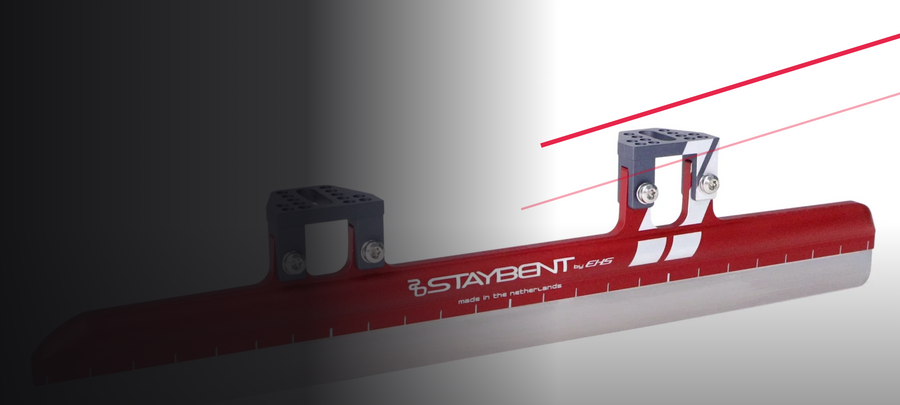
Blades come next. Check your steel for rust, wear and how much material is left, and if you are moving to a new pair, buy them in the specific phase rather than the week before the ice. A blade like the StayBent JaeBee wants to be mounted, set up and skated on before it matters competitively, and the first two weeks on new steel always feel unfamiliar.
Race layers are the easiest to sort and the most often forgotten. Wear your race kit for at least one session a week during the specific phase, so that a suit like the LiveLica Pro Short Track Suit is familiar rather than novel on competition day. If anything digs in, rides up or restricts you in a deep position, you want to find that out on a training mat. The full kit list sits in the short track setup collection.
Anything that takes time to arrive, mould or break in belongs in weeks 1 and 2. Week 6 is for packing, not for experiments.
Testing yourself without ice
You do not need a rink to know whether the block is working. Pick two or three simple tests in week one, write down the numbers, and repeat them at the end of week four and again at the end of week six.
A wall sit in the skating position, held to failure with a flat back, tells you about position endurance. A single leg squat, counting good repetitions before form breaks, tells you about one leg strength and balance. A set of lateral jumps, measuring how far you can go and land under control, tells you about the explosive push. If those three numbers are moving, your first ice session will feel different regardless of what the calendar says.
Common pre season mistakes
The first is starting too hard. Enthusiasm in week one is the most reliable predictor of a sore, flat week three. The second is never getting easier or harder, just doing the same session for six weeks, which is training without a plan. The third is leaving equipment to the end, then trying to break in boots and adapt to new blades in the same fortnight you are supposed to be sharpening. The fourth is skipping the rest day because it feels lazy, when rest is when the training you already did becomes fitness.
The fifth is comparing your block to somebody else's. A skater with four ice sessions a week and a gym needs a different plan from a skater with a kitchen floor and three evenings. Build the block you can actually complete.
Frequently asked questions
What if I only have four weeks, not six?
Compress the general phase rather than the sharpening phase. Do one week of general, two of specific and one of sharpening. Cutting the sharpening phase is tempting and leaves you arriving tired.
Can I do this if I have no access to ice at all yet?
Yes, that is exactly what it is for. Every session in the block happens off the ice. The point is to be ready on day one of the season rather than getting ready during it.
Should juniors follow the same structure?
The shape works, but keep the emphasis on position, balance and coordination rather than loading. Keep sessions short and varied, and let the depth of the stance develop naturally with the child.
How hard should the hard sessions be?
Hard enough that the last repetition of a set is genuinely difficult, and easy enough that you could train again two days later. If either half of that is untrue, adjust.
When should I sharpen my blades?
In week five, not week six, so that you get at least one session on fresh edges before they matter. Our guides on sharpening and on blade care cover the process in detail.
What if I miss a week?
Repeat the phase you were in rather than jumping ahead to catch up. Six weeks done properly beats eight weeks done anxiously.
The short version
Give yourself six weeks. Spend the first two building a broad base at low intensity, the middle two making the work look like skating, and the last two going short and sharp while arriving fresh. Run the kit audit in week one so that boots, blades and suits are sorted long before they are urgent. Test yourself off the ice so you know the block is working. Then walk into your first session ready to skate rather than ready to survive it.
If you are rebuilding a setup for the new season and want a second opinion on what actually needs replacing, message us. We would rather talk you out of a purchase than sell you a blade you did not need.