Almost every guide to short track speed skating is written as though the reader is nine years old and has a parent holding the kit bag. That leaves out a large and growing group of people, because starting short track speed skating as an adult is entirely possible, reasonably common, and in some ways easier than starting as a child. What it is not is identical. Adults learn differently, fall differently, and buy equipment in a different order. This guide is written for the skater who is starting at twenty five, thirty five or fifty five, and who wants to know what the first year actually looks like before spending anything.
We sell short track equipment, so we have an obvious interest in you buying some. That is exactly why the buying section of this guide is placed late and tells you to delay most of it. Getting the order right saves adults more money than any discount.
The honest answer on whether you are too late
If your goal is an Olympic team, starting as an adult is a very long shot, and it would be dishonest to suggest otherwise. If your goal is to race at club and national masters level, to skate fast and well, and to be genuinely good at a difficult sport, adult starters do that all the time. Short track rewards technique, timing and tactical sense at least as much as raw athleticism, and those are all things an adult can build.
Adults also bring real advantages. You can be told why something works and adjust immediately. You will actually do the off ice work. You can afford your own equipment, which matters more in this sport than most. And you have the patience to spend six weeks on a single skill, which is something very few teenagers manage.
What is different about learning as an adult
Your fear response is louder
Children fall, get up and stop thinking about it. Adults calculate. That calculation is what stops you committing to the lean in a corner, and an uncommitted lean is exactly what makes you slip out. The fix is not bravery, it is making falling boring. Practise sliding deliberately on the ice in full protection until it stops being interesting, and the corner will open up for you.
Mobility, not fitness, is usually the limit
Most adult starters arrive reasonably fit and are surprised to find that fitness is not what stops them. What stops them is that the short track position asks for deep ankle bend and open hips, and a couple of decades of sitting down takes both away. If you cannot sit in a deep squat with your heels flat, you will not hold the skating position no matter how strong your legs are. Start the ankle and hip work in week one, not in month six.
You have fewer hours, so quality matters more
A junior might get five ice sessions a week. You will probably get one or two, around work. That changes what a session is for. You cannot afford to spend an hour skating laps at a comfortable speed and calling it training. Arrive with two specific things to work on, and take the rest off the ice.
A rough map rather than a schedule. The only step worth rushing is protection, and the only step worth slowing down is buying boots.
What to buy, and the order that saves you money
Adults tend to buy in the wrong order because they can. The temptation is to arrive at session one with a full carbon setup, which is how people end up with expensive boots in the wrong size and blades sharpened for a technique they do not yet have.
Protection is the only purchase with a deadline. Everything above it can wait until your feet and your technique have stopped changing.
Protection comes first because it has a deadline and the rest does not. A helmet built for the sport, cut resistant gloves and a cut resistant base layer are what let you practise falling and committing to a lean without the fear tax. A Level 3 Kevlar cut resistant undersuit sits under whatever you already wear, with reinforcement at the knees and ankles, and most national federations require cut resistant protection to race anyway, so it is not a purchase you avoid, only one you delay.
Blade guards and soakers come next, the moment you own your own steel. Walking a sharpened blade across a rubber floor without a guard, or leaving a damp blade in a bag overnight, ruins an expensive edge in a single evening. A set of blade guards costs a tiny fraction of what it protects.
Why rental skates hold adults back, and when to stop using them
Rental hockey skates are fine for learning to be comfortable on ice. They are hopeless for learning the short track position, and it is worth understanding why so you know when to stop blaming yourself.
The dashed outline shows a foot floating inside a boot that cannot hold it. No amount of technique work fixes that, which is why boots are the first big purchase.
When your ankles collapse inwards and your heel lifts on every push, you are not being taught by the skate, you are fighting it. That is the moment to move to a proper boot. The EHS Short Track Boots use a carbon and Diolene shell that is heat mouldable, come in sizes 32 to 48, and ship with waxed laces and the mounting hardware for your blades. Have the moulding done by a qualified fitter, and measure your foot in millimetres rather than trusting a shoe size.
Blades, and why you should not buy them first
Blades are the most expensive single item in short track and the one adults are most tempted to rush. Wait, for two reasons. First, blade choice depends on your weight, your level and how you actually skate, none of which you know in month one. Second, an aggressive blade under a skater who is still learning the corner is harder to skate on, not easier.
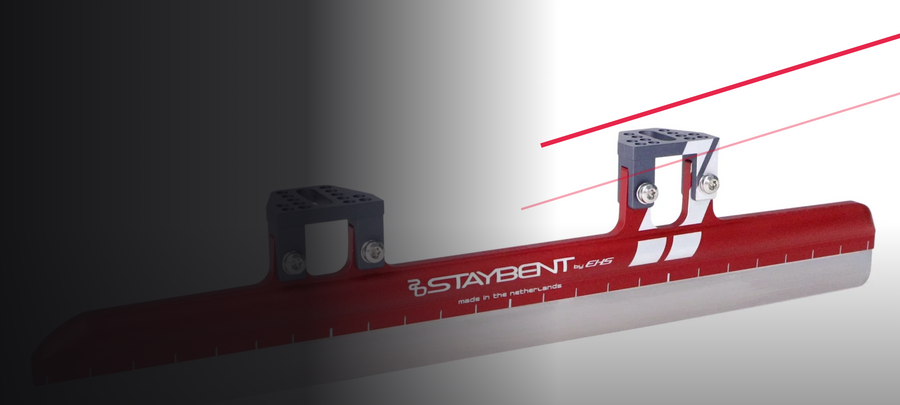
When you are ready, the choice is between a few well understood models. The StayBent JaeBee is a sensible starting point for a skater moving into structured club training. The full range, along with mounting cups, adapters and the sharpening kit you will eventually want, sits in the short track setup collection. Buy the blade once you have a coach or a clubmate who has watched you skate and can tell you what you actually need.
How to get value from one or two sessions a week
- Decide the two things you are working on before you leave the house, and write them down. Ice time disappears when you improvise.
- Warm up off the ice so that your first lap is a useful lap rather than a slow one.
- Spend the first third of the session on position and edges at low speed. Speed hides faults, and you cannot afford to hide them.
- Film one corner from the side on a phone every few weeks. Adults improve fastest when they can see what they are doing rather than what they think they are doing.
- Do the ankle and hip mobility work on the days you are not on ice. This is the single highest return thing an adult starter can do.
- Dry your blades the moment you step off, every time, without exception.
Mistakes adult starters make
- Buying boots in month one, before the foot swelling of a new sport has settled and before you know whether you like it.
- Skipping the falling practice, then wondering why the corner never feels committed.
- Training fitness instead of technique, because fitness is the familiar thing and technique is the uncomfortable one.
- Comparing progress with juniors on the same ice, who have been skating since they were six.
- Lacing the top of the boot as tight as the middle, which locks the ankle and kills the position.
- Leaving a sharpened blade in a bag without a soaker and then blaming the steel.
Frequently asked questions
Am I too old to start short track speed skating?
For club racing and masters competition, no. Adults start in their thirties, forties and fifties and become genuinely fast skaters. For elite international competition the window is realistically closed, which is worth knowing but changes very little about how much you will enjoy the sport.
Do I need to be fit before I start?
Ordinary fitness is enough to begin. What helps far more is ankle and hip mobility, because the skating position demands range rather than power. If you want to prepare for six weeks before your first session, spend it on mobility and single leg balance rather than on cardio.
Can I learn short track without a club or a coach?
You can learn to be comfortable and to skate cleanly on public sessions. You cannot really learn pack racing, starts or passing alone, because those need other skaters. Get the basics on your own if you must, then find a club for everything after that.
How much should I expect to spend in the first year?
It depends entirely on how quickly you commit. Protection and guards first, boots when rentals start limiting you, blades last. Spreading those over a year is normal and sensible, and buying them all in week one is the most common way adults waste money in this sport.
Is short track dangerous for an adult beginner?
There is real risk, which is why cut resistant kit and a proper helmet are treated as mandatory rather than optional. With full protection, a sensible progression and practised falling, adult beginners skate safely. The riskiest thing an adult does is commit half way to a corner.
Can I use hockey or figure skates to start?
To learn balance and comfort on ice, yes, and most adults do. They will not teach you the short track position, and you will hit a ceiling that is about the boot rather than about you. Treat them as a temporary tool, not a long term setup.
The short version
Starting short track speed skating as an adult works, as long as you accept that your first year is about position and mobility rather than speed. Get comfortable on rental skates, practise falling until it is dull, buy protection before anything else, and hold off on boots until rentals are clearly the thing limiting you. Buy blades last, once somebody who has watched you skate can tell you what suits you. Treat one good session a week as enough, do the ankle work at home, and give yourself the same patience you would give a beginner half your age.