Buying inline speed skating gear for a child is a different problem from buying it for yourself. You are spending real money on equipment that has to fit a body which will be a different size by the end of the season, for a skater whose technique is still forming, in a sport where the fastest looking option is very often the wrong one. Get it right and a junior progresses quickly, stays comfortable and stays safe. Get it wrong and you end up with a nervous skater on equipment that fights them, plus a bill for replacing it all six months later.
This guide is written for parents and coaches kitting out a young inline speed skater, and for junior skaters buying their own upgrades with saved pocket money. It covers what to buy first, how wheel size and frame choice actually affect a lighter skater, what is worth spending on and what can wait, and how to buy in a way that survives a growth spurt. Everything here is based on the gear we stock and skate on ourselves, with no guesses about numbers we cannot verify.
Junior kit is not simply smaller adult kit
A young skater is lighter, shorter in the leg and usually less strong through the ankle and core than an adult. Three consequences follow, and almost every junior buying mistake ignores at least one of them.
First, a lighter skater cannot load a wheel the way an adult can. Body weight is what presses urethane into the surface and generates grip, so a very hard wheel that feels perfect under a seventy kilo senior can feel skittish and glassy under a thirty kilo junior. Second, a taller setup raises the centre of gravity, and a child balancing on big wheels spends their energy staying upright instead of learning to push. Third, every gram matters more when the legs swinging the skate are shorter and lighter. A heavy frame that an adult barely notices is a genuine handicap for a junior over a long session.
So the guiding principle for junior speed gear is simple. Buy low, light and controllable first, and buy fast later. Speed comes from technique that is learned on equipment a skater can actually control.
Start with the helmet, always
The helmet is the one purchase that is never negotiable and never worth economising on. Look for a recognised certification, a fit system that adjusts, low weight and real ventilation, because a hot helmet is a helmet that gets taken off.
The LiveLica ventilated skate helmet is certified to CE EN1078, the European standard for skate and cycle helmets, and weighs 250 grams with a PC outer shell over an EPS foam liner. It uses a rear adjustable dial, and it comes in a size S to M covering head circumferences of 55 to 58cm, which suits many older juniors and smaller adults. The inner padding is removable and washable, which matters more than it sounds for a child who trains four times a week in a warm climate.
Fit is what makes a helmet work. Measure around the head just above the ears, sit the helmet level so the front edge sits roughly two finger widths above the eyebrows, then tighten the dial until the helmet stays put when the skater shakes their head with the strap undone. A helmet tipped back on the crown looks casual and protects almost nothing, and it is the single most common fitting error you will see at any rink.
A helmet sitting level and low on the forehead protects. A helmet pushed back on the crown mostly decorates.
Wheel size: bigger is not automatically faster
Every junior at every rink wants the biggest wheels in the club. Larger diameters do roll further per rotation and carry more speed once they are moving, which is why senior racers use them. What a big wheel also does is raise the skater, lengthen the frame, add rotating weight and slow acceleration, and those costs land hardest on the lightest skaters.
Why many juniors are better on 90mm
At 90mm the skater stands close to the ground. A lower centre of gravity gives sharper control, quicker changes of direction and a much more direct connection between a small push and the surface. Acceleration is snappy, which suits track racing and the short, sharp efforts junior sessions are built around, and falls are shorter and less dramatic. Most importantly, a lower setup lets a young skater actually hold a low position and learn to push sideways instead of wobbling.
When to move up
Move up when the skater is consistently spinning out their current setup on the straights, holds a stable low position through corners, and has the leg length to lift a taller skate cleanly through the recovery. Age is a poor guide, and body size and technique are good ones. Going up one step at a time also protects your budget, since each jump usually means new wheels and a new frame together.
Every step up in diameter buys roll and costs control. Light skaters pay that price more heavily than heavy ones.
Frames: length, weight and the mounting question
The frame is where a junior feels the biggest difference, because it sets the ride height, the wheelbase and a large part of the weight hanging off the foot.
Three wheels or four
Four 90mm wheels give four points of contact, which means grip, stability and predictable handling when a skater loads the skate hard through a corner or a start. That is why the LiveLica Aerolite 4x90 remains such a good junior racing platform. It runs a compact 10.86 inch (276mm) platform, weighs 124 grams in 7075 T6 aircraft grade aluminium, and comes with an Allen key, spacers and axles in the box.
A three wheel setup is shorter and lighter still. The Aerolite 90x3 carries three 90mm wheels on a 9.5 inch (241mm) platform at just 114 grams, which is about as little weight as you can hang under a boot. Shorter frames turn willingly and feel lively, which suits smaller skaters and tighter tracks, though four wheels usually feel more planted for a skater still building confidence.
Check the mounting standard before you buy anything
Frames bolt to boots on standardised hole spacings, and buying a frame that does not match the boot is the classic expensive mistake. The Aerolite 4x90 is drilled for both 165mm and 195mm mounting. The Aerolite 90x3 is drilled for both 150mm and 165mm. Measure the centre distance between the two mounting bolts on the existing skate, or check the boot maker's specification, before ordering. Dual drilled frames are worth seeking out for a junior precisely because they carry over when the boots are replaced.
A dual drilled frame fits two boot standards, so it can follow a junior onto their next pair of boots.
Bearings: sensible beats exotic for a junior
Bearings are where families most often overspend. A young skater generating modest force will not extract the benefit from an expensive ceramic set, and will happily destroy any bearing by skating through wet grit and putting the skates away damp. Buy a good honest steel bearing, learn to clean it, and spend the difference on a helmet or a coaching session.
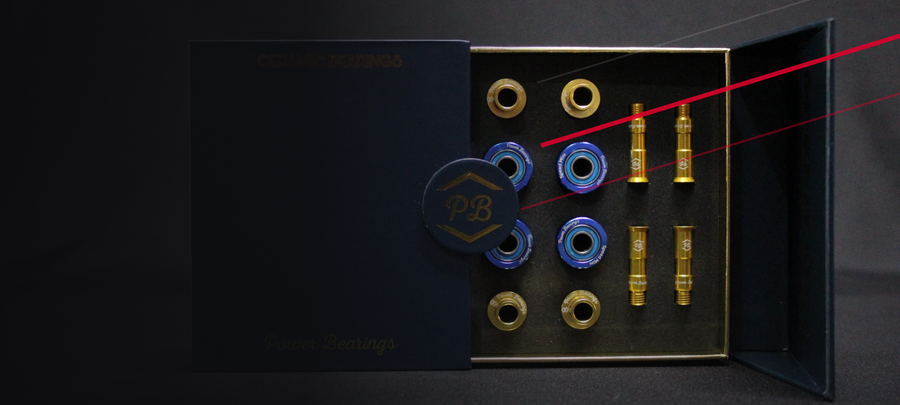
Power Bearings Red is the entry point in the Power Bearings range and the best value for money set we stock. It is precision steel in the standard 608 size, 8mm bore by 22mm outer by 7mm wide, sealed, and it fits most inline speed wheels. A standard pair of four wheel skates needs sixteen bearings, so count before you order. Teach the junior to wipe the wheels down after every outdoor session, and the same set will last far longer than a premium set that never gets cleaned.
Wheel hardness and Indian surfaces
Hardness matters more for a light skater than most people expect. A softer compound deforms more easily under a smaller body, which gives grip and a more forgiving ride on rough concrete. A harder compound rolls faster but needs weight and speed to work.
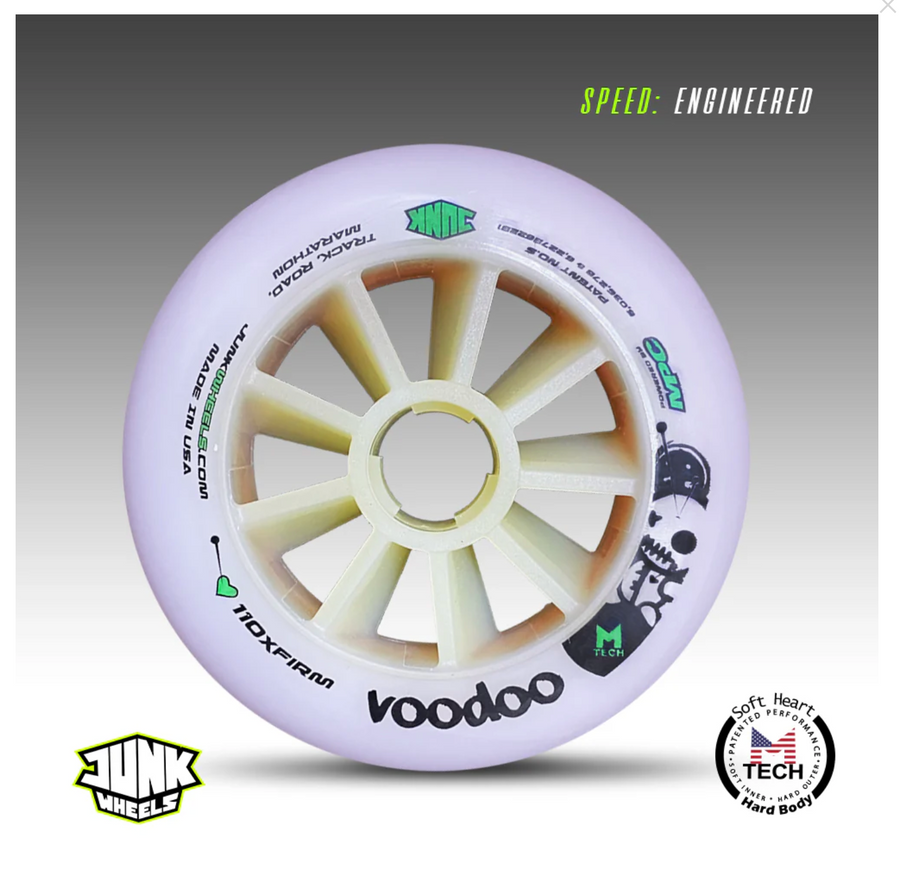
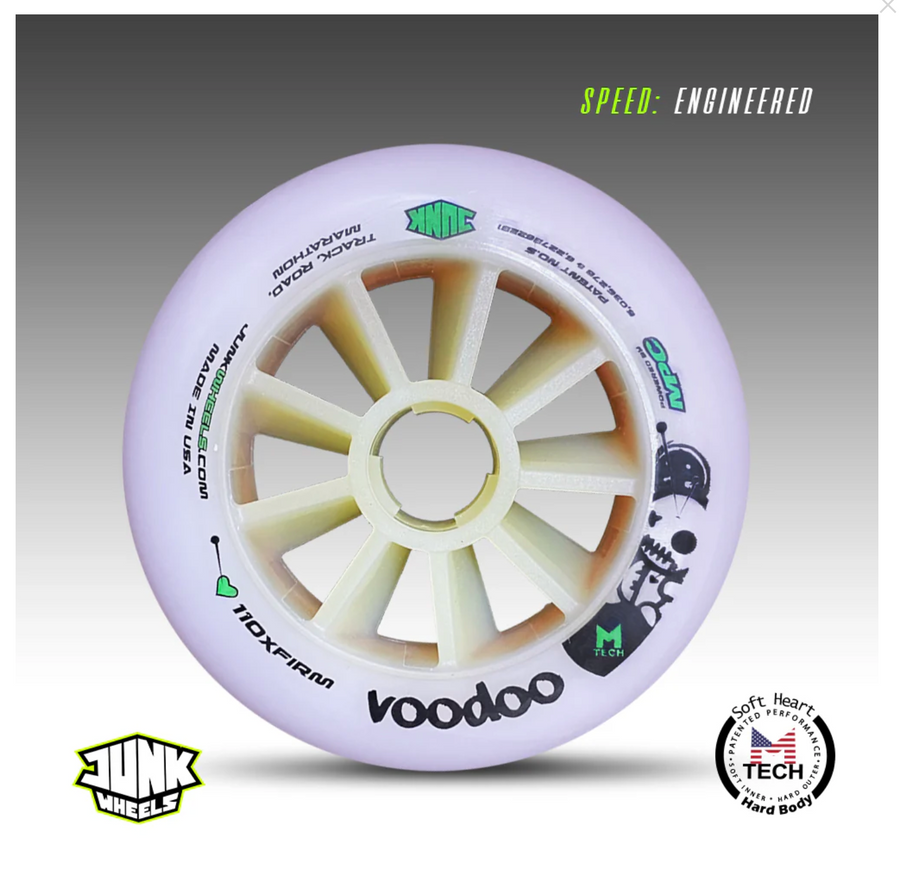
JUNK Voodoo XFirm sits in the middle of the Voodoo range at 84 to 86A and is sold as a set of eight, a full set for a pair of four wheel frames. It is built for hard, smooth, dry surfaces and balances grip with roll, which makes it a sensible first race wheel for a junior on a decent rink. The harder XXFirm option rolls faster but asks more of the skater, and it is worth waiting until the technique is there. Note that wheels are sold without bearings, so budget for sixteen bearings and spacers alongside a new set.
Buying for growth without wasting money
The trick is to spend on the parts that survive a growth spurt and economise on the parts that do not.
- Frames and wheels do not care how tall the skater is, so a good frame can serve for several seasons and can move onto new boots if it is dual drilled.
- Helmets are sized to the head, which grows slowly compared with feet, so a well fitted certified helmet usually lasts longer than you expect.
- Boots are the item that goes out of size fastest, so this is where a sensible mid level purchase beats a top of the range one.
- Never buy skates a size or two large in the hope of growth. A foot swimming inside a boot cannot transmit a push, causes blisters and teaches bad habits that take a year to unlearn.
- Keep the old wheels when you move up a size. Rotated onto a training setup, they are perfectly good for drills and off season skating.
A sensible order of purchase
If the budget has to be spread over a season, this order gives a junior the most benefit for each rupee spent. Start with a certified helmet that fits. Then a light frame in a size the skater can control, because that changes every stride of every session. Then wheels matched to the surface they actually train on. Then bearings, cleaned regularly rather than replaced often. Skinsuits, bags and cosmetic upgrades come last, however much the skater lobbies for them.
You can compare the full frame range, including the longer and taller options a junior may grow into, in the LiveLica AI frames collection.
Frequently asked questions
What wheel size should a young beginner start on?
Smaller and lower is almost always the better starting point, with 90mm being a proven junior racing size. It keeps the skater close to the ground, accelerates quickly and lets them learn a proper low position before they take on the extra height of larger wheels.
Are three wheel frames suitable for juniors?
They can be excellent, because they are short and very light. The Aerolite 90x3 weighs 114 grams on a 241mm platform. Four wheel frames still tend to feel more stable for a skater who is building confidence, so match the choice to the individual rather than to a rule.
Do juniors need expensive ceramic bearings?
No. A good steel bearing that is kept clean will out perform a neglected premium one every time. Start with a solid value set, build a cleaning habit, and upgrade when the skater is generating real speed and asking for it.
How do I know when it is time to move up a wheel size?
Look for a skater who holds a stable low position, corners confidently and is clearly running out of speed on the straights rather than out of control. That combination, not a birthday, is the signal.
Can one frame carry over when we buy new boots?
Often yes, if the frame is drilled for more than one mounting standard. Both Aerolite frames mentioned here are dual drilled, which is exactly why they suit a growing skater who will change boots before they change frames.
Kitting out a junior well is mostly about resisting the temptation to buy the setup they will want in three years. Fit the helmet properly, keep them low, keep the skate light, teach them to clean their own bearings, and let the speed arrive on its own. It always does.