Look down at a pair of inline speed skates and you will notice something that quietly worries every new skater: there is no brake. No rubber heel stop, no lever, nothing. Just five hundred grams of aluminium and urethane designed entirely around going forwards. Meanwhile you are on 110mm or 125mm wheels that roll further and faster than anything you have skated before, and the first time you find yourself carrying real speed towards a junction or a crowded stretch of path, the question becomes very urgent indeed.
This guide covers how inline speed skaters actually stop. Not the theory, but the four techniques that work in practice, when to reach for each one, why they behave differently on big wheels, and what they cost you in wheel wear. Stopping is a skill you should build deliberately and early, in the same way you build your stride, because confidence in a stop is what lets you skate faster everywhere else.
Why Speed Skates Have No Brake
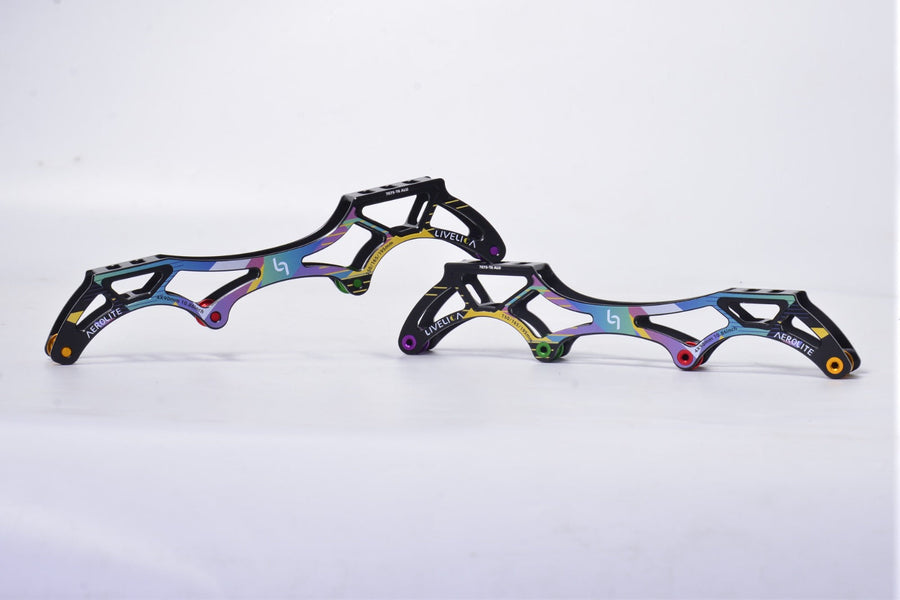
A heel brake needs a mounting point at the back of the frame, and on a speed frame that space is occupied by a wheel. Fitting a brake would also mean adding weight and, more importantly, ride height at the rear, which fights everything a speed frame is built for. A LiveLica Aerolite frame weighs between 114 and 159 grams depending on the model, and that lightness comes from removing every gram that is not carrying load. A brake block is the opposite of that idea.
There is also a technique argument. A heel brake encourages you to sit back on your heels, which is the last thing you want when your whole stride is built around staying low with your weight over the front of the skate. Speed skaters instead learn to shed speed by turning it sideways, scrubbing it off through the wheels, or simply managing it before it becomes a problem. That last one is the real answer, and we will come back to it.
The Four Ways to Stop
Each technique trades stopping power against control and wheel wear, so most skaters learn all four.
The T Stop
The T stop is the first proper stop most skaters learn. You glide on one skate, lift the other, turn it perpendicular to your direction of travel and set it down behind you, dragging the wheels sideways across the surface. The friction slows you, and the shape your feet make gives the technique its name.
On speed skates the T stop needs more care than it does on recreational skates, for two reasons. First, a long speed frame puts the trailing skate a long way behind you, so you need real balance on the supporting leg. Second, larger wheels present a bigger contact patch and grab harder, which can twist your ankle if you set the skate down aggressively. Lay it on progressively. Start with barely any pressure, feel the drag begin, then load it gradually.
The T stop is reliable, controllable and works at moderate speed. Its main downside is wheel wear. You are deliberately grinding urethane sideways across tarmac, and if you always drag the same skate you will flat spot one side of that wheel set. Alternate which foot you use, and factor this into your rotation routine.
The Slalom Scrub
This is the technique most experienced speed skaters use most often, and it is the one that fits the sport best. Instead of applying a brake, you steer a series of tight, linked curves across your direction of travel. Every curve turns some of your forward momentum sideways, and the wheels scrub off speed as they resist the sideways load. Repeat it four or five times and you shed a surprising amount of pace.
It works because it uses exactly the same edge control you already train for cornering. You stay low, you stay balanced over the front of the skate, and nothing about your body position changes. It is smooth, it is quiet, it barely marks your wheels, and it can be done at high speed where a T stop would be uncomfortable. The catch is that it needs lateral space and it does not stop you instantly, so it is a technique for managed slowing rather than emergency stopping.
The Power Slide
The power slide is the emergency option. You drop low, rotate your body, and swing one skate around until it is fully sideways to your direction of travel, then let it slide while your weight stays over the other leg. It is the fastest way to kill speed on wheels and it is genuinely useful when something appears in front of you.
It is also the hardest to learn, the easiest to get wrong, and by far the most expensive in wheel terms. A single hard slide can put a visible flat spot on a wheel, and on a high grade race compound that is a costly mistake. Most skaters practise the power slide on old training wheels rather than race wheels for exactly this reason. Learn it, keep it in reserve, but do not use it as your everyday stop.
The Run Off
The least glamorous technique is the one that experienced skaters use constantly. Instead of stopping, you steer into open space and let the speed decay on its own. Aim for a rising gradient if there is one, widen your line, stand slightly taller to catch more air, and let physics do the work. It costs nothing, wears nothing, and is almost always available if you have looked far enough ahead.
Why Wheel Size Changes Everything
The bigger your wheels, the more the stopping problem changes. A 125mm wheel carries far more rotational momentum than a 90mm wheel, it rolls for longer once you stop pushing, and its taller profile puts your foot higher off the ground, which reduces the leverage you have when you try to drag a skate sideways.
Larger wheels roll further and sit taller, so plan your slowing earlier as you move up in wheel size.
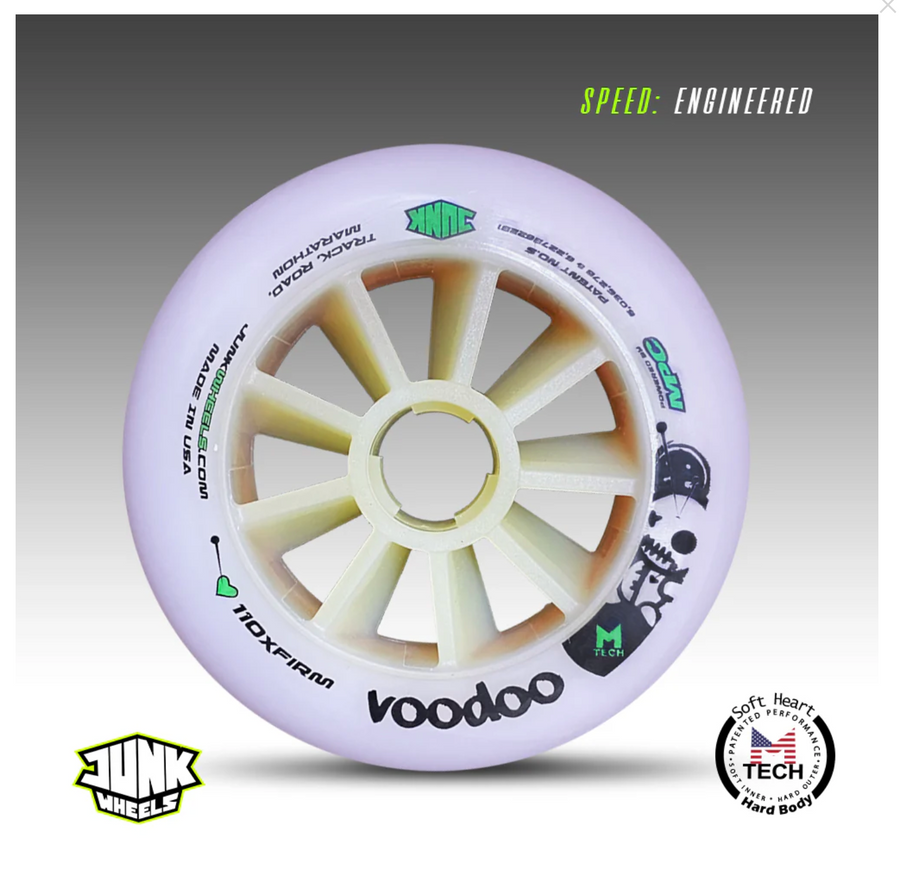
Wheel hardness matters too. A harder compound such as an XXFirm wheel slides more readily and grips less, which makes a power slide easier to initiate but a slalom scrub less effective. A softer XFirm wheel grips harder, so it scrubs speed well but resists sliding and wears faster when you do slide it. If you are still learning to stop, the softer end of the range is more forgiving, and you can read more about the difference in our guide comparing XFirm and XXFirm hardness.
If you skate a short, low setup such as the Aerolite 4x90, every technique here is easier, which is one reason it is a sensible frame to learn on. Frames in the LiveLica AI Frames range go up to a 13.2 inch platform on the 4x110, and a long frame will always feel less willing to pivot.
How to Actually Learn These
Do not practise stopping at speed. Every technique here is a balance skill first and a friction skill second, so start slower than feels useful. Roll gently on a flat, empty surface and simply place the trailing skate down sideways with almost no weight on it, just to feel where the drag comes from. Do that twenty times before you try to actually stop with it.
Build the slalom scrub out of ordinary edge work. Skate a slow line and carve wide, linked curves, then progressively tighten them until you can feel the wheels resisting sideways. That resistance is the stop. Once you can produce it deliberately at low speed, it scales up naturally.
Wear protection while you learn. A certified helmet such as the LiveLica ventilated skate helmet and a pair of LiveLica skate gloves are the two items you will be glad of when a slide practice session goes wrong, and gloves in particular save a lot of skin because your hands go down first almost every time.
The Stop You Should Use Most
Good route reading keeps you in the top branch, where stopping costs you nothing but a little momentum.
Here is the thing nobody tells beginners: the best speed skaters barely stop. They read the path a long way ahead, they carry the right speed into every situation, and they slow using space and steering rather than friction. Emergency stops exist because the world is unpredictable, not because they are part of normal skating.
So practise all four, but treat the run off and the slalom scrub as your everyday tools. Keep the T stop sharp for car parks and junctions. Keep the power slide as your genuine emergency card, practise it occasionally on wheels you do not mind marking, and hope you never need it. Look further up the road than you think you need to, and most of your stopping problems disappear before they start.
Frequently Asked Questions
Can I fit a heel brake to an inline speed frame?
Practically, no. Speed frames have a wheel where a brake mount would go, and adding one would raise your rear ride height and add weight. Learning the techniques above is the right answer rather than trying to bolt on hardware.
Which stop should a beginner learn first?
The T stop, at very low speed, on a flat empty surface. It teaches you to balance on one skate and to feel friction through the trailing wheels, and both of those skills feed directly into everything else.
Will stopping ruin my wheels?
T stops and power slides both remove urethane, and a hard slide can flat spot a wheel in one go. Slalom scrubbing and running off cost almost nothing. Rotate your wheels regularly and alternate which foot you drag so the wear spreads evenly.
Is it harder to stop on 125mm wheels?
Yes. Bigger wheels carry more momentum, roll further and raise your foot, which reduces the leverage you have for dragging a skate sideways. Plan your slowing earlier on a big wheel setup and lean more on steering than on friction.
Should I practise the power slide on my race wheels?
Better not to. Use an older or cheaper set while you learn, because a single failed attempt can leave a flat spot that you will feel on every rotation afterwards.
What surface is best for learning to stop?
Smooth, flat, clean and empty. Loose grit is the enemy of every technique here, because it turns a controlled scrub into an unplanned slide. An empty car park or a quiet stretch of good tarmac is ideal.
Confidence Is the Real Brake
Stopping on speed skates is not a gap in the equipment, it is a skill the sport asks you to build. Learn the four techniques, understand what each one costs you in wheels and in control, and practise them until choosing between them is automatic rather than panicked. Do that and you will skate faster, not slower, because the fear that holds most skaters back on a fast descent is simply not knowing how they would slow down. Browse the wheels collection if your current set is already showing the flat spots, and give yourself a session or two of deliberate practice before your next long ride.