Ask around any skating group and you will hear the same question in different words: does cross training for inline speed skating actually make you faster, or is time off your skates time wasted? It comes up most often when the track is shut, when the monsoon has turned your usual loop into a river, or when a coach tells a skater to ride a bicycle for an hour and the skater quietly wonders why. The honest answer is that cross training helps a great deal, but only in the specific ways it can help, and it never replaces the thing it supports. This guide explains what transfers from cycling, running and other off skate work, what does not, and how to fit it into a week so your skating improves rather than stands still.
Why inline skaters need cross training more than most athletes
A runner can run almost anywhere. A skater cannot skate almost anywhere. Smooth tarmac, safe traffic, daylight, a dry surface and a venue that allows wheels are five conditions that all have to line up at once, and in most Indian cities they line up less often than we would like. Add the realities of a long wet season, afternoon heat that makes a midday session unwise, exam weeks, travel and the simple cost of wheel wear, and the average skater loses a surprising number of training days to circumstances rather than to fatigue.
Cross training exists to stop those lost days becoming lost fitness. It also does two other jobs that matter. It lets you build aerobic volume without grinding your wheels and your joints through the same repetitive pattern every day, and it gives you a way to keep training when a niggle makes skating unwise but movement is still fine. Used well, it is the reason a skater turns up in October with a base rather than starting again.
The idea that decides everything: specificity
Training adapts you to what you actually do. The closer an activity sits to skating in its movement pattern, its muscle demands and its energy system, the more of its fitness shows up on wheels. This is why nothing beats skating, why some substitutes are good and some are poor, and why the ranking below is not a matter of opinion.
It helps to split transfer into two separate things, because they behave differently. The first is your engine: heart, lungs, blood and the aerobic machinery inside the muscle. The second is your pattern: the specific way skating asks your hips, knees, ankles and trunk to produce force sideways while balancing on one skate. Your engine transfers quite freely between activities. Your pattern barely transfers at all.
Nothing sits in the top right corner except skating itself. Everything else buys you engine, pattern or a little of both.
Cycling: the closest big engine substitute
If you can only pick one cross training activity for inline speed skating, cycling is usually it, and there are good reasons for that. A cyclist works the same large muscles that drive a skating push, the quadriceps, the glutes and the hip extensors, through a fairly deep range of knee and hip flexion. The riding position folds you forward at the hip, much as a low skating position does, so your lower back and hip flexors get used to holding a closed angle for a long time. Both sports also put almost no impact through the body, so you can accumulate real aerobic hours without the pounding that running brings.
Cycling is also easy to measure and easy to control. You can hold a steady effort for ninety minutes without worrying about traffic lights, road surface or wheel wear, and you can do precise intervals on a hill or a trainer. For a skater who needs a bigger aerobic base, that controllability is worth a lot.
What cycling cannot give you
The push is the problem. Skating produces force sideways, through the outside and inside edges, while you balance on a single leg and move your centre of mass across the skate. A bicycle fixes your pelvis on a saddle, locks your feet in one plane and asks for force almost straight down. So cycling leaves three important things untrained: single leg balance, lateral hip strength, and the specific timing of a push and a recovery. It also does nothing for the ankle stability that a long session in a stiff boot demands.
The practical consequence is familiar to any skater who has ridden all winter. You come back with good lungs and legs that feel strong on the straights, then wobble through corners and tire in the hips far sooner than your fitness suggests. That is not a sign the cycling was wasted. It is a sign that the pattern work still has to be done on skates.
Running: useful, but handle with care
Running is the most convenient cross training there is. You need shoes and twenty minutes, and you can do it from your door in almost any city. It builds a strong aerobic base, it loads bone in a way that is genuinely good for long term skeletal health, and it is a reliable way to keep your engine ticking when nothing else is possible.
The cautions are real though. Running is a vertical, impact heavy, forward driving action with a short range of hip and knee movement compared with skating. It loads the calves and the achilles tendon hard, and skaters who come from a low volume running background often pick up sore shins and tight calves within a fortnight of starting. Worse, heavy legs from running can quietly ruin the quality of your skating sessions, which is the opposite of what cross training is for.
So use running as a supplement rather than a staple. Keep most of it easy and conversational, build the volume slowly over weeks rather than days, and schedule the harder runs away from your most important skating sessions. If your skating feels flat and your calves are permanently tight, the running is too much, not too little.
The dryland work that actually copies skating
Here is the part most skaters underuse. Cycling and running buy you engine. The activities that buy you pattern are the ones that copy the skating movement without wheels, and they cost nothing but floor space.
- Slide board work. The closest thing to skating off wheels, because it forces a sideways push, a glide and a controlled recovery on one leg at a time.
- Low walks in basic position. Hold your skating posture, then step sideways slowly, keeping the hips low and quiet. Brutal and extremely specific.
- Lateral bounds. Jump sideways from one leg to the other and land softly in a bent knee, which trains exactly the direction skating pushes.
- Single leg squats and single leg balance holds. These build the hip and ankle stability that cycling cannot reach.
- Imitation crossovers. Step the outside foot over the inside foot in a corner shape, slowly, with the trunk held low.
Twenty minutes of this twice a week does more for your corners than an extra hour on a bicycle. It is also the honest answer to the skater who says they cannot train because the roads are wet. You can do every item on that list in a corridor.
The further you are from a race, the more of your week can be off skates. As the season arrives, skating takes the room back.
How much cross training is the right amount
There is no single ratio that fits every skater, but there is a simple principle. The nearer your next race, the more of your training should be on skates, and the clearer your skating sessions should be of leftover fatigue from other sports. Work outwards from that.
In the deep off season, when there is no race in sight, you might skate twice a week and spend three other sessions on a bicycle, in the gym and on a slide board. That is a sensible way to build an engine and repair the imbalances a season leaves behind. In the build phase, flip it, so that most sessions are on skates and cross training fills two slots, typically one long easy aerobic session and one strength session. In race season, cross training shrinks to a maintenance role: one easy spin for recovery, one short strength session to hold what you built, and everything else on wheels.
Two practical rules keep this honest. First, never let a cross training session compromise the quality of the next skating session, because skating quality is what you are buying. Second, if you have only three sessions a week in total, make all three skating sessions. Cross training is what you add when you have room, not what you substitute when you have little.
Fitting it into an Indian season
The calendar here has its own shape, and planning around it beats fighting it. The monsoon weeks are the natural home for a cycling block, gym work and slide board sessions, because wet tarmac is both slow and genuinely dangerous on narrow speed wheels. Peak summer afternoons are better spent indoors or on an early morning ride than on a road that is hot enough to soften urethane. Exam season, which takes a bite out of every junior skater's year, is best handled by shrinking sessions rather than stopping, and a thirty minute run or a twenty minute dryland circuit protects more fitness than people expect.
When the roads dry out and the racing calendar returns, the switch back has to be deliberate. Give yourself two or three weeks of steady skating volume before you ask for hard efforts, because an engine built on a bicycle will happily write cheques that your skating specific muscles cannot yet cash.
Protect the sessions you are cross training for
There is a quiet irony in this subject. Skaters who cross train carefully often neglect the setup that makes their skating sessions worth doing. If your bearings are gritty, your wheels are coned and your frame bolts have worked loose, every skating session you have protected with a winter of cycling is still a poor session.
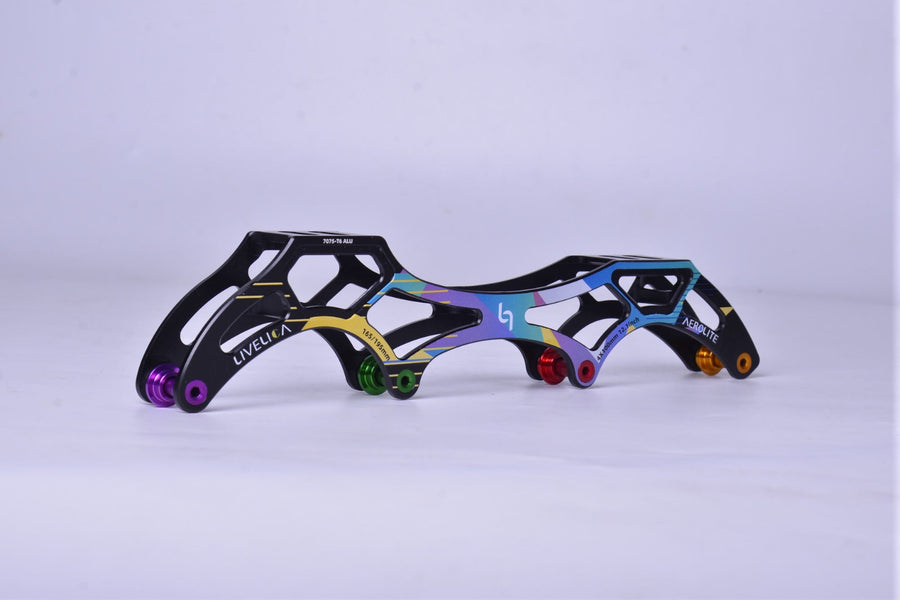
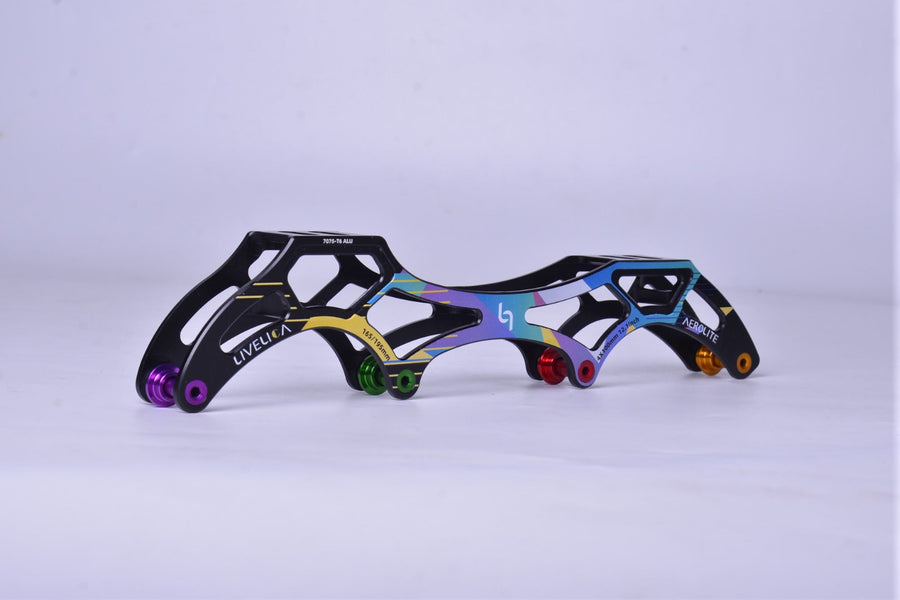
So treat your setup as part of the training plan. Clean, well lubricated bearings mean your easy aerobic skating is actually easy rather than a fight against drag, and the Power Bearings range with a few drops of Speedslick Pro bearing oil is the cheapest speed in the sport. A set of road wheels you trust, such as the JUNK Road Reaper 110 XFirm, keeps long aerobic sessions comfortable on rough tarmac rather than punishing. A stiff frame like the LiveLica Aerolite 4x110 keeps your push going into the road instead of into flex. And if you are doing road volume at dawn, a ventilated certified helmet is simply part of the kit, not an optional extra.
Common cross training mistakes
- Treating cycling as a replacement for skating rather than a supplement to it, then wondering why the corners feel unfamiliar.
- Making all the cross training hard. Most of it should be easy, because its job is volume and recovery, not more suffering.
- Starting a running habit at too high a volume and spending the next month with tight calves and flat skating legs.
- Skipping the pattern work, which is cheap, quick and the only off skate thing that improves your technique.
- Putting the hardest cross training session the day before the most important skating session.
- Letting a strong engine tempt you into hard skating efforts before your skating specific muscles have caught up.
Frequently asked questions
Does cycling make you a faster inline speed skater?
It makes you fitter, which usually makes you faster, provided your skating technique is already sound. Cycling builds the aerobic engine and the quadriceps and glutes that drive a push, with no impact cost. What it cannot do is teach the sideways push, the single leg balance or the corner timing, so pair it with skating and dryland pattern work.
Is running bad for skaters?
No, but it is easy to overdo. Keep most of it easy, build the volume gradually, and keep the hard running away from your key skating sessions. If your calves are permanently tight or your skating feels heavy, cut the running back.
How many days a week should I cross train?
If you skate four or more times a week, one or two cross training sessions is plenty. If you skate twice a week, two or three sessions off skates make sense. If you only have three sessions a week in total, use all three for skating.
What is the best cross training when the roads are wet?
Indoor cycling, gym strength work and dryland pattern work. A slide board, low walks in basic position and lateral bounds are the most skating specific things you can do without wheels, and they need almost no space.
Will swimming help my skating?
Swimming is excellent for general aerobic health and for recovery, and it is kind to a body that is carrying a niggle. Its movement pattern is a long way from skating, so treat it as engine and recovery work rather than as a way to get faster on wheels.
Can cross training keep my fitness during exam season?
Yes, and this is one of its best uses. Short sessions protect a great deal of fitness. A thirty minute easy run or a twenty minute dryland circuit three times a week will hold most of your base through a busy month, and you will come back to skating sharper than a skater who stopped completely.
Should juniors cross train or just skate more?
Young skaters benefit enormously from varied movement, so a mix of sports, games and skating is usually better than piling on skating volume. The pattern work still matters, but make it playful rather than a gym programme.
The short version
Cross training for inline speed skating is not a compromise. It is how you keep an engine running through a wet season, a hot month and a busy exam term, and how you build the strength and balance that skating alone tends to leave uneven. Use cycling for aerobic volume with no impact, running sparingly for convenience and bone health, and dryland work for the pattern that only copying the skating movement can give you. Then keep most of your week on wheels when the racing is close, and keep your skates in a state that makes those sessions count.