Most training advice assumes you have six mornings a week and nothing else going on. Real life is not like that, and if you are trying to work out how to train for inline speed skating on three days a week, you are in the majority rather than the exception. School and college skaters lose weeks to exams. Working skaters lose them to shifts and travel. Parents lose them to everybody else's timetable. The good news is that three well chosen sessions a week will hold almost all of your speed, and for a lot of skaters they will actually build it, because three sessions you turn up to properly beat six you drag yourself through.
What follows is how to choose those three sessions, how to shape the week around them, how hard to go when there is no coach standing at the rail, and how to keep your skates in a state where a short session is never wasted on a slow, gritty setup. It is written for skaters in India where exam season, monsoon and travel all eat into the calendar, but the logic works anywhere.
What three days a week can and cannot do
Be clear about the trade first. Three sessions a week is plenty to maintain and improve technique, to hold your top end speed, and to keep a solid aerobic base ticking over. It is enough to get faster over a season if the sessions are specific and you are consistent for months rather than weeks. What it will not do is build the kind of deep endurance that a marathon skater gets from long back to back weekends. If your target is a long road race, three days will get you to the finish line trained and honest, but the skater doing five days will beat you if everything else is equal.
So decide what you are training for, then accept the trade calmly instead of trying to squeeze six days of work into three and wrecking yourself. Overstuffed short weeks are the single most common mistake of the busy skater. Every session becomes medium hard, nothing is ever truly fast and nothing is ever truly easy, and the whole block flattens into grey mush.
The three sessions that earn their place
When you only get three, each one has to do a job the other two cannot. The simplest split that works for almost every speed skater is one speed session, one race pace session and one long easy session.
Session one: short and genuinely fast
This is where you protect your top speed and your ability to accelerate. Short efforts, long recoveries, full quality. Think in terms of a handful of very short sprints from a rolling start or a standing start, with enough rest between them that the last one is as quick as the first. The moment your times drop off, the session is finished, whatever the plan said. Chasing more reps on tired legs trains you to skate slowly with good intentions.
Session two: race pace
This is the session that makes racing feel familiar. Repeats at the effort you want to hold on race day, with modest recovery, so your body learns the specific rhythm and breathing of that pace. Keep the total work realistic. Three or four solid repeats done at true race pace teach you far more than eight repeats at slightly less than race pace.
Session three: long and properly easy
The long session is where the base lives, and it is also where technique gets grooved, because you have time and no pressure. The rule is that it must be genuinely easy. If you finish it feeling like you raced, you have stolen from the two hard sessions and the week collapses. Keep it conversational, keep your position low and relaxed, and use the distance to feel your push direction rather than to prove anything.
Same three days, two very different weeks. The bar height here is how hard the session is, not how long it lasts.
Spread the three days out if you can. Two rest days between the hard sessions is ideal, so a pattern such as fast on Tuesday, race pace on Thursday and long easy on Sunday works well. If your only free days sit next to each other, put the fast session first while you are fresh and the long easy session last.
How to train around exam season without losing your speed
Exam season is the classic three days a week problem, and it is usually worse than three days, because the two weeks before the papers start often collapse to one session or none. Treat it as a planned dip rather than an accident and it costs you almost nothing.
Split the period into a maintenance block and a rebuild block. Through the exams themselves, aim for two short sessions a week of about forty minutes each, and make them fast and technical rather than long. Short and sharp holds your speed, keeps your nervous system used to moving quickly and takes almost no time out of your day. Long slow sessions are the first thing to cut here, because they cost the most time and are the easiest quality to get back afterwards.
Then give yourself two or three weeks after the last paper to rebuild the duration before you race. Add the long easy session back first, then bring the race pace work up to full length. Skaters who try to race in the same week they finish exams usually find their legs are fine for one lap and empty after three, which is a duration problem, not a talent problem.
A planned dip costs very little. An unplanned one usually turns into a month off and a painful comeback.
Where the time goes in a sixty minute session
When sessions are scarce, the temptation is to skate hard from the first metre and squeeze every minute. That backfires. A cold skater pushes badly, and bad pushing is what you practise. Budget the hour instead.
Ten minutes of easy rolling to warm up, ten minutes of technique at low speed while you are fresh and attentive, roughly twenty five minutes for the main set, and the remainder easy rolling to finish. That leaves the main set smaller than most skaters expect, and it is still the right split, because the quality of those twenty five minutes is what actually changes you.
The main set is smaller than it feels like it should be. That is the point of a short week.
How hard is hard enough when nobody is watching
Without a coach you need your own way of judging effort, and you do not need any gadget for it. Three checks cover almost everything. Use your breathing: on the long easy session you should be able to talk in full sentences, on race pace repeats you should manage a few words, and on sprints you should not be talking at all. Use your times: if you have a fixed stretch of road or a marked lap, note your split for the first repeat and treat it as the standard for the rest of the set. Use your technique: the moment your position rises, your feet start slapping down or your push wanders behind you, the useful part of the session is over.
Write two lines in a notebook or your phone after every session, saying what you did and how it felt. On three sessions a week, that record becomes genuinely valuable within a month, because patterns show up quickly when there is not much noise in the data.
Set your skates up so a short session is never wasted
When you only get three sessions, losing one to a dragging wheel or a seized bearing hurts far more than it does in a six day week. Five minutes of care the night before protects the whole session.
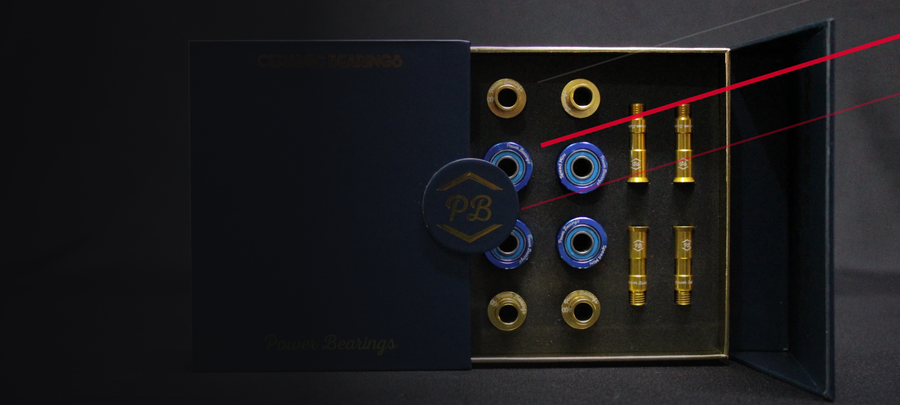
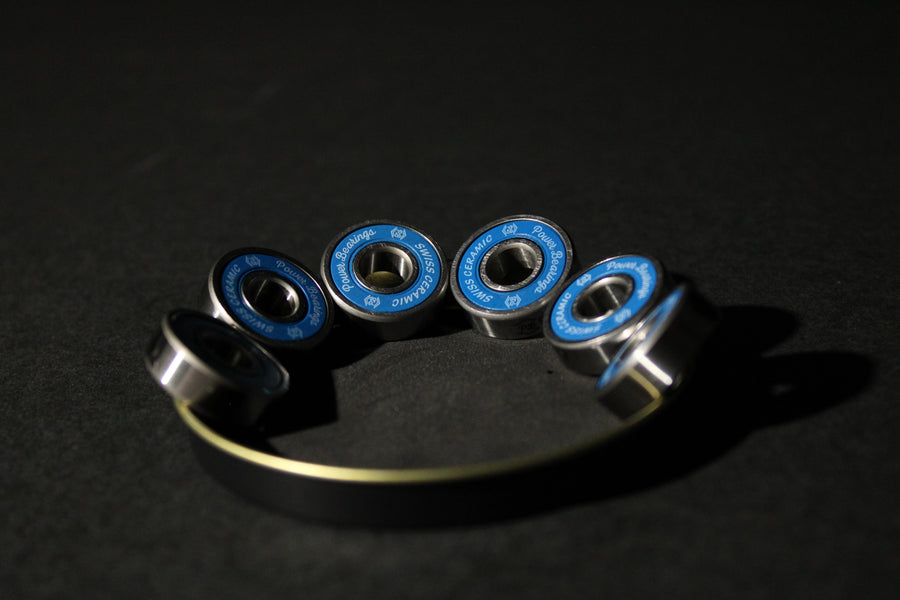
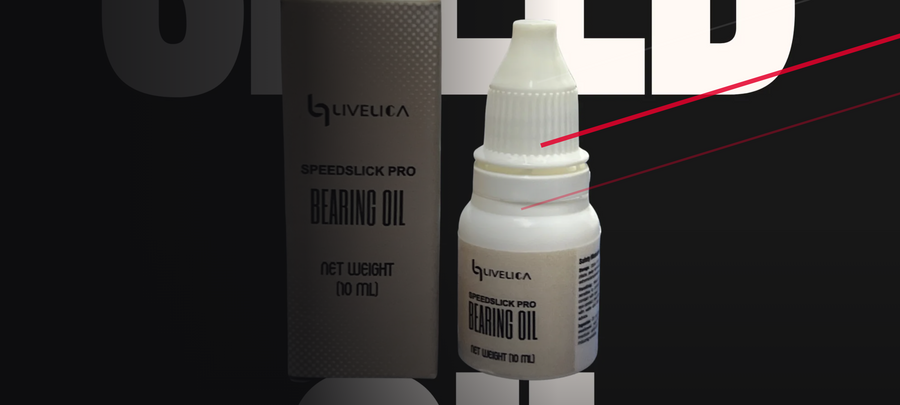
Spin every wheel by hand before you leave. Each one should turn freely, quietly and for several seconds. A wheel that stops early is telling you that the axle is too tight, that a spacer is wrong or that the bearing is full of grit. Keep your bearings clean and lightly oiled with a proper skate oil such as Speedslick Pro Bearing Oil, one drop per bearing, and wipe the excess so it does not collect dust. If a set has gone rough beyond rescue, replacing it from the speed bearings collection restores more real speed than any training tweak you could make in the same week.
Keep the setup consistent, too. One reliable platform such as the LiveLica Aerolite 4x100 with four 100 mm wheels covers all three of your sessions, which matters because a skater with limited hours cannot afford to spend two of them adapting to a new feel underfoot. Rotate your wheels on schedule so the profile stays even, and if you train on a rough surface, pick your hardness for that road rather than for the race you did last year. The options are laid out in the JUNK wheels collection. Wear your certified helmet even for a twenty minute session, because the short sessions are exactly the ones skaters talk themselves out of protecting.
The weeks you cannot skate at all
Some weeks give you nothing. Accept them and protect two things: your gear and your position. Store the skates dry, indoors and off their wheels if you can, so you do not return to rust in the bearings or flat spots in the urethane. Then spend five minutes every second day in a low skating position at home, holding it and feeling where your weight sits. It is not training, but it keeps your hips and ankles familiar with the shape, and it means your first session back is skating rather than remembering.
Coming back to full volume
When your calendar opens up, resist the urge to double everything at once. Add one session, hold it for two weeks, then add duration to the long one. The skaters who get injured after a busy period are almost always the ones who went from three sessions to six in a single week because they felt behind. You are not behind. You held your speed while life happened, which is the whole point.
Frequently asked questions
Can you actually get faster on three days a week?
Yes, if the three sessions are different from each other and you keep at it for months. Speed responds well to specific work and adequate recovery, and a three day week gives you plenty of the second. What grows more slowly is deep endurance, so long distance racers feel the limit sooner than sprinters do.
Is it better to do three long sessions or five short ones?
If you genuinely have five slots, five shorter sessions usually win for technique, because skating well is a skill and skills like frequent practice. If you only have three slots, do not try to fake five by rushing. Make the three count and use short off skate work on the other days.
Should I skip the drills when time is short?
No. Drills are the cheapest speed you will ever buy, and ten minutes at the start of a session is enough to keep them alive. It is the middle of the main set that should shrink when time is tight, not the technique block.
Will I lose fitness in two weeks off for exams?
You will lose a little sharpness and very little of your base. Two weeks of two short fast sessions holds almost everything. It is the four to six week gap with no skating at all that leaves a real hole, and even then most of it comes back inside a month.
How do I fit skating around school or college exams?
Book the sessions like appointments in whatever timetable you already use for studying, put them at a time of day you are not going to renegotiate, and keep them short. Forty minutes of skating is easier to protect from the rest of your day than two hours, and it is quite enough to hold your speed through an exam block.
Do I need a heart rate monitor to do this properly?
No. Breathing, split times on a familiar stretch and the quality of your technique tell you everything you need on three sessions a week. A monitor is a nice extra once you are training most days and want to control your easy sessions more precisely.
The honest summary
Three days a week is not a compromise you should apologise for. It is a workable, sustainable way to train for inline speed skating, provided you give each session a distinct job, keep the easy one truly easy, protect the technique block, and keep your skates rolling freely so no session is wasted on friction. Do that through a busy term and you will arrive at your next race sharper than the skater who trained six days a week in March and stopped in April.