Most club skaters have a good training week. Very few have a season. The week gets repeated from January to December, the racing happens whenever it happens, and if the legs turn up on the day it feels like luck. Learning how to plan an inline speed skating season is what turns that luck into something you can arrange on purpose, and it costs nothing except a sheet of paper and a bit of honesty about which races actually matter to you.
This guide is the calendar rather than the session. We already have a detailed inline speed skating training plan with drills, intervals and a weekly schedule, and that covers what to do inside a session. What follows is how the months fit together, which weeks should be easy, when to stop building and start racing, and when to put the good wheels on.
Why a season plan beats a good training week
Your body only improves when hard work is followed by enough recovery to absorb it. Over one week that idea is obvious. Over ten months it is the whole game, because a skater who trains hard every week for ten months does not get ten months of improvement. They get about six weeks of improvement and then a long plateau that feels like effort without reward.
A season plan does three things. It puts your hardest and most specific work close to the races that matter. It builds in easier weeks before you need them rather than after you break. And it gives every block a job, so you always know why today's session looks the way it does. That last point is the one skaters underrate. Training with a reason is easier to stick to than training out of habit.
Start with the calendar, not with the training
Open a calendar for the next twelve months before you write a single session.
Write down every race you care about
State meets, nationals, club time trials, a marathon, the annual event your friends all do. Put them all in. You are not committing to peak for each one, you are mapping the year so nothing surprises you in week nine.
Choose one A race, and be honest about it
One race gets to be the target. Two at a stretch, if they sit sensibly apart. Everything else is either preparation for that race or simply a day out, and labelling them now stops you racing every weekend at full effort and arriving at the important one already flat.
Being honest matters here. If your real goal this year is to finish a marathon rather than to win a 500m, the whole plan should look different, and our twelve week marathon plan is the better starting point for that goal.
Count backwards in weeks
From your A race, count backwards. The last three to ten days are the taper. The four to six weeks before that are the race and sharpening phase. Six to eight weeks before that is the build. Everything earlier is base, and the weeks immediately after last season ended were the transition. Written this way, a season stops being a vague year and becomes about thirty boxes, each with a label.
The four phases of a skating season
Every serious endurance sport arranges a year the same way, and skating is no exception. The names change, the logic does not.
Transition, two to four weeks
This is the deliberately unstructured block that follows the end of a racing season. Skate because you feel like it, play other sports, let small niggles settle, and do not record anything. The purpose is to arrive at the start of base training genuinely keen rather than quietly stale. Skaters who skip the transition tend to have a brilliant first two months and a miserable spring. If you are coming back from longer than a few weeks away, our guide on getting back into inline speed skating after a long break covers the ramp up.
Base, eight to twelve weeks
The longest and least glamorous phase, and the one that decides your ceiling. Volume is the highest it will be all year, intensity is the lowest. Long easy skates, steady aerobic work, technique at speeds low enough that your position does not fall apart, and general strength in the gym. This is also the phase for fixing things: a stride fault, weak single leg strength, poor ankle mobility. Nobody fixes technique in the week before nationals.
Base is where off skate strength work earns the most, because you can load the gym properly when nothing on the calendar needs fresh legs.
Build, six to eight weeks
Now the work starts to look like racing. Total volume comes down slightly and intensity climbs. Tempo work at race pace, longer intervals, corner sequences at genuine speed, and pack skating with a group if you can arrange it. The long easy skate stays in the week, because it is what lets you repeat the hard days, but it stops being the centre of the plan.
Race and peak, four to six weeks
Volume drops clearly. What remains is short, fast, specific and race like: starts, race pace repetitions with full recovery, and B races used as training. This phase feels strange because you are doing noticeably less work and feeling noticeably better, which is exactly what should happen. Then the taper: keep the intensity, cut the volume hard, and arrive at the A race slightly underworked rather than perfectly trained.
The two lines never rise together for long. When one goes up, the other should be coming down.
What each phase feels like in a week
The weekly skeleton barely changes across a season. What changes is the content of the hard days and how much easy work sits around them. A workable skeleton for a club skater with four training days looks like this: two key sessions, one long easy skate, one strength or mobility session, and at least one full rest day that is not negotiable.
In base, the two key sessions are steady aerobic work and technique at controlled speed, and the long skate is the biggest session of the week. In build, the key sessions become tempo and interval work while the long skate shortens a little. In the race phase, the key sessions become short and very fast, the long skate becomes a moderate roll, and total time on skates drops by roughly a third.
Read down a column for one phase, or across a row to watch a single variable change over the season.
Peaking twice, and why three times rarely works
A peak is not a permanent state. It is roughly two to three weeks of feeling genuinely sharp, bought with the eight weeks before it. Two peaks in a season is realistic for most club skaters, provided they sit at least ten to twelve weeks apart, because you need a short base and build block between them.
The way to do it is to treat the gap as a miniature season. After the first A race, take one genuinely easy week, then run three to four weeks with the volume back up and the intensity down, then three to four weeks of build, then taper again. What does not work is trying to hold form from March to September. You cannot, and attempting it produces a skater who is permanently slightly tired and never actually fast.
Planning around the Indian calendar
A season plan written for a European racing calendar will not survive contact with monsoon, a hot April, and exam season. Plan around them deliberately instead of being ambushed.
- Heavy rain weeks are good base weeks. Move volume indoors or into the gym, accept that technique work will be limited, and do not schedule your hardest specific block for a month when your surface is unreliable.
- Peak heat is a poor time for long outdoor volume. Shift the long skate to early morning, and if the heat is severe, treat those weeks as lower volume and higher quality rather than fighting it.
- Exam season is an easy week, planned in advance. Two or three maintenance weeks around exams cost almost nothing physically. Three weeks of guilt and broken sleep cost a great deal.
- Wet and dusty months are hard on equipment, not just on skaters. Our guide on skating in Indian conditions covers what heat, dust and monsoon do to wheels and bearings.
The gear calendar that runs beside the plan
Equipment has its own season, and most skaters discover this the week before a race, which is the worst possible time. Fold it into the plan instead.
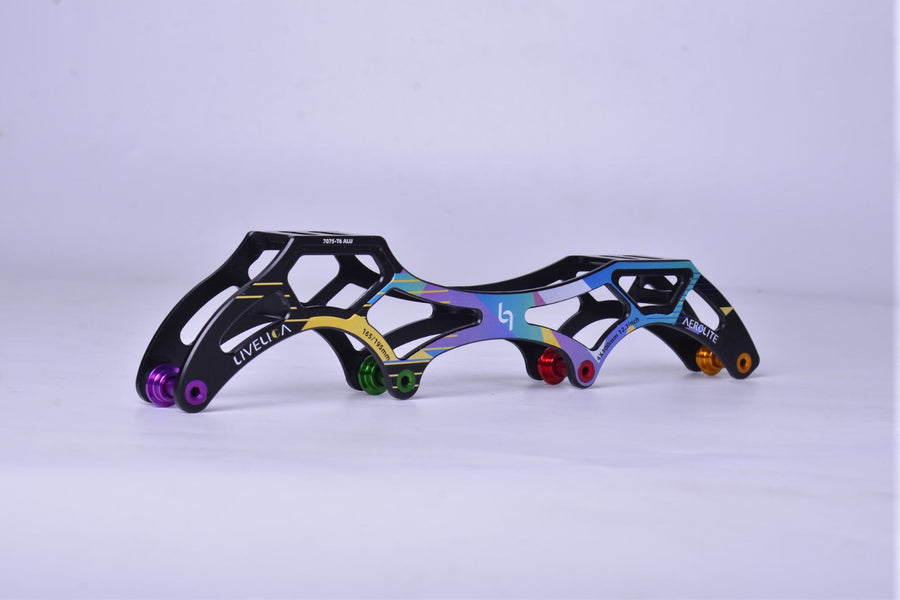
Anything that changes how you skate belongs in base. A new frame, a different wheel size, a boot change: these all alter your balance and your stride, and you want ten weeks of easy skating to absorb them, not ten days. If you are moving to a longer setup such as a 4x110 Aerolite frame, do it early and let the adaptation happen when nothing is at stake.
Train on training wheels, race on race wheels. Keeping two sets is the single most useful gear habit in the sport, and the reasoning is set out in our guide to training wheels and race wheels. Practically, buy the race set during build, not race week, and put them on for at least one hard session before the A race so nothing about them is a surprise. The JUNK wheel range is stocked in both XFirm and XXFirm, so you can run the harder compound for training mileage and keep the grippier set for the day itself, or the other way round depending on your surface.
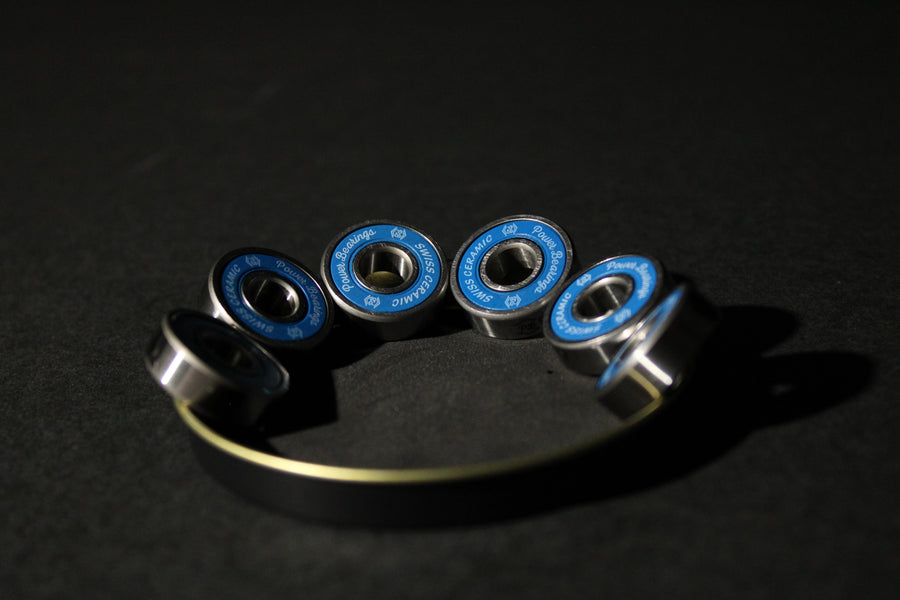
Bearings get serviced in base and replaced in build. Cleaning and oiling is a base phase job, done properly and unhurriedly, and our cleaning and oiling guide covers the method. If a set is genuinely worn, replace it during build so it has miles on it before the race. Browse the Power Bearings range for the options, and keep Speedslick Pro bearing oil in the kit bag all season, because a dry bearing costs more speed than most upgrades buy.
Race kit gets worn in training. Somewhere in build, wear your race suit for a full hard session. If it rides up, bunches or restricts your position, you want to find out then. The LiveLica skin suit range is where to start if you are still racing in a training top.
Anything that needs adaptation time goes early. The last week is for clean bearings and familiar kit.
How to tell the plan is working
You need a small number of repeatable checks rather than a spreadsheet you will abandon in March. Pick a test lap or a fixed loop and time it in the same conditions at the end of each phase. Note how a standard steady effort feels compared with three months ago. Watch whether your position still holds at the end of a long skate, which is the honest measure of position endurance, and film yourself occasionally as our guide on analysing your own skating on video describes.
Three signs the plan is working: the same effort produces a faster lap, hard sessions no longer need three days to recover from, and your technique survives fatigue. Three signs it is not: your sleep is getting worse, your enthusiasm is falling, and warm ups feel heavy week after week. Those last three usually mean too much intensity too early, which is the most common way a season plan fails.
When to change the plan
A plan is a hypothesis, not a contract. Miss one week and carry on as though nothing happened. Miss two or three, and repeat the phase you were in rather than jumping ahead to catch up, because the fitness you skipped does not appear by moving the label. If you are ill, the training does not exist until you are well, and if a race is cancelled or moved, redraw the countdown from the new date rather than keeping a taper that now points at nothing.
The one thing not to change is your rest. Recovery is where the training becomes fitness, and our guide on how many rest days a skater needs covers what that actually looks like across a week.
Frequently asked questions
How long before a race should I start a season plan?
Twenty weeks gives you a full base, build and race phase. Twelve weeks is enough for a shortened version. Under eight weeks you are sharpening whatever fitness already exists rather than building anything new, so make the plan honest about that.
Can I peak for two races in one season?
Yes, if they sit roughly ten to twelve weeks apart, which leaves room for an easy week, a short base block and a short build between them. Two peaks three weeks apart is really one peak with a race in the middle of it.
Do I need a heart rate monitor to do this?
No. A monitor makes it easier to keep easy days genuinely easy, which is the mistake most skaters make, but a simple five level effort scale and honest self assessment work perfectly well. Plan first, measure later.
What if I can only train three days a week?
The phases still apply, the volume just scales down. With three days, make one a long easy skate, one the key hard session, and one technique or strength. The shape of the season matters more than the size of it.
Should juniors follow the same structure?
The phases work, but keep the emphasis on skills, coordination and variety rather than on volume, and keep the racing calendar generous. Long term development beats a sharp peak at fourteen every single time.
What should I do in the transition phase if I hate not training?
Move, but do not measure. Play another sport, skate somewhere new for the fun of it, walk, swim. The point is mental rather than physical, and two weeks of it buys you eight months of appetite.
Does a season plan matter if I only skate for fitness?
Less, but it still helps. Even without racing, alternating harder blocks with easier ones gets you fitter than doing the same week forever, and it is far kinder to your knees and your motivation.
The short version
Write down your races, pick one that matters, and count backwards. Give yourself a short transition, a long unglamorous base, a build that starts to look like racing, and a short sharp race phase that ends in a taper. Let volume and intensity trade places instead of climbing together. Put frame and wheel size changes in base, buy your race set during build, service your bearings before you need them, and wear your race suit in training first. Then check in at the end of every phase and adjust honestly.
If you want a second opinion on where your own season should start, or on whether a piece of kit is worth changing before a target race, message us. We would rather help you time a purchase properly than sell you race wheels the week you cannot afford to be adapting to them.