If you are wondering how to get back into inline speed skating after a long break, the honest answer is that the hard part is rarely your lungs. It is your patience. Skaters who return after six months, two years or a decade almost always make the same mistake, which is to treat the first session back as a test of how much they have lost. They lace up, push hard for forty minutes, discover that their legs are gone and their corners feel alien, and then spend a week too sore to skate again. Three weeks later they have skated twice and quietly stopped.
There is a much better way to come back, and it has two halves. The first half is your skates, which have been sitting in a bag doing quiet damage to themselves. The second half is a return ramp that respects what a layoff actually does to a skater's body, which is not what most people assume. This guide covers both, with a four week plan you can follow whether you stopped because of exams, an injury, a move to a new city, or simply because life got busy.
Why the first month back decides everything
Coming back is a confidence problem dressed up as a fitness problem. On your first session your balance will feel vague, your push will feel short, and your corners will feel like someone rearranged the furniture. This is normal and it is temporary. What is not temporary is the story you tell yourself about it. A skater who comes back with a plan and hits every session feels competent by week three. A skater who comes back with no plan and goes too hard on day one feels broken by week two and stops.
So the first month is not about speed. It is about accumulating clean, unremarkable sessions until skating feels normal again. Speed follows, and it follows faster than you expect, because the motor patterns you spent years building are still in there. They just need waking up.
Getting back into inline speed skating after a long break starts with your gear
Before you plan a single session, go and look at your skates. A skate that has been stored for months is not the skate you put away. Bearings seize, urethane sets, boot liners compress and helmet foam ages. Skating on neglected gear on your first day back is how a returning skater ends up blaming their legs for a problem that lives in their wheels.
Bearings: spin them before you trust them
Bearings are the first casualty of storage, especially in Indian humidity. Old oil migrates away from the raceway or thickens into a sticky film, and any moisture that got in has had months to work on the steel. Take a wheel off, hold the axle and flick the bearing. A healthy bearing spins freely and quietly and slows down smoothly. A stored bearing often spins for a second and stops, or turns with a dry gritty feel you can hear.
Most of the time this is recoverable. Clean the bearings properly, dry them completely, and re oil them with a proper skate bearing oil rather than a household spray. A thin, fast oil like Speedslick Pro Bearing Oil is designed for exactly this job, and one drop per bearing is plenty. If you find orange staining on the balls or the races, or the bearing still feels rough after a full clean, that bearing is finished and no amount of oil will bring it back. Replacing a tired set from the Power Bearings range is the cheapest speed a returning skater can buy, and it removes any doubt about whether the drag you feel is you or your kit.
Wheels: check for flat spots and hardened urethane
Urethane does not like being left under load. If your skates sat upright on a shelf with the weight of the boot pressing on the same spot for months, you may find small flat patches on the wheels that you feel as a regular thump at speed. Spin each wheel and look along the contact surface. Also check for coning that you never got round to rotating out before you stopped.
Wheels that have been stored for years can also feel noticeably harder and more slippery than you remember, because urethane changes slowly over time. If your old set was already worn down before the layoff, this is the natural moment to start fresh rather than fight a compromised set. A new set from the JUNK wheels range will do more for how your first month feels than any training block.
Boots, frames and hardware
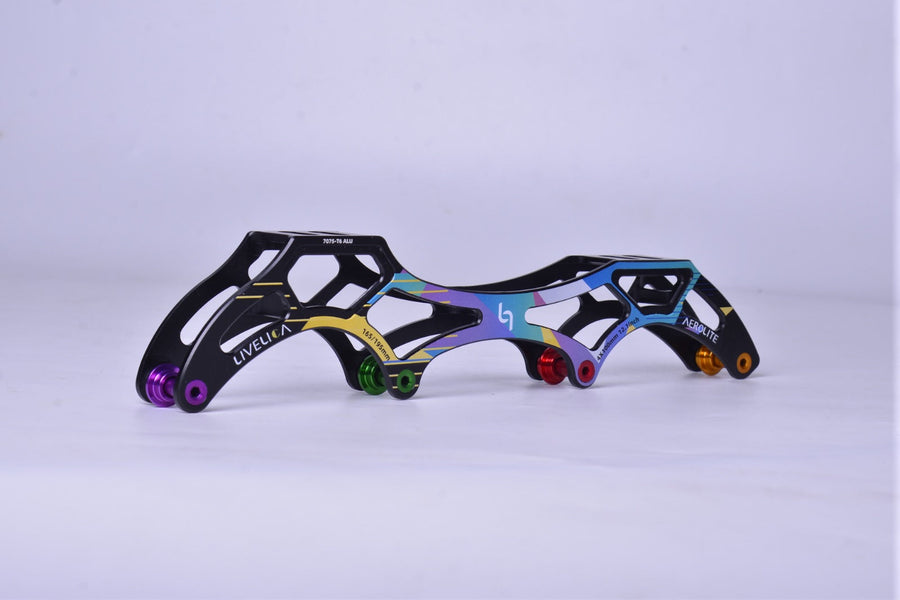
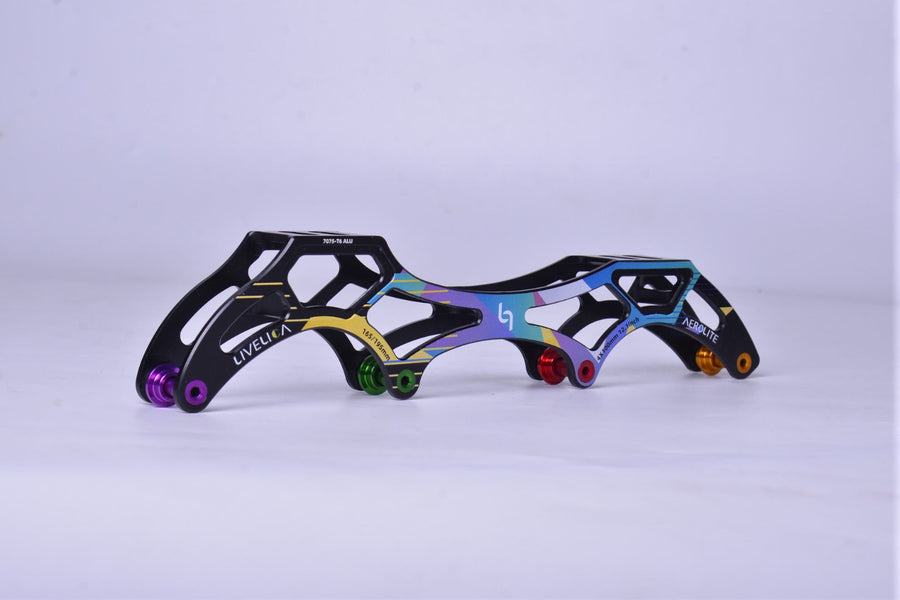
Liners compress and dry out, so a boot that fit perfectly two years ago may feel loose in the heel or tight across the instep. Lace it up and stand in your basic position before you commit to a session. Check every frame bolt and axle, because hardware backs off over time even when the skate is not being used, and a frame that has crept out of position will quietly ruin your edge feel. Look at the frame itself for cracks around the mounting blocks, particularly if you crashed at any point before you stopped skating.
Helmet and protection: the part people skip
An old helmet is the item returning skaters are most likely to reuse without thinking. Foam degrades with age, heat and sweat, and a helmet that took a real impact before your break is no longer doing its job even if the shell looks fine. If you cannot remember its history, or the fit system is brittle, replace it. A certified, ventilated lid like the LiveLica Ventilated Skate Helmet is not expensive relative to what it protects. Gloves are the other piece worth checking, because your first month back is statistically your most likely month to fall, and palm protection from a pair of LiveLica Skate Gloves saves a lot of skin and confidence.
Five things to check on a skate that has been in storage, before you blame your legs for how the first session feels.
What comes back fast and what takes longer
Returning skaters tend to assume that everything decays at the same rate, so they judge their whole comeback by whichever quality feels worst on day one. That is the wrong way to read your body, because the different pieces of skating fitness come back on completely different clocks.
Balance and edge feel come back fastest. These are skills, stored in the nervous system, and they are remarkably durable. Even after years off, most skaters find that within two or three sessions their feet stop arguing with them. What feels alarming on day one is usually fine by day five.
Aerobic fitness comes back next. If you have been doing any other exercise at all, you will have kept more of it than you think, and a few weeks of steady skating rebuilds a surprising amount. If you have been completely sedentary, expect four to six weeks before easy skating feels genuinely easy.
Leg strength and the specific ability to hold a deep position take the longest, and they are also the part that gets you injured if you rush. Your quads, glutes and lower back need to be able to hold a low, seated posture for long stretches, and that endurance is built slowly. This is why the classic returning skater injury is not a dramatic fall. It is a strained groin or an angry lower back from trying to sit low for an hour on legs that have not done it in a year.
Finally, skating specific power, the explosive part that lets you accelerate out of a corner or contest a sprint, comes back last of all. Do not go looking for it in your first month. It will arrive once the foundation is back under it.
Judge your comeback by the right clock. Your feet remember quickly, your legs do not, and explosive power is the last thing to show up.
A four week return plan you can actually follow
This plan assumes three sessions a week and no racing. It is deliberately conservative, because the goal of month one is simply to arrive at month two still skating and still uninjured. Adjust the durations down if you are coming back from years off, or up slightly if your break was a couple of months and you stayed active otherwise.
Week one: rediscover, do not train
Three sessions of twenty to thirty minutes, all easy. Skate on a smooth, flat, quiet surface with no traffic and no hills. Stay relatively tall rather than forcing a deep position. Spend the time on simple things: straight line gliding on one foot, gentle weight transfer from side to side, and slow crossovers in both directions. Stop while you still feel fine. The soreness from week one arrives two days later, so finishing early is the whole skill.
Week two: add duration, not intensity
Three sessions of thirty to forty five minutes, still easy. Now start sinking lower, but only in blocks. Skate two minutes in a proper low position, then two minutes tall, and repeat. This teaches your legs to tolerate the position without asking them to hold it continuously. Add deliberate technique work: one full lap or one long stretch focused on a complete sideways push, then one focused on full recovery of the trailing leg.
Week three: reintroduce speed carefully
Three sessions of forty five minutes to an hour. Keep most of it easy, and add short accelerations at the end of two sessions. Six efforts of fifteen seconds with a full two minutes of easy skating between them is plenty. These should feel brisk, not maximal. Also start cornering with real intent, gradually increasing your lean rather than attacking the corner on day one.
Week four: string it together
Three sessions of an hour. One easy long skate, one technique session, and one session with slightly longer efforts, perhaps five efforts of one minute at a pace you could hold for five. By the end of this week most returning skaters find that skating feels normal again. That is the whole target. From here you can pick up a proper structured training block with intervals and a real weekly rhythm.
Volume rises every week. Hard efforts only appear once you have three weeks of comfortable skating behind you.
Rebuilding technique, not just fitness
A layoff is an unusual opportunity, because the bad habits you had before are also weaker than they were. You have a short window in which your body is willing to relearn a movement rather than defaulting to what it always did. Most skaters waste that window by grinding out easy laps and thinking about nothing.
Instead, give every easy session one technical focus and only one. A good order to work through is this. First, sit down properly, which means bending at the hips and knees rather than leaning at the waist, with your weight through the middle of the foot. Second, push sideways rather than backwards, so that the wheel travels out from underneath you across the surface. Third, recover the pushing leg all the way back underneath your body before you load it again, because a short recovery is what makes a stride feel choppy. Fourth, quiet the upper body, because every bit of bobbing and swaying is energy that never reaches the ground.
Filming yourself once a week from behind and from the side is worth more than any amount of thinking about it. A phone propped on a bag is enough. You will see things in ten seconds of video that you could not feel in an hour of skating.
The problems returning skaters actually run into
- Sore lower back after the first few sessions. Almost always from holding position with the spine rather than the hips. Skate taller for a week and build position in blocks.
- Numb or burning feet. A compressed liner plus lacing too tight to compensate for a loose heel. Loosen the top, snug the middle, and consider whether the boot still fits.
- Blisters on the heel or ankle. Your skin has lost its callus over the layoff. Shorter sessions and clean dry socks fix this in about two weeks.
- Groin or adductor strain. The classic overreach injury, caused by pushing too wide too early. Keep the push modest in weeks one and two.
- Feeling slower than the numbers say you are. Usually gear, not legs. Dirty bearings and hardened wheels can cost you far more than a month off does.
If you have been away for years rather than months
A long absence changes two things. The first is that your gear is probably beyond reviving rather than in need of a clean, so budget for bearings and wheels at minimum and treat the boot and helmet as open questions. The second is that the sport has moved on. Wheel sizes, frame lengths and setups that were standard when you stopped may not be what your local skaters are running now, and the right setup for you today may not be the one you remember. If you are coming back to a three wheel world after learning on four, expect the first few sessions to feel strange and give yourself a fortnight before you judge it.
The other advice for the long absence group is social. Find a group. Returning alone works for about three weeks and then loses to the weather, the traffic and a busy Tuesday. A club session, a training partner, or even two friends who expect you to turn up is the single strongest predictor of whether a comeback survives past month one.
How to make this comeback stick
Put the sessions in your calendar rather than deciding session by session. Keep the first month boring on purpose. Track something simple, such as minutes skated per week, rather than speed, because minutes are within your control and speed is not yet. And give your gear a fixed maintenance slot, because the returning skater who cleans their bearings every few weeks is the one who never has to wonder whether the drag is in the skate or in the legs.
Above all, resist the urge to compare yourself to the skater you were. That skater had months of accumulated training behind them and you have three sessions. Compare yourself to last week instead. By week four the comparison starts flattering you, and by week eight you will stop making it at all.
Frequently asked questions
How long does it take to get back to my old speed after a break?
For a break of a few months, most skaters are close to their previous level within six to eight weeks of consistent training. After a break of several years, think in terms of three to four months to feel like a skater again, and longer to reach old race times. Balance returns in days, fitness in weeks, and power last.
Should I buy new bearings or clean my old ones?
Clean them first and judge by feel. If they spin freely and quietly after a proper clean and a drop of oil, they are fine. If you see rust on the balls or races, or they still feel gritty, replace them. Rust damage to a raceway is permanent and no lubricant fixes it.
Is it safe to use a helmet that has been stored for years?
Not automatically. Helmet foam degrades with age, heat and sweat, and any helmet that has taken a real impact should be replaced whatever it looks like. If you cannot account for its history or the fit system feels brittle, buy a new certified one.
How many days a week should I skate when coming back?
Three is the sweet spot for the first month. Two is enough to rebuild skill but slow for fitness, and four or more on legs that have not skated in a long time is how strains happen. Three sessions with a rest day between each gives your body time to adapt.
Why do my feet hurt so much now when they never used to?
Two reasons usually stack up. Your liner has compressed and lost the shape that held your foot, and your skin has lost the toughness it built over years of skating. Shorter sessions rebuild the skin, and if the boot genuinely no longer holds your heel, it may be time to look at a new one.
Can I just jump back into my old training plan?
No, and this is the most common way comebacks fail. Your old plan was written for a body with months of training behind it. Spend four weeks rebuilding a base, then pick up structured training. The four weeks you invest now save you the six weeks you would otherwise lose to an injury.
Coming back is mostly a matter of doing sensible things for a month while your body catches up with your memory. Sort the gear first so your kit is not lying to you, keep the first sessions shorter than your ego wants, and let the speed arrive on its own schedule. When you are ready to refresh what has aged in storage, a clean set of Power Bearings and a bottle of proper skate bearing oil are the two things that make the biggest difference to how your first month back actually feels.