If you learned to skate in India, there is a good chance you learned on quads. Most school rinks, most first coaching batches and most beginner competitions run on four wheels arranged two by two, and plenty of skaters spend their first two or three years there before anyone mentions speed skating. Then one day you watch a road race or a rink final, you see the long frames and the big wheels, and you start wondering what switching from quad skates to inline speed skates actually involves.
The honest answer is that it is easier than most skaters fear, and different in ways they do not expect. Your fitness comes with you. Your race craft comes with you. Your balance does not come with you completely, and almost none of your hardware does. This guide walks through what changes under your feet, what fits and what does not, and the order in which it makes sense to spend money.
Starting on quads is not a wasted start
There is a persistent idea that time on quads is time lost, and it is wrong. Quad skating teaches you edges. It teaches you to keep turning left under pressure without thinking about it. It teaches you where other skaters are in a pack, how a rink surface changes when it gets dusty, and how to hold a low position for longer than is comfortable. Every one of those things is exactly what inline speed skating asks of you.
What quads do not teach you is balance on a single line of wheels, and that is the whole of the transition in one sentence. Everything else is adjustment. This is why a strong quad skater usually looks competent on inline within two or three sessions and genuinely fast within a season, while a complete beginner takes far longer.
The real change is your balance platform
Stand still on a quad skate and your weight is supported inside a rectangle. Four contact points, two at the front and two at the back, spread across the width of the plate as well as its length. That rectangle is why a quad skate feels planted when you are standing around at the boards, and why a nervous beginner can survive on them.
Stand still on an inline speed skate and your support is a line. The wheels sit one behind the other, so there is length but almost no width. Front to back you are extremely stable, which is why inline skaters can ride out a bump that would pitch you over on quads. Side to side you have nothing but your ankle, your foot and, crucially, your speed. Moving forward stabilises an inline skate in a way that standing still never will.
The quad plate spreads your weight across a rectangle. An inline frame spreads it along a line, so side to side balance becomes an active job rather than a free gift.
What transfers straight across
- Aerobic fitness and leg strength. A skater who can hold a hard effort on quads can hold it on inline from day one.
- The low position. Sitting deep and keeping your chest quiet is the same skill on both.
- Crossover timing. The rhythm of stepping the outside foot over is familiar, even though the feel on a single line of wheels is sharper.
- Pack awareness. Knowing where people are, when a gap is real and when it closes is hard won and completely portable.
- Race routine. Warming up, pacing a distance and staying calm on the line do not change with the skate.
What you have to rebuild
- Lateral balance. Expect the first twenty minutes to feel wobbly at low speed and to improve dramatically as soon as you are moving properly.
- Stopping. There is no toe stop on a speed frame, so every method you relied on is gone and you have to learn new ones before you go anywhere near traffic or a slope.
- Push direction. Quad skating lets you get away with pushing partly backwards. An inline speed frame rewards a clean sideways push and punishes a backward one with wheel chatter and lost speed.
- Single foot glide. On inline you spend far longer on one skate, and that exposes any weakness in ankle stability very quickly.
- Edge pressure. The contact patch is narrower, so a small change in how you load the foot produces a big change in how the skate tracks.
Your bearings almost certainly will not fit
This is the single most common and most expensive surprise, so deal with it before you buy anything else. Quad setups very often run 627 bearings, which have a 7mm bore because the axle is 7mm. Inline speed frames overwhelmingly run 608 bearings, which have an 8mm bore for an 8mm axle. Both sizes share the same 22mm outer diameter and the same 7mm width, so they look nearly identical in a photograph and in your hand.
They are not interchangeable. An 8mm axle will not pass through a 7mm bore, and a 627 bearing dropped into an inline wheel on an 8mm axle simply will not go together. If you are bringing a set of Power Bearings 627 ABEC 11 across from your quads, they stay with your quads. For a new inline speed setup you need 608 bearings, and a standard pair of four wheel skates takes sixteen of them, two per wheel.
One millimetre of bore is the whole difference. Confirm your axle size before you order, because the two sizes are impossible to tell apart at a glance.
For a first inline set, most skaters coming off quads are well served by a straightforward precision steel bearing rather than the most expensive thing on the shelf. Power Bearings Super is the sensible middle of the range, a 608 sealed bearing with an ABEC 9 rating and higher turning precision, made to be trained on all week and raced at the weekend. If you want to compare the whole ladder from entry steel up to hybrid ceramic, the speed bearings collection lays it out in one place.
Choosing your first inline speed frame
On a quad skate the plate is bolted to the boot and you rarely think about it again. On inline speed skates the frame is a component you choose deliberately, because it sets your wheel size, your wheelbase and how the skate behaves. Two numbers matter immediately.
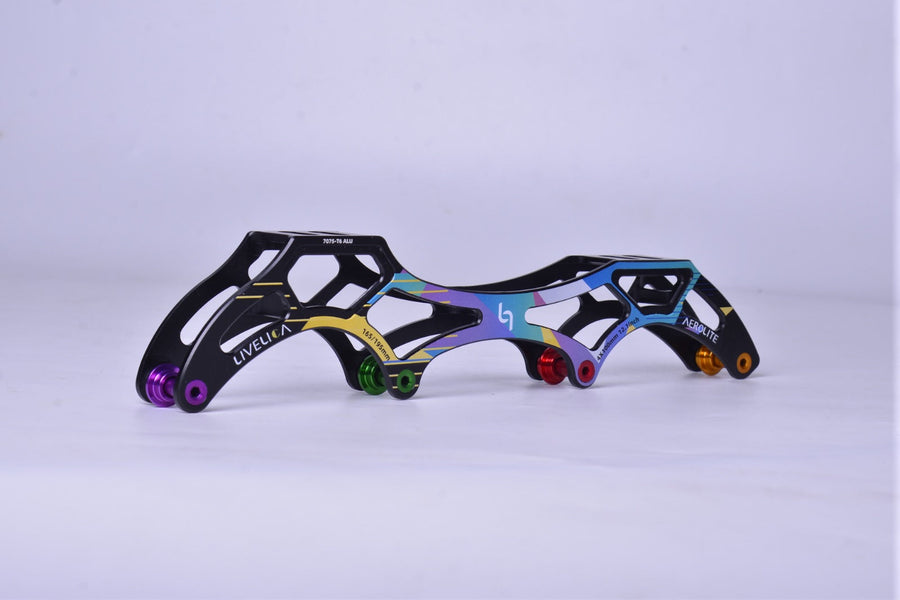
The first is mounting. Speed and fitness boots are drilled to either a 165mm or a 195mm standard, and the frame has to match. The LiveLica Aerolite 4x90 and the Aerolite 4x100 are both drilled for 165mm and 195mm, which removes that worry and means the frame stays with you if you change boots later. Both are machined from 7075 T6 aircraft grade aluminium and both ship with axles, spacers and an allen key.
The second is wheel size and length. The Aerolite 4x90 runs four 90mm wheels on a 10.86 inch platform, which is 276mm, and weighs 124 grams. It keeps you low and turns willingly, which is why it remains the classic choice for track and tight courses. The Aerolite 4x100 runs four 100mm wheels on a 12.1 inch platform, which is 307mm, and weighs 148 grams. It rolls further per stride and tracks straighter, which suits road, training and general fitness speed skating.
Both are four wheel frames, so both keep the grip and predictability a quad skater is used to. The 4x90 stays low and quick, the 4x100 rolls further for the same stride.
If you are unsure which to pick, think about where you will actually skate for the next year. Skaters who will spend most of their time on a rink or a short technical course usually get on better with the 4x90. Skaters who will train on roads, cover distance and enter longer events tend to prefer the 4x100. Either way, staying on four wheels rather than jumping straight to a big wheel three wheel setup is the friendlier path out of quads, because four points of contact behave more like what your feet already know.
Wheels are where the feel really lives
Quad wheels and inline speed wheels are not comparable parts. Inline speed wheels are taller, run a stiff hub designed to resist deformation under load, and are chosen by diameter and hardness rather than by looks. They are sold as a set of eight, which is a full set for a pair of four wheel skates, and they come without bearings or spacers, so budget for those separately.
Hardness is the variable you will hear most about. A softer compound grips more and wears faster, a harder compound rolls better and lasts longer. The JUNK Voodoo XFirm sits at 84 to 86A, the grippier middle compound in the Voodoo line, and it is built with no pigment in the hub or the urethane and moulded in a one cavity tool for consistency from wheel to wheel. For a skater arriving from quads, choosing the grippier of two options is almost always the right call while you are still learning how much you can lean.
One practical note for Indian conditions. Heat softens urethane, so a wheel feels softer on hot tarmac in April than it does in an air conditioned rink, and dust reduces grip on any surface. Both of those push you toward the grippier compound rather than the hardest one, at least until you have a season of experience reading surfaces.
Your first month on inline, session by session
Resist the urge to turn up and immediately do the training you were doing on quads. Four focused sessions will save you a month of frustration.
- Session one. Flat, empty, smooth surface. Walk, glide, stand on one skate for as long as you can, and do nothing at speed. You are teaching your ankles a new job.
- Session two. Stopping, and only stopping. Learn at least two methods you can execute without thinking, and practise them until they are boring. Do not skip this one because you feel stable.
- Session three. Straight line pushing. Concentrate on pushing sideways rather than backwards, and listen to your wheels. Chatter usually means the push direction is wrong.
- Session four. Corners. Start with wide, slow arcs, then bring them in. Your crossover timing from quads will show up quickly once you trust the edges.
After that, you are simply an inline skater with a quad background, and you can pick up normal speed training. Most skaters find their old race fitness reappears far faster than they expected once the balance settles.
What to buy first and what can wait
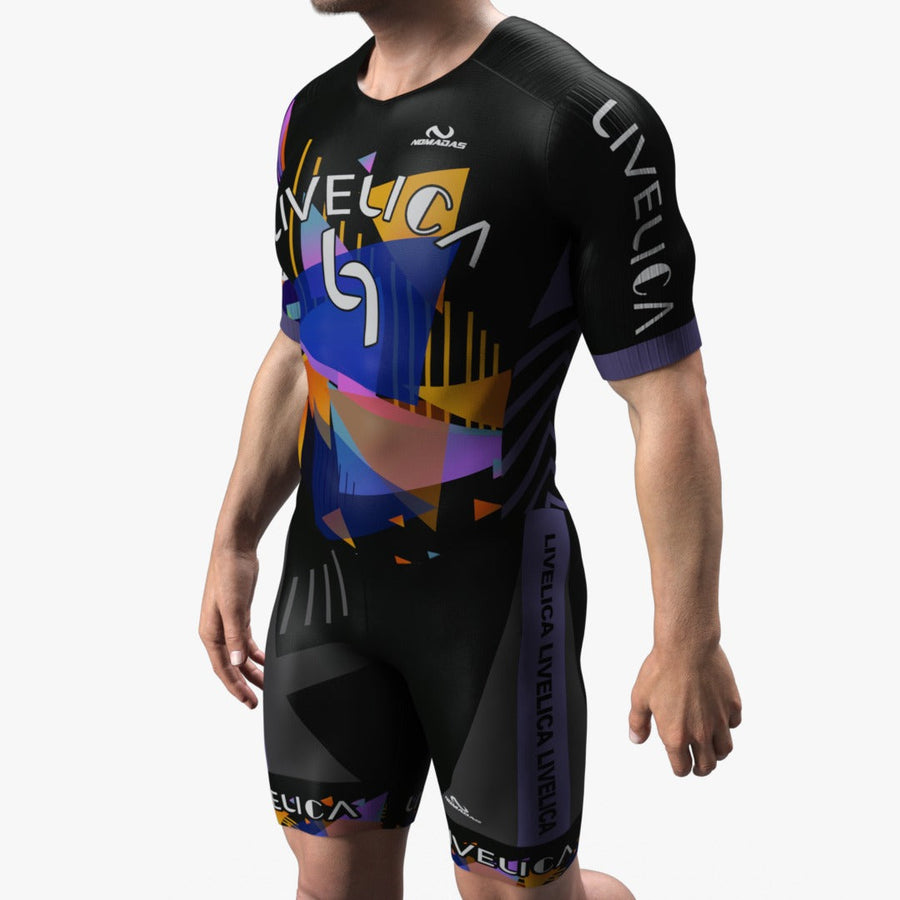
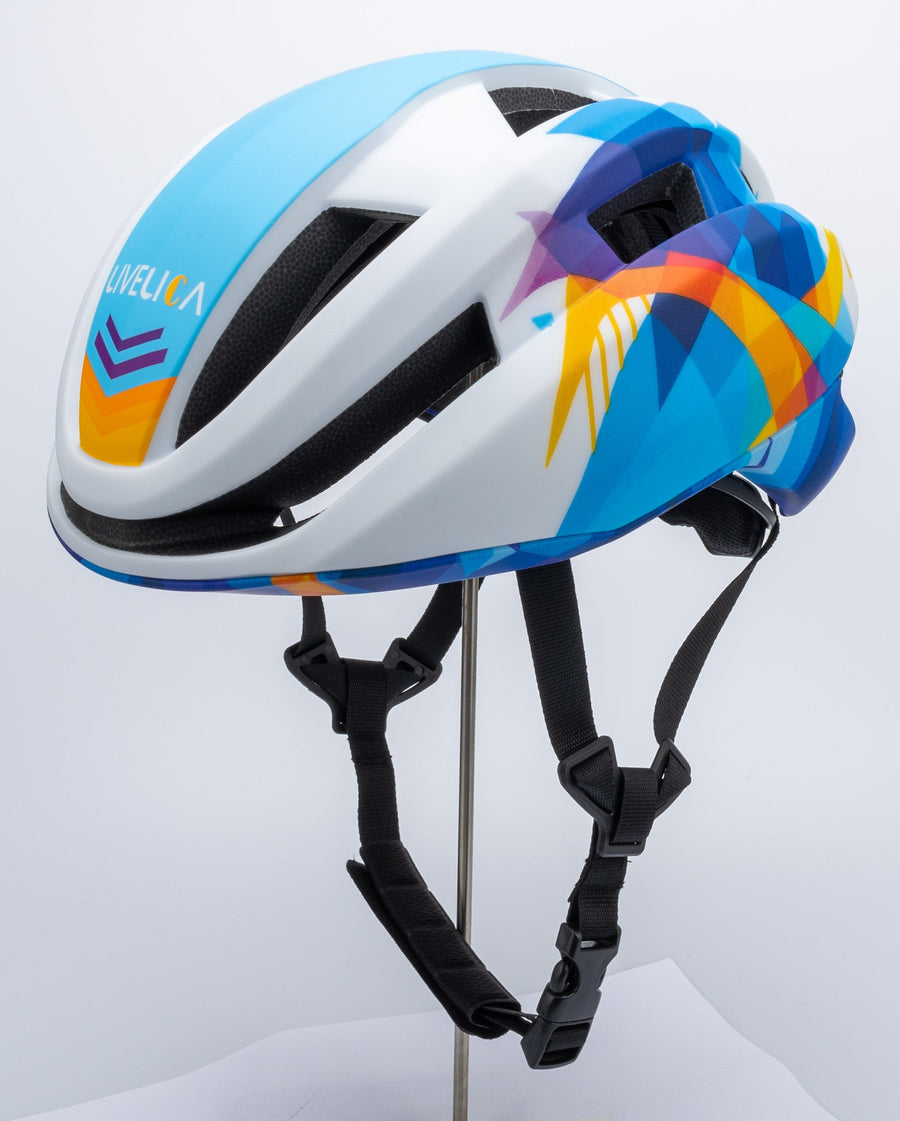
Spend in this order. Boots first, because nothing else matters if your foot is not held properly. Then a frame that matches your boot mounting. Then wheels and 608 bearings, because those two decide how the skate rolls. A helmet belongs in the first group rather than the last, not the fourth thing you think about. Everything else, including a race suit, better bearings and a second wheel set for training, can wait until you know what you actually want.
The one thing worth spending on early is protection, because you are deliberately putting yourself on a less stable platform while you learn. Falls in the first month are normal and almost always harmless if you are wearing a certified helmet and you have practised falling.
Frequently asked questions
Can I use my quad bearings in inline wheels?
Usually not. Quad setups commonly use 627 bearings with a 7mm bore, while inline speed frames use 608 bearings with an 8mm bore. The outer size is identical at 22mm, so check the axle rather than the appearance. You need sixteen bearings for a standard pair of four wheel skates.
How long does the transition take?
Most quad skaters feel safe within one or two sessions and feel normal within about four. Getting back to your old competitive level takes a season of consistent training, mostly because the push mechanics are different and need conditioning.
Should I start on three wheels or four?
Four. Four points of contact are closer to what your feet already understand, and a four wheel frame gives you stability and grip while you rebuild lateral balance. A big wheel three wheel setup is a good later upgrade, not a first frame.
Do I need new wheels, or can I move my quad wheels across?
You need new wheels. Quad wheels are a different shape, a different diameter and built for a different loading pattern. Inline speed wheels are sold in sets of eight, without bearings or spacers.
Will my quad skating make me slower on inline?
No. It gives you fitness, pack sense and crossover timing that a true beginner does not have. The only habit worth correcting early is pushing backwards instead of sideways, which quads tolerate and inline speed frames do not.
What is the most common mistake in the first month?
Skating too slowly. An inline speed skate is more stable when it is moving, so creeping along nervously makes balance harder, not easier. Once stopping is genuinely under control, a little more speed usually makes everything feel better.
Can I keep my quads for training?
Yes, and plenty of skaters do, especially where rink time is easier to get than road time. Just keep the bearings with the right skate, since 627 and 608 sets are easy to mix up in a kit bag and impossible to swap.
Coming across from quads is one of the most common routes into inline speed skating in India, and it is a good one. You arrive with fitness, race sense and a tolerance for the low position that most beginners lack. Give the first month to balance and stopping, get the bearing size right, pick a four wheel frame that matches your boots, and the rest is just skating.