Bearings are the most misunderstood part of a speed skate. They are small, they all look roughly the same in a photograph, and the marketing around them leans on a rating system that does not measure what most skaters think it measures. So people either overspend on the wrong thing or ignore bearings entirely and wonder why their skates feel slow.
This guide explains what a bearing actually does, which specifications are worth caring about, and how to match a set to your level. It is written for skaters worldwide by skaters who race, and it will not tell you that the most expensive option is automatically the right one.
What a bearing actually does
Every wheel on your skate spins on two bearings. Their only job is to let the wheel rotate around a fixed axle with as little resistance as possible. That is it. A bearing cannot add power. It can only give back more of the energy you already put in, by wasting less of it as friction and heat.
This matters because it sets your expectations correctly. A better bearing will not fix a poor push. It will let a good push carry you further. On a long straight, the difference between a tired set and a fresh precision set is the difference between the skate dying under you and the skate carrying you to the corner.
Inside a bearing
Once you know the parts, the specifications start to make sense.
- Outer race. The ring that presses into the wheel and stays with it.
- Inner race. The ring that sits on the axle.
- Balls. Six or seven of them, running between the two races. This is where steel or ceramic is decided.
- Cage or retainer. Holds the balls evenly spaced so they do not bunch together.
- Shields or seals. The covers on each face that keep dirt out and lubricant in.
The quality of a bearing is mostly decided by how round and how smooth the races are, and how consistent the balls are. Everything else is detail.
Five parts, one job. Everything a specification sheet tells you is really a statement about one of these pieces.
ABEC ratings and why they mislead people
ABEC is a tolerance standard. It describes how precisely the bearing was manufactured, on a scale that runs 1, 3, 5, 7, 9 and upward. Higher means tighter tolerances.
Here is what ABEC does not describe: ball material, race material, lubricant, seal design, cage design, or how the bearing behaves under the sideways load you generate in every single corner of a speed skating lap. Those are the things you actually feel.
The practical result is that a thoughtfully built ABEC 7 racing bearing will beat a mass produced ABEC 9 comfortably. Some of the best skate bearings in the world do not quote ABEC at all, because the standard was written for industrial machinery spinning on a fixed axis, not for a skate being driven sideways into a corner at speed. Use ABEC as a rough clue about manufacturing care, then judge the bearing on everything else.
608 or 627, get this right first
Before anything else, check what your skates take.
- 608: 8mm bore, the standard for most inline speed skates.
- 627: 7mm bore, used on some frames and on many quad setups.
They look nearly identical and they will not fit each other. Look at your axle, or measure it, or ask us before you order. Nothing sours a bearing upgrade like a set that will not go on. If you are on 627, we stock Power Bearings 627 ABEC 11 and the Swiss Ceramic 627.
Six balls or seven
Most bearings hold seven balls. Some racing bearings hold six.
Seven balls spread the load across more contact points, which makes the bearing tougher and more tolerant of a heavy or aggressive skater. Six balls mean fewer contact points and therefore less rolling friction, so the wheel spins more freely, but each ball carries more of the load.
The honest guidance is that six ball sets such as Super 6 Ball Steel or 6 Ball Ceramic reward smooth, light, technical skaters. If you are heavier or you skate hard and crash your weight into every stride, seven balls will serve you better and last longer.
Steel or ceramic
The single question people ask most. The short version:
- Steel is tougher, cheaper, and far more forgiving of neglect. It is the right answer for most skaters most of the time.
- Ceramic balls are harder, rounder, lighter and they do not weld themselves to the steel races under heat. So they run cooler, hold speed better on long efforts, and shrug off humidity and water far better.
Ceramic is genuinely faster, but it only pays you back if your engine and your technique are already good enough for that margin to matter, and if you actually maintain your kit. We have written the whole comparison, including what silicon nitride and zirconia actually mean, in ceramic vs steel skate bearings.
Shields, seals and lubricant
Rubber seals touch the inner race. They keep dirt and water out brilliantly and they cost you a small amount of speed. Metal shields do not touch, so they are faster, but they let more grit in and they need you to actually clean them.
Removable shields are worth looking for. A bearing you can open is a bearing you can clean properly, and a bearing you can clean properly is a bearing that stays fast for years.
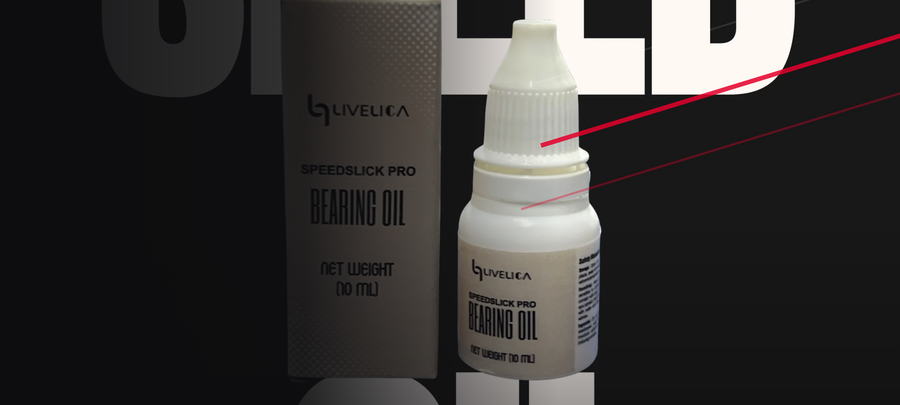
On lubricant, grease lasts longer and protects better but drags. Oil is faster but needs topping up. For racing, light oil wins. Use a purpose made skate bearing oil such as Speedslick Pro rather than whatever is in the garage. Household oils are either thick enough to slow you down or thin enough to evaporate within a session.
Matching bearings to your level
Each step up buys a smaller gain than the one before it, which is why the first upgrade from stock bearings is always the one you feel most.
You are new to speed skating
Buy honest precision steel and spend the difference on wheels, a coach, or ice time. Power Bearings Red is where most new racers should start, and it will feel like a serious upgrade over stock bearings.
You train regularly and race locally
Power Bearings Super is the sensible one set answer. Train on it all week, race it at the weekend, and stop thinking about it. If you want the best steel feel available, step up to Swiss Steel Ball.
You race seriously and maintain your kit
This is where ceramic starts to earn its price. Gold Ceramic is the gentle entry. Colorful Titanium Ceramic adds durability at the top end.
You race at national level
Swiss Ceramic pairs ceramic balls with Swiss grade races and is where most serious racers settle. Beyond that sits the Speed Minimizer, for skaters who have optimised everything else already.
The full range, with prices, is laid out in our best inline speed skating bearings guide.
How to spot a low quality or fake bearing
Bearings are the easiest part of a skate to fake convincingly, because a photograph of a cheap bearing and a photograph of a good one look almost identical. Most skaters who have been burned were not careless, they simply had no way to tell. There are useful signals, and none of them requires measuring equipment.
Start with the price. A set of sixteen genuine precision skate bearings is not cheap to make, and a price far below every other seller is the strongest warning sign there is. If a set costs a fraction of what a known brand charges, the saving has come out of the tolerance, the steel, the cage or the lubricant, and you will feel all four.
Then look at the bearing itself, ideally before you fit it.
- Markings. A properly made bearing carries a size code and usually a brand name on the shield or the race. Blank faces on a bulk pack tell you nobody wanted their name on it.
- Shield fit. The shield should sit flush and square in its groove all the way round. One that sits proud, bulges, or has a lip you can catch a nail on has been pressed in carelessly.
- Finish. Look across the outer race in good light. A consistent finish is a sign of consistent machining. Tool marks, a patchy plating or a race that looks polished in one spot and dull in another is not.
- Ball spacing. Turn the inner race slowly and watch the balls through the shield gap if it has one. They should stay evenly spaced. Balls that bunch and then gap suggest a weak or badly formed cage.
- Feel. Hold the outer race and turn the inner race with a finger. You are feeling for one smooth resistance, not for speed. Notchiness, a catch at one point in the rotation, or a rattle you can hear means the set is wrong out of the box.
- Lubricant. A racing bearing should arrive with light oil or a thin grease. A set packed with thick sticky grease is either an industrial bearing sold as a skate bearing or a set hiding a rough feel behind drag.
The two things you cannot check by eye are the roundness of the races and the consistency of the balls, and those are exactly what you are paying for. That is the honest argument for buying from a seller who stands behind the set rather than from the cheapest listing you can find. Everything in the speed bearings collection comes from a named range with stated specifications, which is the only real protection a skater has here.
You cannot judge tolerance by eye, but you can spot carelessness, and carelessness in the finish usually means carelessness in the parts you cannot see.
Choosing bearings for heat, dust and monsoon
Most bearing advice is written for clean indoor tracks in mild climates. If you train on a dusty outdoor track in April and then on wet tarmac in July, the choice looks different, and the difference is mostly about seals and about how often you are realistically going to open them.
Dust is the enemy of an open or metal shielded bearing, because fine grit gets past a non contacting shield easily and then works as grinding paste between the ball and the race. If your usual surface is dusty and you know you will not strip your bearings every fortnight, rubber sealed sets are the sensible choice even though they cost you a small amount of roll. If you do maintain them properly, removable metal shields let you clean far more thoroughly and stay faster for it.
Water is a different problem. A wet session does not ruin a bearing, but a wet bearing put away in a bag overnight does, because standing water attacks the races from the inside where you cannot see it. This is where ceramic balls have a genuine practical advantage beyond speed, since they do not corrode and they cope better with heat and moisture than steel does. For a skater in a humid climate who races through a wet season, that durability can matter as much as the watts.
Heat matters less than people assume for the bearing itself, but it thins your oil. In a hot month you will find the roll goes off sooner after oiling, which is not a fault in the set, only a sign to re oil more often. A light purpose made oil such as Speedslick Pro is easy to top up, which is exactly what you want when the climate is working against you.
A maintenance routine that actually works
- Wipe your bearings and wheel hubs down after dusty or wet sessions. Two minutes.
- Never store them wet. Water sitting inside overnight causes more damage than months of hard skating.
- Clean and re oil when the roll goes short or noisy, not when the bearing seizes.
- Rotate your wheels regularly so wear stays even across all sixteen bearings.
- Keep a spare clean set for race day. Train on one set, race on the other.
Mistakes we see constantly
- Buying on ABEC alone. The number is the least useful thing on the box.
- Buying ceramic too early. Ceramic in a dirty wheel is slower than clean steel.
- Using the wrong oil. Thick oil undoes everything you paid for.
- Ignoring wheel rotation. Uneven wear loads some bearings far harder than others.
- Skating them wet and putting them away. The fastest way to ruin a good set.
Frequently asked questions
How many bearings do I need?
Sixteen for a standard pair of four wheel inline speed skates, two per wheel. Check how each set is sold on the product page.
Are expensive bearings worth it for a beginner?
Usually not. A beginner gains more from wheels that suit the surface, a boot that fits, and coaching. Buy good steel now and upgrade when your skating outgrows it.
How do I know when a bearing is finished?
Spin the wheel by hand. If it stops quickly, sounds gritty, or feels notchy as it turns, clean it first. If it still feels rough after a proper clean and oil, it is done.
Do ceramic bearings need less maintenance?
They tolerate water and heat better, but they still need cleaning and oiling. Ceramic is not an excuse to stop caring for your kit.
How can I tell if the bearings I am buying are genuine?
Check that the size and brand are marked, that the shields sit flush and square, that the finish is consistent across the race, and that the ball spacing stays even as you turn it. A price far below every other seller is the clearest warning sign of all.
Is it worth buying a cheap bulk pack of bearings?
For a spare wheel on a beater setup, perhaps. For skating you care about, no. Unbranded bulk bearings are made to a price rather than a tolerance, and a set that feels notchy out of the box will not improve with use. One good set outlasts three cheap ones.
Do I need different bearings for dusty or wet conditions?
Not different sizes, but the seal choice matters. Rubber seals keep grit and water out better and cost a little roll, which suits dusty outdoor training. Removable metal shields are faster and let you clean properly, which suits a skater who actually does. In wet seasons, ceramic balls have the advantage of not corroding.
Can I use skateboard bearings on speed skates?
They will physically fit if they are 608, but they are built for a different job. Skate speed bearings are designed for sustained rotation and side loading through corners, which is exactly what a speed lap asks for.
Ready to choose? Browse the speed bearings collection, or read the full range guide with prices. If you are stuck between two sets, message us and tell us your weight, your level and where you train. We will give you a straight answer.