Inline skating in cold weather feels slower and looser because three things change at once. Cold urethane stiffens and grips less, cold bearing oil thickens and drags for the first few minutes, and a cold road often carries a thin film of dew that you cannot see until a wheel slides on it.
None of that is a fault in your skates. It is physics, and it is manageable. Run the grippier compound you own, give both the bearings and your body a longer warm up, treat the first two laps as information rather than a time trial, and dry everything properly afterwards. This guide goes through what actually changes on a cold morning, what to adjust, and what to leave alone.
What cold does to a urethane wheel
Urethane is a temperature sensitive material. Warm it and it softens, deforms more under load and grips harder. Cool it and the compound stiffens, the contact patch shrinks slightly and the wheel holds the surface with less bite, so it behaves like a harder wheel than the grade printed on the box. That is why skaters wash out on the first corner of a winter session and quietly assume their technique went backwards overnight. It did not. The wheel is harder than the one you set your lean for yesterday afternoon. If you want the full hardness ladder rather than just the cold weather end of it, we cover that in our guide to XFirm and XXFirm wheels.
What matters on a cold morning is timing. A wheel reaches its working temperature partly from the surface and partly from the heat it generates as it deforms and recovers under load, and at six o'clock none of that heat exists yet. So your first laps are the least grippy laps of the session, and they are also the laps when your muscles are coldest and your reactions slowest. That combination is where most early morning crashes come from.
The same compound behaves like a harder wheel when it is cold, which is why the first corner of a winter session catches people out.
Why the first few minutes feel like skating with the brakes on
Bearing oil is also temperature sensitive. Cold oil is thicker, and thicker oil takes more energy to shear as the balls roll through it. Spin a wheel by hand on a cold morning and you will often feel a short, reluctant roll that would have spun freely the previous afternoon. Nothing is broken. The oil simply has not warmed up and thinned to its working viscosity yet, and the first few minutes of skating do that job for you.
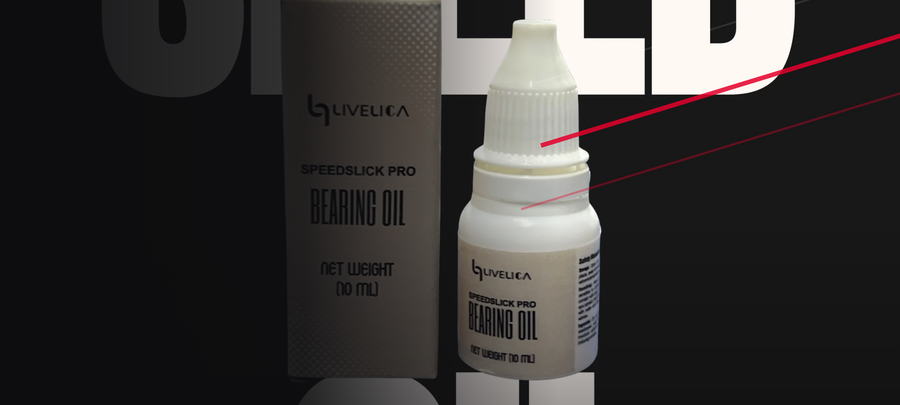
Two practical points follow. First, do not judge a set of bearings on a cold morning. If you want to assess whether a bearing is worn, do it indoors at room temperature, and listen for grit and roughness rather than timing the spin. Second, do not try to solve cold drag by flooding the bearing with oil. A purpose made skate bearing oil already sits between the two household extremes: heavy oils protect but drag, and very thin oils feel fast for ten minutes then leave the bearing dry. Speedslick Pro comes in a 10 ml precision tip bottle and takes one drop per bearing, which is the whole dose. More than that collects dust and adds drag of its own.
If your bearings feel slow after the first ten minutes as well, that is not the cold talking. That is grit, water or wear, and the fix is to clean them, dry them fully and put one fresh drop in each. Whatever sits in your frames, from entry level steel through to ceramic in the Power Bearings range, the routine is identical and the oil is the same.
Judge nothing in the first ten minutes of a cold session, and start your intervals after it.
Dew, fog and the film you cannot see
The bigger cold weather hazard in most of India is not the temperature, it is the moisture that comes with it. On a clear winter night the road radiates heat and drops below the air temperature, so water condenses on it. By first light a stretch of smooth tarmac or a painted surface can carry an invisible film of dew that behaves like light rain. Painted lines, tiled sections, metal covers and polished concrete are the worst offenders, and they stay damp long after the rest of the road looks dry.
Shaded patches are the trap. A road that is dry in the sun can be wet under a flyover, beside a wall or under trees, and you meet that change at speed without warning. So on a cold, damp morning, scout the first lap slowly, note where the shade sits and treat painted and tiled surfaces as low grip until you have tested them. Fog adds the other half of the problem, because it reduces both your visibility and the visibility of every driver near you. If the fog is thick enough that you cannot see a vehicle at a comfortable stopping distance, the session belongs on a closed track or in the gym, not on the road.
Which of your wheels to skate when the morning is cold
The adjustment is simple: when grip is the scarce thing, skate the grippier compound you own rather than the fastest rolling one. Race wheels are sold in named firmness grades, and for most skaters the winter decision sits between an XFirm set and an XXFirm set.
| Grade | What the makers build it for |
|---|---|
| XFirm | The grippier of the two, built for hard, smooth, dry surfaces so the wheel holds as well as rolls. JUNK quote 84 to 86A for the Voodoo XFirm. |
| XXFirm | The harder of the two, tuned for the most roll and outright straight line speed. JUNK quote 86 to 88A for the Voodoo XXFirm. |
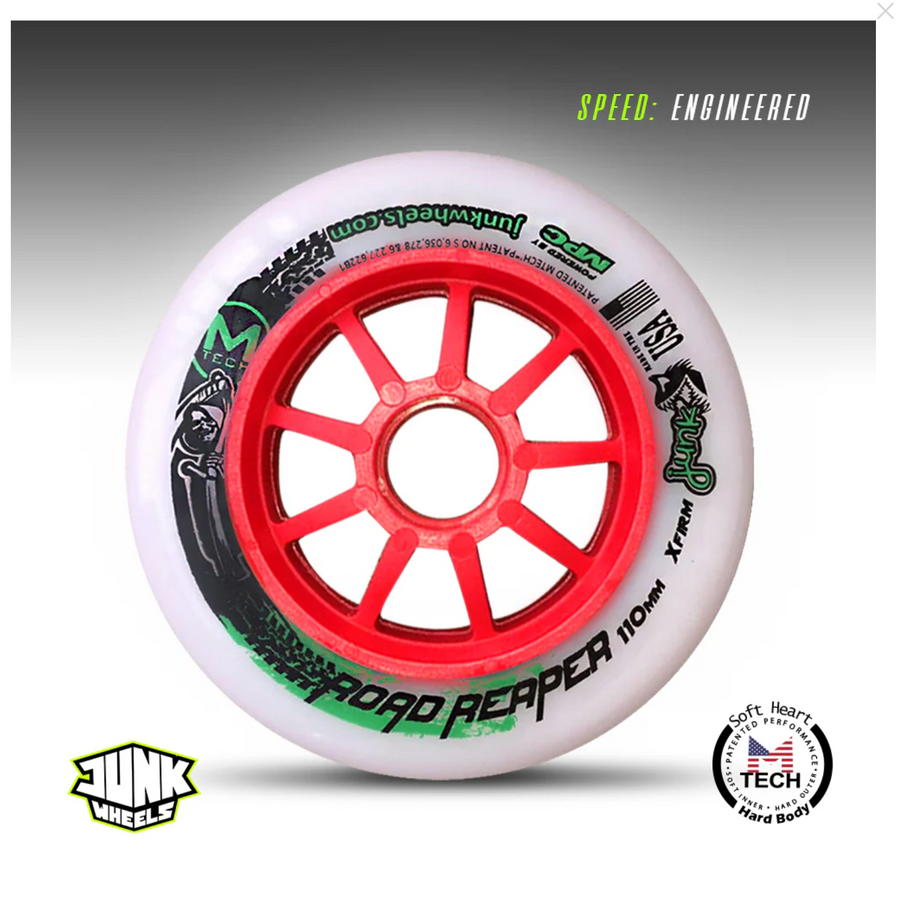
If you own both grades, the cold morning call is easy: skate the XFirm. On an MPC Black Magic the MTech Soft Heart Hard Body build helps in the same direction, because a softer inner ring sits inside a harder outer layer of urethane, so the wheel can flex for grip while the body keeps rolling. JUNK and MPC both make a softer Firm grade below XFirm for slick and rough surfaces, so if you have a Firm set in the bag from a wet season, that is the one to reach for.
Be clear eyed about the limit, though. XFirm is pointed at hard, smooth, dry surfaces, so a grippier grade only buys back some of what the cold took away. It does not make a dew covered underpass safe. On those mornings the honest answer is a slower first lap and a shorter session, not a different wheel.
One thing not to do is drop two or three wheel sizes or raid your old training set in the hope of more grip. Worn and coned wheels give you less contact, not more, and a wheel that has gone out of shape on a warm afternoon will not suddenly behave on a cold one. Grip comes from compound and from an even, round profile, and both matter more in the cold than they do in the heat.
A cold body needs a longer warm up, not a braver first lap
Muscle and tendon are stiffer when cold, and the push in inline speed skating loads the groin, hip flexors and lower back through a long, deep range. That is the combination that produces early season strains: a stiff body asked for a full power push in the first five minutes of a ten degree morning.
The cold weather adjustment is not a different warm up, it is a longer one. Run the same four stage warm up routine you would use in summer, but roughly double it, start it off the skates so you arrive at them already warm, and keep the hardest intervals for the back half of the session when you, the oil and the urethane have all come up to temperature. Accept that the session will be a little shorter as a result. The thing to resist is the instinct to skip ahead because you are cold and want to get moving properly, which is exactly how a stiff groin becomes a strained one.
This is general training guidance rather than medical advice. Cold weather aches that ease once you are warm are normal. Sharp pain, swelling, numbness, a joint that gives way, or any pain that lasts more than a few days is worth seeing a physiotherapist or doctor about, and that is true whatever the thermometer says.
In the cold the warm up is not a formality, it is the part of the session that protects the rest of it.
What to wear, and why a skinsuit is not a warm layer
A race suit is built for air, not for insulation. The LiveLica Pro Skin Suit is made from Colombian lycra in the 260 to 360 gram range with compression in the legs and a close, aerodynamic cut, and that is exactly what you want at race pace. It is not what you want standing on a cold start line for twenty minutes. So on a cold morning, warm up in a tracksuit or thermal layer over the suit and strip down shortly before the effort that matters, rather than trying to get warm inside the suit alone.
Two smaller points save a lot of misery. Cover the hands and the ears, because fingers lose dexterity quickly in the cold and you want a full grip if you have to put a hand down. And do not leave a damp suit in a bag after a cold session, because fabric that stays wet is how a suit starts to smell and how the silicone gripper and the zip age early. Wash gently and dry away from direct heat.
After the session, condensation is the real rust risk
Here is the part that catches skaters who move between a cold outdoor session and a warm indoor room. Cold metal brought into warm, humid air collects condensation, exactly as a cold glass of water does. That moisture lands on your bearing shields, your axles and your frame, and if the skates go straight into a zipped bag it sits there for hours.
So treat a cold morning like a wet one. Wipe the wheels and the outside of the bearings down, loosen the boot, and leave the skates somewhere with air moving around them rather than sealed in a bag. A shaded balcony, a window sill out of direct sun, or a shelf under a ceiling fan all work. What does not work is the floor of a cupboard or the boot of a car. Spin each wheel by hand and listen as you do it. If the roll is short or gritty once everything has reached room temperature, that is a real signal and it is time to clean, dry fully and re oil with one drop per bearing. Our guide to storing inline speed skates covers the longer term side of that.
Your cold morning checklist
- Check the forecast for fog, not just temperature. Visibility decides whether the road session happens at all.
- Scout the first lap slowly and mark where shade, paint, tiles and metal covers sit.
- Skate the grippier compound you own, and keep your newest and roundest set for cold damp days.
- Double your usual warm up and start it off the skates, then give the first ten minutes on wheels to easy rolling.
- Warm up in a layer over your suit and strip down close to the main effort.
- Wipe down and air dry after the session, because condensation does the rusting.
If you are not sure which of your sets to put on for a cold session, tell us what you own and what surface you train on, and we will help you choose.
Frequently asked questions
Can cold weather damage my bearings?
Cold on its own does not. Moisture does, and cold weather brings moisture with it in the form of dew and condensation. Water displaces oil and leaves rust where it sat, so drying the skates properly after a cold session matters more than the temperature itself.
How long does it take dew to lift off the road?
It depends on sun and shade more than on the clock. Open tarmac in direct sun usually dries within half an hour of the light reaching it, while the same road under a flyover, behind a wall or under trees can stay damp all morning. That is why the useful habit is reading the shade on your route rather than waiting for a particular time.
Should I change my bearing oil for winter?
We make one oil and there is no separate winter grade of it. Speedslick Pro is a low friction oil that suits steel and ceramic bearings in standard 608 sizes, and one drop per bearing stays the right dose through the year. Reaching for a heavier household oil instead feels protective and simply gives you more drag every month.
Do wheels last longer if I train on cold mornings?
Often, yes. Heat is what accelerates wheel wear, because warm urethane deforms more and sheds material faster, so a winter of early sessions is usually kinder to a set than a summer of afternoons on hot tarmac. Keep rotating them anyway. Cold does not stop a wheel coning, it just slows the process down.