Most skaters can tell you the price of their bearings, the brand, maybe the ABEC number. Far fewer can tell you what kind of shield sits over the balls, and yet that little cover is one of the most practical things to understand about a bearing. It decides how easy your bearings are to clean, how well they keep grit out, and even how much drag you feel on a cold, dusty morning. This guide explains bearing shields and seals in plain language, so you can service your bearings properly and choose the right setup for where you actually skate.
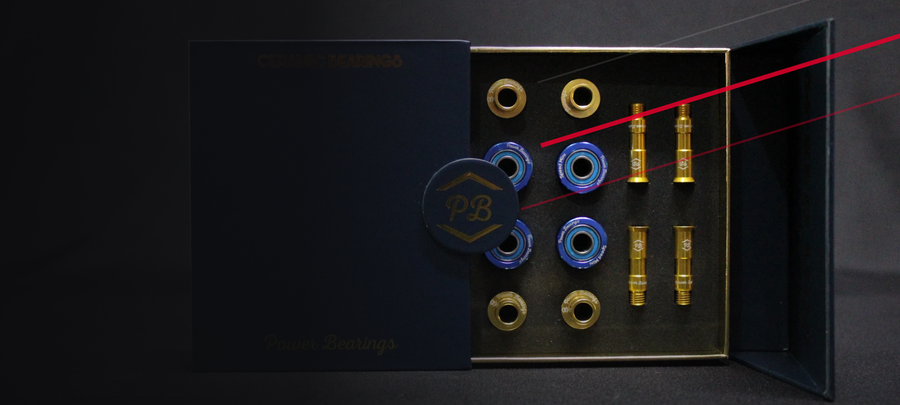
Everything here applies to the standard 608 size bearings used in inline speed skating, including the full Power Bearings range that we stock.
What a shield actually is
Inside every bearing sits a ring of balls held in a cage, running between an inner race and an outer race. Left open, that ring of balls is exposed to the world. A shield or a seal is simply the cover that closes off the gap between the inner and outer race, keeping dirt out and lubricant in. It is a small ring that clips or presses into place on each face of the bearing.
The important thing to understand is that the shield does not touch the balls. It sits in the gap over them. How closely it fits that gap, and whether it is made of metal or rubber, is what separates the different types, and that difference changes how the bearing behaves.
Understanding the parts makes servicing obvious. To clean the balls you simply remove the shield that covers them.
The three main types
Metal shields
A metal shield is a thin steel ring that sits close to the inner race without quite touching it. Because there is a tiny gap, it creates no rubbing and therefore adds no drag. This is why most dedicated speed bearings use metal shields. They spin freely and they are easy to pop off for cleaning. The trade off is that the small gap lets fine dust and water in more readily than a rubber seal would. For clean indoor floors and race use, that is a fair trade, and it is why the fast options such as the Power Bearings Swiss Ceramic favour free spinning shields.
Rubber seals
A rubber seal, sometimes called a contact seal, presses lightly against the inner race to form a proper barrier. It keeps out far more dirt and moisture, which is a real advantage on dusty outdoor roads and in the monsoon. The cost is a small amount of drag from that light contact, and slightly more effort to remove for cleaning. Some rubber seals are the removable kind, which give you the best of both worlds: strong protection that you can still take off to service.
Open bearings
An open bearing has no shield on one or both faces. You see straight in to the balls. Open bearings spin with the least possible resistance and are the easiest to clean and oil, but they offer no protection at all, so they demand frequent maintenance. Some racers run bearings open on one side, facing inward where dust is less of a problem, to shave drag while keeping some protection on the outer face.
There is no single best type. The right choice depends on whether you skate clean indoor floors or dusty outdoor roads.
Which shield type suits your skating
If you race indoors on clean floors, metal shields or removable rubber seals run open at the inner face give you free rolling speed and easy cleaning. If you train outdoors on Indian roads, where dust and the odd puddle are a fact of life, rubber seals protect your investment and save you cleaning after every session. Many skaters keep two sets: a protected set for daily training and a fast, freshly cleaned set for race day. That way your good bearings only meet clean conditions.
Whatever you choose, remember that a clean, well oiled steel bearing beats a filthy ceramic one every time. The shield type only matters if you actually maintain what is behind it. If you are shopping, the value focused Power Bearings Red and the mid tier Power Bearings Super six ball steel are both easy to service and forgiving to live with.
How to remove a shield for cleaning
This is the practical payoff of understanding shields. Being able to take them off means you can clean and oil your own bearings instead of replacing them.
For a metal shield held by a C clip, look for the thin circular retaining clip sitting in a groove around the inside of the outer race. Find the small gap in the clip, slip the tip of a pin or a fine needle under it, and gently walk it out of its groove. The clip lifts away, then the metal shield lifts out. Work over a tray so you do not lose the clip.
For a rubber seal, there is often no clip. You slide a pin under the edge of the rubber and ease it up and out. Rubber seals are more forgiving because they flex, but take care not to tear them. Removable rubber seals are designed to come out cleanly and go back in.
Once you have done this once, cleaning your own bearings becomes a quick habit rather than a mystery.
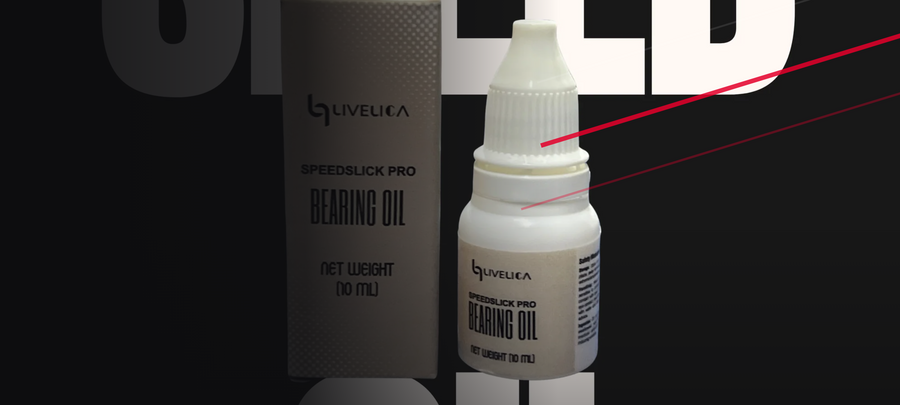
With the shield off, you can flush the balls with a proper cleaner, let them dry fully, and re oil. A single drop of a quality oil such as Speedslick Pro Bearing Oil per bearing is plenty. More is not faster. Then refit the shield, press the clip back into its groove, and you are done.
Refitting without damage
Refitting is where people bend shields and stretch clips. Seat the shield flat first, making sure it sits square in its seat rather than cocked at an angle. Then press the C clip back into its groove evenly, working around it rather than forcing one side. You should feel and hear it settle. If a shield spins loose or rattles after refitting, the clip has not seated. Take it out and try again rather than skating on it, because a loose shield can drag on the balls or fall into the bearing.
Common shield mistakes
The first mistake is skating on a bent shield. Once a metal shield is deformed it can rub the inner race and add real drag, or worse, contact the balls. If you bend one, replace it. The second mistake is over oiling after cleaning, which attracts dust straight through a metal shield and turns your bearings into a grinding paste over time. The third is running open bearings outdoors and then wondering why they died in a fortnight. Match the protection to the environment.
Frequently asked questions
Do rubber seals really slow you down?
Slightly, because of the light contact against the inner race. On a clean indoor floor you may feel it. Outdoors, the protection they add usually outweighs the tiny drag, because a clean protected bearing rolls better than a fast bearing full of grit.
Should I remove my shields to go faster?
Running a bearing open on the inner face can shave a little drag and makes cleaning easy, but it exposes the balls. Only do it if you are prepared to clean and oil frequently, and keep a shield on the outer face for some protection.
Can I clean bearings without removing the shields?
You can flush them roughly, but you will never get them properly clean or properly dry with the shields on. Removing the shield is the only way to do the job well, and it is not difficult once you have done it once.
My bearing rattles after cleaning. What happened?
The shield or its retaining clip has not seated back in its groove. Take the shield out, sit it flat and square, and press the clip in evenly all the way around until it settles.
Which is best for Indian outdoor roads?
Rubber seals, or removable rubber seals, because dust and occasional water are the main enemies outdoors. Keep a separate clean set with metal shields for race day if you want the extra speed when it counts.
The short version
The shield is the cover over the balls, and its type shapes everything about living with your bearings. Metal shields are fast and easy to clean but let more dust in. Rubber seals protect better at the cost of a whisker of drag. Open bearings are fastest and most exposed. Learn to pop a shield off, clean and oil with a single drop, and refit the clip squarely, and you will keep your bearings fast for years. Browse the full Power Bearings range to find a set that matches how and where you skate, and ask us if you are not sure which shield type suits your rinks and roads.