Every inline speed skater eventually reaches the same moment. A wheel is coned and needs rotating, a bearing has started to growl, or a frame bolt has worked loose the night before a race, and the only tool in the house is a kitchen knife and a pair of pliers. Skate maintenance is not difficult, but it is nearly impossible without the right handful of tools, and most of the damage we see on bearings, axles and frames comes from someone improvising with the wrong one. A bearing pried out with a screwdriver, an axle head rounded off by a worn key, a frame bolt overtightened until the thread strips.
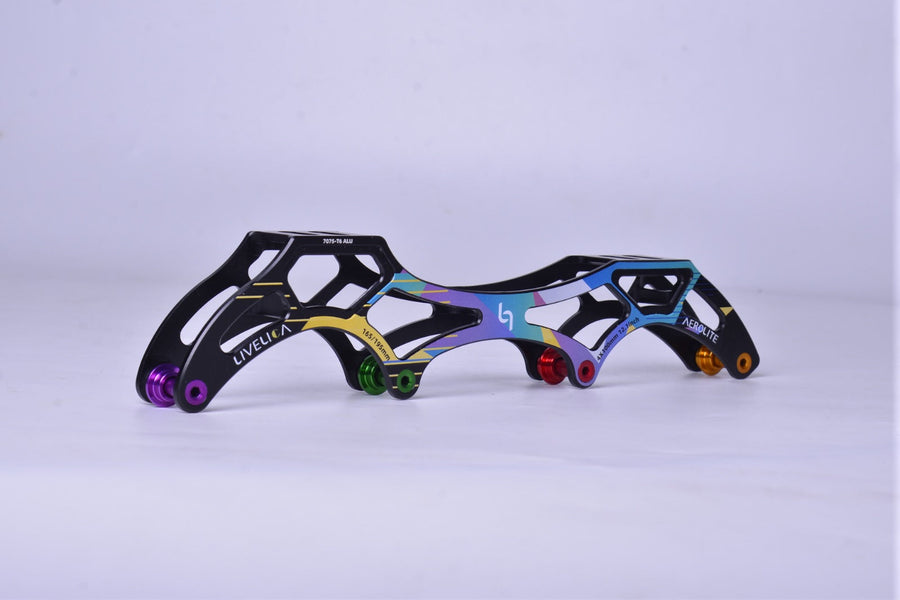
The good news is that a complete home tool kit for inline speed skates is small, cheap compared to the gear it protects, and fits in a single pouch. This guide lists everything you need, explains what each tool actually does, and shows how to organise a home bench kit and a lighter race day kit so you are never caught out. It assumes a standard speed setup: a boot, a frame with axles, wheels running two bearings each with a spacer between them, which is exactly what you get when you build a frame from the LiveLica Aerolite frame range with wheels and bearings from the store.
First, understand what you are working on
A single wheel assembly on a speed skate has more parts than most skaters realise, and each tool in the kit exists to deal with one of them. The axle passes through the frame wall, through the first bearing, through the spacer, through the second bearing and out through the far frame wall, where it threads into either the frame itself or a matching bolt. The spacer sits between the two bearings inside the wheel hub and stops the inner races being crushed together when the axle is tightened. The bearings are pressed into the hub on either side. Understanding this stack is what makes maintenance logical rather than mysterious.
Side view of one wheel. The axle in orange clamps the frame walls against the spacer in green, not against the bearings in blue.
The essential tools
Allen keys that match your axles and frame bolts
The most used tool in any skate kit is the hex key, often called an Allen key. Speed frames use hex head axles and hex head mounting bolts, but the sizes vary between frame brands and even between the axles and the mounting bolts on the same frame, so check what your own frame uses before you buy anything and keep one key for each size. Buy good quality keys and replace them when the corners start to round, because a worn key is the number one cause of rounded axle heads. A T handle or a folding multi key set is more comfortable for the repeated work of removing eight axles, but a plain L shaped key does the job.
A skate tool or frame key
Many frames and skates come with a small combined skate tool that carries the correct hex sizes for the axles and mounting bolts. If yours did, keep it in the bag permanently. It is the tool that saves you at a race when a bolt loosens. If yours did not, a compact folding hex set covers the same job.
A bearing press or puller
Bearings are a press fit in the wheel hub. Getting them out without damage is where the most avoidable harm happens. A dedicated bearing puller grips the inner race and pulls straight, and a simple press seats new bearings squarely. In a pinch, an axle can be used to lever a bearing out through the hub from the far side, but do it gently and evenly, because a bearing levered out at an angle can dent its race or bend its shield. Our guide on removing and installing bearings covers the technique in detail. The kit item to buy is the puller, and it pays for itself the first time it saves a bearing.
A spacer pick and a shield pin
Spacers fall out of hubs and roll under benches. A small pick or even a thin nail helps fish them out, and the same pin lifts the C clip or pops the rubber shield on a bearing when you want to clean it fully. Keep a couple of spare spacers in the kit too, because a missing spacer means a wheel that binds when tightened.
The cleaning kit
Bearings do not wear out so much as get dirty. Grit and old oil turn a fast bearing into a slow one, so a cleaning kit is part of the tool kit, not a separate hobby. You need a small jar or container with a tight lid, a cleaning solvent, a soft brush, lint free cloth and something to dry the bearings on. Isopropyl alcohol or a citrus degreaser are common choices. Avoid anything that leaves a residue, and avoid multi purpose spray oils as cleaners, because they leave a thin film that attracts dust and never really evaporates. Work in a ventilated space, keep the lid on the jar between uses, and let bearings dry completely before oiling. A wet bearing oiled too soon traps solvent and moisture inside.
The six steps of a bearing service and the tool each one needs. Step four is the one skaters rush, and it is the one that matters most.
Lubrication
After cleaning, a bearing needs a light purpose made oil, and the amount is one drop per bearing. Speedslick Pro is the store's own light bearing oil, supplied in a 10 ml bottle with a fine tip, and because the dose is a single drop that small bottle services many full sets of sixteen bearings. It works across steel and ceramic bearings alike, so the same bottle covers everything in the speed bearing collection. The fine tip matters more than it sounds: it lets you put one controlled drop onto the balls rather than flooding the bearing, which is what a household oil can with a wide spout tends to do. Keep the bottle in the kit with the cap tight, and keep it away from the cleaning solvent. You can find it at Speedslick Pro Bearing Oil by LiveLica.
Wheel tools and a marker
Wheels need fewer tools than bearings, but they need a system. A permanent marker is the most underrated item in the kit. Number your wheels one to eight when you fit a new set, and mark which foot they went on, so that rotation later is a matter of following the chart rather than guessing which wheel was where. Keep a small notebook or a note on your phone with the date you fitted the set and the date of each rotation. If you run a race set and a training set, which many skaters do with wheels like the JUNK and MPC race wheels, a marker keeps the sets from getting mixed up. A hard flat surface and a straight edge let you check a wheel for coning by rolling it and watching the wobble.
Frame tools
Frame mounting bolts are the fasteners most likely to loosen in use and the most serious if they do, because a shifting frame changes your alignment mid race. Keep the correct hex key for them in the race kit, and get into the habit of checking all mounting bolts before every session by hand. Before you loosen anything to adjust frame position, mark the current position on the boot sole and the frame with the marker, so that you can return to it if the experiment does not work. Some skaters use a light thread locking compound on mounting bolts. If you do, use the removable grade only, and never on axles, because you need to take axles out often.
When you fit or move a frame, tighten the bolts in stages and alternately, front then rear then front again, rather than fully tightening one bolt before starting the other. This seats the frame evenly. The same principle applies to axles: tighten until the wheel spins freely with no side play, not until the key stops turning. Overtightening does nothing for security and everything for stripped threads and crushed bearings, which is exactly what the spacer is there to prevent when the assembly is correct.
Spares that belong in the kit
Tools fix problems, spares prevent a lost session. The minimum spares list is two spare axles, two spare spacers, two spare frame bolts and at least two spare bearings. A spare bearing is the difference between finishing a race and pulling out when one seizes, and a set of bearings such as the Power Bearings Super is a sensible spare set to keep in the bag alongside your race bearings. If you race, a complete spare wheel is worth carrying too. Everything else, from a spare lace to a small roll of tape, is optional but cheap.
The bench kit is for proper service at home. The race pouch is only for quick fixes, and it never leaves the skate bag.
Organising the kit: bench versus bag
The mistake most skaters make is trying to carry everything everywhere, which means the solvent jar leaks in the bag and the hex keys end up in the wrong pocket when they are needed. Split the kit in two. The bench kit contains everything above and lives in a box at home where you do proper cleaning and wheel changes. The race day pouch is a small zipped bag that never leaves the skate bag and holds only what is needed to fix a problem trackside in a few minutes: the skate tool, the oil, spares and a cloth. Never plan to do a full bearing service at a race. Do it the night before at the bench, then confirm every wheel spins free before you pack.
Tools you do not need, and the ones that cause damage
- Pliers on axle heads. They round the hex and slip. Use the correct key every time.
- A screwdriver as a bearing lever. It dents races and bends shields. Use a puller or push with an axle, gently.
- Spray penetrating oil as a cleaner or lubricant. It leaves a residue that attracts dust and washes out real oil.
- Power tools. A drill on an axle is a fast way to strip a frame thread. Skate hardware is hand tightened only.
- Thick grease on speed bearings. It protects but drags. Use one drop of light oil.
Frequently asked questions
How much should I expect to spend on a basic kit?
Very little relative to the gear it protects. Good hex keys, a bearing puller, a jar and a bottle of oil cost a small fraction of a single set of race wheels or a set of ceramic bearings, and they last for years.
Which hex key size do I need?
It depends on your frame. Check the axles and mounting bolts on your own setup, or the documentation that came with the frame, and buy keys to match. Keeping the skate tool supplied with your frame in the bag is the simplest answer.
Do I need a bearing press as well as a puller?
A puller is the priority because removal is where damage happens. New bearings can usually be seated with firm, even thumb pressure or a gentle push on the outer race, but a press makes it quicker and squarer if you service bearings often.
How often should I check frame bolts and axles?
Give every bolt a quick check by hand before each session and do a proper check with the key weekly and before every race. Bolts that loosen repeatedly are a sign something is not seated properly and should be investigated.
Can I use the same oil for ceramic and steel bearings?
Yes. Ceramic bearings still need clean, light lubrication to run their best, and the one drop routine is the same as for steel.
A small, well organised tool kit turns skate maintenance from a chore into a ten minute habit. Build it once, keep it stocked, and your wheels, bearings and frames will run the way they did on the day you bought them.