New short track kit is expensive, and in India it is often expensive twice over once shipping and duties are counted. So it is completely normal to look at a used pair of blades or a second hand boot and wonder whether you can get racing for half the money. The honest answer is that you sometimes can. A good used setup is a genuinely sensible way into the sport, especially for a junior who is still growing. The trap is that short track gear hides its wear better than almost anything else a skater buys.
A blade can look mirror bright and still be finished. A boot can look barely skated and still be dead inside. This guide walks through what to inspect, in what order, and where the line sits between a bargain and a costly mistake. It is the same order of checks we run on gear that passes through our own hands.
Why used short track gear is worth a look at all
Short track is a small sport with a fast moving top end. Skaters outgrow boots, change blade preference, move up a blade length, or stop skating and sell a full setup that has honestly done very little work. Junior skaters in particular grow out of boots long before those boots wear out, which is why the best used deals are often two seasons old rather than ten.
The other reason is simple arithmetic. A pair of race blades and a carbon boot together make up the biggest single spend in short track. If a second hand set gets a new skater on the ice a full season earlier, it has already done its job even if it only lasts two winters. Go in with your eyes open about what you are actually buying and the maths usually works.
Start with the blades, because that is where the money sits
Blades can be either the best or the worst part of a used deal. A blade with plenty of steel left and a clean, even bend is worth real money. A blade that has been ground away for six seasons on a rink machine is worth close to nothing, no matter how respected the name stamped on the side is. Judge the steel, not the badge.
Read how much steel is left
Steel below the pedestal is the fuel tank of a short track blade. Once it is gone, no amount of skill puts it back.
Every sharpen removes a little material from the running surface, so a blade has a finite number of sharpens in it. Sight along the side of the blade and look at the depth of steel hanging below the pedestals at three points: near the toe, in the middle and near the heel. On a fresh blade that band is generous and even. On a tired blade it is thin, and often thinner in the middle than at the ends because the middle is where most skaters grind hardest.
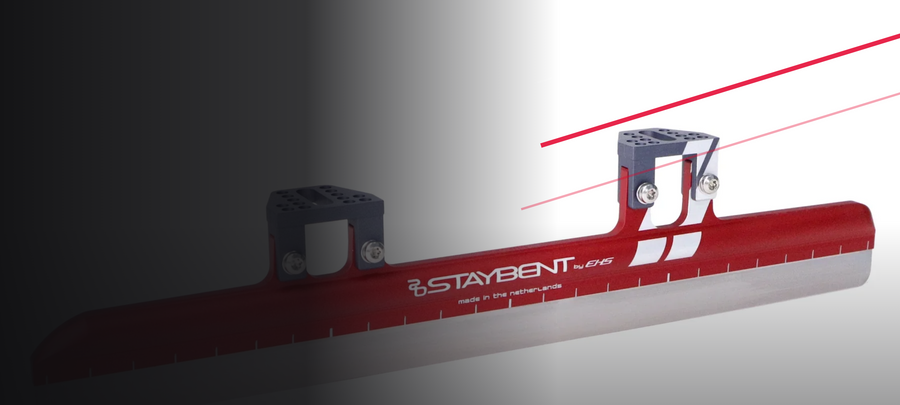
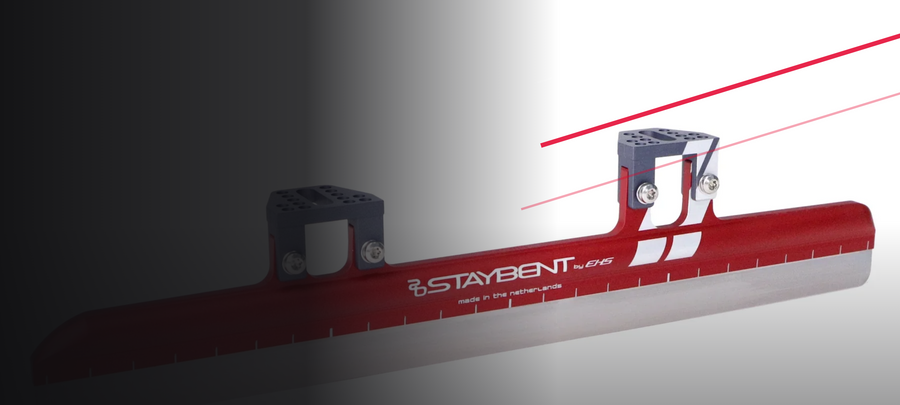
Ask the seller two simple questions. How many seasons has it skated, and how often was it sharpened. A blade sharpened once a week for four seasons has had a lot of steel taken off it. A blade sharpened once a month for two seasons has plenty of life left. If the seller cannot answer, treat that as information too. Comparing against a current model such as the StayBent JaeBee or the StayBent QCS gives you a mental reference for what a full depth blade looks like.
Rust, pitting and the damage you cannot polish out
There is a big difference between surface bloom and pitting. Surface bloom is the light orange film that appears when a blade was put away damp. It wipes off and the edge underneath is fine. Pitting is when corrosion has eaten actual craters into the steel. If those craters sit on or near the running edge, that blade will never hold a clean edge again, because every sharpen simply exposes more of the pit.
Run a fingernail lightly along the side of the running edge under good light. Smooth is good. Anything you can feel catching is a warning. Also look at the places rust likes to hide: inside the ends of the tube, at the joint between pedestal and tube, and under the heel pedestal where water sits after a session in a soaker.
Check the bend, the rocker and whether it is truly a matched pair
Short track blades are set up for one skater. Bend and pitch can both be adjusted later, so a blade bent for someone else is not a problem. Rocker is different. Rocker is ground into the blade and it changes over the life of the steel, so a heavily sharpened blade may carry a rocker profile you would not have chosen and cannot easily undo.
Confirm that the left and the right actually came from the same pair and are the same model and length. Mismatched blades happen more often than you would expect in second hand sales, especially when a seller has combined leftovers from two setups. Two blades that look identical can carry different rockers and will feel completely different underfoot.
Boots are personal, so be more careful here
What transfers between skaters and what does not
Work around the boot in this order and most problems show themselves in under a minute.
A heat mouldable carbon boot can usually be re moulded, but not endlessly. Every heat cycle asks something of the resin, and a boot that has already been shaped hard around another skater's ankle bones and heel may never sit quite right on yours. If the previous owner had a wide forefoot and had the shell pushed out, that extra volume does not go back in.
What does transfer well is a boot that was moulded gently, kept dry and skated for one or two seasons by someone of a similar foot shape. What does not transfer is a boot that has been punched, ground and reshaped repeatedly. If you can, try the boot on cold before buying. A boot that is clearly wrong cold will not be rescued by heat. Comparing the fit against a new pair of EHS short track boots is a useful sanity check on what a correct short track fit should actually feel like.
Signs a used boot is finished
- Soft, deep creases at the ankle where the shell has lost stiffness
- Any visible crack or delamination in the carbon, particularly around the heel and the ankle cut
- Mounting inserts in the sole with stripped or rounded threads
- A liner that has compressed flat with no padding left over the ankle bones
- A smell that survives a proper dry out, which usually means the liner is saturated
The first two are structural and cannot be fixed sensibly. The last three are annoying but survivable if the price reflects them.
Mounts, cups and hardware are the quiet deal breakers
A cheap set of blades stops being cheap the moment it will not bolt to your boots.
This is the part most first time buyers forget. Blades bolt to a boot through cups or an adapter, and the bolt spacing on the boot sole has to match the hardware. Measure centre to centre between the front and rear mounting holes before you commit. If the spacings do not match, you are buying an adapter as well, which changes both your cost and your blade height.
Cups themselves wear. Look for elongated slots, cracked plastic, rounded bolt heads and threads that feel gritty. Cups are a consumable, and replacing a tired set with something like the StayBent short track mounting cups is a reasonable line item in a used purchase rather than a disaster. Bolts are cheaper still, and you should replace them anyway rather than trust hardware that has been torqued by a stranger.
The kit you should always buy new
Some things are simply not worth the saving. A helmet that has taken an impact may look perfect and still be compromised, and you have no way to verify a stranger's crash history. Buy the helmet new, every time.
Cut resistant kit is the same argument. The protection in a glove or a neck guard comes from the fibres in the fabric, and those fibres wear, abrade and get cut through in use. A pair of cut resistant gloves with worn palms is not doing the job you are wearing it for. Blade guards and soakers are fine used if they are clean and not worn through, since they protect the blade rather than you.
Working out a fair price
Start from the current price of the same item new, then subtract honestly. A blade with most of its steel left, clean edges and no pitting is worth a large share of new. A blade at half its steel is worth roughly half. A blade with pitting on the running edge is worth what the mounting hardware on it is worth, and no more.
Then add the costs you will actually incur. A fresh sharpen, new mounting bolts, possibly a re mould for the boot, possibly a new set of cups. Write those numbers down before you negotiate. Very often the total lands close enough to new that buying new becomes the better decision, and knowing that in advance saves you from a purchase you regret in November.
Questions to ask before you send money
- How many seasons has this skated, and at what level
- How often were the blades sharpened, and by hand or by machine
- Has the boot been heat moulded, and how many times
- What is the bolt spacing on the sole, measured centre to centre
- Are the left and right definitely from the same original pair
- Can you send photos in daylight of the running edge from the side and from underneath
A seller who answers these clearly is usually a skater who looked after the kit. A seller who deflects is telling you something without meaning to.
What to do the day the gear arrives
Do not skate it straight away. Strip the blades off, inspect the cups and the sole inserts properly in good light, and replace the bolts. Give the blades a fresh hand sharpen so you know exactly what edge you are on rather than inheriting someone else's guesswork. Dry mount everything, check alignment on the floor before you check it on ice, and give yourself an easy first session to feel what you have bought.
Then set your maintenance routine from day one. Dry the blades after every session, use guards for walking and soakers for storage, and keep the boot open to air out. Used gear rewards good habits faster than new gear does, because it has less margin left. If you want to fill the gaps around a used purchase, the short track setup collection covers the hardware, guards and consumables that most second hand deals arrive without.
Frequently asked questions
Is it safe to buy short track blades online without seeing them
It can be, if the seller sends clear daylight photographs of the running edge from the side and from below, states the number of seasons and sharpening frequency, and confirms the model and length of both blades. Without those, you are guessing on the single most expensive part of the setup.
Can a used boot be heat moulded to my foot
Usually yes, if it is a heat mouldable carbon boot and has not already been reshaped many times. Be realistic though. Moulding adjusts fit, it does not change the underlying last shape or restore stiffness to a shell that has gone soft.
How do I know if a blade has been sharpened too many times
Look at the depth of steel below the pedestals and compare it against a current model of the same blade. If the band of steel is noticeably thin, or much thinner in the middle than at the ends, the blade is near the end of its useful life.
Should a beginner buy used or new
A beginner is better off with a used boot and blades that are in honest condition than with nothing at all. Just buy the helmet and the cut resistant kit new, and budget for a sharpen and new bolts on top of the purchase price.
The short version
Judge steel, not badges. Judge the boot cold, not in a photograph. Measure the bolt spacing before you fall in love with a set of blades. Buy safety kit new. Do those four things and a second hand short track setup becomes exactly what it should be, which is a faster and cheaper route onto the ice rather than a lesson you pay for twice.