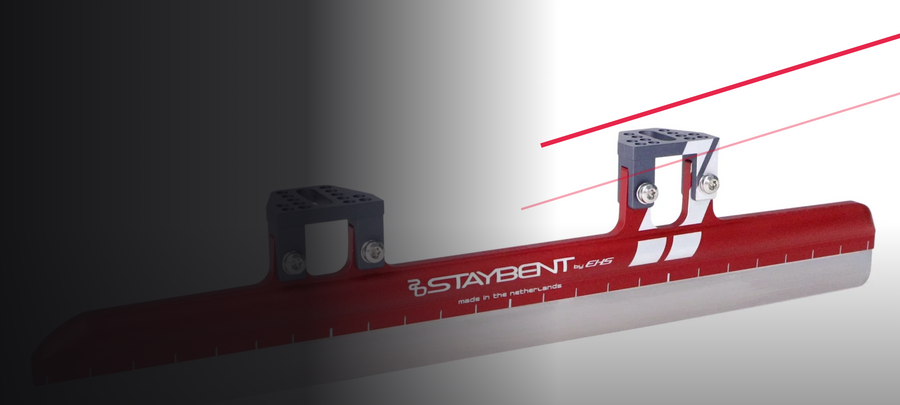
Sooner or later every committed short track skater asks the same question. Should I have training blades and race blades, or is one good pair enough? It usually comes up after a bad experience. You nick an edge on concrete the morning of a meet, or you realise your blades have been sharpened so many times that the steel is running low with half a season left. Suddenly a second set looks less like a luxury and more like insurance. This guide works through what a second pair of short track blades actually buys you, what it does not fix, and the points in a skating career where the money is genuinely well spent rather than simply spent.
The short answer, before the detail: most club skaters are better served by one well maintained pair and a disciplined sharpening routine than by two neglected pairs. But there are four situations where a second set earns its place, and if you are in one of them, the case is strong.
What wears out on a short track blade
A short track blade does not really wear out from skating. It wears out from sharpening. Every pass on the stone removes steel from the running surface, and once enough has gone, two things happen. The blade sits lower relative to the cup, which changes your effective stand height and your pitch. And the useful band of steel above the low point gets thin enough that a deep nick can no longer be ground out without going too far.
That is why sharpening frequency, not hours on the ice, is the real clock on a blade's life. A skater who sharpens lightly once a fortnight will get far more seasons from a pair than one who grinds hard every week chasing a feeling that is actually a technique problem. Learning to sharpen conservatively is therefore the cheapest way to extend blade life, and it costs nothing but patience.
Blade damage is the other clock, and it is unpredictable. Contact in a pack, a bad landing in a crash, or one careless step on rubber matting can put a nick in an edge that takes a serious grind to remove. That is the risk a second set actually insures against.
Splitting your sessions across two pairs halves how often each one visits the stone, which is why rotation stretches the life of both.
The four situations where a second pair is genuinely worth it
1. You are racing several meets a season
This is the strongest case. A dedicated race pair that only ever sees competition ice stays predictable. You sharpen it on a known schedule, you never walk it across a car park, and it arrives at the meet with the edge and the setup you last felt. Meanwhile your training pair absorbs the rough ice, the contact, the public sessions and the mistakes. If something goes badly wrong at a meet, you simply mount the other pair and race.
2. Your rink conditions swing between hard and soft
Skaters who move between rinks, or who train on ice that is soft in the afternoon and hard in the morning, often end up wanting two setups rather than constantly re bending one. Keeping a second pair set up for the other condition means you stop compromising, and more importantly you stop altering a setup that was working. Changing bend and rocker back and forth on a single pair is how skaters lose track of what they actually like.
3. Your current pair is getting low on steel
If your blades are approaching the end of their usable band, buying the replacement before the old pair dies is simply sensible timing. You get a long overlap in which the new pair is broken in gradually while the old pair still covers training, instead of a sudden switch to unfamiliar steel in the middle of a season.
4. You are travelling to race
Flying to a meet with a single pair of blades means one baggage mishap ends your competition. Skaters who travel regularly tend to arrive at a second pair quickly, for the same reason that cyclists travel with spare wheels.
Four honest questions. If none of them lands on yes, your money is better spent on sharpening tools and ice time.
Training blades and race blades: should both pairs be the same model?
For most skaters, yes. The whole value of a race pair is that it feels like the pair you train on, only fresher. Two identical blades set up identically means nothing surprises you on race day. If you train on the StayBent JaeBee, the simplest second set is another JaeBee, bent and rockered to the same numbers you have written down.
There is a reasonable argument for a different model as the second pair, but it is a narrower one. Some skaters keep a stiffer or softer blade for a particular condition, or they are trialling a change and want to run both for a block before committing. If that is you, choose deliberately rather than by accident, and understand that you are now managing two feels instead of one. The StayBent QCS and the rest of the StayBent blade range differ in ways you will notice immediately, so swapping between them mid season is a decision, not a convenience.
What you should not do is buy a cheap second pair purely as a backup and never skate it. An unfamiliar blade you have never trained on is not a spare, it is a different sport, and discovering that in the ten minutes before a heat is worse than racing on a slightly dull edge.
Mounting: the part people forget
A second pair of blades needs somewhere to live. You can either run a second set of mounting cups so each pair bolts straight on, or move one set of cups between pairs, which is slower and gradually wears the bolt holes. If you are serious about a race pair and a training pair, a dedicated second set of StayBent short track mounting cups removes the single biggest reason skaters stop rotating, which is that swapping became a twenty minute job.
Record both setups. Photograph the cup position on each boot, write down your bend and rocker, and keep the notes with your tools. When a pair comes back from a long rest it should return to a known state, not a guess.
Buy a second pair for the problems in the green column. The orange column needs practice or a tool, not more steel.
If you are keeping one pair, do these four things instead
One pair is a completely respectable answer, and for a skater training two or three times a week at a single rink it is usually the right one. The money saved goes much further spent on the habits that keep that pair alive.
- Sharpen conservatively. Take the fewest passes that restore a clean edge, and resist the urge to grind every week out of habit.
- Deburr every time. A wire edge left on the steel drags, and it makes you believe the blade is dull when it is only ragged.
- Dry the steel and use soakers after every session, because rust takes more metal off a blade in a humid rink than a month of sharpening does.
- Never walk on bare blades. Hard guards for the walk, soakers for the bag, and the single most common cause of a ruined edge disappears.
A sharpening setup you trust matters more here than it does for a skater with two pairs, because you have no fallback. The EHS sharpening jig and a set of StayBent blade soakers together cover the two jobs that keep a single pair fast and alive for years.
How to rotate two pairs without losing track
If you do go to two pairs, make the rotation a rule rather than a mood. The simplest scheme that works is this. Label the pairs clearly. Train on the training pair for everything, including technical sessions and public ice. Put the race pair on for the last one or two sessions before a meet so your feet recognise it, then race on it. After the meet, the race pair gets dried, soaked, inspected and put away, and the training pair comes back out.
Sharpen both on a schedule, not only when one feels dull. A race pair that sits untouched for two months and then goes straight into a heat is not a race pair, it is a surprise. Give it a light sharpen and one session on the ice before it matters.
Frequently asked questions
Do I need two pairs of short track blades as a beginner?
No. A beginner is still changing setup as technique develops, so a second pair is money that would be better spent on ice time, sharpening tools and safety kit. Revisit the question once you are racing regularly.
What is the difference between training blades and race blades?
Usually nothing except history. The race pair is the one kept fresher, with a known setup and fewer hard sessions on it. Most skaters run the same model for both so the feel is identical.
How many times can a short track blade be sharpened?
It depends entirely on how much steel each sharpening removes, which is why a light touch matters so much. Judge by the band of steel remaining above the low point rather than by counting sharpenings.
Should I buy a cheaper blade as my spare?
Only if you will actually train on it. A spare you have never skated behaves differently under load, and a heat is the wrong place to discover that. A matching pair is the safer choice.
Can I use one set of mounting cups for two pairs of blades?
You can, but swapping takes time and repeated unbolting is hard on the hardware and on your alignment notes. A second set of cups makes rotation quick enough that you will keep doing it.
Which pair should I sharpen before a competition?
The pair you will race on, early in race week, followed by at least one session on that fresh edge. Never sharpen on the morning of a meet, because a new grind can feel grabby for the first session.
Two pairs of blades is a racing decision, not a status symbol. If you compete through a season, travel to meets, or are watching the steel on your current pair run low, the second set will pay you back in predictability on the days that matter. If you train at one rink and race occasionally, put the money into a proper sharpening setup and a strict guards and soakers habit, and one good pair of blades, looked after properly, will serve you for a long time.