Short track is not a cheap sport, and pretending otherwise does nobody any favours. If you are standing at the barrier watching skaters carve the corners and wondering what it would actually cost to join them, you deserve a straight answer with real numbers rather than a vague "it depends". This guide breaks down every part of a short track setup, tells you what each piece costs at LiveLica today in Indian rupees, and builds three realistic budgets so you can see exactly where your money goes and what you can sensibly delay.
Every price here comes from our own product pages at the time of writing. Prices do move, so treat these as an accurate planning figure rather than a quote, and check the linked product page before you order. What will not change is the shape of the spend, and that is the genuinely useful part. Once you understand which items are large, fixed costs and which are small, repeatable ones, planning a season becomes much easier.
What a Short Track Setup Actually Is
A short track skate is three separate purchases that happen to bolt together. There is the boot, which holds your foot. There are the mounting cups, which raise the blade off the sole and let you position it left or right under your foot. And there is the blade itself, the long, gently bent piece of steel that does the actual work on the ice. Nobody sells this as one box, and that surprises a lot of newcomers who are used to buying inline skates as a complete unit.
On top of the skate sits a second category that is not optional in short track: cut resistant protection and a proper helmet. Blades are sharp, falls happen at speed, and the rules of the sport reflect that. Then there is a third, much cheaper category of care items that protect everything above it. Guards, soakers and a deburr stone cost very little and quietly extend the life of steel worth many times more.
The Skate Itself: Boot, Blade and Cups
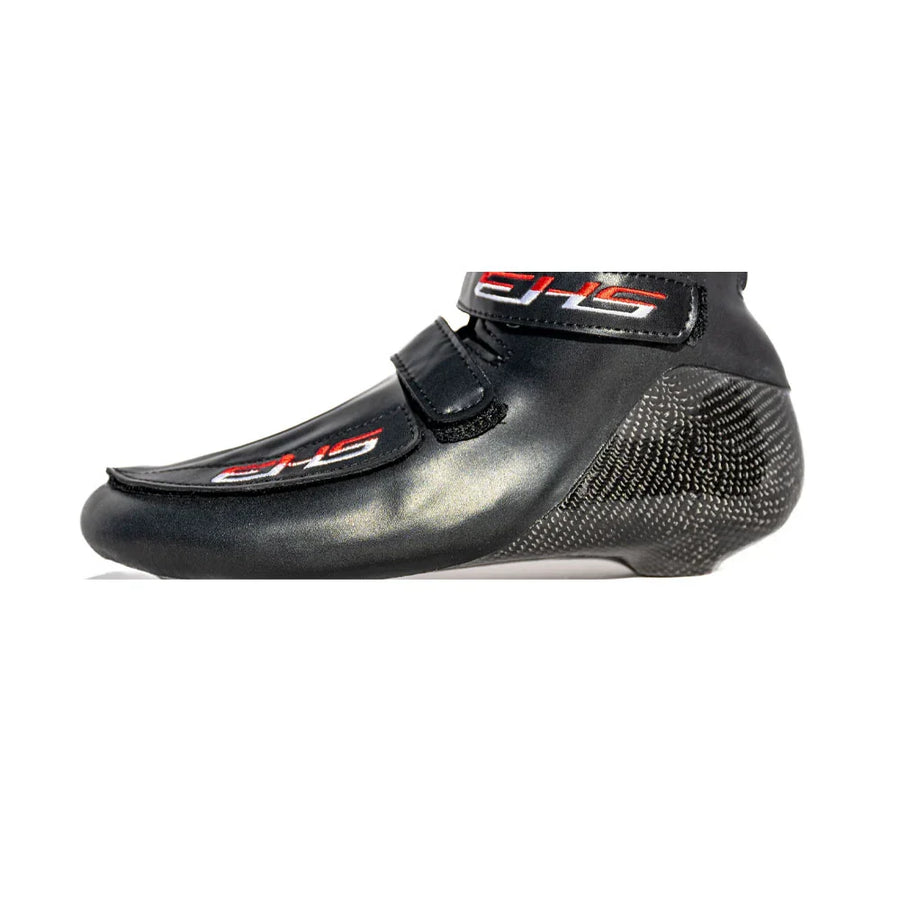
The EHS Short Track Boots sit at Rs 48,000. They use a carbon fibre and Diolene shell that you can heat mould to your foot, they are built on a last developed specifically for short track, and they arrive with Canadian waxed laces plus four M6 by 16 bolts and four M6 rings, so the hardware to mount your blades is already in the box. That last detail matters when you are budgeting, because it is one line item you do not have to add.
Blades are where the number climbs. The StayBent JaeBee and the StayBent QCS both sit at Rs 70,000, while the StayBent XC Flex Weapon is Rs 100,000. That is a serious sum, and it is worth understanding why. These are precision race blades, offered in bimetal at 62 HRC or full PM at 64 HRC on the JaeBee, in eight lengths from 14.5 up to 18. A blade is also the component that lasts longest if you look after it. Boots wear out, suits fade, but well maintained steel keeps going for years.
Mounting cups complete the skate. The StayBent Short Track Mounting Cups are Rs 15,000 for a set of four, which covers both skates, and the PRO version is Rs 20,000. If you are pairing a 195mm blade with a 165mm boot pattern, the StayBent EHS adapter set is Rs 4,000.
Add the entry level combination together and the skate alone comes to Rs 133,000. Boot at 48,000, blade at 70,000, cups at 15,000. That is the floor for a genuine short track skate, and there is no clever way around it.
How an entry level short track budget of Rs 199,000 divides across the skate, the safety kit and the care items.
Safety Kit Is a Cost, Not an Option
This is the section new skaters try to trim, and it is the one you should not. Short track skaters fall at speed on hard ice with sharpened steel nearby, which is precisely why cut resistant clothing exists in this sport and why competition rules require it.
The LiveLica Level 3 cut resistant Kevlar undersuit is Rs 26,000 and covers the large areas of the body most exposed in a slide. The Level 3 neck guard is Rs 3,500, the Level 4 cut resistant ankle socks are Rs 3,500, and StayBent cut resistant gloves are Rs 3,500. A helmet shaped for short track, such as the StayBent short track helmet, is Rs 19,000.
Add those together and mandatory protection comes to Rs 55,500. It feels like a lot next to the skate until you consider that it is the only category that exists purely to keep you in one piece. Skaters who buy proper protection also tend to progress faster, because you learn to lean and commit through a corner far more readily when you are not skating scared.
The Small Items That Protect the Big Ones
Blade guards by Guardog are Rs 3,500, blade soakers are Rs 3,500, and a StayBent diamond deburr stone is Rs 3,500. That is Rs 10,500 for the whole care kit, and it is the best value spending you will do all season. Guards let you walk off the ice without ruining an edge on a rubber mat or a concrete floor. Soakers pull moisture off the steel so rust never gets a foothold in your kit bag. A deburr stone takes the tiny raised burrs off your edges between proper sharpenings and keeps the blade feeling clean.
Put another way, roughly five percent of the total budget protects the other ninety five percent. Skaters who skip this are the ones replacing steel early.
Three Realistic Budgets
The gap between getting on the ice properly and a full elite setup is smaller than most skaters expect.
Budget One: Get on the Ice Properly, Rs 199,000
EHS boots, a StayBent JaeBee, standard mounting cups, the full safety kit and the care items. This is a complete, safe, competition legal setup with nothing missing and nothing wasted. You could skate a whole first season on this and never once feel that your equipment was holding you back.
Budget Two: Race Ready, Rs 210,000
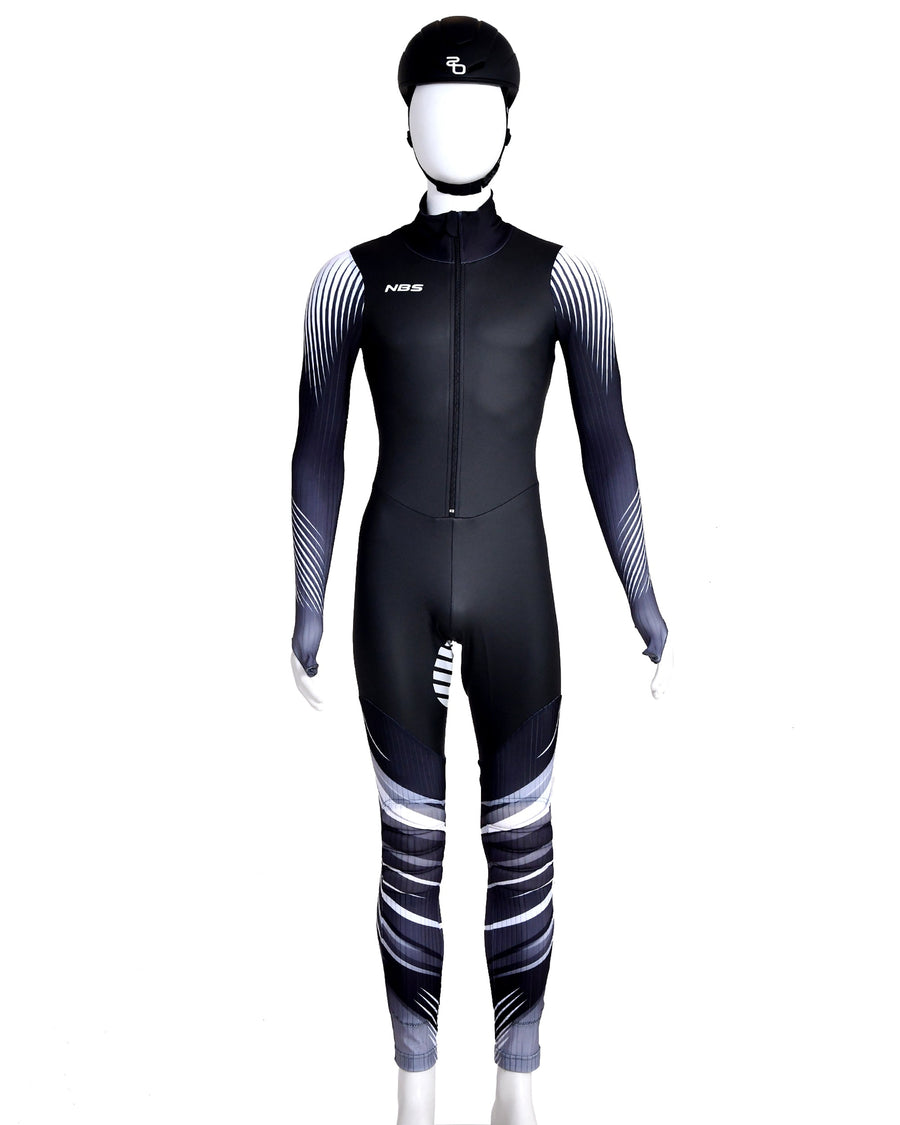
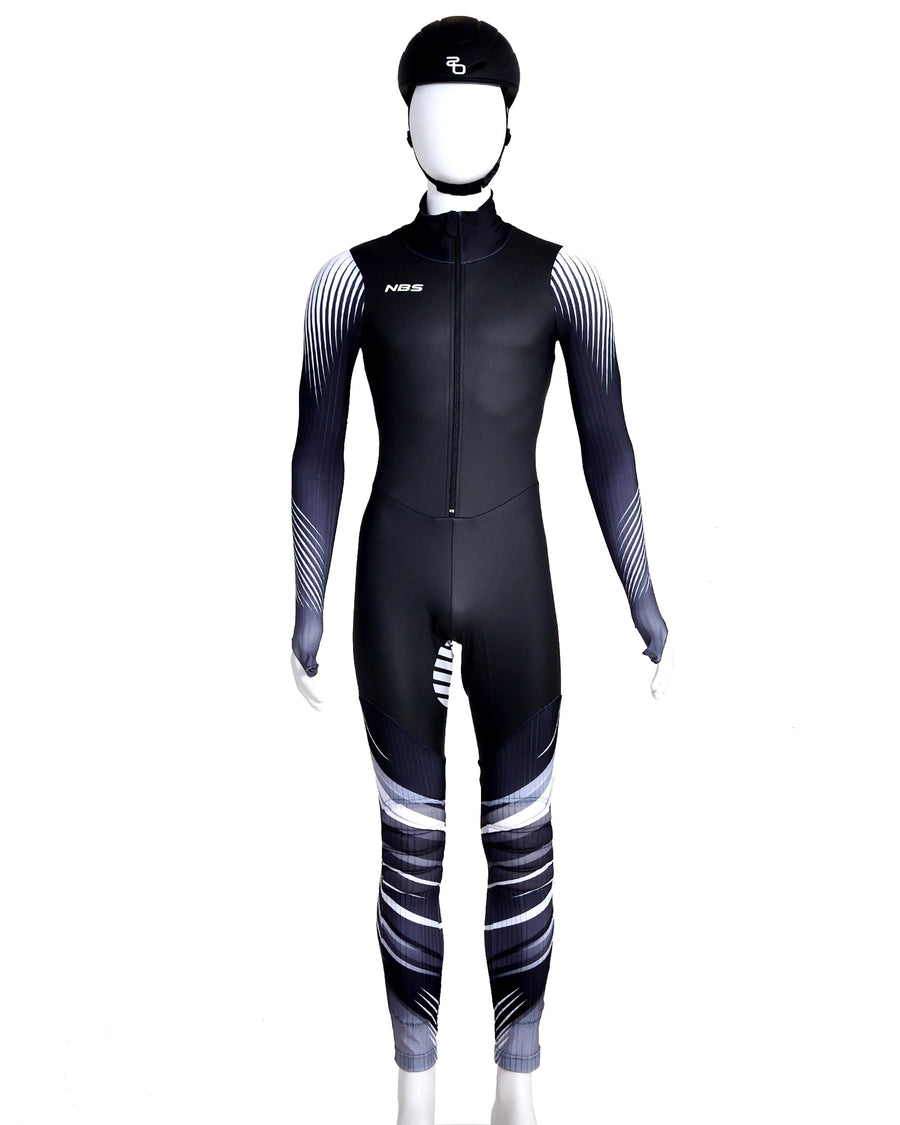
The same setup plus a LiveLica short track lycra suit at Rs 11,000. Once you enter competitions you need a race suit anyway, and the lycra suit is the sensible first one. The step up from budget one is only Rs 11,000, which is a reminder that the expensive decisions were all made at the start.
Budget Three: The Full Elite Setup, Rs 253,000
EHS boots, the XC Flex Weapon at Rs 100,000, PRO mounting cups at Rs 20,000, the full safety kit, care items and the LiveLica Pro short track suit at Rs 19,000. This is what a serious national level setup costs. Notice the important thing: it is roughly twenty seven percent more than budget one, not double. The floor for the sport is high, but the ceiling is not as far above it as people assume.
Sharpening at Home: The One Big Optional Cost
If you have a coach or a club with a jig, you can skip this entirely. If you do not, and there is no local sharpener who understands short track geometry, this becomes the next real decision. The EHS short track and long track sharpening jig is Rs 38,000, a Zandstra Foss combination sharpening stone is Rs 6,000, and a Zandstra 3M polishing triangle is Rs 3,500. That is Rs 47,500 for a home sharpening station.
It is a large number, and it is also a one time number that serves you for many seasons and can serve a whole training group. If two or three skaters at your rink share the cost, it stops looking expensive very quickly. Our guide to sharpening short track blades walks through how to actually use it.
What to Buy Now and What Can Wait
Spread the cost in this order and every stage of the spend leaves you with a usable, safe skate.
Protection first, because you can borrow ice time but you cannot borrow skin. A boot that fits second, because a boot that is too big will hold your technique back for years no matter what blade you bolt underneath it. Blade and cups third. Then care items and a race suit as the season approaches.
The one thing we would ask you not to do is buy a cheap boot to afford a better blade. That trade goes the wrong way every time. A premium blade under a sloppy boot feels worse than a mid blade under a boot that locks your heel, because power transfer starts at your foot and every bit lost there is gone before it ever reaches the steel.
How to Make the Budget Stretch
Buy protection in your correct size rather than sizing up for a growing skater, because loose cut resistant fabric protects less well and a suit that fits will be worn more consistently. Share sharpening equipment with your training group. Keep guards and soakers in use from day one so your blade retains its value. Choose your blade length carefully the first time, because a blade in the wrong length is the most expensive mistake available in this sport.
And be patient. Nobody needs the top blade in their first season. You can browse the full short track collection to see how the pieces fit together, and message us with your boot size if you want a second opinion before you commit to anything.
Frequently Asked Questions
What is the minimum I can spend and still skate short track safely?
Around Rs 199,000 for a complete setup with boots, blade, cups, helmet, cut resistant protection and basic care items. You can spread that across a few months, but all of it needs to be in place before you race.
Why are short track blades so expensive?
They are precision made race components in hardened steels, produced in small numbers, in eight different lengths, with flex characteristics tuned by design rather than by chance. They are also the longest lasting item you will buy, so the cost per season is lower than the headline number suggests.
Do I need to buy mounting hardware separately?
The EHS Short Track Boots include four M6 by 16 bolts and four M6 rings, so the bolts are covered. You still need mounting cups, which are a separate purchase, and an adapter set if your blade and boot use different mounting spacing.
Can I skip the cut resistant undersuit at first?
No. Short track competition requires cut resistant protection, and training without it is a genuinely poor idea given how often beginners fall while learning to lean. Treat it as part of the skate, not as an accessory.
Is a second hand setup worth considering?
Blades and cups can be worth buying used if you can inspect them, because steel that has been looked after holds its performance. Boots are much riskier, since they have already been heat moulded to somebody else's foot and cannot be fully reshaped to yours.
How often will I need to spend money after the first setup?
Very little, if you maintain things properly. Expect to replace soakers and guards occasionally, add sharpening stones as they wear, and eventually replace a race suit. Boots typically come first among the big items, followed much later by blades.
The Honest Summary
A complete short track setup in India starts at roughly Rs 199,000 and a full elite build lands near Rs 253,000. The skate itself is the bulk of it, protection is a serious and non negotiable second, and the small care items are almost free by comparison while doing more than their share of the work. Plan the spend in the order above, get the boot fit right, and you will not need to buy any of it twice.