Every short track skater who ever got faster did it from the same place, and it is not the blade or the boot. It is the position. The low, patient, well balanced posture that we call the basic position is the platform that every crossover, every start and every overtake is built on. Get it right and your skating suddenly feels stable, powerful and quiet. Get it wrong and you fight the ice on every lap, burning energy you should be saving for the last two corners. This guide breaks the basic position down joint by joint, shows you what good looks like from the side and the front, and gives you drills to lock it into your body so it holds up even when your legs are screaming.
What the basic position actually is
The basic position is a deep, seated stance where your hips sink low, your knees bend hard over your toes, and your upper body folds forward so your back is close to flat. Think of it as sitting into an invisible chair while your chest reaches out over the ice. Your weight stays centred over the middle of the blade, your supporting leg carries the load, and your free leg recovers underneath you rather than swinging out wide. It looks relaxed on the best skaters because they have trained the strength to hold it, not because it is easy.
Two things make this position work. The first is a low centre of gravity, which keeps you stable when you lean into a corner at speed. The second is a deep knee bend, which is where all of your pushing power is stored. A tall skater with straight legs has nothing left to push with. A low skater has a loaded spring under them on every stride.
A tall stance has no spring left in the legs, while the low seated position stores power and keeps you stable.
The position joint by joint
Ankles
Everything starts at the ankle. Your shin should be pressed forward into the tongue of the boot so your ankle is bent, not locked upright. If your ankles stay stiff and vertical, your knees cannot travel forward over your toes and the whole position collapses backward onto your heels. This is exactly why a well fitted, heat moulded boot matters so much. A boot that supports the ankle without pinching lets you hold that forward flex for a full session. Our EHS Short Track Boots are built to be baked to the shape of your foot so the flex point sits where you want it.
Knees
The knees are the engine. In a strong basic position your knee sits forward of your toes, and the angle behind the knee closes toward a right angle on the loaded leg. New skaters almost always stand too tall here because holding a deep bend burns the quads. That burn is the training. The lower you can sit while staying balanced, the longer your pushing stroke becomes and the more speed each stride produces.
Hips and back
Your hips drop down and back as if you are sitting, while your chest folds forward over your thigh. The aim is a back angle that comes close to parallel with the ice. This does two jobs at once. It lowers your centre of gravity for stability, and it lines your body up so that when you push sideways, the force runs cleanly through your hip and into the ice rather than leaking upward.
Head and eyes
Keep your head up and your eyes looking down the track, not at your feet. A dropped head pulls your shoulders forward and rounds your back in the wrong way, and on a short oval you need to be reading the skaters ahead of you at all times.
Head, chest, hip, knee and blade line up over one leg, while the free leg stays tucked in close rather than swinging wide.
Why the position makes you faster
Speed in short track comes from a long, complete push against the ice, then a full recovery, repeated hundreds of times a race without wasting energy. A deep basic position lengthens that push because your leg has more distance to extend through. It also keeps your recovery tight, so your free foot comes back underneath your body instead of stepping out wide, which would throw your balance sideways and cost you the corner.
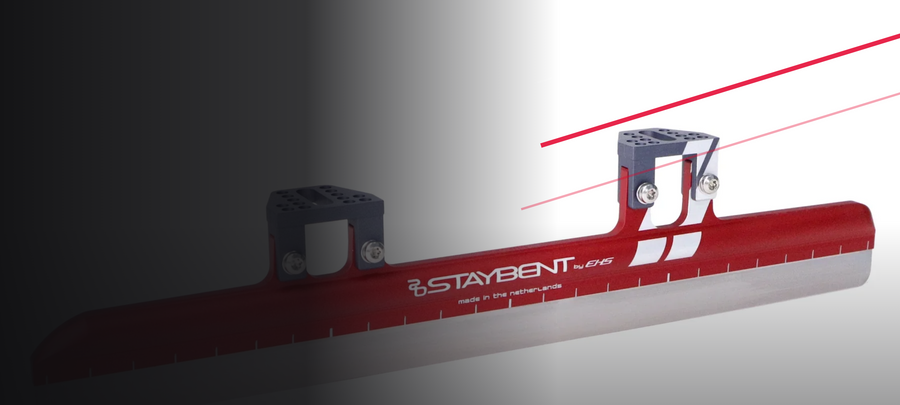
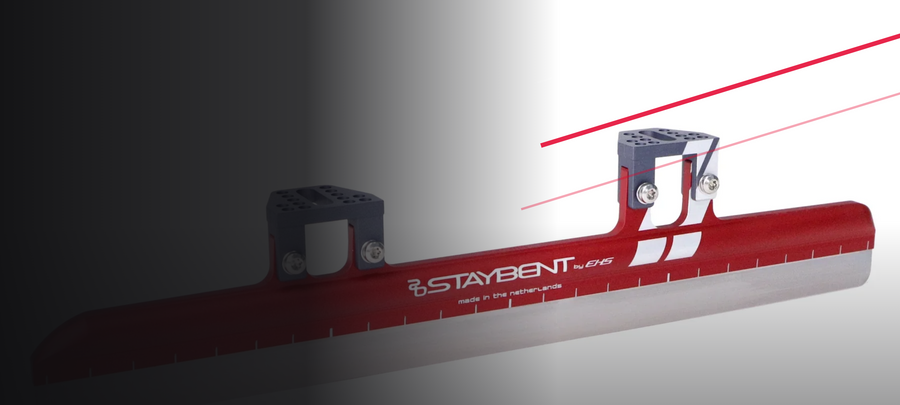
There is a grip side to this too. When your weight sits centred and low, your blade holds a cleaner edge in the corner. A blade that is set up and sharpened well rewards a balanced skater with astonishing corner speed. If you want to understand how the blade under you turns that pressure into hold, browse our short track options in the short track blades collection, including the popular StayBent JaeBee.
Common mistakes and how to fix them
Standing too tall
The most common fault. You feel it as a lack of power and a tendency to slip in the corners. The fix is patience and leg strength. Spend time in a static low hold off the ice, and consciously sit one notch lower every time you push off on the ice.
Weight on the heels
If your ankles are not bent forward, your weight drifts back onto your heels and you lose the front of the blade. Press your shins into your boots and feel the pressure move to the ball of your foot.
Swinging the free leg wide
A wide recovery looks powerful but it pushes your hips off the line of balance and unsettles the corner. Bring the free foot back close under your hip, almost brushing the supporting ankle.
Dropping the head
Looking at your feet rounds the back the wrong way and blinds you to the pack. Fix your eyes on a point down the track and let your hips do the sinking.
Build the position off the ice first, then hold it static on the ice, then carry it into a one leg glide.
Drills to build and hold the position
Position is a strength skill as much as a technique skill, so you train it in two places. Off the ice, wall sits and low squats teach your legs to tolerate the depth. Focus on time under tension rather than fast repetitions. On the ice, the static low hold and the one leg glide are the two drills that matter most. In the static hold you simply stand in a perfect basic position on both blades and learn where your balance sits. In the one leg glide you push once, then glide as far as you can on a single blade while staying low, which trains the exact balance point you need in a race.
Do not train your hands as an afterthought. In the corners your inside hand touches down for balance and reference, so a grippy, protective glove that lets you feel the ice gives you confidence to commit to the lean. Have a look at our skate gloves collection and the cut resistant options such as the StayBent Cut Resistant Gloves for hand down cornering.
Frequently asked questions
How low should my basic position be?
As low as you can go while staying balanced and able to push cleanly. A good target is a knee angle closing toward a right angle on the loaded leg, with your back close to flat. Depth without balance is not useful, so build the strength gradually.
Why do my thighs burn so much when I skate low?
Because the deep bend loads your quadriceps, which is exactly what produces power. The burn eases as you build specific leg strength through wall sits and low skating. It is a sign you are in a real racing position rather than standing tall.
Does the position change in the corners?
The core shape stays the same, but in the corner you add lean and your inside hand can touch the ice for reference. Your low centre of gravity is what lets you lean hard without sliding out, which is why the basic position is trained first.
Will better boots or blades help my position?
They help you hold it. A boot that supports your forward ankle flex and a blade that holds a clean edge both make the correct position feel natural rather than a fight. Technique comes first, but well fitted kit lets that technique express itself.
Final word
The basic position is not glamorous and it does not show up in a highlight reel, yet it is the single biggest lever most club skaters have for getting faster. Sit lower, bend the ankles, keep the free leg close and the head up, and train the strength to hold all of that when you are tired. Do that patiently over a season and every other skill you own, from starts to corners to the final sprint, gets better at the same time.