The short track start is the most crowded, most nervous and most decisive moment of any race. In a four lap final there is barely time to recover from a slow first corner, so the skaters who leave the line cleanly win positions before the pack has even settled. Yet the start is the part of short track that most club skaters practise least. They spend hours on their crossovers and almost no time on the four steps that decide who reaches the first corner in front. This guide breaks the short track start down into the parts that matter: how the start procedure runs, how you stand at the set position, how the block start transfers force into the ice, how your first steps turn a standing skater into a moving one, and how you choose your line into that first apex.
Everything here is written skater to skater, and it assumes you are racing on proper short track kit. A start only rewards you if the equipment underneath you can take the load. Stiff boots, sharp blades and a secure mount are what let you push hard against the ice instead of skidding sideways, so we will point to the gear that makes each phase work as we go.
Why the start decides more races than skaters admit
Short track corners are tight and the racing line is narrow. When two skaters arrive at the first apex level with each other, the one on the inside almost always holds the lane, and the one on the outside has to either back off or take a risk on a pass. Winning the start does not mean sprinting flat out for four laps. It means arriving at that first apex with the inside line and clean air in front of you. From there you can control the pace, force others to make the moves, and save energy for the laps that count.
There is also a safety argument. A tidy, balanced start keeps you upright and predictable, which matters when five bodies are converging on the same point of ice. A scrambled start, with your weight too high and your feet slipping, is how early race pile ups begin. Learning a repeatable start is as much about staying out of trouble as it is about gaining a place.
How the start procedure actually runs
Knowing the sequence removes half the nerves. The starter calls the field to the pre start line, and this is where you settle your breathing and take one last look at the line you intend to take. On the next command you step forward to the start line and take up your set position. From that moment you must be completely still. Any movement before the gun can be judged a false start, the field is recalled, and the skater responsible picks up a warning. Under ISU rules a further false start from the same skater is penalised, so stillness is not a formality, it is part of the race. Domestic and club events sometimes apply their own variations, so read the technical briefing for your competition rather than assuming.
The practical lesson is that you should be able to hold your loaded set position comfortably for several seconds. If your stance is so extreme that your legs tremble or you drift forward while you wait, it is not a race position, it is a pose. Build a set position you can freeze in, then make it as low and as loaded as you can while keeping it steady.
The set position: still, loaded and ready
The set position is not a relaxed pause. It is a coiled stance that stores energy you are about to release. Your front skate points down the track, your back skate sits behind and turned out so the blade can bite, and your hips are low with your weight already forward over the front foot. Your leading hand hangs down and forward, ready to swing, and your shoulders stay quiet.
The most common set position mistake is standing too tall. If your hips are high, your first movement has to travel downward before it can travel forward, and that wastes the most valuable tenths of the whole race. Sit lower than feels comfortable. A low, patient set position means your very first push goes straight into the ice and straight down the track.
Front skate aims down the track while the rear skate turns out so its edge can grip. Weight sits forward over the front foot before the gun.
The block start: pushing against the ice, not the air
The block start takes its name from the way a sprinter drives off the blocks. In short track you have no blocks, so the turned out rear blade becomes your block. When the gun fires you drive hard against that rear edge and extend the leg fully, sending your body forward and down the track rather than upward. The first movement is an aggressive push from the back skate while the front skate steps forward to catch your falling weight.
Think of the first move as a controlled fall. You let your centre of mass topple forward down the track and you catch it with quick steps. If you try to stay perfectly balanced you will be slow, because balance is stillness and a start is the opposite of stillness. The skill is falling forward with intent and then getting your feet under you fast enough to keep the momentum going.
This is where equipment either helps or hurts you. A stiff, supportive boot lets you drive through the ball of the foot without the boot folding, which is exactly why serious racers move to a proper short track boot such as the EHS Short Track Boots once they start sprinting hard. A soft recreational boot flexes under a real block start and leaks the very power you are trying to deliver.
On the left the hips sit high, so the first movement drops before it drives. On the right the skater stays low and lets the body fall forward down the track, catching it with fast steps.
The first four steps: running before you glide
Right off the line you do not skate, you run. The first three or four contacts with the ice are short, punchy steps on the front of the blade, much like a sprinter accelerating. Each step lands underneath your hips, not out in front, so that every contact pushes you forward instead of braking you. Your arms drive in time with your legs, and your eyes look up the track toward the first corner, never down at your feet.
Only once you have speed do these running steps blend into recognisable skating strokes and then into your first crossover into the corner. Rushing that transition is a classic error. If you glide too early you lose the sharp acceleration. If you keep running too long you waste energy that longer strokes would deliver more efficiently. The change happens naturally when your speed catches up with your leg turnover.
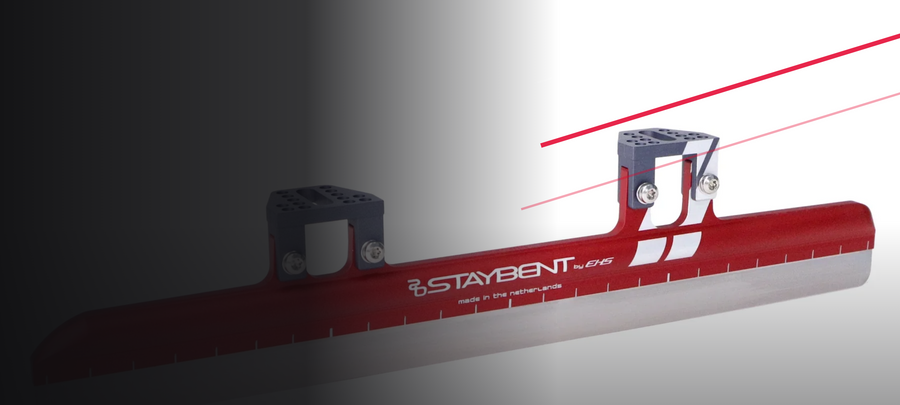
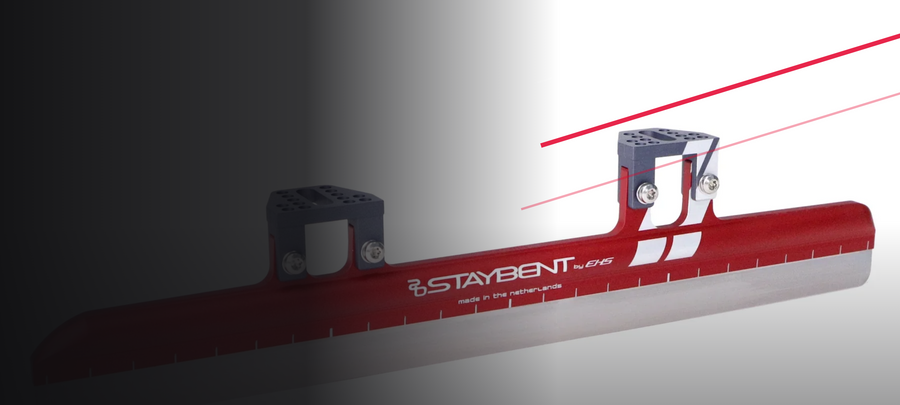
Grip matters enormously in these first steps. Your blades must bite cleanly so that each push loads the edge rather than slipping out. That is a direct argument for racing on quality short track blades with a properly maintained edge. Blades such as the StayBent JaeBee and the StayBent QCS are built to hold a stable edge under exactly this kind of load, and if you want the stiffest race day option many skaters step up to the StayBent XC Flex Weapon. Whatever you skate, a start is only as good as the edge underneath it.
The first contacts are short and quick, landing under the hips. As speed rises the strokes lengthen and flow into the first crossover toward the corner.
Choosing your line into the first apex
Your start position on the line changes the problem you have to solve. From an inside position you already own the shortest path to the apex, so your job is simply to be quick enough that nobody arrives there before you. Hesitate and you will find skaters stacking up outside you, which leaves you boxed in on the inside for the opening laps with nowhere to move.
From an outside position the path is longer, but you have open ice and a better view of what everyone else is doing. The mistake is trying to cut across to the inside immediately. Cutting in early forces you to change direction while you are still accelerating, which scrubs off the speed you just built. The faster option is usually to run straight and hard for longer, then converge on the apex from a shallower angle so your momentum carries through the corner rather than fighting it.
Whichever position you draw, decide your line before the starter calls you forward. A skater who is still choosing at the gun is already a step behind one who committed in the pre start.
An inside start owns the shortest route to the apex. An outside start is longer, so run straight and hard for longer and converge on a shallower angle instead of cutting across early.
Hands, gloves and the inside line
As your running steps blend into the first corner you will reach down with the inside hand, which in short track means your fingertips touch the ice on the bend. That is why glove protection matters from the very first corner of the race, not just later on. A pair of dependable StayBent Cut Resistant Gloves keeps your hand safe when it brushes the ice or another skater during a busy start. Racing gloves are part of your start kit, not an afterthought.
Drills that actually build a faster start
The start is trainable, and short focused reps beat long tired ones. Practise the set position on dry land first, holding the low loaded stance until it feels natural and your legs learn to stay quiet before the gun. On the ice, work standing starts in short bursts of eight to ten pushes, walking back to the line to recover fully between each one, because a start is a maximal effort and a tired start teaches bad habits.
Film yourself from the side and from behind. From the side you can see whether your hips stay low and your weight falls forward. From behind you can see whether your steps land under your body or splay out wide. Small corrections to these two things usually produce a bigger gain than any amount of raw effort. Finish every start session while you are still fresh, so the pattern your body remembers is a sharp one.
One more habit worth building: warm up for the effort you are about to make. A start is a maximal contraction from a standing position, and cold legs do it badly and risk injury. Two or three progressive standing starts in the warm up tell your nervous system what is coming.
Your start line checklist
Run this quietly to yourself while you wait to be called forward.
- Guards off and stowed, blades wiped dry and edges checked for nicks.
- Cup bolts and mount checked, because a shifting mount ruins a hard push.
- Laces set with a locked heel, ends tucked so nothing catches.
- Gloves on with tips fitted, neck guard and helmet secure.
- Line chosen for your start position, inside or outside, decided before the call.
- Two or three progressive practice starts done in the warm up.
- Breathing settled, eyes up the track, ready to be still on the line.
Frequently asked questions
How many steps should a short track start take before I am skating normally?
Most skaters run three to five short steps before the strokes lengthen into skating. The exact number depends on your leg speed and strength, so do not force a fixed count. Let the running steps blend into strokes naturally as your speed climbs, then flow into the first crossover.
Should my weight be on my heels or the balls of my feet at the start?
The balls of your feet. A start lives on the front of the blade, because that is where you generate quick, punchy acceleration. Heel heavy starts feel stable but they are slow, and they make it hard to fall forward into the race.
What counts as a false start and how do I avoid one?
Any movement after you have taken your set position and before the gun can be called as a false start. The field is recalled and the skater responsible is warned, and a repeat from the same skater is penalised. The fix is almost never mental. Build a set position that is low but genuinely stable, so you are not fighting your own balance while you wait, and check the rules briefing for your particular competition.
Do I need special boots and blades just to work on my start?
You can practise the movement pattern on any kit, but a hard block start loads the boot and edge heavily. Stiff short track boots and quality blades let you push at full effort without the boot folding or the edge slipping, which is why racers moving up in level tend to invest here first.
Why do I keep slipping sideways on my first push?
Slipping usually means the rear blade is not turned out enough to bite, or your edge is dull, or your weight is not yet forward. Check your set position angle first, then check your edges. A clean, sharp edge and a properly turned out rear skate stop most start slips.
Putting the start together
A great short track start is not a single explosive movement, it is a short chain of correct positions that flow together. Settle at the pre start, sit low and loaded at the set and stay still, drive against a turned out rear blade, fall forward down the track, catch that fall with quick running steps under your hips, and let those steps grow into strokes and then into your first crossover on the line you already chose. Give the start the same practice time you give your corners, race it on boots and blades that can take the load, and protect your hands from the first bend onward. Do that and you will find yourself arriving at the first apex on the inside line, in front, with the whole race still to control.