Choosing a short track blade is not only about picking a model you like. Once you have settled on a blade, you still have to choose the right size, and that single number quietly shapes everything. It changes how the blade sits under your boot, how balanced you feel through a corner, and how confident you are pushing off the line. Get the size right and the blade seems to vanish under your foot in the best possible way. Get it wrong and you end up fighting the ice on every lap. This guide walks through short track blade sizing in plain, skater to skater language, so you can order with confidence and spend your energy on skating rather than second guessing your setup.
Why blade length matters more than most skaters think
A short track blade is a long, thin platform that carries all of your weight while you balance on a sliver of steel. The length of that platform decides how stable you feel and how the blade tracks through a lean. A blade that is too short leaves your heel or your toe hanging past the ends of the steel, which makes the setup feel twitchy and nervous, especially on the entry to a corner. A blade that is too long is heavy, harder to swing through under your body on crossovers, and can catch as you cross one skate over the other. The sweet spot is a length that matches your boot closely, with only a small, deliberate amount of steel sitting beyond the heel and the toe.
Because short track is skated on tight corners at high speed, this balance point really is the difference between a blade you trust and one you tolerate. Sizing is not a detail to rush. It is the foundation the rest of your setup sits on.
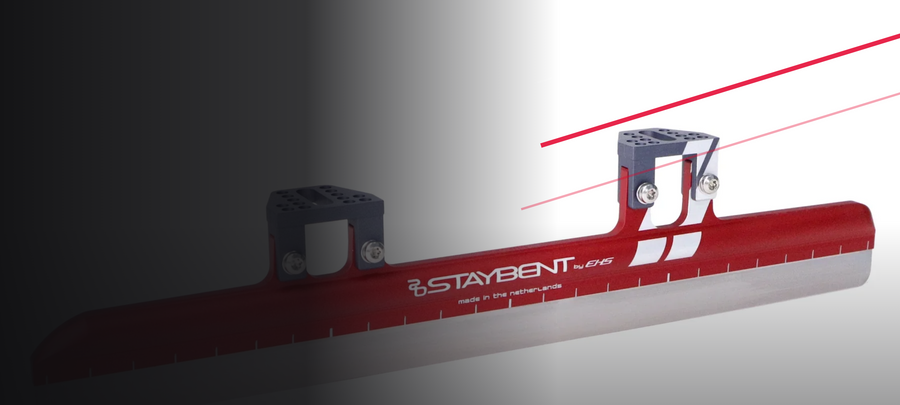
A well sized blade matches your boot closely, with only a little steel reaching past the heel and the toe.
How short track blade sizing actually works
Short track blades are sold in a ladder of sizes. On the StayBent range we stock, you will see numbers such as 14.5, 15, 15.5 and 16, climbing in small steps up to around 17.5 on the longer blades. Each step up adds a little length to the steel. Smaller feet take the lower numbers, larger feet take the higher numbers, and most skaters land somewhere in the middle of the ladder. The half steps exist so you can fine tune the fit rather than jump between sizes that feel very different underfoot.
Reading the number on the blade
The number printed on a short track blade refers to the size of the blade itself, not your shoe size in the shop. That is why you cannot simply read your trainer size off the box and assume it maps across one to one. The blade size relates to the length of the boot sole it is designed to sit under. Your job is to match the blade to your boot, then confirm that the steel gives you that small, even overhang at each end rather than a large gap or an overhang so long it feels clumsy.
Start from the boot, not from your street shoes
The most reliable way to size a blade is to start from the boot you will actually skate in. Short track boots such as the EHS Short Track Boots are heat mouldable and come in their own size range, and the sole length of that boot is what the blade has to match. If you already own your boots, measure the sole and use that as your reference point. If you are buying boots and blades together, size the boot first for a snug, supportive fit, and choose the blade length to suit that boot.
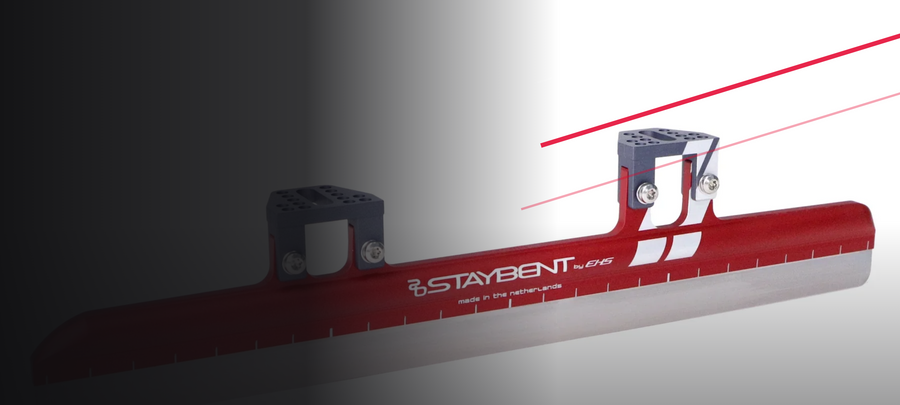
Blades climb in small steps, so most skaters find a close match somewhere along the ladder.
Matching your blade to your boot
Once you know your boot sole length, choosing the blade becomes a matter of finding the size that gives you that even, modest overhang. As a rule of thumb, you want the steel to reach just past the heel and just past the toe of the boot, spread fairly evenly at both ends. A little at the front helps the blade track and gives you steel to lean on through the corner. A little at the back adds stability when you sit into the basic position. What you want to avoid is a blade that stops short of the boot ends, or one that reaches so far past them that it feels long and slow to move.
Junior and smaller footed skaters
Younger skaters and adults with smaller feet usually sit toward the lower end of the ladder. The temptation with a growing junior is to buy long and let them grow into it, but an oversized blade is genuinely harder to control and can hold a young skater back. It is better to size correctly for now and plan to move up as their feet and their skating develop.
When you sit between two sizes
If your boot lands between two blade sizes, think about the kind of skater you are. If you value quick feet and nimble crossovers, lean toward the shorter option. If you value stability and a planted feel at speed, the longer option can suit. When in doubt, the shorter of the two is usually the safer choice, because a blade that is slightly short is easier to manage than one that is slightly long.
Where the blade sits under the boot
Sizing and mounting go hand in hand. The blade length sets how much steel you have, and the mount decides where that steel sits front to back and side to side under your foot. Short track blades attach to the boot through cups, such as the StayBent Short Track Mounting Cups, and those cups let you position the blade so it is centred correctly for the way you balance and turn. Because short track is skated anticlockwise on tight left corners, most skaters run the blade slightly offset to help the boot clear the ice as they lean, but the starting point is always a blade whose length suits the boot.
The two cups carry the boot, with the front cup near the ball of the foot and the rear cup near the heel.
How model and flex interact with size
Blade size and blade model are separate choices, but they meet on the ice. A softer, more flexible blade like the StayBent JaeBee gives you feel and freedom of movement, while a value focused blade like the StayBent QCS offers that same family character at a friendlier price, and a flagship such as the StayBent XC Flex Weapon is built for skaters chasing everything the blade can give. Whichever model you choose, the size still needs to match your boot. Do not let a favourite model tempt you into the wrong length. Pick the model for how you want the blade to behave, then pick the size for your boot.
Getting your fit checked
Sizing charts get you close, but nothing beats having your boots and blades looked at by someone who fits them regularly. If you are new to the sport, take your boots to a coach or an experienced skater and check the overhang together before you commit. A short conversation now can save you a season of skating on a blade that never quite felt right. When you buy from a skater owned store, you can also ask questions before you order rather than guessing from a web page.
Frequently asked questions
Can I use my shoe size to choose a blade?
Not directly. The blade number refers to the blade length, which is matched to the boot sole, not to your everyday shoe size. Always size from the boot you will skate in.
Should juniors size up so the blade lasts longer?
It is tempting, but an oversized blade is harder to control and can hold a young skater back. Size correctly for now and plan to move up later.
What if my boot is between two blade sizes?
Choose based on your priorities. Go shorter for quick, nimble feet and longer for stability at speed. If you are unsure, the shorter option is usually easier to manage.
Does the blade have to sit exactly in the middle of the boot?
Front to back it should give an even, modest overhang. Side to side, most short track skaters run a small offset to help the boot clear the ice on the corners, which you set through the mounting cups.
The short version
Size your short track blade from your boot, aim for a small and even overhang past the heel and the toe, and use the half steps on the ladder to fine tune the fit. Pick your model for the feel you want, then pick the length for your foot. Do that and your blade becomes something you stop thinking about, which is exactly what you want when the pace lifts and the corners come fast.