There is a small moment of disappointment that a lot of skaters feel the first time they roll out on a brand new set of race wheels. You expected instant grip and free speed. Instead the wheels feel a little glassy, a little nervous under your feet, and your corners do not bite the way your old worn set did. Nothing is broken. You are simply feeling fresh urethane that has not yet been broken in.
Breaking in new inline speed wheels is a real and useful process, and understanding it will save you from throwing away good wheels or blaming your bearings for something the wheels are doing. This guide explains what actually changes as a new wheel beds in, how grip builds over the first few sessions, and the simple things you can do to seat a fresh set quickly and evenly so they reach their best as fast as possible.
Why new wheels feel different
A fresh race wheel comes off the mould with a crisp, sharp shoulder and a very smooth outer skin. That smooth skin has almost no texture, so on your first few laps it slides more than it grips. The contact patch, meaning the small area of urethane actually touching the floor, is narrow and the surface is slick. This is the skittish feeling most skaters notice on lap one.
As you skate, that outer skin scuffs away and the sharp shoulder rounds slightly. The urethane at the contact point starts to key into the floor, the contact patch settles into a natural shape for your weight and stride, and grip climbs. Within a session or two the same wheels that felt nervous will feel planted. This is not marketing. It is just what happens when a moulded surface meets a real floor.
A fresh wheel has a smooth skin and a narrow contact patch, so it slides. As it beds in the edge seats and the contact patch settles, so it grips.
What actually happens as a wheel beds in
The skin wears off and the edge seats
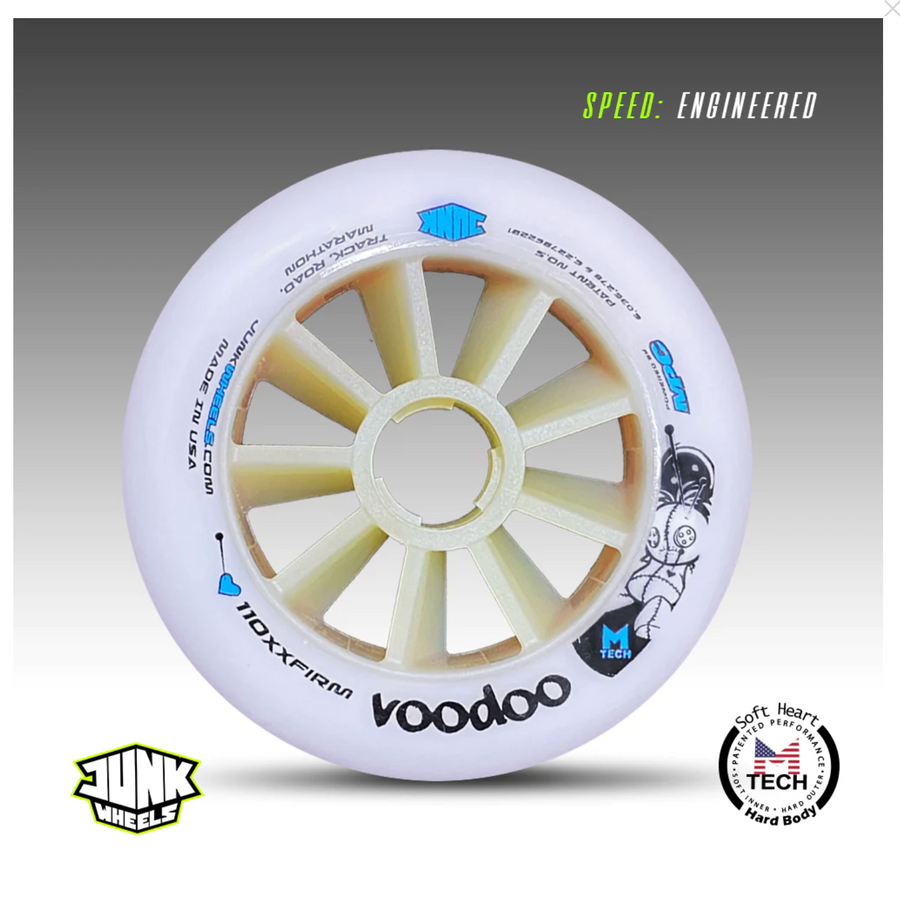
The very outer layer of a new wheel is the smoothest it will ever be. Skating wears this away and exposes urethane with a touch more texture and grip. At the same time the fresh shoulder rounds into a working profile. A well made wheel such as the JUNK Voodoo XFirm is designed so that this working profile is a good one, which is why premium race wheels feel so consistent once they are seated.
The urethane finds its contact patch
Urethane is not rigid. Under your body weight it flattens very slightly where it meets the floor, and that flattened area is your contact patch. When the wheel is brand new the patch is small and moving over a slick surface. After a little use the patch settles into the shape your weight and skating style ask of it, and grip becomes predictable rather than surprising.
Heat helps it along
Rolling builds a little heat in the wheel, and warm urethane grips better than cold urethane. This is part of why the first minute on cold wheels feels loose, and why a set that felt nervous at the start of a session feels far better once you are properly warmed up. Give a new set time to warm before you judge it.
How grip builds over the first sessions
Grip does not arrive in a straight line. It climbs quickly at first as the skin wears off, then keeps improving more gently as the profile settles, before levelling out at the wheel's true working grip. The graph below shows the shape of that curve. The important takeaway is simple: do not judge a new set on lap one, and do not judge it cold.
Grip climbs quickly as the skin wears off, then settles at the wheel's true working grip. Judge a new set once it is warm, not on lap one.
How to break a new set in the right way
You do not need a special routine to break wheels in. You mostly need to skate on them sensibly for the first session and rotate them early. Here is the approach we recommend to skaters buying a fresh set from the JUNK wheels collection.
Start on a clean, familiar floor
- Roll your first laps somewhere you know well, so any looseness is clearly the wheels and not the surface.
- Keep grit and dust off the wheels, because a dirty floor polishes the skin rather than seating it.
- Let the set warm up for a few minutes before you push hard into a corner.
Keep the first laps steady
- Build your lean and speed gradually rather than attacking the first corner flat out.
- Expect a little slide on entry and ease into it, which is exactly how the skin wears evenly.
- Save your hardest efforts for once the wheels feel warm and planted.
Rotate early to keep them even
Inline wheels wear on the inner edge first because of the angle you skate at, and a fresh set will start to lean into that wear pattern within the first session or two. Rotating early, before the wear sets deep, keeps the whole set seating evenly and stops any single wheel coning off to one side. The diagram below shows what coning looks like and why an early rotation fixes it.
Inline wheels wear on the inner edge first. Rotating early, before a wheel cones off to one side, keeps the whole set seating evenly.
Matching the wheel to how quickly it seats
Wheel hardness changes the break in feel. LiveLica stocks race wheels in two hardness grades, XFirm and XXFirm, and they seat a little differently.
XFirm
An XFirm wheel such as the MPC Black Magic XFirm uses slightly softer urethane, so it keys into the floor and reaches good grip fairly quickly. Many skaters find XFirm the friendlier grade to break in, especially on cooler or more slippery floors.
XXFirm
An XXFirm wheel such as the Killer JUNK 110 XXFirm is harder, rolls with less drag and lasts longer, but it can feel glassy for slightly longer while the skin wears off. If you are on a grippy, warm floor and you want maximum roll, XXFirm rewards a patient break in. Choose your grade to suit your floor and your weight rather than always reaching for the hardest option.
Do not forget the bearings
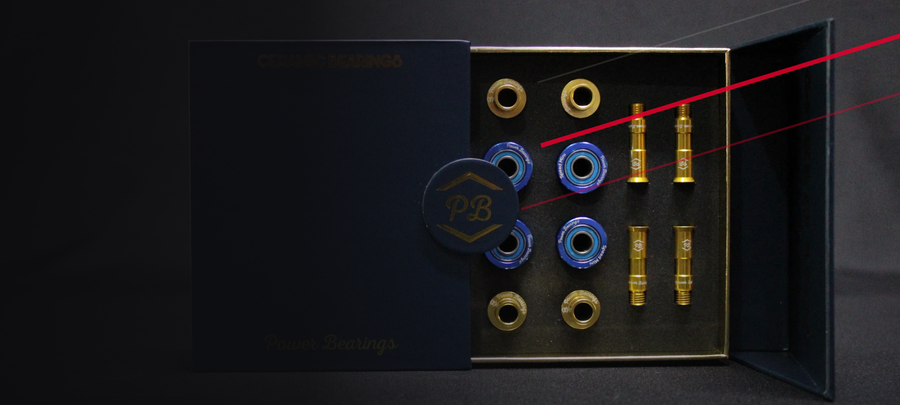
New wheels are only half of a fast set. If you are pressing fresh wheels onto bearings, make sure the bearings are clean, correctly spaced and running freely, because a dragging bearing will make even perfectly seated wheels feel slow. A quality set such as the Power Bearings Swiss Ceramic will let your new wheels spin freely from the first lap, so the only thing you are feeling is the wheel bedding in and not a tight or gritty bearing fighting you.
Common mistakes when breaking wheels in
- Judging a new set on the first lap while the urethane is cold and the skin is still on.
- Attacking a hard corner immediately and taking a slide because the wheels have not warmed.
- Leaving rotation too late, so one edge wears into a cone before the set has seated evenly.
- Blaming the bearings for a looseness that is really just fresh, unbedded urethane.
- Skating a fresh set through grit, which polishes the skin instead of wearing it in.
Frequently asked questions
Are new inline speed wheels supposed to feel slippery?
Yes, a little. The smooth outer skin and the cold, sharp profile of a fresh wheel slide more than a seated wheel. This eases within a session as the skin wears and the urethane warms. It is normal and not a fault.
How long does it take to break in a set of race wheels?
Most skaters feel a big improvement within the first full session and settled grip within two or three. Harder XXFirm wheels can take a touch longer than softer XFirm wheels.
Should I break wheels in before a race?
Ideally yes. Fit and seat a new set in training rather than pulling them out of the packet on race morning. A short session lets you reach settled grip and check your rotation before it matters.
Does rotating new wheels early really help?
It does. Inline wheels wear on the inner edge first, and rotating before that wear sets deep keeps the set seating evenly and extends its life. Early rotation is one of the simplest speed and longevity habits there is.
Can I speed up break in with sandpaper?
Lightly scuffing the skin can wake a wheel up, but it is easy to overdo and ruin an even profile. For most skaters, simply skating the set in sensibly gives a better and more even result than sanding.
The short version
New race wheels feel glassy because fresh urethane has a smooth skin and a sharp, cold profile. Skate the first session steady, let the wheels warm before you push hard, rotate them early so they seat evenly, and pair them with clean, free running bearings. Do that and a good set will reach its true grip quickly and reward you with corners that bite and straights that roll. Browse the full range in the JUNK wheels collection and match the hardness to your floor and your weight.