Skaters spend hours debating wheel size and durometer, yet one of the most important parts of a race wheel is the one nobody names out loud: its profile. Profile is the shape of the wheel when you look at it end on, the curve that runs from one side of the riding surface to the other. That shape decides how much rubber touches the floor at any moment, and that patch of rubber is where all your grip and all your rolling resistance live. Two wheels can share the same diameter and the same hardness and still feel completely different on the road because their profiles are different. This guide explains profile and contact patch in plain terms, so you can look at the wheels on your skates and understand why they behave the way they do, and choose your next set with confidence.
What wheel profile actually means
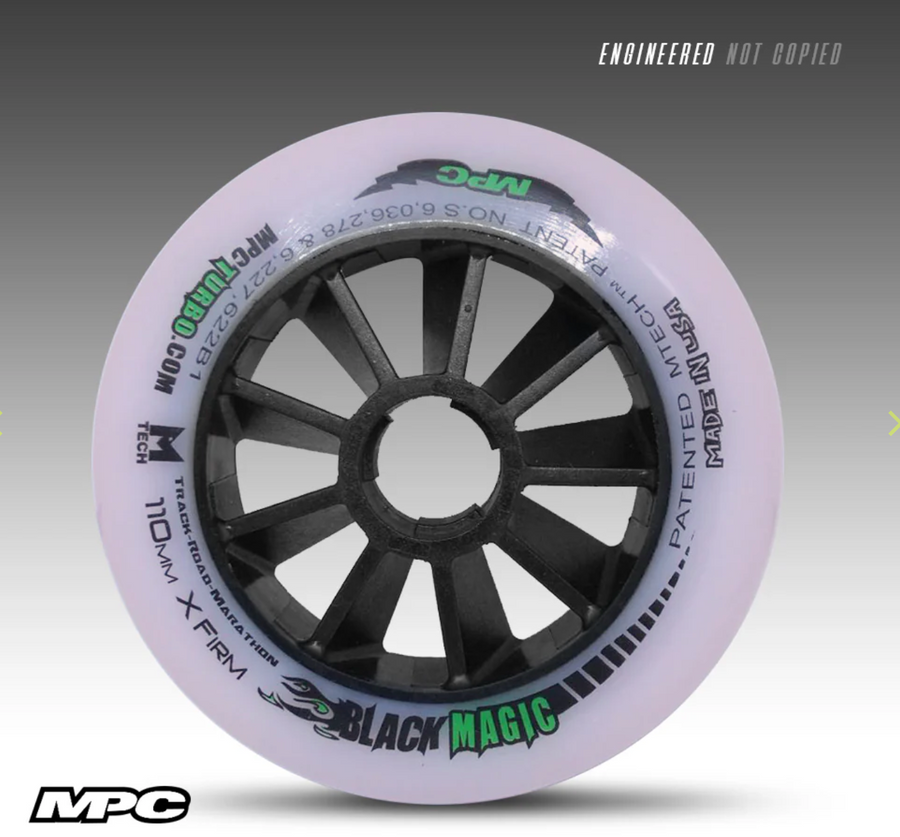
Imagine slicing a wheel straight down the middle and looking at the cut face. The urethane does not come to a flat edge like a car tyre. Instead it curves, and the tightness of that curve is the profile. A sharp, pointed curve is usually called a bullet profile because the wheel tapers to a narrow riding line, a bit like the nose of a bullet. A gentler, more open curve is a rounder profile that spreads the rubber over a wider band. Speed wheels sit somewhere along that range, and each brand tunes the shape to suit a purpose. The JUNK Voodoo, the JUNK Road Reaper and the MPC Black Magic are all built for high speed skating, and getting to know how a profile behaves helps you read what any of them will feel like under your foot.
A bullet profile taps a narrow line into the road, while a rounder profile spreads the rubber over a wider band. That difference sets the whole character of the wheel.
The contact patch and why it rules everything
The contact patch is the small area of urethane pressed flat against the floor at any instant. It is tiny, often smaller than a fingernail, yet everything you feel through the skate passes through it. A larger contact patch grips harder, because more rubber is biting the surface, and it also flexes and deforms more, which turns motion into heat and slows you down a little. A smaller contact patch grips less but rolls with less resistance, so it feels faster and freer on a clean, smooth surface. Profile is simply the tool a wheel designer uses to set the size of that patch. Bullet shapes shrink the patch for roll, rounder shapes grow it for grip. Neither is better in the abstract, they are choices for different conditions.
Grip against roll: the trade at the heart of every wheel
Every wheel is a compromise between grip and roll, and profile is where that compromise is dialled in. On a slick indoor floor or a dusty outdoor track you want more grip so the wheels hold your line through the corner instead of washing out, and a rounder profile earns its keep there. On grippy, high quality asphalt or a fast banked track you may already have all the grip you need, so a bullet profile lets you trade some of that surplus for a lighter, faster roll. Your body weight plays into this too. A heavier skater presses the wheel harder and naturally opens up a bigger contact patch, so they can often run a sharper profile than a lighter skater who needs the extra rubber of a rounder shape to find the same bite.
Profile is the setting on the scale between grip and roll. Slick floors and heavy corners tip you toward grip, clean fast surfaces let you tip toward roll.
How profile changes as the wheel wears
A wheel does not keep the same profile for life. As you skate, the riding surface wears down, and because most skaters lean and push more on one edge, wheels tend to wear unevenly into a coned shape. A wheel that started as a clean bullet slowly becomes lopsided, with more rubber on one side than the other. This is why rotation matters so much: moving and flipping your wheels on a schedule keeps the profile even and lets you use the full thickness of the urethane before the shape is gone. A coned, worn wheel grips differently on its two edges and can make your skating feel twitchy, so reading the profile as it wears tells you when to rotate and when a set is finished. Firmer urethane, such as the XXFirm option many of these wheels come in, tends to hold its profile longer than a softer XFirm, which is one quiet advantage of a harder wheel for heavier or more powerful skaters.
A fresh wheel wears into a coned shape as you lean and push. Regular rotation restores an even profile and lets you use all of the urethane.
Matching profile to your skating
So how do you choose? Start with your surface and your event. If you mostly skate a slick indoor track, tight technical circuits or gritty outdoor roads where holding the corner is the challenge, lean toward a rounder profile and a grippier setup. If you race on smooth, fast asphalt or a well kept banked track and you want free speed on the straights, a bullet profile rewards you. Then factor in your size and power. Lighter and newer skaters usually benefit from the security of more grip, while heavier and stronger skaters can run sharper profiles because they load the wheel enough to find grip anyway. Finally, think about the whole package: profile works alongside diameter and hardness, and your frame ties it together. A stiff, well set frame such as a LiveLica Aerolite 4x110 lets a fast profile do its job without the platform flexing and stealing your energy.
Reading a wheel before you buy
You do not need a laboratory to judge a wheel. Look at it end on and note whether the shape is sharp and pointed or open and round. Press your thumb into the riding surface to feel how firm the urethane is, remembering that firmer holds its shape longer and softer bites more on slick floors. Think about where you skate most, how much you weigh and how hard you push. With those few pieces of information the marketing names matter far less, because you can predict how a wheel will behave from its profile and hardness alone. That is the real value of understanding profile: it turns a wall of similar looking wheels into a set of clear, honest choices.
Frequently asked questions
Is a bullet profile always faster?
Not always. A bullet profile rolls with less resistance on a clean, grippy surface, which feels faster, but on a slick floor it can slide and cost you more time in the corners than it saves on the straights. The fastest wheel is the one that grips enough for your surface and then rolls freely.
Does profile matter more than durometer?
They work together. Durometer sets how hard the rubber is and profile sets how much of it touches the road. A firm bullet feels very different from a firm round wheel, so it is best to consider both rather than fixing on one number.
How do I stop my wheels coning so quickly?
Rotate them on a regular schedule, flipping each wheel so both edges share the wear, and consider a firmer compound if you are a heavier or more powerful skater, since it holds its profile for longer.
Can I mix profiles across my setup?
Most skaters keep one type of wheel across the frame for a predictable feel, but as wheels wear you can place slightly more worn wheels in less loaded positions during rotation. Mixing very different profiles on purpose usually makes the skate feel unpredictable.
Once you can read a profile at a glance, choosing race wheels stops being guesswork. Match the shape to your surface, your weight and your push, keep the profile even with regular rotation, and let a stiff frame carry it all cleanly to the road.