Ask ten inline speed skaters whether ceramic or steel bearings are better and you will get ten confident answers, most of them different. The truth is calmer than the arguments. Both can be excellent, both have a clear place, and the right choice comes down to how you skate, how often you train, and what you want to spend. This guide walks through how a skate bearing actually works, how ceramic and steel really compare, what the ABEC number does and does not tell you, and which set in the LiveLica Power Bearings range fits your level.
Bearings are the quiet engine of a fast skate. Eight of them sit inside your wheels, two per wheel on a four wheel setup, and every push you make has to pass through them before it reaches the ground. Get them right and the whole skate feels free and eager. Get them wrong, or let them clog with grit, and even the best wheels feel like they are dragging an anchor.
How a skate bearing works
A bearing is a simple idea built to a fine tolerance. An inner race sits on your axle, an outer race presses into the wheel, and a ring of balls rolls between the two so the wheel can spin freely around the axle. A cage keeps those balls evenly spaced, and a pair of seals shields the polished inner surfaces from dust and water. The quality of each part, and how precisely they are made and finished, is what separates a fast, long lasting bearing from a cheap one that feels rough after a month.
A 608 skate bearing in cross section, the same size that fits most inline speed wheels.
Once you can picture that layout, the ceramic against steel question gets much easier, because the only part that really changes between the two is the balls, and sometimes the finish on the races.
Steel bearings, the dependable workhorse
A good steel bearing rolls beautifully and costs far less than ceramic, which is why it is the sensible starting point for most skaters. Precision steel takes hard, repeated efforts, shrugs off the odd knock, and gives you a real racing roll without a racing budget. The trade offs are honest. Steel is heavier than ceramic, so it spins up a fraction slower and carries more rotating weight at the rim. It runs a little warmer on very long efforts. And bare steel can rust if you skate through water and then leave your bearings wet, so it rewards a quick wipe and a drop of oil after damp sessions.
For training days, club racing and any skater still building their engine, steel is not a compromise. It is the smart spend. In the Power Bearings range the Red set is the entry point and the best value for money option we stock, precision steel priced from around Rs 9,080. Step up to the Super, from around Rs 10,850, and you get an ABEC 9 rated steel bearing that is faster, quieter, smoother and more durable, happy being trained on all week and raced at the weekend.
Ceramic bearings, the racing upgrade
Ceramic bearings swap the steel balls for ceramic ones, usually running in steel races, a build known as hybrid ceramic. Ceramic balls are harder, rounder and lighter than steel, and they do not gall against the steel races under heat the way steel on steel can. In plain terms that means a ceramic bearing spins up faster because there is less rotating weight, runs cooler on long efforts, holds its speed deeper into a race, and copes better with heat and moisture. That is why ceramic is the classic upgrade once your skating has outgrown steel.
Ceramic is not magic, though, and it is not for everyone. It costs more, the gains are small until your own technique is clean enough to feel them, and it still needs to be kept clean and oiled. A racer who maintains their kit will love it. A beginner who never cleans a bearing will not see the benefit.
Two ceramic materials, Si3N4 and ZrO2
You will see two ceramic materials on skate bearings. Silicon nitride, written Si3N4, is the material serious racers reach for, prized for being extremely hard, light and smooth. Zirconia, written ZrO2, is tougher and more forgiving, offering a lovely blend of speed and resilience at a friendlier price. Both beat standard steel balls in the ways that matter for skating, and both sit in the Power Bearings range.
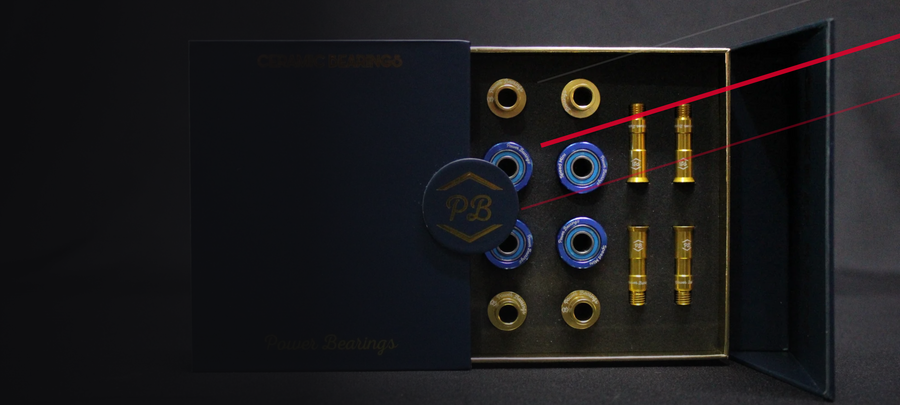
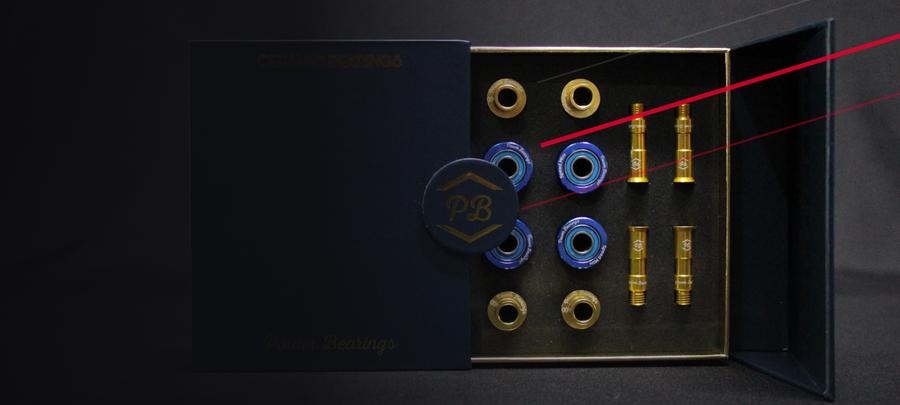
The gentlest way into ceramic is the Gold Ceramic, from around Rs 17,930, which pairs ZrO2 ceramic balls with steel races and a protective gold titanium coat. The maker rates the balls at around 30 percent lighter than steel and 40 percent tougher, so you get the cooler running and freer spin of ceramic without the top tier price. When you are ready for the full race bearing, the Swiss Ceramic, from around Rs 31,500, uses cryogenically treated Si3N4 balls that the maker lists as 50 percent lighter and 40 percent more robust than precision steel, saving roughly 0.8 to 1.0 watts per bearing at speed. Across sixteen bearings, over a long race, that adds up.
The Power Bearings range from best value steel up to full race ceramic.
Ceramic against steel at a glance
If you want the short version, here is how the two stack up for inline speed skating. Steel wins on price and on sheer toughness, and a quality steel set is all most skaters ever need. Ceramic wins on weight, on how cool it runs, and on how well it holds speed late in a long effort, which is exactly what a racer is paying for. On rust, ceramic balls do not corrode, though hybrid ceramics still have steel races that want the same care. On maintenance, both need clean, light oil to stay fast. Neither is a shortcut around looking after your kit.
So which should you buy?
Match the bearing to how you actually skate rather than to the fastest thing on the page. If you are new to speed or skate mostly to train, start with a quality steel set and put the saving toward wheels and coaching. If you train seriously and race, and you keep your kit clean, a first ceramic set makes real sense. If you are chasing every advantage on the start line and in the final laps, full race ceramic is the answer. Whatever your level, buy a full set of sixteen and look after it, because a well kept mid priced bearing beats a neglected expensive one every time.
Will they fit? 608 against 627
Almost every inline speed wheel takes a standard 608 bearing, which measures 8mm bore by 22mm outer by 7mm wide. A smaller size, the 627, has a 7mm bore and turns up on some quad and specialist setups. The two are not interchangeable, so check your axle size before you order. Whichever you run, a standard pair of four wheel inline skates needs sixteen bearings, two per wheel, so buy a full set rather than a handful.
Installation, do not crush your bearings
Fast bearings can still feel slow if they are fitted badly. Press each bearing squarely into the wheel with the spacer between the pair, then tighten the axle only until the play disappears. Over tightening pinches the races and adds drag that no amount of oil will fix, so nip the bolt up, spin the wheel to check it turns freely, and back off a touch if it binds. Good spacers and a sensible axle torque let any set in the range, steel or ceramic, give you everything it has.
The free speed most skaters ignore
Here is the part that matters more than the ceramic against steel debate. A clean, well oiled steel bearing will roll faster than a filthy, dry ceramic one every single time. Dirt and water are what actually slow you down. Wipe your bearings after dusty or wet sessions, keep them dry between skates, and re oil them when the roll starts to feel short or noisy. A single drop of Speedslick Pro bearing oil, from around Rs 500, cuts friction and protects the internals between cleans. Looking after what you already own is the cheapest speed upgrade there is.
Frequently asked questions
Are ceramic bearings worth it?
For racing, and for skaters who train regularly and maintain their kit, yes. Ceramic runs cooler, holds speed on long efforts and lasts well. For learning and for value, a quality steel set like Red or Super is still an excellent choice.
Does a higher ABEC number mean more speed?
No. ABEC measures manufacturing tolerance, not speed. It is one useful sign of precision, but ball material, cage design and clean oil have a far bigger effect on how a bearing feels under your feet.
How often should I oil my bearings?
Whenever the spin starts to feel slow or sounds gritty, and always after skating in wet or dirty conditions. A light, regular routine beats an occasional heavy clean.
How many bearings do I need?
Sixteen for a standard pair of four wheel inline speed skates, two per wheel.
Still weighing it up? Browse the full Power Bearings collection and pick the set that matches your goals, then keep it fast with a little regular care.