Ask around any skating group and you will hear the same question, usually from someone who has just pulled a slow, gritty bearing out of a wheel. Can I just use WD40 on my skate bearings? Or the three in one oil from the shed, a drop of sewing machine oil, or the chain lube from a bicycle? It feels harmless. Oil is oil, surely. In reality the oil you choose has a real effect on how far your wheels roll after each push, how quickly your bearings wear out, and how much of your training energy turns into forward speed rather than heat and noise. This guide explains what a skate bearing actually wants from an oil, why the bottle in the garage is usually the wrong answer, and how to keep your bearings fast with almost no effort.
What a skate bearing actually needs from an oil
A skate bearing is a small precision part. Inside, a ring of steel or ceramic balls runs between two polished tracks called races, held apart by a cage and usually covered by a shield on each side. When you push off, those balls roll thousands of times per lap. The job of the oil is not to fill the bearing. It is to leave a microscopically thin film between each ball and the race so that metal never rubs directly on metal. That film lowers friction, protects the polished surfaces from wear, and lets the wheel carry on spinning long after you stop pushing.
This is why bearing oil is really a speed part, not just a maintenance product. A well oiled bearing gives you a long, free glide, so more of every stride becomes distance. A dry or badly oiled bearing feels slow and sounds harsh, drags your speed down on the straights, and grinds itself out from the inside. Getting the oil right is one of the cheapest ways to keep a fast skate fast.
A skate bearing rolls on a film of oil, not a pool of it. One drop is all it takes to keep metal off metal.
So can you use WD40 on skate bearings?
The classic blue and yellow can of WD40 is not really a lubricating oil at all. It is mostly a water displacing solvent with a very light oil content. Sprayed into a bearing it does two useful things and one harmful thing. It flushes out old grease and moisture, and it frees a stiff bearing enough to spin again, which is why it feels like a quick fix on the day. The trouble is what happens next. The solvent thins and flashes off within a session, and because it has stripped out whatever lubrication was already in there, you are left with a nearly dry bearing running metal on metal. It feels fast for ten minutes and then feels worse than before, wearing the races the whole time.
So the honest answer is this. WD40 is fine as a cleaner if, and only if, you follow it with a proper bearing oil once the bearing is dry. On its own it is not a lubricant and it will cost you speed and bearing life. Reach for it to clean, never to run.
The three ways household oils go wrong
Household oils tend to fail a skater in one of three ways. Too thick, too thin, or too aggressive. Understanding these three traps makes it obvious why a purpose made oil exists.
Too thick and it drags
Heavy machine oil, thick motor oil and gear oil protect metal beautifully, which is exactly why they exist. But a thick oil is like treacle to a tiny steel ball. It resists the roll, so the wheel slows sooner and your glide shortens on every straight. You end up spending energy stirring oil rather than moving forward.
Too thin and it vanishes
Very light oils, including some sewing and clock oils and the lightest spray lubricants, feel wonderful for the first few laps. Then they thin out with heat or simply evaporate, and the bearing goes dry in the middle of a session. A dry bearing is loud, slow and quietly grinding itself away.
Too aggressive and it strips
Solvent based sprays and some penetrating oils are designed to break down grease and creep into tight gaps. Inside a bearing they wash away the very film you are trying to keep, and over time some can attack the plastic cage and shields. They belong in the cleaning step, not the lubricating step.
Too thin dries out mid session, too thick drags all session. The right oil sits in the middle and keeps its glide.
What a purpose made bearing oil does differently
A bearing oil made for skating, such as our own Speedslick Pro Bearing Oil, is formulated to sit in the narrow band between too thick and too thin. It is light enough to let the balls spin freely, so your glide stays long, yet stable enough that it does not evaporate or wash out after a handful of laps. It clings to the races as a thin film rather than pooling, and it is safe on the plastic parts inside modern bearings. That balance is the entire point. You are not paying for a magic ingredient, you are paying for a viscosity chosen for exactly this job, in a 10 ml bottle with a fine tip so you can place a single drop where it belongs.
How to apply bearing oil the right way
Applying oil well matters as much as choosing it. The routine is short and hard to get wrong.
- Remove the wheels and pop the bearings out of the hubs.
- If the bearings are dirty, clean and dry them fully first. Oil binds to grit, so oiling a dirty bearing traps dust inside and slows it down.
- Place one drop of oil onto the balls, through the gap in the shield, or straight onto the balls if you have lifted the shield off.
- Spin the bearing by hand for a few seconds so the film spreads evenly around the race.
- Wipe away any excess, refit the bearings and wheels, and skate.
For the full strip and clean routine, follow our guide on how to clean and oil skate bearings. This post is about the oil itself, that guide walks the whole clean.
The whole routine per bearing takes seconds. One drop in, a quick spin to spread it, then wipe off what sits on the outside.
How much and how often
One drop per bearing is the sweet spot. It is tempting to add more, on the logic that if a little is good then a lot must be better, but a flooded bearing is a dust magnet. The excess oil creeps to the outside of the shield, collects grit off the floor, and turns into a slow grinding paste. One drop lubricates, anything more attracts the very dirt that kills bearings.
Reoil by feel, not by the calendar. When the roll starts to feel short, or the bearing sounds dry and gritty as you spin it close to your ear, it is time. Skaters who train outdoors in dust or damp will clean and reoil far more often than those on clean indoor floors. Because you use only a single drop each time, a 10 ml bottle lasts a very long time. A four wheel inline pair holds sixteen bearings, which is sixteen drops, so a bottle services many full sets before it runs low.
More oil is not more speed. A flood pulls in grit and turns to grinding paste, while one clean drop keeps the roll free.
Do ceramic bearings need oil too?
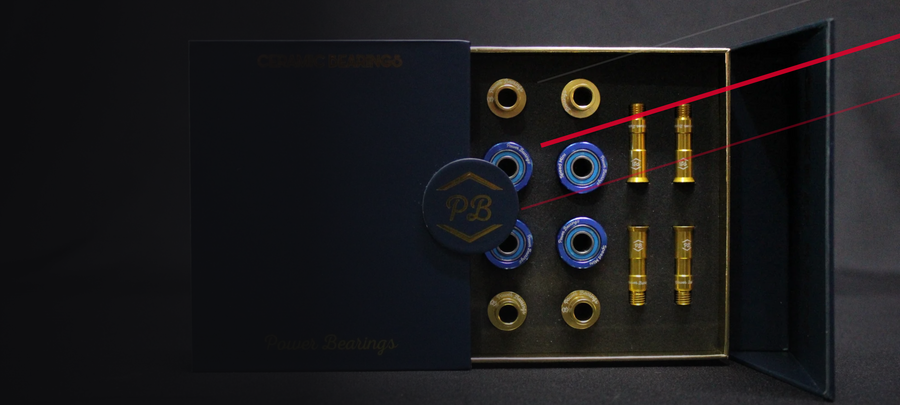
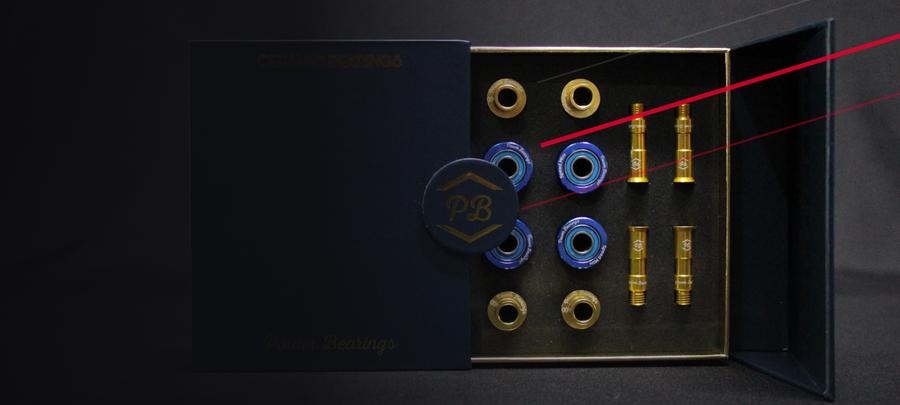
Yes, and this is a common misunderstanding. Ceramic balls are harder, smoother and cope with heat and water far better than steel, which is why ceramic bearings such as the Power Bearings Swiss Ceramic set roll so well and last so long. But the races those balls run in are still steel, and steel races still need a film of oil to stay protected and fast. A dry ceramic bearing will still wear and still feel slow. The routine is identical, one drop per bearing, whether you run ceramic or a steel set like the Power Bearings Super 6 Ball Steel.
Oil or grease for skating?
Factory bearings often ship packed with grease because grease lasts a long time and keeps water out, which suits skateboards and general use. For speed skating most racers prefer a light oil, because grease is thick and adds drag in the same way a heavy oil does. Oil gives a longer, freer roll at the cost of needing more frequent attention. If you are chasing glide, oil wins. If you never want to think about maintenance again, grease trades speed for longevity. Speedslick Pro is a light oil made squarely for the fast end of that trade.
Frequently asked questions
Can I use WD40 on skate bearings?
Only as a cleaner, never as the lubricant. It flushes and frees a bearing but flashes off quickly and leaves it dry. If you use it to clean, dry the bearing fully and then add one drop of proper bearing oil.
Is sewing machine or three in one oil good enough?
They can work in a pinch, but they tend to sit at the wrong end of the range, either so thin they vanish or heavy enough to drag. A light oil made for bearings gives a much more predictable, lasting roll.
How many drops per bearing?
One. More attracts dust and adds drag without ever making you faster.
How often should I reoil?
By feel. When the spin feels short or sounds gritty. Outdoor and wet conditions mean more often, clean indoor floors far less.
Will the right oil actually make me faster?
It will not add power to your stride, but it stops you losing speed to friction and drag, and it keeps your bearings fast for far longer. That is the real win.
Ready to look after your bearings properly? Pick up a bottle of Speedslick Pro Bearing Oil, or browse the full speed bearings collection to match the right set to how you skate.