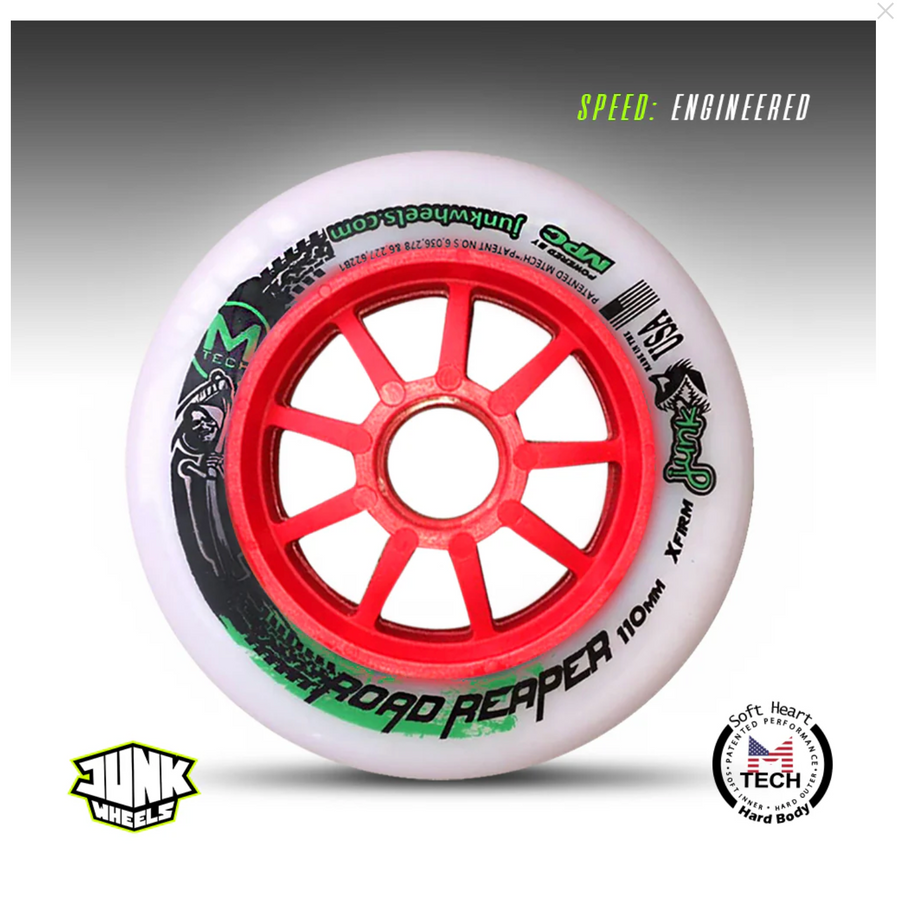
Race wheels are one of the biggest running costs in inline speed skating, and most skaters wear theirs out long before they need to. The culprit is almost never the urethane itself. It is uneven wear, caused by never rotating, never flipping, and skating hard on a lean that slowly grinds one side of every wheel into a slope. A good set will give you a long, fast life if you look after it, and this guide shows you exactly how. Whether you ride the JUNK Voodoo XFirm wheels or the MPC Black Magic XFirm wheels, both sold as a full set of eight, the same care routine applies.
The good news is that wheel care is simple and quick. Ten minutes after a session, once a week, will keep your wheels rolling round and even, protect your speed, and save you a surprising amount of money over a season. Here is how to do it properly.
Why inline wheels wear unevenly in the first place
When you skate, you almost never load a wheel dead flat. You push to the outside, you lean into corners, and your body has a stronger and a weaker side. Over time this grinds the urethane into a slight cone shape, with the inner edge worn lower than the outer edge. A coned wheel has less contact with the ground, feels skittish, and loses grip exactly when you need it most. Left unchecked, one or two wheels wear out while the rest of the set still has plenty of life, and you end up throwing away good urethane.
Skating on a lean wears the inner edge lower than the outer edge, turning a full round wheel into a coned wheel with less grip.
Rotating and flipping the wheels spreads that wear across the whole set and across both edges of each wheel. Instead of two wheels coning badly while the others still look new, all eight wear down slowly and evenly, staying rounder and faster for far longer.
How often should you rotate?
There is no single perfect number, but a good rule for most speed skaters is to rotate every one to three sessions, depending on how hard and how far you skate. If you train daily on rough outdoor tarmac, rotate more often. If you skate a few times a week on smooth surfaces, once a week is usually fine. The key is consistency. A small rotation done regularly keeps wheels even, while a big rotation done rarely cannot undo damage that has already set in.
Get into the habit of checking your wheels with your fingertips after every session. Run a finger across the riding surface of each wheel, from the inner edge to the outer edge. If you can feel a clear slope, that wheel needs to move and flip. Your fingers will pick this up long before your eyes do.
The basic rotation and flip method
The aim is two things at once. You move each wheel to a new position that wears it differently, and you flip it over so the worn low edge becomes the fresh high edge. Here is a simple, reliable approach for a standard four wheel frame.
- Remove all the wheels and lay them out in order so you know which position each came from. A row on a towel, left skate then right skate, is enough.
- Flip every wheel over so the inner worn edge now faces outward. This alone does most of the work of evening out cone wear.
- Move the most worn wheels, usually the ones under your strongest pushing positions, to the positions that see the least wear.
- Move the least worn wheels into the hardest working positions so they take their share of the load.
- Refit, check each wheel spins freely, and make sure your axles are snug rather than overtightened. An axle done up too hard will squeeze the bearings and rob you of roll.
Move each wheel to a new position and flip it over, so every wheel wears its other edge and the whole set stays even. The exact pattern matters less than doing it consistently.
Many skaters use a front to back swap combined with a flip, so the front wheel moves toward the rear and every wheel turns over. The exact pattern matters far less than doing it consistently and always flipping. Keep it simple enough that you will actually stick to it after a hard session.
Rotating a three wheel or Hi Lo setup
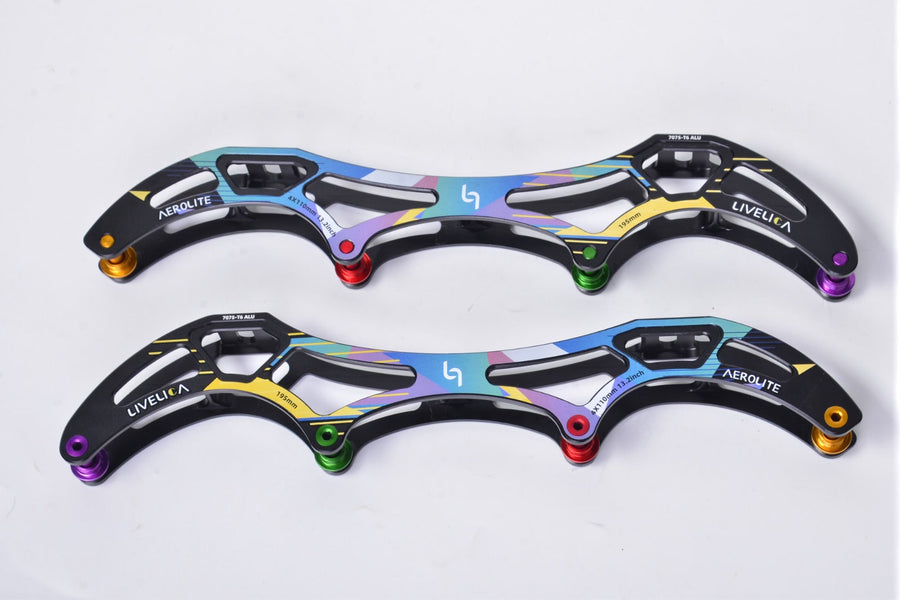
Not every skater runs four equal wheels. The LiveLica Aerolite range covers 4x110, 4x100 and 4x90 frames, a 3x125, a 90x3 and a Hi Lo frame that runs three 110mm wheels plus one 100mm wheel, so the rotation you use has to match the frame under your boot. You can see the full line up in the LiveLica Aerolite frames collection.
On a three wheel frame there are only three positions per foot, six across the pair, so every wheel is doing more work and wear arrives faster. The middle wheel usually takes the heaviest load because it sits under your body weight through most of the stroke. A simple pattern is to move the middle wheel to the front, the front wheel to the rear, and the rear wheel into the middle, flipping all three as you go. Swapping wheels between the left and right skate as well helps, because your two legs almost never load the wheels the same way.
A Hi Lo frame needs one extra rule. The smaller wheel is a different diameter, so it cannot swap into a large wheel position without changing your pitch. Rotate the three larger wheels among themselves, flip them, and flip the smaller wheel in place. It will wear at its own rate, and that is fine as long as you keep the three big wheels even.
Three wheel frames rotate in a simple loop with every wheel flipped, while a Hi Lo frame keeps its smaller wheel in its own position so the pitch of the frame stays the same.
Keep the set matched
Wheels are sold as a set of eight for a reason. A full set covers a pair of four wheel frames, keeps the compound identical across every position, and starts every wheel at the same diameter. That matched start is what makes rotation work, because you can move any wheel to any position without changing how the frame sits under your foot.
Compound matters here too. The XFirm versions of both the JUNK Voodoo and the JUNK Road Reaper are quoted at 84 to 86A, a middle firmness that grips well on hard, smooth and dry surfaces. If you mix a firmer wheel into a softer set, the harder wheel will sit slightly proud as the others wear down and will take more than its share of the load, which is the fastest way to cone a single wheel. Keep the set together, rotate it together, and retire it together.
Do not forget the bearings while the wheels are off
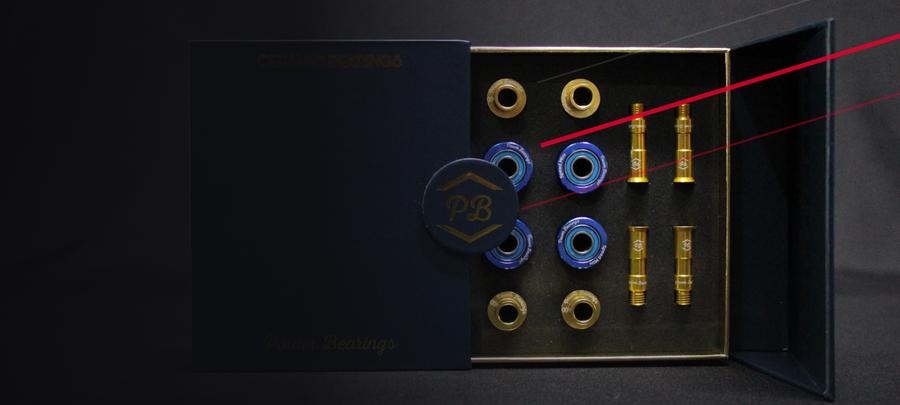
Every rotation is the perfect moment to look after your bearings too, because the wheels are already off and the bearings are exposed. A pair of four wheel skates runs sixteen 608 bearings plus spacers, and all sixteen wear at different rates depending on position and how much grit they have picked up. Wipe grit off the shields, spin each bearing and listen for grinding, and add a drop of a proper skate lubricant if any of them sound dry. A clean, well oiled bearing set does as much for your roll as fresh wheels. A light, purpose made oil such as Speedslick Pro bearing oil keeps them spinning freely without attracting the dust that thick greases pull in.
Doing wheel rotation and a quick bearing check together as one routine means your whole setup stays fast, and you catch small problems before they cost you a wheel or a bearing.
Bigger wheels, bigger reasons to rotate
Larger diameters such as 110mm carry more speed but also cost more, so even wear matters even more on a big setup like the JUNK Road Reaper 110 XFirm wheels. On a full set of tall wheels a single badly coned wheel throws off the feel of the whole frame, and you will notice it as a wobble or a loss of confidence through fast corners. Rotation discipline pays off directly in how planted your skate feels at speed. If you are planning your next set, explore the sizes and compounds in the JUNK wheels collection.
Storing and cleaning your wheels
Urethane does not love heat or sunlight for long periods. Do not leave your skates baking in a car boot or out on a hot balcony, because heat can soften and distort wheels over time. In an Indian summer that is an easy mistake to make, and a set left in a parked car can be quietly ruined in an afternoon. After skating outdoors, wipe road grime off the wheels with a dry cloth so grit does not work its way into your bearings the next time you skate. If your wheels pick up tar or sticky residue, a cloth and a little patience is all you need. Avoid harsh solvents, which can attack the urethane.
Store your skates somewhere cool and dry, off the ground, and check the wheels before your next session rather than discovering a problem mid warm up.
When is a wheel actually finished?
A wheel is done when it has worn down close to the hub, when it has coned so badly that flipping no longer gives you a usable riding edge, or when the urethane has gone hard and lifeless with age and no longer grips. Even wear from good rotation means all your wheels reach this point together, which is far more economical than replacing them one at a time. When that day comes, replace the whole set so your diameters stay matched across the frame.
Frequently asked questions
How often should I rotate my inline speed wheels?
For most skaters, every one to three sessions works well. Rotate more often if you train hard on rough surfaces, and always flip the wheels when you rotate so both edges share the wear.
Does rotating wheels really make them last longer?
Yes, noticeably. Uneven cone wear is what kills most sets early. Spreading wear across all eight wheels and both edges keeps them rounder and lets the whole set reach the end of its life together.
How do I rotate a three wheel frame?
Move the middle wheel to the front, the front to the rear and the rear into the middle, flipping all three. On a Hi Lo frame, rotate the three larger wheels among themselves and simply flip the smaller wheel in its own position.
Should I clean my bearings every time I rotate?
You do not need a full strip down every time, but a quick spin test, a wipe of the shields and a drop of oil when they sound dry is a great habit while the wheels are already off.
Can I mix worn and new wheels in one set?
It is best avoided for racing, because mismatched diameters change how your frame sits and feels. If you must, place the newest wheels in the hardest wearing positions and keep an eye on how they even out.
Look after your urethane with a simple rotation and care routine, keep your bearings clean at the same time, and your wheels will stay faster and last far longer. That is time and money well saved, and a better ride every session.