If you are wondering how to teach a child inline speed skating, the good news is that children usually learn the skating part far faster than adults do. The hard part is everything around it: keeping the sessions short enough to stay fun, building the right skills in the right order, and resisting the urge to make a nine year old skate laps because that is what training looks like on television. This guide lays out a first season plan you can actually follow, whether you are a parent at the local ground with one child or a new coach with a group of eight.
We have written this around a child who can already roll forward a little and wants to go faster. If your child has never stood on skates, the first month below is exactly where to start. The plan assumes two or three sessions a week of forty five to sixty minutes, which is plenty for a first season and far better than two long sessions that end in tears.
Before the first session: the three things that matter
Children do not need expensive equipment to start. They need three things, and only three things, to be safe and to make progress.
A helmet that fits. This is not negotiable and it is not the place to save money. A certified helmet that sits level, does not rock and does not slide back off the forehead is the single most important item a young skater owns. The LiveLica ventilated skate helmet is CE EN1078 certified and uses a dial fit system, which matters a lot with children because you can tune the fit as they grow through the season rather than buying again in March.
Gloves. Children fall forward onto their hands constantly, and a scraped palm ends a session faster than a bruised knee. A pair of LiveLica skate gloves costs very little next to the number of sessions it saves. Knee and elbow protection is worth having too, particularly in the first two months.
Skates that are the right size today. The single most common mistake parents make is buying two sizes too big so the skates last longer. A loose boot means the heel lifts, the ankle rolls, and the child learns to skate from the ankle instead of the hip. They then spend a year unlearning it. Buy skates that fit now, with a thumb width of growing room at most, and accept that you will change them.
You also need a flat, smooth, traffic free space. A basketball court, a school ground, an empty car park early on a Sunday. Smooth matters more than big. A child on rough ground spends all their attention on not falling and none of it on learning to push.
Do this check at the start of every session until the child does it without being asked.
The five foundation skills, in order
Speed comes last. These five skills come first, and a child who owns all five will pick up real speed technique in a matter of weeks.
- Falling and getting up. Teach this before anything else, on grass or a mat first. Fall forward, land on knees then hands, roll slightly. Then get up one knee at a time. A child who is not afraid of the ground learns four times faster.
- Standing and marching. Feet in a V, small marching steps on the spot, then marching forward. This builds the ankle and hip stability everything else sits on.
- Gliding on two feet. March, then lift the feet and hold a glide. Make a game of it: how far can you roll without a single step.
- The first real push. Not a running step, a sideways push. The classic teaching tool is the swizzle, where both feet push out and draw back in, because it makes the sideways direction obvious without the child having to balance on one leg.
- Stopping. Children need at least one reliable stop before they are allowed to go fast anywhere. Start with the plough and progress to a T stop when they can balance on one foot. Nothing else gets added until a stop works.
Only after those five does one foot balance, the long glide, the proper low position and crossovers become sensible. A child trying to learn crossovers before they can glide on one foot is being taught to fall over elegantly.
How to structure a session a child will come back to
A child's session is not a shrunken adult session. The attention span is shorter, the recovery is faster, and the motivation is entirely different. Keep the structure the same every week so the child knows where they are, and keep every block short.
Short blocks, one skill at a time, and a game in the middle. The structure is what makes it repeatable.
Two rules make or break this. First, one cue at a time. If you tell a child to bend the knees, push sideways, keep the head up and swing the arms, they will do none of it. Pick the single thing that will help most today and say nothing else. Second, finish while they still want more. A session that ends with the child asking for five more minutes is a session they will want again on Thursday.
A first season, month by month
This is the progression we would use with a child starting from almost nothing. Shift it to fit the child in front of you rather than the calendar. Some children own the first month in a fortnight, others need six weeks, and neither is a problem.
Six months, one skill layer at a time, with a first race only at the end.
Gear that actually suits a young skater
Children are light, short and still growing, and that changes what works. Three principles cover almost every decision.
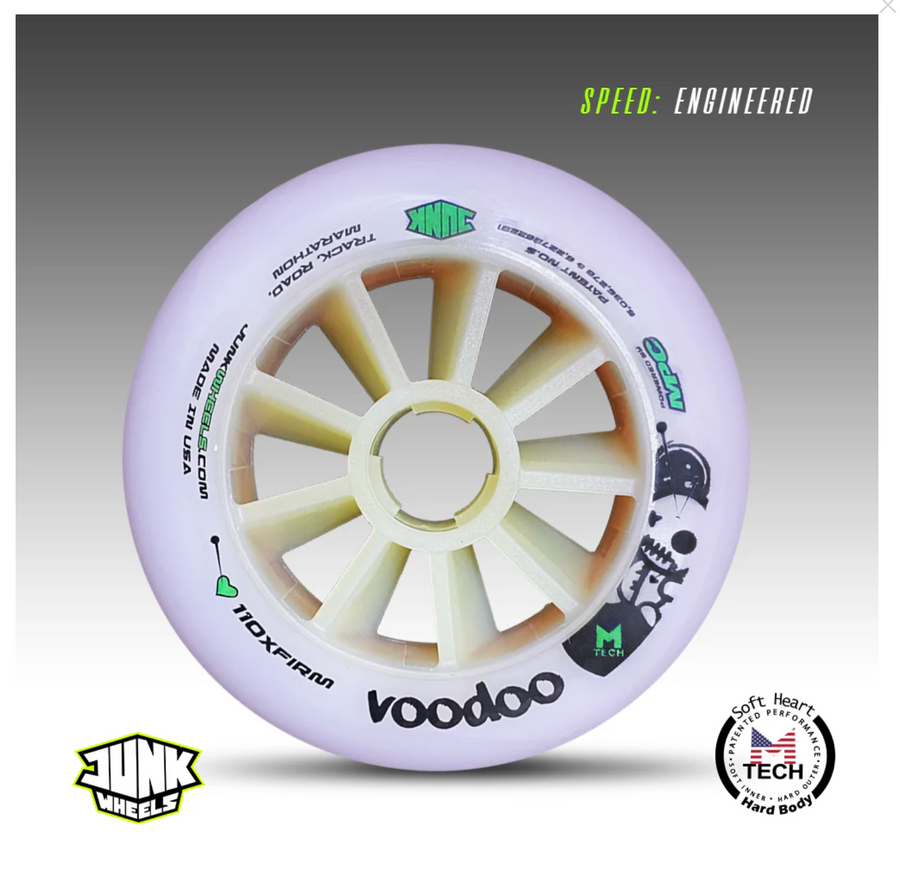
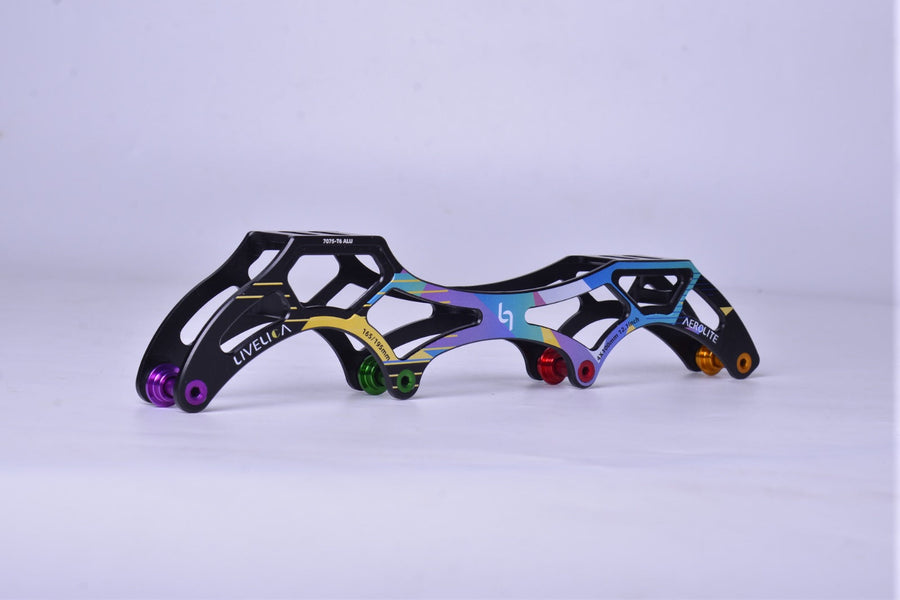
Smaller wheels first. Big wheels roll further but they sit the foot higher off the ground and make the skate longer and harder to turn. A young skater is better served by a lower, shorter setup that they can actually control. That is why we point beginners and junior skaters at frames such as the LiveLica Aerolite 4x90 rather than straight to a long 125mm frame. The whole Aerolite frame range runs from 90mm up to 125mm, so there is a natural path upwards as the child grows and gets stronger.
Frame length has to match the boot. A frame that overhangs a small boot at the front or back makes the skate feel unstable and is harder to balance on. Match the frame to the boot sole rather than to what the fast seniors are using.
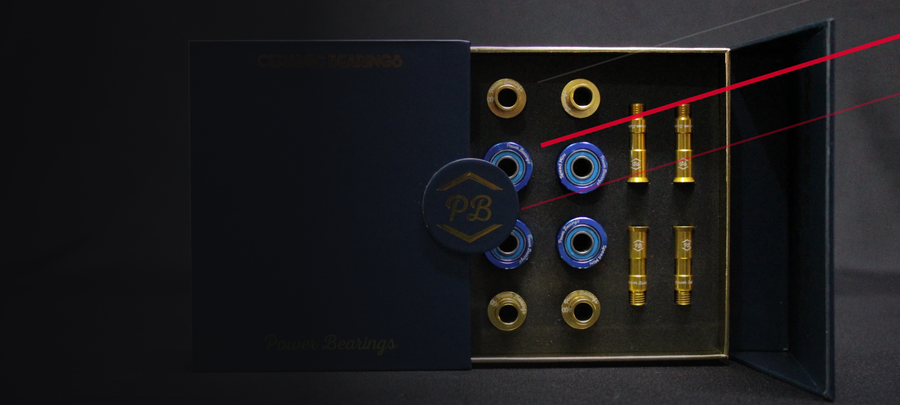
Bearings are the last thing to spend on. A child generates nowhere near enough power for a premium bearing to matter, and they are much harder on their kit than an adult. Clean, honest bearings from the speed bearings collection are plenty, and the money is far better spent on a properly fitting boot and helmet. Teach the child to wipe their wheels and bearings after a dusty session instead. That habit is worth more over a career than any upgrade.
Coaching language that works with children
Adults respond to explanations. Children respond to pictures and games. The same instruction lands completely differently depending on how you word it.
- Instead of bend your knees, try sit like you are on a tall chair.
- Instead of push sideways not backwards, try push the wall away to the side.
- Instead of extend fully, try finish with a long toe, then bring it home.
- Instead of keep your head up, try read the number on my shirt while you skate.
- Instead of lower your centre of gravity, try can you pick up this cone while rolling.
Count successes out loud, not errors. Film thirty seconds on a phone and let the child watch it, because children correct themselves surprisingly well when they can see what they are doing. And give specific praise: that push was long, rather than good job.
The mistakes adults make most often
- Buying skates that are too big. It feels thrifty and it sets technique back a year.
- Making it training too early. Laps and intervals belong to a skater who has chosen the sport. Before that, games build more fitness than drills ever will because the child does not stop.
- Too many cues. One per block. Write the cue on your hand if you have to.
- Skipping the stop. Speed before braking is how children end up frightened, and a frightened child skates high and stiff.
- Comparing children. Growth spurts arrive at wildly different times and nothing about who is fastest at ten predicts who is fastest at eighteen.
- Letting kit become an excuse. Technique, not equipment, is the limiting factor for every child in their first two seasons.
Frequently asked questions
What age can a child start inline speed skating?
Most children can start learning to skate from around four or five, with very short sessions and a lot of games. Anything that looks like structured speed training usually makes sense from about eight onward, and even then it should be a small part of the week. Start with the skill, add the training later.
How long should a session be?
Forty five to sixty minutes including the kit check and the cool down. Two or three of those a week is a full programme for a first season. If a child is still keen at the end, you have the length right.
Do children need speed skates to start?
No. A child can learn every one of the five foundation skills on ordinary fitness skates that fit properly. Move to a speed setup when they have outgrown the skates anyway and have decided they like going fast, not before.
What wheel size should a child use?
Smaller than you think. A lower, shorter setup is easier to balance and easier to turn, and control is what a beginner needs. Grow the wheel size as the child grows and gets stronger rather than starting big.
How do I keep a child motivated through a season?
Vary the games, skate with other children as often as possible, and give them something concrete to chase that is not a lap time: a longer glide, a cleaner crossover, a new stop. Children stay for the people and the fun long before they stay for the results.
Should my child race in their first season?
One or two local events near the end of the season, framed purely as an experience, work beautifully. Travelling to serious competition in a first season is usually a way to make a child anxious about a sport they have barely learned.
What protective gear is essential?
A certified helmet that fits, always. Gloves, almost always, because hands take the first fall. Knee and elbow protection is strongly worth it in the early months while falls are frequent.
Teaching a child inline speed skating is mostly an exercise in patience and sequencing. Get the helmet right, get skates that actually fit, teach falling and stopping before speed, keep sessions short and playful, and add one skill layer at a time. Do that for six months and you will have a young skater with a real foundation, which is worth far more than a child who learned to go fast badly.