Ask two inline speed skaters what wheels and frame they run and you will often get two completely different answers, and both can be right. The reason is simple. One of them mostly races indoors on a smooth polished floor, and the other spends their season outdoors on rough road and banked tracks. The surface under your wheels changes almost every setup choice you make, from how hard your wheels should be to how long your frame is and how carefully you protect your bearings. Get the match right and the skate feels planted, fast and predictable. Get it wrong and you either slide out of every corner or grind along feeling glued to the floor. This guide walks through exactly how an indoor setup and an outdoor setup differ, and how to build each one from the parts LiveLica stocks.
Why the Surface Decides Your Setup
Grip and roll are the two forces you are always balancing. Grip is how well the wheel bites the ground so you can push hard through a corner without washing out. Roll is how freely and how long the wheel carries speed once you are up to pace. A smooth indoor floor gives you plenty of natural grip, so you can afford softer, grippier wheels tuned for control and tight cornering. Rough outdoor tarmac is the opposite. It saps energy and chews urethane, so outdoors you lean towards harder, larger wheels that keep rolling and last longer. Everything below flows from that single idea.
Indoor skating leans towards grip and control, outdoor skating leans towards roll and durability.
Wheels: The Biggest Single Difference
If you change only one thing between your indoor and outdoor skates, change the wheels. Wheel hardness is described by durometer, and most speed wheels are sold in firm compounds so they roll well, but within that range there is real variation. At LiveLica the two common grades you will see are XFirm and XXFirm. XFirm is the slightly softer, grippier of the two, and XXFirm is the harder, faster and longer wearing option. That one step of hardness makes a noticeable difference to how the skate behaves under you.
Indoor Wheels: Grip Comes First
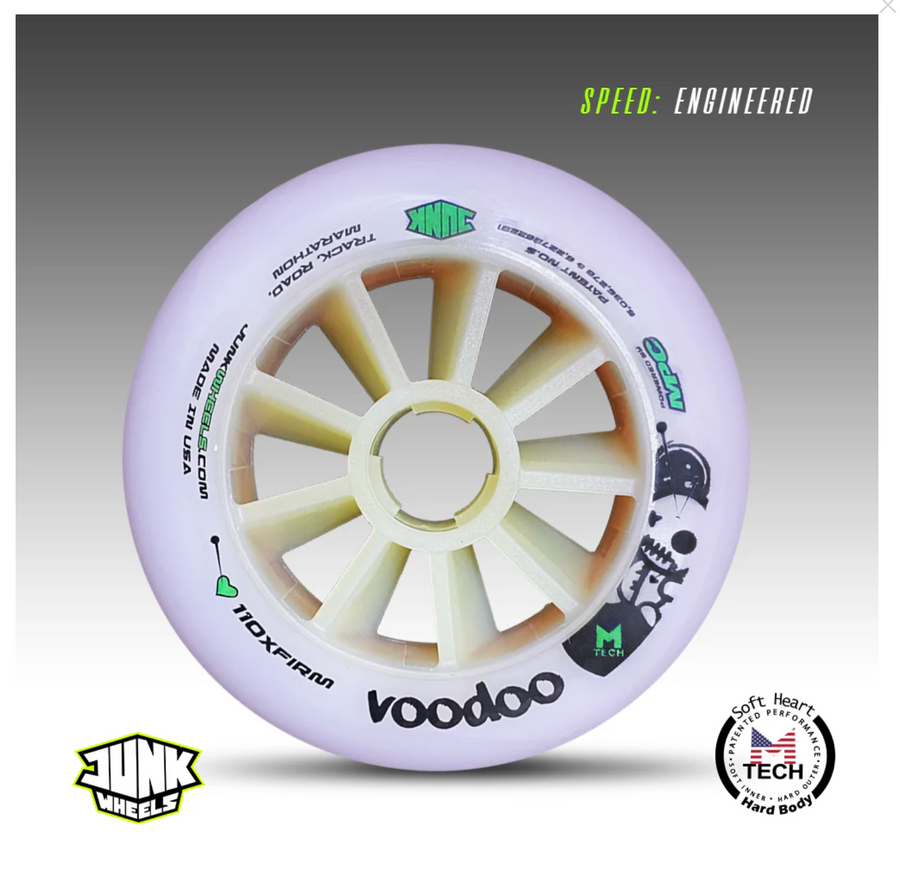
On a clean indoor floor you want the wheel to hold its line so you can commit to a corner and drive out of it. A grippier compound gives you that confidence, and a smaller wheel is quicker to get up to speed and easier to control on a tight indoor track. The JUNK Voodoo XFirm wheels are a natural indoor choice, offering a grippy, controllable feel that suits polished surfaces. If your floor is very fast or you are a heavier, more powerful skater who tends to slide, the XXFirm version of the same wheel gives you more roll while keeping the indoor friendly shape. Indoor racing often favours smaller wheels in the region of 90mm to 100mm because they are nimble through short, sharp corners.
Outdoor Wheels: Roll and Durability
Outdoors the road fights back. The surface is coarse, sometimes damp and often littered with grit, so you want a wheel that keeps rolling and does not wear away in a single long session. Larger, harder wheels shine here. The JUNK Road Reaper 110 wheels are built around this job, pairing a bigger 110mm size with a firm road compound so you carry speed on the open stretches. For skaters who want maximum roll and wear life, the Killer JUNK 110 range and the MPC Black Magic wheels are proven road options that keep rolling when the tarmac gets rough. As a rule of thumb, go XFirm outdoors if you want a touch more grip on rough or slightly damp roads, and XXFirm if your roads are smooth and you want every bit of roll.
Wheel Size and the Frame That Carries It
Your wheels and your frame are a package. A frame is built to hold a particular wheel size and a particular number of wheels, and that dictates the wheelbase, which is the distance between the front and rear axles. A shorter wheelbase turns quickly and feels agile, which suits indoor tracks. A longer wheelbase is more stable and holds a straight line at speed, which suits open outdoor roads. LiveLica builds the Aerolite frame in several layouts so you can match the frame to where you skate.
A shorter frame turns fast for indoor tracks, a longer frame holds speed on outdoor roads.
Shorter Frames for Tight Indoor Tracks
Indoor tracks are small, so the corners come quickly and you spend a large share of every lap turning. A short frame packed with smaller wheels helps you flick from edge to edge. The Aerolite 4x90 frame carries four 90mm wheels on a compact wheelbase, which is a classic indoor and short track road layout that rewards quick feet. The 90x3 layout is another agile choice for skaters who want a lower, nimble platform.
Longer Frames for Open Outdoor Roads
Outdoors you want to sit on top of big wheels and let them run. The Aerolite 3x125 frame carries three large 125mm wheels, which gives you a tall, fast rolling setup made for covering ground on the road. The 4x110 layout is a popular middle ground that keeps four points of contact while still rolling big. You can see how the different layouts compare across the Aerolite range and pick the wheelbase that matches your events.
Bearings: Same Job, Different Enemies
Bearings do the same work indoors and outdoors, letting the wheel spin freely on the axle, but the threats they face are different. Indoors the main enemy is fine floor dust that works its way in over time. Outdoors the enemies are grit, sand and water, all of which can turn a fast bearing into a gritty one in a single wet session. This does not mean you need different bearings for each surface. A quality bearing such as those in the Power Bearings range will serve you well on both, but your maintenance routine should change with where you skate.
If you skate outdoors, clean and re oil your bearings more often, and never skate through standing water if you can avoid it. A light, fast oil keeps the bearing spinning freely and helps flush out contamination when you service it. Indoors you can go longer between services, but you should still wipe your bearings down and keep them dry between sessions. Whichever surface you favour, storing your skates somewhere dry is the single cheapest way to make bearings last.
A quick reference for how the two setups differ across wheels, size, frame and bearing care.
If You Skate Both, Build a Two Setup Wardrobe
Plenty of skaters train and race on both surfaces through the year. The good news is that you do not need two complete pairs of skates. The most cost effective approach is to keep one boot and switch the parts that matter. Many skaters own two frames, a shorter one for indoor and a longer one for outdoor, and two sets of wheels to match. Bearings can move between both if you keep them clean, though a second set saves you swapping them every time. When you change frames, always recheck your mounting position and bolt tightness before you skate, because a frame that shifts under load is both slow and unsafe.
A Quick Setup Cheat Sheet
- Skating mostly indoors on smooth floors: choose grippier XFirm wheels in a smaller size and a short, agile frame such as a 4x90 layout.
- Skating mostly outdoors on road: choose harder XXFirm wheels in a larger size and a longer frame such as a 3x125 or 4x110 layout for stability and roll.
- Skating both: keep one boot, own two frames and two wheel sets, and recheck your mount every time you swap.
- Service bearings more often outdoors, keep them dry, and use a light fast oil to protect and flush them.
- When in doubt, err towards a touch more grip. A wheel that holds a corner is faster in practice than a wheel that rolls fast but slides.
Frequently Asked Questions
Can I use outdoor wheels indoors or the other way around?
You can, but you will feel the compromise. Hard road wheels on a slick indoor floor can slide in the corners, and soft grippy wheels on rough road will wear away quickly and feel slow. For a session or two it is fine, but if you race regularly on a surface, match your wheels to it.
Do I really need a different frame for each surface?
Not to get started. A mid length frame will cope with both. Once you are racing seriously, a shorter frame indoors and a longer frame outdoors will each feel better in their element, which is why many skaters end up owning both.
Are XFirm and XXFirm the only choice I need to make?
They are the main hardness choice at LiveLica, and for most skaters that plus wheel size covers the important decisions. Your body weight and power matter too. Heavier and more powerful skaters often prefer the harder XXFirm because it resists deforming under load, while lighter skaters may get more grip from XFirm.
How often should I service bearings?
It depends on how dirty your skating is. A rough guide is to clean and oil after any wet or gritty outdoor session, and every few weeks of regular indoor training. If a wheel spins down quickly or sounds gritty, service it sooner.
Final Word
Indoor and outdoor inline speed skating are the same sport with two different rulebooks written by the ground beneath you. Indoors you tune for grip and quick handling with softer wheels and a shorter frame. Outdoors you tune for roll and durability with harder, bigger wheels and a longer frame, and you protect your bearings from grit and water. Match your setup to your surface, keep everything clean and torqued, and the skate will do what you ask when it matters most. If you are ready to build or refine either setup, the wheels, frames and bearings above will get you there.