Most inline speed skaters maintain their skates the same way: not at all, until something feels wrong. The bearings get gritty, the wheels cone over to one side, a frame bolt works loose in the middle of a session, and then there is a frantic evening of cleaning everything at once before a race. It works, sort of, but it costs you speed you never notice losing, and it shortens the life of wheels and bearings that are not cheap to replace.
The fix is not more effort. It is spreading a small amount of effort across a schedule so that no single job ever becomes big. This guide lays out exactly what to check after every session, once a week, once a month and at the change of each season, how long each check takes, and what you are looking for. We have written separate deep guides on cleaning bearings, rotating wheels and caring for frames, so this post is the calendar that ties them together. Print it, stick it on the inside of your skate bag, and follow it.
Why a schedule beats fixing things when they break
Wear on skate gear is gradual, and gradual change is almost impossible to feel. A set of bearings that has been slowly filling with dust for a month feels normal, because you got used to it a little at a time. The day you clean them and put a drop of fresh oil in, you suddenly roll ten metres further off the same push and wonder how long you have been skating on drag. The same thing happens with coned wheels and loose frames. A schedule catches these changes before your body adapts to them.
There is also a cost argument. Grit that sits in a bearing does not just slow it down, it grinds the races and balls, and once the races are pitted no amount of cleaning brings the bearing back. Wheels that are not rotated wear down on one side and get thrown away with half their urethane left. A frame bolt that works loose for three sessions can strip its thread. Ten minutes a week is cheaper than any of those.
The rhythm of skate care. The inner jobs are tiny and frequent, the outer jobs are bigger and rare, and each ring stops the next one from becoming an emergency.
After every session: the two minute habit
This is the ring that matters most, because it is what stops dirt and water from settling in. Do it before the skates go into the bag, while you are still sitting on the bench.
Wipe the wheels and frames
Run a cloth over each wheel and along the frame rails. Outdoors in India this removes the film of fine dust that otherwise migrates into the bearings on the way home. After a wet session it removes the water that would otherwise sit against the bearing shields for hours. Thirty seconds, eight wheels.
Spin each wheel and listen
Flick every wheel and let it spin down. You are not timing it, you are comparing. A wheel that stops noticeably sooner than its neighbours, or that makes a dry rasping sound, has a bearing that needs attention at the weekly check. Note which one. This is the single most useful diagnostic you have and it costs nothing.
Hand check the axles and mounting bolts
Put a finger on each axle head and each frame mounting bolt and give it a wiggle. You are not tightening anything, just feeling for one that has started to back out. Loose axles let the wheel rock and chew the bearing seat; loose frame bolts let the frame shift and change your alignment mid session.
Let the boots and skates air out
Loosen the laces and buckles, pull the tongues forward and leave the skates open in the bag or, better, out of it. A closed bag with damp boots and wet frames is where odour and bearing rust both begin.
Once a week: the ten minute service
Pick a fixed day, ideally the evening before your hardest session, so you skate that session on fresh gear.
Rotate the wheels
Inline speed wheels wear on the inside edge because of the angle you push at, and the front and rear wheels usually wear faster than the middle ones. Rotation spreads that wear so the whole set cones evenly and lasts far longer. The basic pattern is to swap wheels between positions and flip each wheel so its worn inside edge now faces outside. Our full wheel rotation guide covers the exact patterns for four wheel and three wheel frames; the point here is that once a week is the right frequency for most skaters training three or more times a week.
The worn inside edge (orange) moves to the outside when you flip the wheel, and the wheel moves to a position that wears at a different rate. Together they keep the set even.
Tool check the frame bolts and axles
Now use the proper tool. Check every axle and both frame mounting bolts for correct tightness. Snug, not crushed: overtightened axles pinch the bearings and make them drag, and overtightened frame bolts can damage the boot's mounting plate. If a bolt is loose every week, it needs thread locker, and if it is loose every session, the thread is probably damaged.
Oil the bearings you flagged
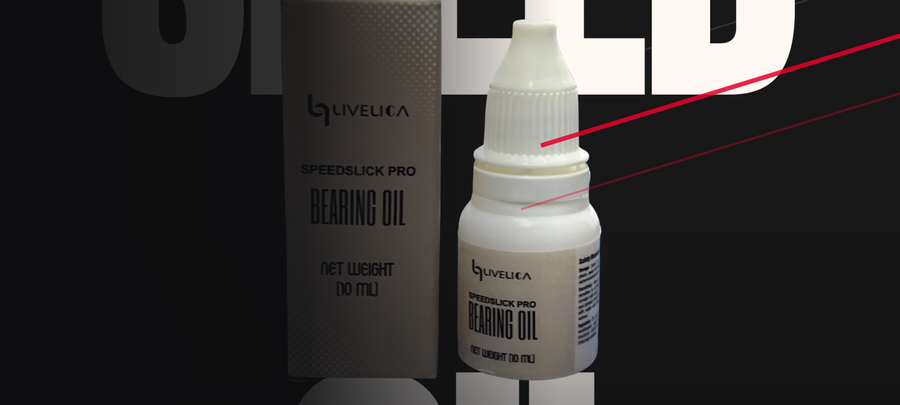
If a wheel failed the spin test during the week and the bearing is not visibly filthy, a single drop of light bearing oil through the shield is usually all it needs. One drop per bearing is the rule with Speedslick Pro Bearing Oil, our own light oil made for skate bearings, which comes in a 10 ml bottle with a fine tip. Spin the bearing to spread the oil and wipe off the excess. More oil is not faster; a flooded bearing collects dust and drags. If the bearing is gritty rather than dry, oil will not fix it, and it goes on the list for the monthly clean.
Oil is a film, not a bath. One drop coats the balls; more than that only gives dust something to stick to.
Once a month: the deep service
Set aside most of an hour. This is where the skates come fully apart.
Full bearing clean and oil
Pull all sixteen bearings, remove the shields where the design allows, clean them properly, dry them completely, and then add one drop of oil to each before refitting. Our bearing cleaning guide covers the method in detail. Clean before you oil, always, because oil on a dirty bearing seals the grit inside. If you skate mostly indoors on clean floors you can stretch this to every six or eight weeks; if you skate outdoors in dust or through the monsoon, monthly is the minimum and some skaters go fortnightly.
While the bearings are out, spin each one between your fingers. A bearing that feels rough or notchy after cleaning has damaged races and should be retired rather than put back. One bad bearing in a wheel drags the whole skate. Keep a few spares from the Power Bearings collection so a single failed bearing never costs you a session.
Measure wheel wear
With the wheels off, look at each one from the front. Fresh wheels have a symmetrical profile; worn wheels cone to one side even with good rotation. Compare the set for diameter too. Once the wheels have lost a few millimetres and coned enough that flipping no longer evens them out, it is time to plan replacements. Our wheel replacement guide explains how to read the wear. Training on the last of a set is fine, but do not race on it: a fresh set from the JUNK wheels range, such as the JUNK Voodoo XFirm, is one of the most noticeable upgrades you can make on race day.
Inspect the frame
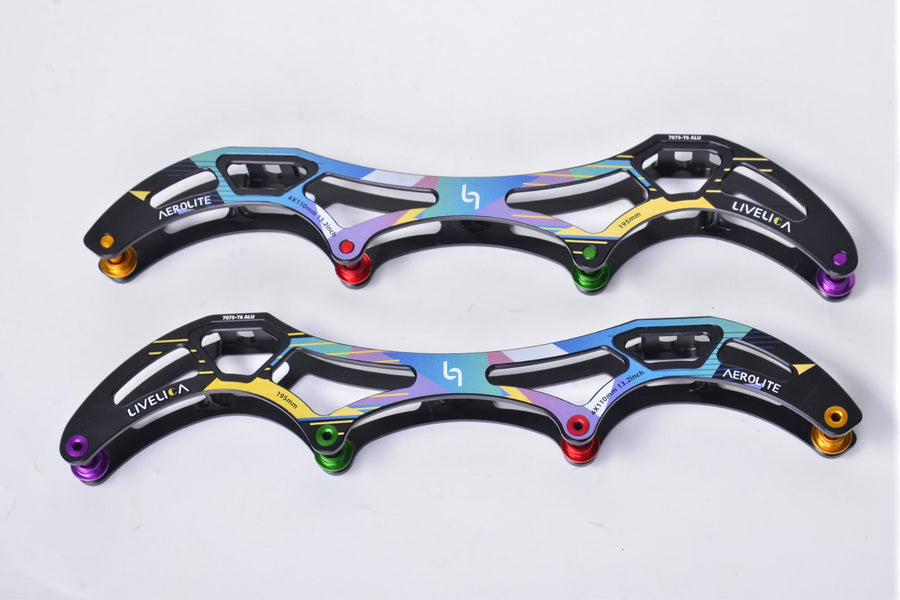
With everything stripped, look along the frame rails for straightness, check the axle holes for elongation, and look at the mounting slots for cracks or wear around the bolt heads. Clean the rails and the inside of the axle holes. Check that the frame position on the boot has not crept; if you set an offset deliberately, confirm it is still where you left it. Frames such as the LiveLica Aerolite 4x110 are light because material has been removed where it is not needed, which is exactly why a monthly look at the stressed areas is worthwhile.
The four places a frame shows its age. Check them once a month with the wheels off, when you can actually see them.
At the change of season: reset and replace
India gives inline skaters three distinct seasons for gear: the dry heat of summer, the monsoon, and the cooler months. Each shift is a good moment to do the monthly service plus a few extra jobs.
- Replace any wheels that have coned past the point where rotation helps. Keep the best of the old set as a training set and put the new set aside for racing.
- Retire bearings that feel rough after cleaning. Going into the monsoon, this matters most, because a bearing that is already pitted will rust fast once water gets in.
- Going into the wet season, clean and oil more often and dry the skates the same day, every day. Going into the dry season, dust becomes the enemy and the wipe after each session becomes the most important two minutes of the week.
- If the skates are going into storage for a few weeks, do the full clean, oil the bearings, back the axles off a fraction, and store the skates open in a dry cupboard, not in a sealed bag.
Reading the signs between checks
The schedule is a baseline, not a rule. Your skates will tell you when to move a job forward. A wheel that stops early on the spin test means the bearing check moves to today. A sudden change in how a corner feels means a frame bolt check now, not on Sunday. A grinding sound from one wheel means that bearing comes out tonight. Skaters who train every day, or who skate outdoors on rough roads, should roughly halve every interval above. Skaters who skate twice a week indoors on a clean floor can stretch them.
Frequently asked questions
How often should I clean my bearings?
For most skaters, a full clean and oil once a month. Outdoors in dust or rain, every two to four weeks. Indoors on clean floors, every six to eight weeks. Between cleans, a single drop of oil on any bearing that spins short keeps it going.
Can I just add oil instead of cleaning?
Only if the bearing is dry rather than dirty. Oil on a gritty bearing seals the grit in and makes the wear worse. If the bearing sounds rough or feels notchy, clean it first.
How do I know when to rotate wheels?
Weekly is right for three or more sessions a week. If you can see a clear slant on the inside edge of the front and rear wheels before the week is up, rotate sooner.
How tight should axles be?
Snug so the wheel does not rock side to side, but the wheel should still spin freely. If tightening the axle makes the spin shorter, it is too tight and is pinching the bearings.
Do ceramic bearings need the same schedule?
Yes. Ceramic bearings tolerate heat and water better than steel and resist rust, but they still collect dust and still need clean oil to run at their best. Keep the same calendar.
None of this is difficult, and none of it takes long once it is a habit. Two minutes on the bench, ten minutes once a week, an hour once a month. The reward is a pair of skates that feel the same on the last day of the season as they did on the first, and a wheel and bearing budget that goes a lot further. If you are not sure whether a bearing or a wheel is due for replacement, send us a photo on WhatsApp and we will tell you straight.