Inline speed skating has a language of its own, and when you are new to it the words fly past faster than the skaters. Frame, durometer, bore, ABEC, spacer, Hi Lo, triskate. It can feel like everyone else got a glossary that you never received. This guide is that glossary. It explains, in plain skater to skater language, what each part of a speed setup actually is, what it does for you, and how the pieces fit together into a skate you can race. By the end you will be able to read a product page, understand a coach who mentions your platform length, and think clearly about your first proper setup rather than guessing.
The platform: boot and frame
Everything starts with your platform, which is the boot on your foot and the frame bolted underneath it. The boot holds your foot and ankle. The frame is the stiff beam that carries your wheels in a straight line under your boot. On a speed skate the frame is long, low and rigid, because every bit of flex there is energy you push into the frame instead of into the ice or road. A good frame keeps your wheels perfectly in line so the skate rolls true and does not scrub speed.
Wheel setups: three wheels or four
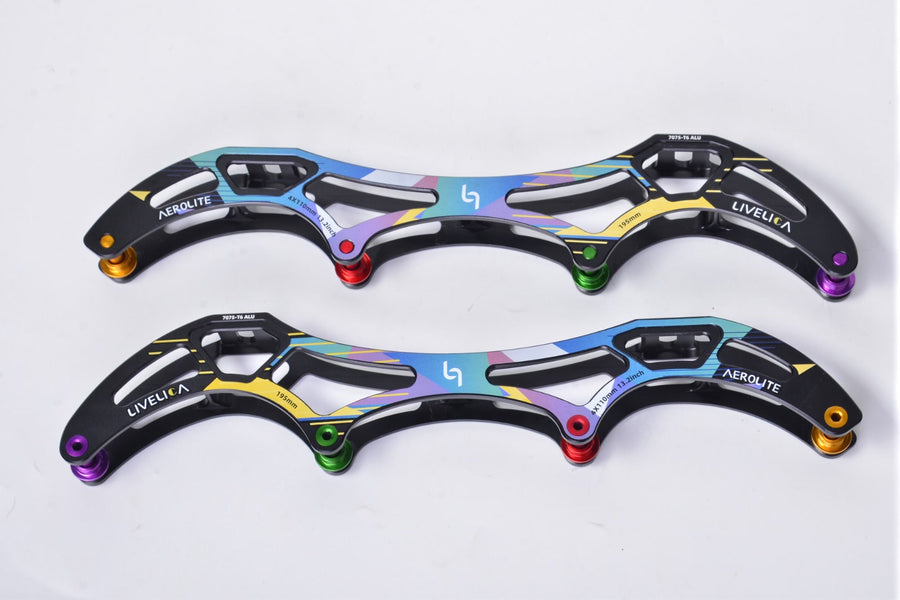
Speed frames come in two broad families. A four wheel frame carries four smaller wheels, often 90mm or 100mm, and sits lower with a longer contact patch, which many skaters find stable and forgiving while they build technique. A three wheel frame, sometimes called a triskate, carries three larger wheels such as 110mm or 125mm, sits taller, rolls faster once you are moving, and is lighter for its size. The LiveLica Aerolite 4x100 frame is a friendly, stable place for many skaters to start, while the taller three wheel frames reward riders who already carry good speed.
Platform length and Hi Lo
Platform length is the distance between the front and rear mounting bolts where the frame meets your boot. A longer platform tracks straighter and feels planted at speed. A shorter platform turns more eagerly and feels nimble. Hi Lo is a setup where the front wheels are smaller than the rear wheels, which lowers the toe and can help you sit forward into your stroke. None of this is something a beginner must fine tune on day one, but knowing the words means you can follow the conversation.
Bigger wheels roll faster and carry speed, while smaller wheels feel more stable and quicker to get moving. Most beginners are well served in the 90mm to 100mm range.
Wheels: size and durometer
Your wheels are where the skate meets the ground, and two numbers describe them. The first is size in millimetres, which we have just met. The second is durometer, the measure of how hard or soft the wheel is. Durometer is written with a number and the letter A, such as 85A. A higher number means a harder wheel. Harder wheels roll faster on smooth, hot surfaces and last longer, while softer wheels grip more and soak up rough ground, at the cost of a little speed and wear life.
What XFirm and XXFirm mean
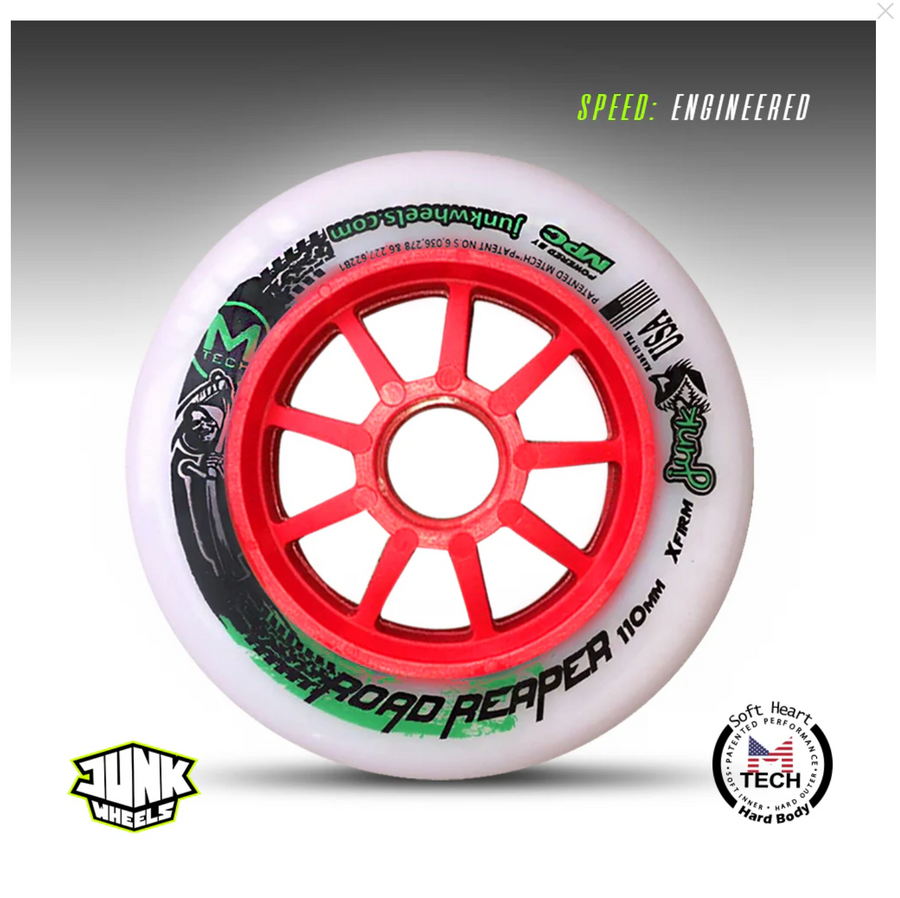
Many race wheels are sold by a firmness label rather than a bare number. XFirm is the slightly softer of the two common race options and gives you more grip, which is welcome on a slick or dusty track or when you are still trusting your edges. XXFirm is harder, rolls faster on smooth hot tarmac, and suits confident skaters on grippy surfaces. The JUNK Voodoo XFirm wheels are a sensible grippy starting point, and you can step to a harder compound later as your surfaces and speed change.
Firmness is a trade. Softer sits toward grip and control, harder sits toward roll and speed. Pick for your surface and your confidence, not just for the fastest label.
Bearings: the small parts that matter most
Bearings are the small steel or ceramic rings that let each wheel spin freely on its axle. Every wheel needs two, so a four by four setup uses sixteen bearings in total. They are the cheapest way to feel a real difference, and the easiest to ruin through neglect, so they are worth understanding properly.
608 versus 627 and what bore means
Bore is simply the size of the hole in the middle of the bearing, the part the axle passes through. An inline speed bearing is a 608, which has an 8mm bore. Many quad skates use a 627, which has a 7mm bore and will not fit an 8mm inline axle. This one number is the most common ordering mistake beginners make, because a 608 and a 627 look almost identical in a photo yet do not swap. Always match the bore to your axle before you buy.
The rings look the same, but the hole in the middle is not. Match the bore to your axle, 8mm for inline and 7mm for most quads, before you order.
ABEC, ceramic and steel
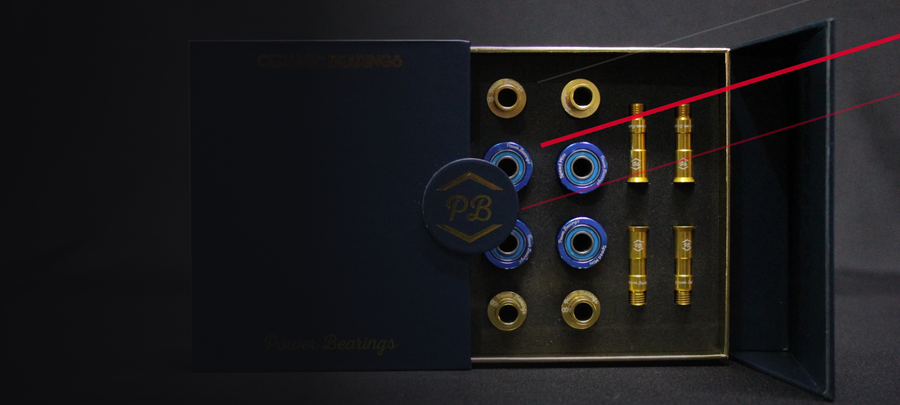
ABEC is a manufacturing tolerance rating with odd numbers such as 1, 3, 5, 7 and 9. A higher ABEC means the bearing is machined to tighter tolerances, but it does not by itself measure speed, and for skating it is only one part of the picture. Far more important is the quality of the balls, races and cage, and how clean and oiled you keep them. Bearings come with steel balls or ceramic balls. Steel is proven, tough and excellent value for money, which is why a set like the Power Bearings Red is a friendly first upgrade. Ceramic balls are lighter, harder and cope better with heat and dirt over long sessions, as you get in the Power Bearings Swiss Ceramic. Ceramic is not automatically faster on the day, but it can stay smooth longer if you look after it.
Spacers, oil and keeping bearings alive
A spacer is a small tube that sits between the two bearings inside a wheel. It lets you tighten the axle firmly without pinching and slowing the bearings, so the wheel spins free while the setup stays solid. Bearing oil is the light lubricant that keeps the balls rolling with almost no friction. A speed bearing wants a thin oil, not a thick grease, and one drop per bearing is plenty. A regular clean and a fresh drop of a proper skate oil will keep a good bearing fast for a very long time, and neglect is what kills them, not age.
The skin suit and why racers wear one
At speed, most of the effort you fight is the air itself. A skin suit is a close fitting one piece made from compression lycra that cuts the drag of loose clothing and holds your muscles firmly through a long effort. It is not about looks. On a fast lap the difference between a flapping shirt and a clean suit is real free speed. A first race suit such as the LiveLica Pro Skin Suit is an accessible way to feel that difference without a big outlay. Fit should be snug, because a loose suit gives back the very drag it is meant to remove.
A beginner glossary to keep
- Platform: your boot plus the frame bolted under it.
- Frame: the stiff beam that holds your wheels in a straight line.
- Triskate: a three wheel frame, usually running larger wheels.
- Platform length: the gap between the front and rear mounting bolts.
- Hi Lo: smaller front wheels with larger rear wheels.
- Durometer: how hard or soft a wheel is, written as a number and the letter A.
- XFirm and XXFirm: race firmness labels, softer for grip and harder for speed.
- Bore: the hole in the bearing, 8mm for a 608 and 7mm for a 627.
- ABEC: a tolerance rating, only one small part of bearing quality.
- Spacer: the tube between two bearings that lets you tighten without pinching.
- Skin suit: a close fitting one piece that cuts air drag.
Frequently asked questions
What wheel size should a beginner start on?
Most new speed skaters are well served around 90mm to 100mm, which balance easy stability with enough roll. You can move up to 110mm or 125mm later once your technique and confidence carry more speed.
Are ceramic bearings worth it for a beginner?
Not always. A good steel set is excellent value and plenty fast for learning. Ceramic bearings can stay smooth longer through heat and dirt, but only if you clean and oil them, so care matters more than the material at first.
Why will my quad bearings not fit my inline skates?
Because of bore size. Inline speed uses a 608 with an 8mm bore, while many quads use a 627 with a 7mm bore. They look alike but the hole is a different size, so they do not swap.
Do I need a skin suit to start racing?
No, but it helps. A snug skin suit cuts air drag and holds your muscles, which is free speed on a fast lap. Many skaters add one early because it is one of the simpler ways to go quicker.
Learning the words is the first real step toward skating faster, because once the jargon stops getting in the way you can make clear choices about your own setup. Start stable, keep your bearings clean, match your bore, and build speed as your body catches up to your gear.