Most skaters train hard for months and then leave time on the clock through preparation, not fitness. A bolt that worked loose in the warm up, a wheel choice that was wrong for the surface, bearings that were stripped the night before and never bedded in, a suit that came out of the bag creased and damp. None of these are dramatic. All of them are quietly expensive on race day, and every one is avoidable with a routine.
This guide sets out that routine. It follows the way a race weekend actually unfolds, so it is split into three time frames. What you do in race week, what you do the night before, and what you do in the hour before your start. One rule runs through all of it. Race day is not the day to try anything new. Everything you race on should be something you have already skated on, and preparation is about making a known setup reliable rather than making it different.
Race week, settle the setup
The most common mistake in the week before a race is change. New wheels, new bearings, a new frame position, a fresh suit that has never been worn. Each one adds an unknown at exactly the point where you want none. If something genuinely needs replacing, do it early in race week so you get at least two or three sessions on it before you have to trust it.
Race week is for three jobs. Confirming your wheel choice for the surface you will actually race on, servicing your bearings so they are clean and settled rather than freshly stripped, and going over the hardware so nothing is running loose. Everything else is training and rest.
Push every decision as early as possible so race day is only about checking, not choosing.
Change it or leave it
Skaters usually know they should stop fiddling, and then fiddle anyway, because it is hard to tell a real problem from nerves. This is the line I use. Change something only if it is worn out, broken or clearly wrong for the venue. Leave it alone if the only reason to touch it is that you are anxious.
- Change it: a wheel with a chunk out of it, a bearing that grinds under your thumb, a frayed lace, a cracked strap, an axle that will not hold tension.
- Change it: wheel firmness, but only if you have skated the venue before or you have a clear read on the surface, and only early enough to test it.
- Leave it: frame position, boot heat moulding, lacing pattern and anything else your body has learned. These take sessions to adapt to, not hours.
- Leave it: bearings that spin freely and sound clean. A set that is working does not need stripping because a race is coming.
- Leave it: a suit that fits. Race week is not the moment to discover that a new cut binds across the shoulders.
Choosing wheels for the surface you will race on
Wheel firmness is the one setup variable that genuinely should respond to the venue, because the surface changes what a wheel does. Many skaters assume harder always means faster, and on a rough or dusty surface that is often true. On a hard, smooth, dry track it is not, because a wheel that is too hard starts to slide instead of holding your line through the corner. Slip costs far more than a small difference in roll.
The JUNK Road Reaper 110 XFirm sits at 84 to 86A, the softer and grippier of the two Road Reaper options, and it is the one made for hard, smooth, dry race surfaces where you need the wheel to hold. The Road Reaper 110 XXFirm is harder at 86 to 88A, which trades some grip for more roll and outright speed. Both are 110mm and both come as a set of eight, which is a full set for a pair of four wheel skates. Both need sixteen 608 bearings and the correct spacers, since wheels are sold on their own.
If you are wondering whether the compound is the limiting factor in your racing, it usually is not. The Road Reaper has taken a 100 metre world record, senior and junior world titles over 100 metres, and the American Triple Crown across the North Shore Inline Marathon, the New York 100K and Athens to Atlanta. The wheel is not what is holding anyone back. Pick the firmness that suits the surface and spend your attention elsewhere.
How to decide at the venue
- Walk the track or the road circuit if you can, and feel whether the surface is smooth and polished or coarse and open.
- Note the temperature and whether there is dust or damp. Both reduce grip, which usually favours the grippier option.
- Think about the shape of the course. Tight, repeated corners reward grip. Long straights and sweeping bends reward roll.
- If in doubt, race the wheel you have trained on. Confidence in the corner is worth more than a theoretical gain.
Both are 110mm Road Reapers. The only question is how much grip the surface is asking for.
Bearings, clean and settled rather than freshly stripped
Bearings are the classic race day mistake. Skaters strip and reoil a full set the night before, then find the wheels feel heavy and noisy for the first few laps because nothing has bedded in and there is too much oil sitting in the races. Service bearings early in race week instead, then skate on them at least once before you race.
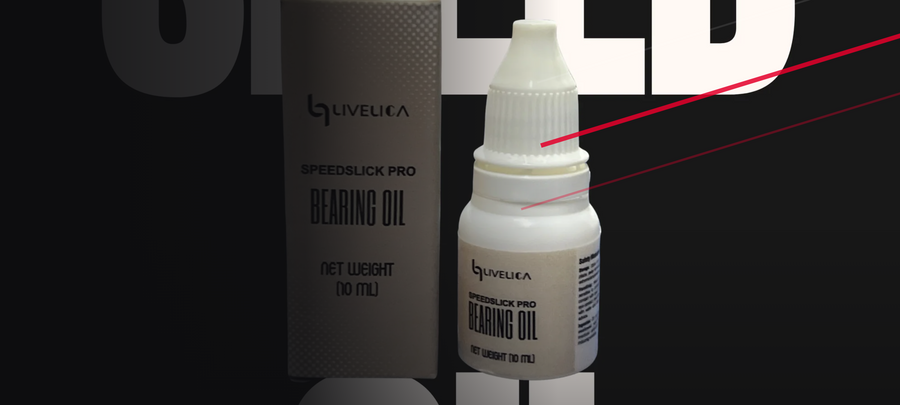
The routine itself is straightforward. Take the wheels off and pull the bearings out of the hubs. If they are dirty, clean them and let them dry completely, because oil binds to grit and oiling a dirty bearing traps dust inside. Then add one drop of Speedslick Pro bearing oil per bearing, spin each one by hand for a few seconds to spread it, and wipe away any excess. One drop is the sweet spot. More oil is not faster, because a flooded bearing collects dust and drags.
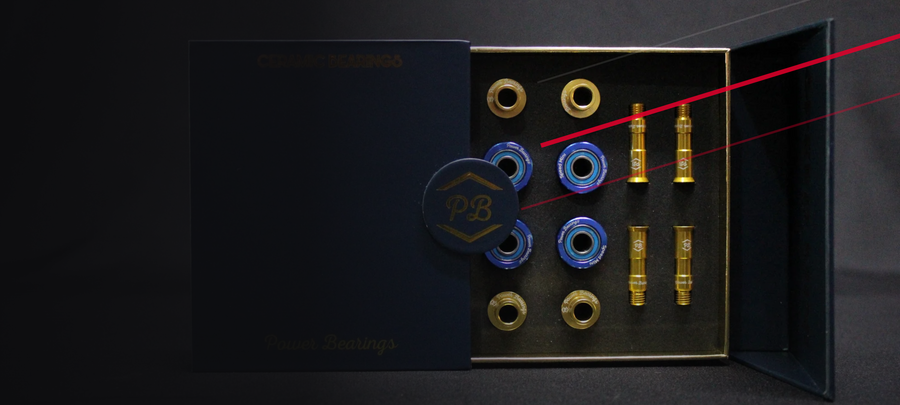
Remember the arithmetic when you check what you have. A standard pair of four wheel inline speed skates runs sixteen bearings, so a spare bearing or two in the bag is cheap insurance. Speedslick Pro comes in a 10 ml bottle with a fine tip, so a single bottle covers many full sets and travels easily. If you are choosing a set for the season rather than servicing what you have, the full range sits in the speed bearings collection, and even ceramic bearings, which handle heat and water better than steel, still need clean light oil to run at their best.
The night before, hardware and packing
The night before is a mechanical job, not a performance one. Work through the skate methodically and then pack the bag so that the morning is only about skating.
Hardware checks
- Check every axle is properly tight and that no wheel has side to side play.
- Check the frame mounting bolts on both skates, since these loosen slowly and silently.
- Spin each wheel and listen. A rough or rattly bearing tells you before the race, not during it.
- Look across the wheel profile for uneven wear, and rotate if one wheel is clearly further gone than the rest.
- Check your boot laces and any buckle or strap hardware for fraying and cracks.
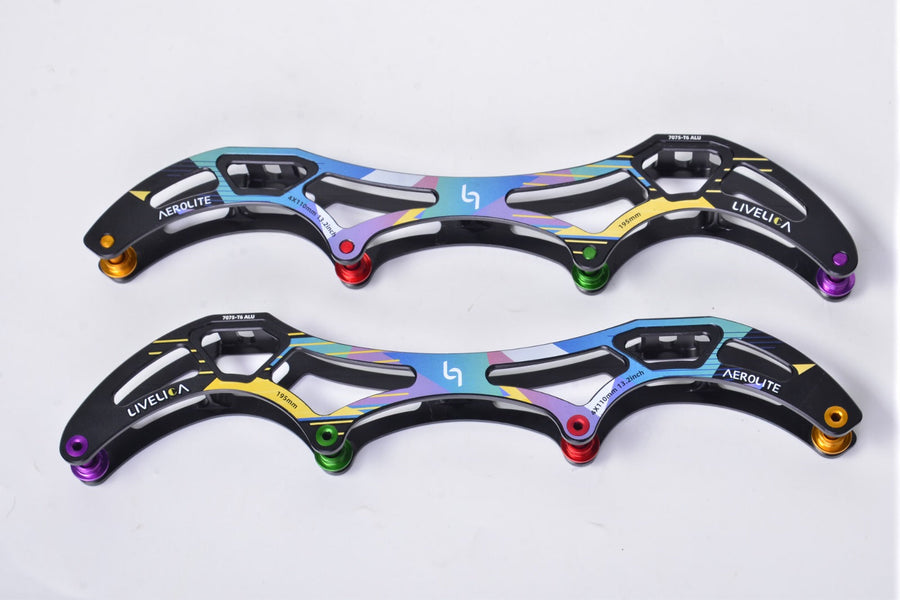
Frames deserve a moment of their own. The Aerolite frames in the LiveLica AI Frames range are cut from 7075 T6 aircraft aluminium, and a stiff frame will happily transmit power through a bolt that is only most of the way tight. Snug each mounting bolt firmly without leaning on the key, and if you have moved your mounting position recently, confirm it is where you expect before you pack. Frame position drift is easy to miss on the bench and instantly noticeable off the line.
Packing the bag
Pack the night before, not in the morning. A checklist beats memory when you are nervous and short of sleep.
Four groups, packed the night before, so nothing important depends on your memory at six in the morning.
Your suit, and why it belongs on the list
A race suit is equipment, not just clothing. It should be dry, uncreased and already familiar on your body, because a suit that binds across the shoulders or rides at the knee changes how you sit in the low position. The LiveLica Pro Skin Suit is cut for the racing position, and the same rule applies to it as to everything else. Wear it in training before you wear it in a race, and never take a suit out of its packaging on the start line.
Three practical points catch people out. Put the suit on before you do your final skate checks, so you are not fighting a zip with cold hands. Have a warm layer to pull over it while you wait, especially at outdoor venues in the early morning. And carry a dry change for after the race, because sitting around in a wet suit is how you spend the following week ill instead of training.
The hour before your start
By now nothing should need fixing. This last hour is about confirming, warming up and staying calm. Give the checks a slot early in the hour so the time closest to your start belongs to your body, not your tools.
- Spin each wheel once and listen for anything rough that has appeared overnight in transport.
- Run a hand over each axle to confirm nothing has worked loose in the bag.
- Do a short easy skate on the actual surface, so your first contact with the grip level is not in the first corner of the race.
- Set your laces the way you always set them, and resist tightening them harder than usual just because it is a race.
- Drink, eat something simple and give yourself time. Rushing the last fifteen minutes is how equipment mistakes happen.
Front load the mechanical checks so the last quarter of an hour belongs to your legs and your head.
Between heats
If you are racing multiple distances, keep the between heats routine short and repeatable. Wipe the grit off the wheels, keep warm, drink, and only touch the skates if something has actually changed. The temptation to fiddle between rounds is strong, and it is almost always a mistake.
After the race, the ten minutes that protect your kit
Race day preparation ends with a small amount of tidying, and it makes the next event easier. Wipe the wheels and frames down, especially if the surface was dusty or damp. Check for any wheel that has taken a chunk out of it in the pack, since damaged wheels are easy to forget and impossible to trust. Loosen laces, let the boots air, and do not leave a damp suit balled up in the bag. If your bearings sounded gritty by the end, note it now and service them at the start of the next race week rather than the night before the next event.
Frequently asked questions
Should I fit brand new wheels for a race?
Generally no. A wheel that has been skated a little has a settled profile and you know how it grips. If you must fit new wheels, do it early in race week and skate on them at least once.
Should I clean my bearings the night before a race?
Better to do it earlier in race week. Freshly serviced bearings often feel heavy for the first few laps, and any excess oil needs a session to settle. Clean early, skate on them, then race.
How do I choose between the XFirm and XXFirm Road Reaper?
Match the surface. XFirm at 84 to 86A is softer and grippier, which suits hard, smooth, dry race surfaces where a harder wheel would start to slip. XXFirm at 86 to 88A rolls faster when the surface allows it. Both are 110mm and both come as a set of eight.
How many spare bearings should I carry?
A pair of four wheel inline speed skates runs sixteen bearings, so carrying two or three spares plus the tools to fit them covers you for the most common mechanical failure without weighing your bag down.
What is the single most overlooked check?
Frame mounting bolts. They loosen gradually rather than suddenly, so nothing feels wrong until the day it does. Check them the night before every race.
How much oil does each bearing need?
One drop, spun through by hand and with the excess wiped away. Extra oil attracts dust and adds drag rather than speed.
Do wheels come with bearings and spacers?
No. Both Road Reaper sets are sold as eight wheels on their own, so you need sixteen 608 bearings and the matching spacers to build a pair of four wheel skates.