Ask a room full of inline speed skaters what makes a bearing fast and most will start with ceramic against steel, or reach straight for an ABEC number. Ball count almost never comes up, and yet it is one of the clearest levers a bearing maker can pull. A standard skate bearing carries seven balls. Some of the fastest race bearings carry only six. That single change touches friction, load, roll and even who the bearing suits, so it is well worth understanding before you spend on your next set.
This guide explains how ball count works inside a 608 skate bearing, what you gain and what you give up when you drop from seven balls to six, and how to decide whether a six ball set belongs in your wheels. Everything here is grounded in bearings we actually stock at LiveLica, so you can match the idea to a real product when you are ready to buy.
What is inside a skate bearing
Before ball count makes sense, it helps to picture what a bearing actually is. A skate bearing is a small steel or ceramic sandwich. There is an outer ring and an inner ring, together called the races. Between them sit a row of balls, held evenly apart by a cage. Seals or shields cover the sides to keep dust and water out. When the wheel turns, the balls roll between the two races, and it is that rolling, rather than sliding, that lets the wheel spin freely.
Almost every inline, quad and short track wheel uses the same size bearing, the 608. It measures 8mm across the bore, 22mm across the outer edge and 7mm wide, usually in the sealed 608RS format. A standard pair of four wheel inline speed skates uses sixteen bearings, two per wheel across eight wheels. Because the outer dimensions are fixed by the 608 standard, the interesting engineering happens inside, in the material of the balls, the quality of the races and, less obviously, in how many balls the maker chooses to fit.
The outer shell is identical on both sides. The six ball bearing simply carries fewer, larger balls inside the same 608 race.
Seven balls, the sensible standard
Seven balls is the layout you will find in the vast majority of skate bearings, from budget sets to high grade race steel. There is a good reason it became the default. Seven balls spread the load of the skater across seven points of contact, so each ball carries less weight. That makes the bearing tough, forgiving and stable under a heavy or hard pushing skater. It copes well with rough technique, kerb strikes, landings and all the little shocks that come with real skating.
The trade is subtle. Every ball that rolls between the races creates a tiny amount of friction and a tiny amount of drag. Seven balls means seven of those contact zones. For most skaters that friction is invisible and the durability is worth far more, which is why a well made seven ball bearing remains the right choice for training, for beginners and for anyone who values a set that simply keeps working.
Six balls, the race idea
Six ball bearings take a different route to speed. By fitting one fewer ball, the maker removes a contact point. Fewer contact points mean less rolling friction, so the wheel spins more freely and holds its roll for longer after each push. To keep strength up despite the missing ball, the remaining balls are usually made larger, which spreads the load across a bigger contact patch on each one.
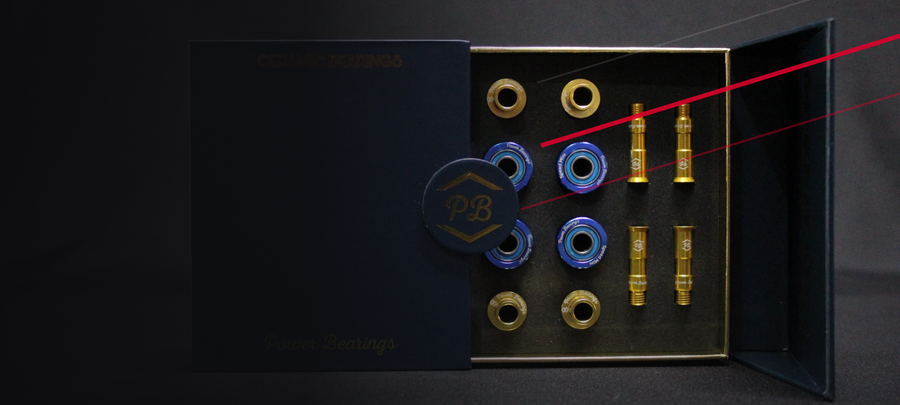
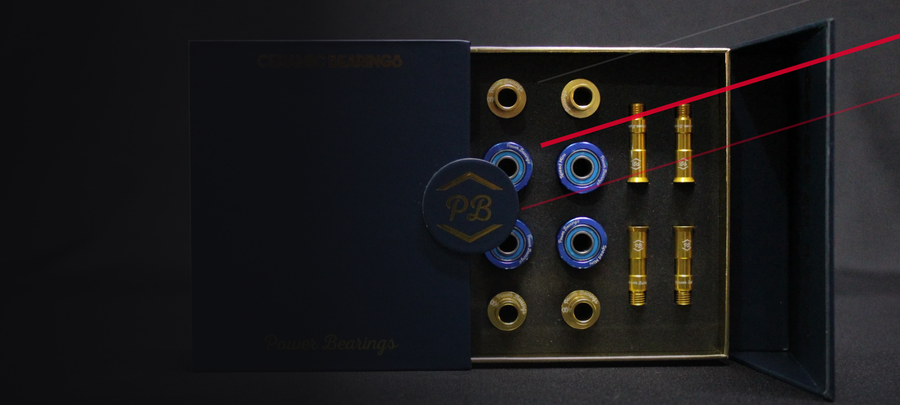
Our two six ball options show this idea in different materials. The Power Bearings Six Ball Ceramic uses six larger silicon nitride ceramic balls in place of the usual seven, pairing the free spin of fewer balls with the low friction and heat resistance of ceramic. The Power Bearings Super 6 Ball Steel applies the same six ball geometry in tough, easy to live with steel. Both are standard 608 bearings, so they drop straight into your existing wheels, sixteen to a pair.
The chart is a simple illustration of the principle. Removing a ball removes a source of rolling friction, which frees up the spin.
The trade you are making
Nothing in bearings comes free, and the six ball layout has a clear catch. With one fewer ball, each remaining ball carries a little more of your body weight. That is fine, and it is exactly why the balls are made larger, but it does shift who the bearing suits best. A six ball set rewards a smooth, controlled skater who loads the wheels evenly and lands cleanly. It suits lighter riders especially well, because there is less weight for those six balls to share.
A heavier skater, or one still developing a settled stride with plenty of scrubbing and hard heel strikes, will usually be happier and no slower in the long run on a quality seven ball bearing. The extra ball adds a margin of strength and forgiveness that matters more than the small friction saving when technique is still coming together. In other words, ball count is not simply better or worse, it is a match to the skater.
Pick the layout that matches your weight and technique, not simply the one with the bolder claim.
Ceramic or steel in a six ball bearing
Once you have decided a six ball layout suits you, you still choose the ball material, and the two work on different problems. Steel is tough, cheaper and forgiving. The Super 6 Ball Steel takes the free spinning six ball geometry and keeps it easy to own, which makes it a smart pick for a lighter racer who wants free speed without stepping up to ceramic prices.
Ceramic goes further. Silicon nitride balls are harder, rounder and lighter than steel, and they do not gall against the steel races under heat the way steel on steel can. That means a ceramic bearing runs cooler on long efforts and holds its speed better through the second half of a race. Put that together with the six ball layout in the Six Ball Ceramic and you get about as free a roll as a 608 bearing offers, aimed squarely at experienced racers with clean technique. If you are weighing the two materials in general, our full ceramic versus steel guide walks through the decision.
Does ball count actually make you faster?
Here is the honest answer a skater to skater shop should give. Ball count is real, and on a smooth rider it can free up the spin in a way you can feel on a long roll out. But it is a fine adjustment, not a magic upgrade. Your technique, your position, your wheels and, above all, how clean and well oiled your bearings are will move your times far more than one ball ever will. A dirty seven ball bearing kept dry will always lose to a clean six ball bearing, and a clean seven ball bearing will beat a neglected six ball one just as easily.
So treat ball count as the last few percent, the sort of choice you make once your engine and your setup are already good. If you are earlier in your journey, put your money into wheels, a proper frame and clean maintenance first, then come back to six ball bearings when the equipment really is the thing holding you back.
How to choose your next set
Start with an honest look at your weight and your stride. If you are light and skate smoothly, a six ball set is a genuine, feelable upgrade and worth the spend. If you are heavier, still developing, or you simply want one set that does everything without fuss, a strong seven ball bearing is the wiser buy. From there, choose the material. Steel if you want toughness and value for money, ceramic if you race seriously, maintain your kit and want the coolest, longest holding roll on the straights.
Whatever you land on, remember it is sixteen bearings for a standard four wheel pair. You can see the full lineup, ball counts and materials side by side in our Power Bearings buyer's guide, or browse the whole range in the speed bearings collection.
Keeping any bearing fast
No bearing, six ball or seven, stays fast on its own. The single biggest thing you can do for speed is keep the balls and races clean and lightly oiled. One drop of a light skate oil such as Speedslick Pro per bearing is the sweet spot. More oil is not faster, because a flooded bearing collects dust and drags. Clean after wet or dusty sessions, re oil when the roll goes short or the bearing sounds gritty, and store your skates somewhere dry so the races never rust.
Frequently asked questions
Why do six ball bearings use bigger balls?
Removing a ball leaves fewer points to carry the skater, so the remaining balls are made larger to spread the load and keep strength and bearing life up. That is how a six ball set stays durable while spinning more freely.
Are six ball bearings only for racing?
They shine in racing and on smooth, lighter skaters chasing free speed. They still work fine for training, but a heavier or developing skater usually gets more from the toughness of a seven ball bearing.
Will six ball bearings fit my skates?
Yes, as long as your wheels use the standard 608 size of 8mm by 22mm by 7mm, which most inline speed wheels do. If your setup uses the smaller 627 size, these will not fit. You need sixteen for a four wheel pair.
Is a six ball bearing worth the money over a good seven ball set?
For a light, smooth skater who already maintains their kit, yes, the freer roll is worth it. For everyone else the honest gain is small, and clean maintenance will do more for your speed than ball count.
Do six ball bearings still need oil?
Absolutely. Every skate bearing, steel or ceramic, six ball or seven, needs to be kept clean and lightly oiled to run at its best. One drop per bearing is all it takes.
Ready to choose? Compare the whole lineup in our Power Bearings guide, or browse the speed bearings collection and match a set to your weight and style.