Two skaters can stand on the same blade, with the same sharpening, on two different sheets of ice, and have completely different sessions. One day the edges bite and the corners feel like rails. The next day the same skates feel washy, the entry to the corner slides, and you finish the session convinced something has gone wrong with your steel. Usually nothing has gone wrong with your steel at all. The ice changed.
Ice is a surface with moods. Its temperature, its density, how recently it was resurfaced, how many skaters have been on it and how humid the building is all change how a blade interacts with it. Short track skaters feel this more than most, because we spend so much of every lap on a deep edge with a lot of body weight loaded onto a very small contact patch. This guide explains what hard ice and soft ice actually do to your skating, how to read a sheet in your first two laps, and what to change in your setup, your sharpening routine and your between session care so you are never fighting the rink.
What skaters mean by hard ice and soft ice
Ice hardness is mostly a function of temperature. Colder ice is denser and more brittle. Warmer ice is softer and more plastic. Rink operators set the ice temperature deliberately, and different sports want different things from a sheet, which is why a figure skating session, a hockey game and a short track session ideally do not want identical ice. Add the building itself, the humidity outside, the number of bodies in the stands and the time since the last resurface, and the sheet you skate on this evening is not quite the sheet you skated this morning.
Colder, harder ice
Hard ice feels crisp. The blade sits high on the surface, penetration is shallow, and the sound under you is brighter and sharper. Edges feel quick to engage and quick to release. Hard ice is also less forgiving of a dull or rolled edge, because you are relying on a very fine amount of steel actually cutting into a dense surface. If your edges are not clean, hard ice will tell you immediately by skidding.
Warmer, softer ice
Soft ice feels grabby and slow. The blade sinks slightly deeper, which increases grip but also increases drag. Snow builds up quickly on the surface, especially on the racing line after a group has been through the corners. Soft ice hides a mediocre edge for a while, because the surface deforms around the blade and gives you grip you did not really earn, but it punishes you on the straights where you lose glide.
Schematic view of blade penetration. On dense cold ice the blade rides high and releases quickly. On soft warm ice it sinks further, which buys grip at the cost of glide.
What hard ice does to your skating
On a hard sheet, everything happens faster. Your push releases sooner because the ice does not hold the blade, so a push that felt long and complete yesterday can feel like it slips off the end today. Skaters commonly respond by pushing harder, which only makes the slip worse. The better response is to push more patiently and more sideways, keeping pressure through the full length of the push rather than snapping at the end of it.
Corner entry is where hard ice really shows up. With less penetration available, you are relying on edge quality and on genuine body lean rather than on the ice deforming to hold you. If you are used to a soft sheet, hard ice can feel like the corner is throwing you out. It is not. It is asking you to commit the lean earlier and to trust a properly sharpened edge.
Hard ice is also faster on the straights, which is why hard sheets are usually where personal bests happen. Glide is cheap, so a good long push and a still upper body pay off enormously.
What soft ice does to your skating
Soft ice adds drag on every metre of every lap. Snow builds up on the racing line and your blades have to plough through it. Legs fatigue earlier and lap times drift, which can feel demoralising if you do not know why it is happening.
The tactical answer on soft ice is to stop fighting the surface. Slightly shorter, quicker pushes usually beat long grinding ones, because a long push on soft ice just gives the ice more time to eat your speed. In a race, the racing line itself may become the slowest part of the sheet late in a session, and skaters who are willing to run a slightly wider or slightly tighter line can find cleaner ice and free speed.
Soft ice is also where a tired or rolled edge does the most hidden damage. You will feel grip, so you will assume your edges are fine, and then you will move to a colder sheet at a competition and discover that your blades have been dull for a fortnight.
Reading the ice in your first two laps
You do not need instruments. You need a routine. Give yourself two easy laps at the start of every session and pay attention to four things.
- Sound. A bright, crisp cutting sound suggests dense ice. A duller, softer, wetter sound suggests a warm sheet.
- Snow. Look at the ice behind you after a hard corner. Fine dust means hard ice. Wet clumps and visible ruts mean soft ice.
- Edge release. On a gentle crossover, does the blade release cleanly or does it feel like it has to be pulled out of the surface
- Glide decay. Push once and glide. On hard ice you will roll a long way. On soft ice speed dies noticeably faster.
Once you have a reading, you can make sensible decisions for the session instead of guessing. Hard sheet means commit to lean and trust the edge. Soft sheet means quicker turnover, cleaner lines and an honest look at whether your edges are actually sharp.
How ice conditions change your sharpening routine
Sharpening is where most skaters mistake an ice problem for a blade problem, or the other way around. The useful rule is simple. Ice hardness does not change how you sharpen. It changes how much you can get away with, and therefore how quickly you notice a problem.
Hard ice is a truth serum for your edges
If you skate mainly on soft ice and then travel to a cold sheet for a competition, sharpen before you travel, not after you arrive and panic. A clean, square, burr free edge is what lets you hold a corner on dense ice. Clamp the blade straight in a jig, keep your stone flat and consistent, and finish properly. The EHS Short Track and Long Track Sharpening Jig exists precisely so that the blade is held true while you work, because a blade that is even slightly twisted in the clamp will come out with uneven edges that feel worse on hard ice than the dull blade you started with.
Soft, wet ice asks more of your finishing and your drying
Warm sheets are wetter sheets. More water on the surface means more water on your steel when you step off, and more water on your steel means corrosion if you are careless. Soft ice also tends to leave a slightly more ragged edge over time because the blade is working through snow rather than cutting cleanly.
Finish every sharpen properly with a good combination stone such as the Zandstra Foss Combination Sharpening Stone, and take the burr off before you skate. A burr feels sharp in the hand and behaves badly on ice. It grabs unpredictably, it breaks off in pieces during the session, and it leaves you with an inconsistent edge halfway through your best block of laps.
Only the first of these three is a finished edge. The other two are the usual reason a skater blames the ice for something the workbench caused.
Blade choice, bend and the sheet you skate on
Bend and rocker are personal, and they are not something to change on a whim because one session felt slippery. That said, ice conditions are part of the picture. A tighter bend commits you to a shorter turning arc, which can feel wonderful on a grippy sheet where the ice will hold whatever you ask of it, and much less forgiving on a hard sheet where any excess is paid for immediately in skidding. An opener bend gives you more room to adjust the line mid corner, which is often the more sensible choice for a skater who trains across several different rinks with varying ice.
A simple top down comparison. Bend changes the arc the blade naturally wants to carve, which is why a bend that suits your home rink can feel unfamiliar somewhere else.
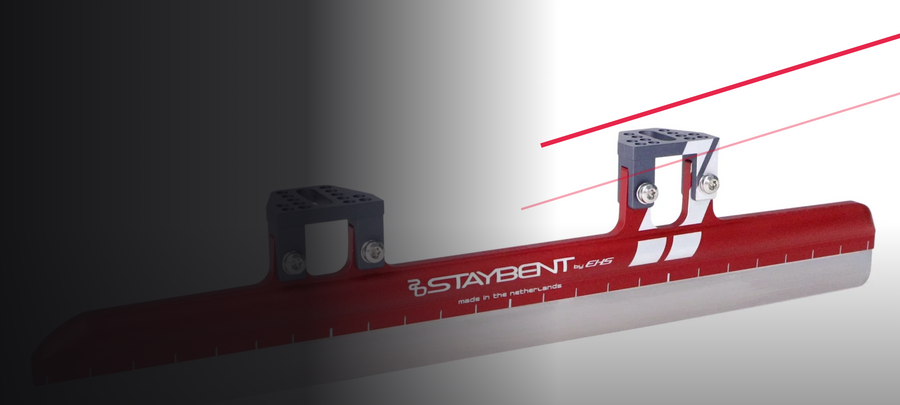
LiveLica stocks three StayBent short track blades, and you can compare the full range on the StayBent Blades collection. If you are choosing between them, the StayBent JaeBee and the StayBent XC Flex Weapon are both popular starting points, and the right answer depends far more on your level, your weight and how much you skate than on any single sheet of ice. Talk it through with us before you buy rather than chasing a setup change after one frustrating session.
Humidity, condensation and rust
This section matters more in India than almost anywhere else. Our rinks sit inside buildings surrounded by warm, humid air. The moment you carry cold blades from the ice into a warmer changing area, moisture condenses on the steel. You may not even see it. It is enough to start rust.
The routine that prevents almost all of this is short and boring, which is why so many skaters skip it. Step off the ice, wipe the blades down completely with a dry cloth, including the sides and the underside of the tube. Only then put them into soakers such as StayBent Blade Soakers, which absorb residual moisture rather than trapping it against the steel the way a hard plastic guard does. Hard guards are for walking, soakers are for storage, and the two are not interchangeable.
Leave the bag open at home rather than zipped shut. A closed bag in a humid Indian summer is a small, warm, damp box, and steel does not survive it politely.
A session routine that works on any sheet
- Before you leave home, check your edges by feel and by eye in good light.
- Take two easy laps and read the ice using sound, snow, edge release and glide decay.
- Adjust how you skate first. Change hardware only if the problem repeats across several sessions.
- Deburr and stone as part of your normal routine, not only when something feels wrong.
- Wipe the blades dry the moment you step off, then store them in soakers.
- Keep a simple note of the rink, the date and how the ice felt. Patterns become obvious in a month.
Frequently asked questions
Should I sharpen differently for hard ice and soft ice
Most skaters, and certainly every developing skater, should keep one consistent sharpening routine and get very good at it. Chasing a different edge for every sheet introduces far more inconsistency than it removes. Get a clean, square, burr free edge every time and let your technique adapt to the ice.
My blades felt great last week and slippery today. Are they dull
Possibly, but check the ice first. If the sheet is colder and harder than usual, an edge that was borderline dull last week will suddenly announce itself. Run your normal edge check. If the edges are genuinely fine, the answer is more lean and more patience, not more sharpening.
Does soft ice damage my blades
Not directly, but soft ice is wet ice, and water is what damages blades. The risk is not the session, it is the twenty minutes after it when wet steel sits in a bag. Wipe and store properly and soft ice costs you nothing but a bit of speed.
Is it worth having a second setup for different rinks
For most skaters, no. A second set of blades is a large investment that solves a small problem. Your money almost always goes further on properly maintained edges, boots that fit and more hours on the ice. Skaters at a genuinely competitive level who race across many venues sometimes keep a second setup, but that is a decision for later, not for your first few seasons.
The short version
Hard ice rewards clean edges, real lean and patience. Soft ice rewards quick turnover, smart line choices and disciplined drying afterwards. Neither is a reason to panic about your equipment. Learn to read the sheet in two laps, keep your sharpening routine consistent, dry your steel every single time, and you will spend far less of your season blaming the ice and far more of it going quickly on whatever the rink gives you.