Pick up a short track blade for the first time and it feels like a single, simple object. A shiny runner, a tube and a couple of cups, all carrying a price that makes you swallow hard. Look a little closer and you find something far more interesting. A modern short track blade is really a careful marriage of two very different materials, light aluminium up top and hard steel along the bottom, each chosen to do a job the other cannot.
Understanding what your blade is made of is not just trivia. It tells you how the skate will feel through a corner, how often you will need to sharpen it, how long the edge will last and whether you are buying the right tool for the way you skate. In this guide we walk through the build of a short track blade from boot to ice, explain the two steels you will see quoted, bimetal and full PM, and show how the body design changes the feel underfoot. Every figure here comes from the blades we actually stock at LiveLica, so you can trust the numbers.
Why your blade is really two materials
A short track blade has to do two things that pull in opposite directions. It has to be light and stiff so it does not rob energy from your push or wobble under load, and it has to present a keen, hard edge that bites the ice and survives the abrasion of sharpening. No single metal does both jobs brilliantly. Aluminium is light and stiff for its weight but far too soft to hold an edge. Hardened steel holds a beautiful edge but is heavy and would make a whole blade feel dead and clumsy.
The answer that the whole sport has settled on is to build the body of the blade, the tube and the cups, from high grade aluminium, and to bond a thin strip of hardened steel along the bottom as the running edge. You skate on the steel. Everything above it exists to hold that steel in exactly the right place, corner after corner, while adding as little weight as possible.
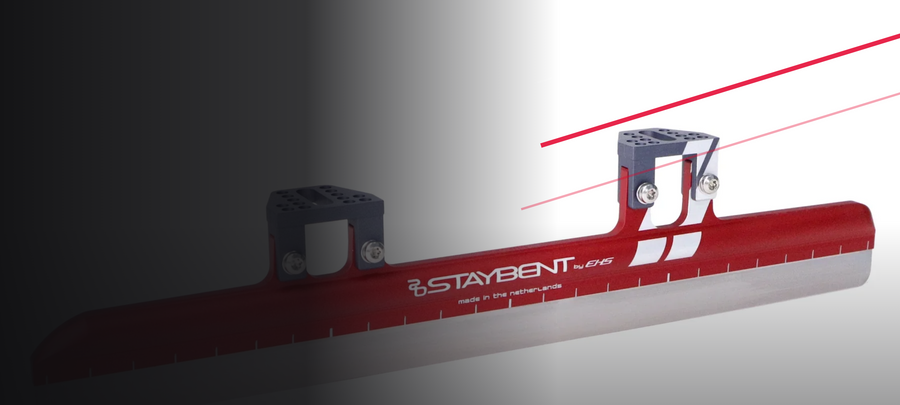
How a short track blade is built. Light aluminium body up top, hard steel runner along the bottom.
The tube and the pillars
The long spine of the blade is the tube. On a StayBent XC Flex Weapon this is made from premium Dutch aluminium chosen for stiffness and durability, and the way the tube is shaped is a big part of how the blade feels. The pillars and lips are the parts that join the tube down to the cups. How thick and how flexible they are decides whether the skate feels planted and direct or soft and free under your foot. We come back to this when we talk about feel.
The cups and blade height
At each end the tube sits on a cup that bolts to your boot. On StayBent blades these cups are machined from lightweight, high strength aluminium and come in several heights. Cup height matters more than beginners expect. More height lifts the blade further from the boot, which lets you lean deeper into a corner before your boot touches down, while less height feels lower, more stable and more direct. If you want to read more about height and mounting, our guide on short track mounting cups and adapters covers it in detail. For now the point is simple. The cups are aluminium because they must be light and stiff, not because they ever touch the ice.
Bimetal or full PM: understanding blade steel
Here is where most of the real questions live. When you choose a StayBent blade such as the StayBent JaeBee or the StayBent QCS, you are usually offered two steels. They are quoted with a hardness number on the HRC scale, which is the Rockwell C scale that engineers use to measure how hard a metal is. A higher number means a harder steel. Short track runners sit in a narrow band near the top of that scale, and a difference of two points there changes the way a blade behaves day to day.
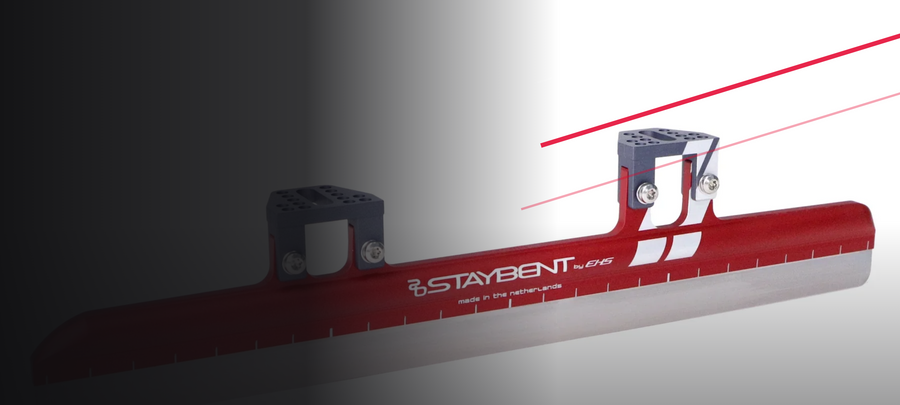
Two steels, two HRC numbers. Bimetal sharpens easily, full PM holds its edge for longer.
Bimetal at 62 HRC
Bimetal steel is the slightly softer of the two options, sitting at 62 HRC. The word bimetal describes how it is built, with a harder edge material joined to a more workable backing, giving you a keen edge on a body that is a touch more forgiving. Because it is softer, bimetal is easy to sharpen and forgiving day to day. If you nick an edge or need to bring a blade back quickly between sessions, bimetal responds fast on the stone. Many skaters, and almost all newer racers, are happiest on bimetal because it asks less of your sharpening skill and gets you back on the ice sooner.
Full PM at 64 HRC
Full PM is a harder powder metallurgy steel at 64 HRC. Powder metallurgy is a way of making steel from very fine, evenly mixed metal powder, which produces a clean, consistent grain that can be run harder without becoming brittle. At 64 HRC this steel holds an edge noticeably longer between sharpenings. That is a real advantage if you train most days, because you spend less time at the jig and more time skating on a fresh edge. The trade off is that a harder steel takes a little more work and a little more care to sharpen well.
Which hardness suits your training
The honest way to choose is to match the steel to how hard and how often you skate, not to reach for the hardest number available. If you skate a few sessions a week and you are still building your sharpening routine, bimetal at 62 HRC is the friendlier companion. If you train heavily, race often and want to sharpen less frequently, full PM at 64 HRC earns its keep. On StayBent blades both steels share the same flex profile, so you are choosing edge behaviour, not feel. Tell our team your preference with your order and we will confirm what is available in your length.
How the build shapes feel
Steel decides your edge. The body decides your feel. Two blades can carry the same steel and skate completely differently because of how their tube and lips are designed. This is the part that separates the models in the StayBent range, and it is worth understanding before you spend serious money.
Even stiffness gives stability. A tapered tube gives more flex at the tips for a softer, more forgiving corner.
The StayBent JaeBee: progressive flex
The StayBent JaeBee is the most flexible blade in the StayBent range. It uses highly flexible lips, even more flexible than the QCS, so the skate moves freely with your push instead of fighting it. What really sets it apart is the tube. The top of the tube tapers down from the centre toward each end, which creates a progressive flex pattern, so the tips of the blade have more give than the middle. The result is a varied, responsive feel that rewards technical and creative skaters who like to read a corner and skate it with touch. Both bimetal and full PM steels are offered on the JaeBee, so you keep this feel whichever edge you pick.
The StayBent QCS: even stiffness on a smarter budget
The StayBent QCS takes a different route. It uses the same tube as the Quantum, with a thin pillar design that keeps the skate light and responsive, and even stiffness along the full length of the tube for stability through every push. The clever part is the steel. The QCS uses the same hardness levels as the top options, full PM at 64 HRC or bimetal at 62 HRC, but on a more cost effective material, which brings Q family feel to a more accessible price. It is a strong choice for developing athletes who want a proper race blade without paying flagship money.
The StayBent XC Flex Weapon: flagship grip
At the top sits the StayBent XC Flex Weapon, one of StayBent's flagship blades. It pairs premium Dutch aluminium with hand selected steel runners in premium bimetal or full PM, and adds Precise Bend Technology, StayBent's own process for producing highly accurate, smooth and repeatable bend radiuses so the blade behaves consistently through every corner. It is built from start to finish by the craftsmen at Hagen Techniek in the Netherlands, and it is aimed at committed racers with a settled technique who want maximum grip and hold through the corner without giving up glide. You can compare all three side by side in the full short track blades collection.
How steel choice changes your sharpening
Blade steel does not just sit under your boot, it shapes your maintenance routine. A softer bimetal edge comes back quickly on the stone, so a light touch up between sessions is easy. A harder full PM edge lasts longer before it needs attention, but when it does you want good technique and clean tools so you do not chase the edge around. Whichever steel you run, the fundamentals are the same. Keep the blade held perfectly straight while you work, finish the edge cleanly and knock off the burr, the tiny lip of raised metal that sharpening leaves behind. A handheld tool such as the StayBent Diamond Deburr Stone makes that final step quick and repeatable. If you are new to the whole routine, our full guide on how to sharpen short track blades walks through it step by step.
Choosing your blade build: a quick summary
Start with feel. If you like a soft, free, intuitive skate that follows your foot, look at the JaeBee with its tapered tube and progressive flex. If you want even, planted stability at a smarter price, the QCS is hard to beat. If you are chasing flagship grip and repeatable bend, the XC Flex Weapon is the tool. Then choose your steel. Pick bimetal at 62 HRC if you value easy sharpening and forgiveness, or full PM at 64 HRC if you train heavily and want longer edge life. Buy the blade that matches how you actually skate today, not the one that matches how you hope to skate next year, and it will reward you every session.
Frequently asked questions
What does HRC mean on a blade?
HRC is the Rockwell C hardness scale. It measures how hard the steel is. On StayBent blades bimetal is quoted at 62 HRC and full PM at 64 HRC, and the higher number is the harder steel that holds an edge for longer.
Is bimetal or full PM better?
Neither is better in every way. Bimetal at 62 HRC is softer and easier to sharpen, which suits most skaters day to day. Full PM at 64 HRC is harder and holds an edge longer, which suits skaters who train heavily and want to sharpen less often.
Why are the tube and cups made of aluminium?
Aluminium is light and stiff for its weight, which keeps the blade fast and responsive. It is far too soft to hold an edge, so a strip of hardened steel is bonded along the bottom to be the running edge you skate and sharpen.
Does the steel change how the blade feels through a corner?
Not directly. On StayBent blades both steels share the same flex profile, so the feel comes from the tube and lip design rather than the steel. The steel changes edge life and how the blade sharpens, not the flex.
Which blade should a developing skater choose?
Many developing skaters get on well with the QCS in bimetal, which gives a proper Q family feel and easy sharpening at a more accessible price. If you prefer a softer, more forgiving corner, the JaeBee is worth trying. Send us your boot size and we will help you choose a length.