Passing is where short track is won and lost. You can have the strongest legs in the pack and the sharpest blades in the building, yet still cross the line fourth because you never found a clean way through. Overtaking on a tight one hundred and eleven metre track is a craft in its own right, a blend of position, patience and a committed move at exactly the right moment. This guide breaks down how to pass and how to defend, from the inside line at the apex to blocking through the corner, so you can turn speed into places.
We race on ice with sharp edges and bodies close together, so good passing is also safe passing. The skater who understands lines and timing takes fewer risks, makes fewer contacts and still comes out ahead. Read through, then get on the ice and drill it until the move feels automatic.
Why passing is a skill of its own
Raw speed sets up a pass, but it rarely completes one on its own. If you simply skate faster into the back of the skater ahead, you close the gap and then sit there, boxed in, burning energy in their slipstream with nowhere to go. A real pass needs three things at once. It needs space, a line the skater ahead is not using. It needs timing, a moment when they are committed to their own line and cannot easily respond. And it needs commitment, the confidence to take the gap before it closes. Space, timing and commitment are what separate a skater who threatens on every lap from one who follows all race and sprints too late.
Most passes in short track happen in and around the corner, because that is where lines diverge and where a skater on the wrong line gives up the most speed. Learn to read the corner and you learn to pass.
The inside line and the apex
The classic short track pass is made on the inside, close to the blocks, at the apex of the corner. The apex is the tightest point of the bend, where the blocks sit closest to you. If the skater ahead drifts even slightly wide through the apex, they open a gap on the inside, and that gap is your invitation. You dive down to the inside, get your shoulder and hip ahead at the apex, and you own the line out of the corner.
The overtaker hugs the blocks and gets a shoulder ahead at the apex while the defender runs wide.
Reading the gap
The gap you are looking for is not always obvious. Watch the hips and blades of the skater ahead through the entry to the corner. If their hips swing wide or their crossover carries them away from the blocks, a door is opening. Sit patient on their inside hip, wait for the apex, and go. If you commit too early on the straight, they simply close the door by holding the inside. Patience is the whole game.
Early apex versus late apex
Where you touch the apex changes how much speed you carry onto the next straight. An early apex, where you turn in hard and reach the blocks too soon, scrubs speed and pushes you wide on exit, which is exactly where you get repassed. A late apex, where you stay a touch wider on entry and clip the blocks later in the bend, lets you straighten the exit and drive out with more speed. When you plan a pass, you are not just aiming for the gap, you are aiming for the exit.
A late apex keeps entry a little wider, then straightens the exit so you drive onto the straight with more speed.
Timing your move: entry, apex, exit
Think of every pass as three zones. In the entry zone you set up, sitting on the inside hip of the skater ahead and holding your position without showing your hand. In the apex zone you commit, driving down to the blocks and getting your body ahead. In the exit zone you hold the line, staying low and pushing so they cannot come back over the top. Miss the apex zone and the pass never happens. Rush the entry and you get shut out. Hesitate on the exit and you hand the place straight back.
Set up in the entry, commit at the apex, then hold the low line through the exit so the place stays yours.
Committing without hesitation
The most common reason a pass fails is a half move. You show the skater ahead that you are coming, then you back off, and now they know to defend. When the gap appears, go with full intent. A clean, decisive pass is safer than a nervous one, because the skater behind and ahead can both read where you are going. Doubt puts blades in unexpected places.
Passing on the straight
Not every pass is a corner dive. If you have a clear speed advantage, the straight can be the safest place to go by, especially on the outside where there is no block to trap you. Come out of the corner with more exit speed, step out one lane and drive past before the next entry, then settle back to the inside for the corner. The risk on the straight is running out of room before the bend, so only commit if you are sure you can complete the pass and be set for the corner. A blade fast off the corner, set up well and running true, makes these straight line passes possible. It is worth reading our companion piece on the low seated basic position to build the power you need here.
Blocking and defending your position
Passing is only half of racecraft. When you are ahead, you defend. The simplest defence is to hold the inside line through the corner so there is no room to dive underneath you. Keep your line tight to the blocks, stay low, and do not drift wide on exit. On the straight you are allowed to hold your lane, but you cannot move sideways into a skater who is already alongside. Good defence is about owning the racing line early and skating it cleanly, not about swerving to shut people down, which is both slow and dangerous.
Contact, gloves and staying safe in the pack
Short track is a contact sport in close quarters, and hands go down on the ice through every corner. That is why cut resistant kit matters as much as fitness. A good pair of StayBent cut resistant gloves protects your hands from your own edges and from other skaters' blades in a tangle, and they are the gloves to wear when you sharpen too. Skate with your inside hand light on the ice through the corner, keep your elbows in, and never put a hand out to push. Clean passing keeps everyone upright.
Kit that helps you hold a pass
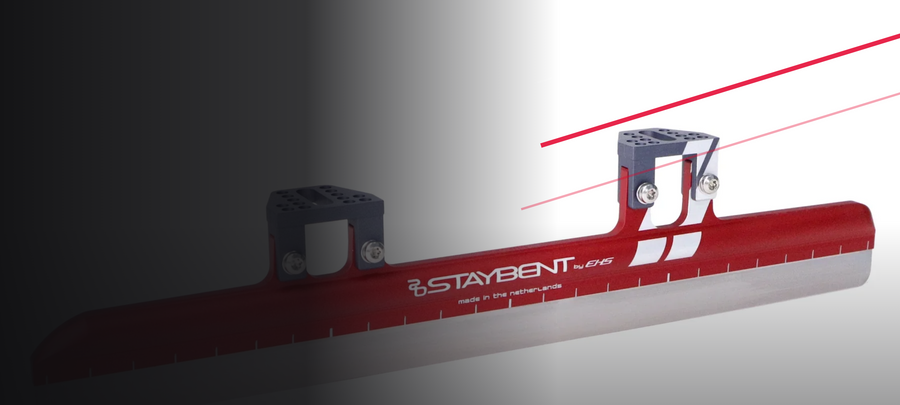
Technique comes first, but equipment that responds when you ask it to makes every move sharper. A blade that grips through the apex and releases cleanly on exit lets you commit with confidence. Many short track racers run the StayBent JaeBee for its lively, responsive feel through the corner, while others prefer the StayBent QCS for a stable, planted platform when they drive the exit. A boot that holds your heel and transmits your push, such as the heat mouldable EHS short track boots, means no energy is lost between your leg and the ice at the moment you commit. You can see the full setup in the short track collection.
Drills to build passing confidence
Passing is a habit built in training, not a gamble saved for race day. Skate follow the leader in pairs and take turns diving to the inside at a set corner, so the move becomes familiar. Practise holding a late apex on your own until the exit speed feels normal. Set two markers a lane apart on the straight and rehearse stepping out and back so an outside pass is second nature. The more you rehearse the timing at training pace, the calmer you stay when a real gap appears at race pace.
Frequently asked questions
Where is the best place to pass in short track?
The most reliable pass is on the inside at the apex, when the skater ahead drifts wide and opens a gap near the blocks. If you have a clear speed advantage, an outside pass on the straight can also work, as long as you can complete it before the next corner.
How do I stop getting passed on the inside?
Own the inside line early, hold it tight to the blocks through the apex, and keep your exit straight so you do not drift wide. If there is no room on your inside, there is no dive to make.
Is passing on the outside ever a good idea?
Yes, when you carry more speed out of the corner and have room on the straight. The outside avoids the trap of the blocks, but you must be sure you can finish the pass and settle onto the inside before the next bend.
What kit helps most with passing?
A responsive blade you trust through the apex, a boot that holds your heel and transmits your push, and cut resistant gloves for safety in the pack. Good equipment lets you commit fully, and full commitment is what completes a pass.
Master your lines, drill the timing, and skate every pass with intent. That is how you turn laps into places.