Ask any experienced short track skater where finals are really won and lost, and very few will point at the ice. They will point at the changing room, the bag, and the twenty minutes before the first heat. On race day the fastest legs still lose to the skater who turned up with clean edges, a warm body and nothing rattling loose on the boot. This is a full competition day routine for short track, written for skaters racing in humid Indian rinks and travelling to meets through the season. It walks through race week, the night before, and the crucial hour before you step on, so that nothing on your kit surprises you when the pace lifts.
Why short track races are won off the ice
Short track is unforgiving because the margins are tiny and the contact is real. A blade that has lost its edge will wash out on the apex when you load it hardest. A bolt that backed off by half a turn will let your blade shift under you at the worst possible moment. A cold hip flexor will cramp on the first flying lap. None of these are talent problems. They are preparation problems, and every one of them is fixable the day before. The skaters who podium consistently are usually the ones who treat their gear checks as part of the race, not as an afterthought once they arrive at the rink.
Race week: what to change and what to leave alone
The golden rule of race week is simple. Change nothing that your body has to relearn. Your feet, your ankles and your balance have spent weeks adapting to a particular boot, blade bend and rocker. Swapping any of that in the last few days throws away that adaptation and hands you a fresh set of unknowns on the day you can least afford them.
Blades and edges
Sharpen early in race week, not the night before. A fresh grind can feel grabby for the first session or two, so you want at least one skate on the new edge before you race. After sharpening, deburr fully so there is no wire edge dragging on the ice. If your bend, rocker and pitch already feel right, leave them exactly as they are. This is not the week to chase a new setup.
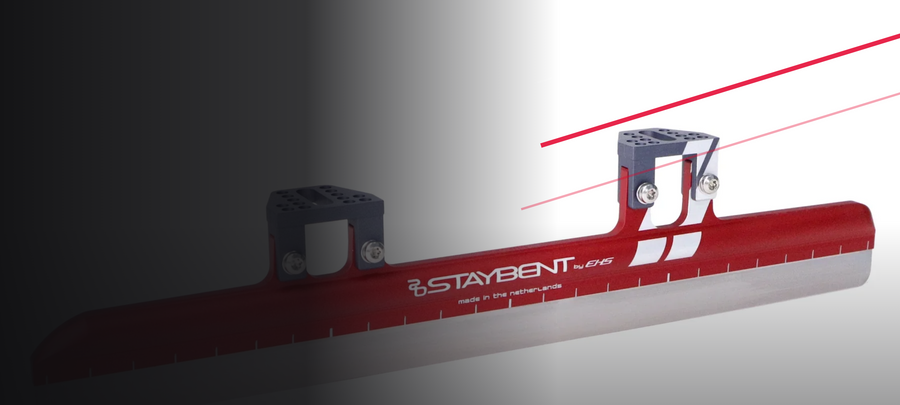
If you are still deciding which blade suits your racing, settle that question well before a meet, never during one. Whatever you race on, whether that is the StayBent JaeBee or another blade in the range, write your alignment down. A photograph of the cup position and a short note of your bend and rocker means you can always return to a known good setup if something moves at the venue.
Boots and mounting
Walk through every bolt on your mounting cups and check that nothing has crept loose over the training block. A short track boot takes a lot of side load and vibration, and cups can loosen slowly without you noticing. Snug them to your usual feel, and if you run the 195 to 165 mm adapter set or any spacers, confirm that they are seated square. A blade that sits even slightly twisted will steer you off your line under load, and you will feel it as a vague, wandering push rather than an obvious fault.
The three windows of race day, each with its own short job list so nothing gets left to chance.
The night before: pack with a checklist, not from memory
Packing from memory is how skaters arrive with one glove, or with a soaker still drying on a radiator at home. Build a written list once and reuse it for every meet. Your short track competition bag should hold your boots with blades mounted, hard blade guards for walking around the venue, and soft blade soakers to pull moisture off the steel once the guards come off. Add your race suit, a spare base layer, your safety kit, a small tool roll, a soft cloth for the edges, tape, and water and simple food for the gaps between rounds.
Your competition bag, in order
Pack in the order you will use things. Boots and guards go where you can reach them fast. Safety kit goes on top, because you put it on first. Tools and spares go at the bottom, because you hope not to need them. A tidy bag is not vanity. When you are three heats deep and tired, a bag you can read at a glance saves you from silly mistakes.
The tool roll and the spares that save a meet
Most race day disasters are small parts failing at the wrong moment, and almost all of them are cheap to insure against. Roll the following into a cloth or a pencil case and it lives in your bag permanently, so you never have to remember it.
- The exact driver that fits your mounting cup bolts, plus two or three spare bolts.
- A spare set of boot laces, because a lace snaps under tension and always at the eyelet you cannot skip.
- A spare pair of glove tips, whether you run the carbon fibre Quick Tips or the solid colour set.
- A diamond deburr stone, small enough to live in the roll, for knocking a burr off an edge you have nicked.
- A clean dry cloth for the steel and a roll of tape for everything else.
All of that fits in a space smaller than a paperback. You can build the roll from the StayBent short track accessories range in one order and then forget about it for a season.
Pack in reverse order of use, so the first thing you need is the first thing your hand finds.
On the morning: your hour before the first heat
Arrive early enough that nothing is rushed. Ninety minutes before your first heat is comfortable at most meets, and it gives you room for the queue at the sharpening bench or the changing room, both of which get busy at exactly the wrong time. The hour before your heat has a rhythm. Start dry and off the ice, then move to the boots, then to the line.
Warm up off the ice first
Short track loads your body in a very specific way, deep in the hips, hard on the outside edge, and fast through the shoulders as you set your arm carry. A proper off ice warm up wakes those patterns before you ask them to fire at speed. Raise your heart rate, open the hips, and do a few explosive movements so the first flying lap is not a shock. A cold skater in a mass start is a slow skater and often an unsteady one.
A simple sequence for the last hour
You do not need anything elaborate. You need the same order every time, so that your body learns the rhythm and your mind is free for the racing.
- Sixty minutes out: light jog or skip, then hip openers, ankle circles and a few gentle lunges.
- Forty five minutes out: short sharp efforts, three or four accelerations of six to eight seconds with full recovery.
- Thirty minutes out: undersuit, socks and race suit on, then neck guard.
- Twenty minutes out: boots on, laces set by zone, helmet fitted and buckled.
- Ten minutes out: gloves and tips on, wipe the edges dry, guards on for the walk.
- At the line: guards off, hand them to a team mate or leave them at the boards, and breathe.
A short track edge grips through its two crisp corners. Once those round off, the blade slides on the apex just when you load it hardest.
Blade care through the rounds
Once your guards come off at the boards, wipe the blades with a dry cloth before every heat. Rink ice leaves a fine film of moisture and grit that dulls the very edge you sharpened. Between heats, dry the steel again and slide the soakers back on the moment you are off the ice. Water sitting on carbon steel for even a short time in a humid rink starts the rust you spent all week avoiding. Never walk on bare blades on rubber matting or concrete, because one hard step can nick an edge and cost you the meet.
The safety kit you must have on
Short track is a contact sport on steel edges, and the safety kit is not optional. A certified helmet, a cut resistant neck guard, cut resistant gloves or glove tips, a Kevlar undersuit and Level 4 ankle socks together form a system, and each piece covers a gap the others cannot. Fit it all before your warm up so you are not fighting a zip at the line.
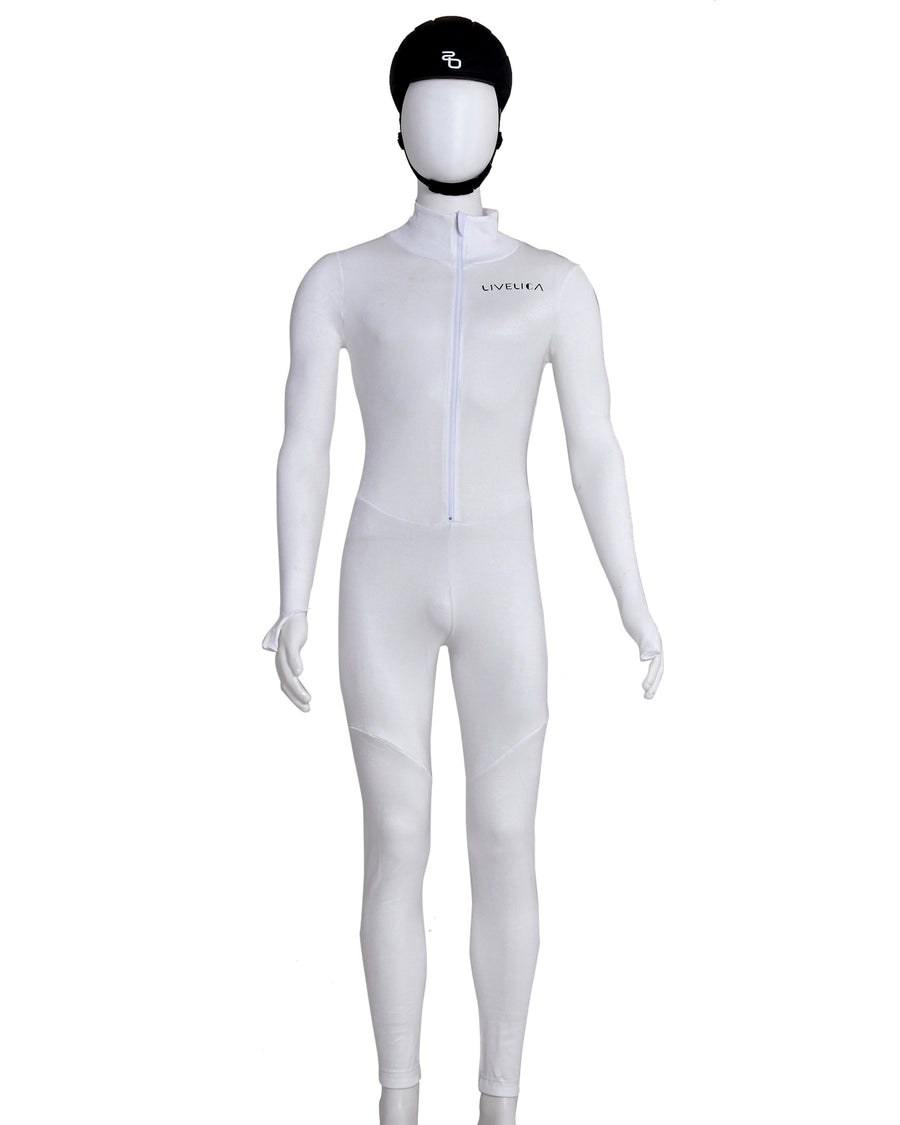
Cut resistance is rated in levels, and the level tells you how much force a blade needs before the fabric gives way. For short track, Level 3 across the torso and the neck and Level 4 at the ankle is the sensible standard, because the ankle is where another skater's blade is most likely to reach you in a fall. The LiveLica range is built to exactly that pattern, with a Level 3 Kevlar undersuit, a Level 3 neck guard and Level 4 ankle socks. The rule is simple. You wear all of it, every race, without exception.
Each layer guards a part of the body a blade can reach, so a short track skater wears the whole system on every race.
When something goes wrong at the meet
Sooner or later something will fail between heats, and the skaters who handle it calmly are the ones who decided in advance what they would do. Here are the four problems that come up most often and the fix that actually works under time pressure.
- A cup bolt has loosened. Stop, do not race on it. Bring it back to your usual tension with the driver from your roll, then check the other three on that boot, because one loose bolt usually means the set has been working itself free.
- A lace has snapped. Replace the whole lace rather than knotting it. A knot sits under the tongue, creates a pressure point and lets your heel lift exactly when you need it locked.
- A glove tip has torn or come away. Swap in your spare pair. Racing with one worn tip changes how your inside hand loads on the ice and makes the corner feel unpredictable.
- You have nicked an edge on matting or concrete. Take the burr off with your deburr stone and check the edge by feel along the length of the blade. If the damage is deep enough to catch a fingernail across the corner, tell your coach before you race on it.
None of these takes more than a couple of minutes if the parts are in your bag. All of them are meet ending if they are not.
Recovery between rounds
Short track meets are long, and heats can be hours apart. Treat the gaps as part of the race. Get warm clothing on the moment you leave the ice, so that your legs do not stiffen. Take on small sips of water and easy to digest food rather than a big meal. Keep the blood moving with a gentle walk or an easy spin on the legs before your next call. A skater who lets the body go cold and heavy between rounds is a very different skater in the semi than they were in the heat.
A race day checklist you can copy
- Race week: sharpen, deburr, skate the new edge once, then change nothing.
- Night before: pack from a written list, fit guards, dry and bag your soakers, lay out your suit and safety kit.
- Tool roll: driver, spare bolts, spare laces, spare glove tips, deburr stone, cloth, tape.
- Arrival: find the sharpening bench, the changing area and the marshalling point before you settle.
- Hour before: off ice warm up, then suit and neck guard, then boots, then helmet and gloves.
- Every heat: wipe the edges, guards off at the line, soakers back on the second you step off.
- Between rounds: warm layers on, small food and water, keep moving.
Copy that into your notes, tune it to your own routine over a few meets, and it quickly becomes second nature. The whole point is that on the day you are thinking about racing, not about whether you forgot a glove.
Frequently asked questions
Should I sharpen my blades on the morning of a race?
It is better not to. Sharpen earlier in race week and skate at least one session on the fresh edge, because a new grind can feel grabby at first. On the morning you only wipe and dry the edges, you do not regrind them.
How early should I arrive at the rink?
Aim for ninety minutes before your first heat. That covers a queue at the sharpening bench, a busy changing room and the walk to marshalling, and it still leaves you a calm hour to warm up and dress in your usual order.
Do I really need both guards and soakers?
Yes, because they do different jobs. Hard guards protect your edges while you walk around the venue, and soft soakers pull moisture off the steel while the blades sit in your bag. One does not replace the other.
How do I stop my blades rusting at a humid rink?
Wipe the steel dry after every heat, never leave water sitting on it, and use soakers between rounds. In a humid rink the enemy is standing moisture, so dry steel and a soft soaker together keep rust away.
What safety kit is genuinely required for short track?
A certified helmet, a cut resistant neck guard, cut resistant gloves or glove tips, a cut resistant undersuit and cut resistant ankle socks. Wear the full set for every race, never a partial one.
What should I carry in my tool roll?
The driver that fits your mounting cup bolts, a few spare bolts, a spare set of laces, a spare pair of glove tips, a small deburr stone, a dry cloth and tape. That covers almost every failure you will meet in a season.
Get the preparation right and race day becomes calm. Your edges bite, your kit is on, your bag makes sense, and all that is left is the part you came for, which is the racing itself. When you next refresh your setup, browse the StayBent cut resistant gloves and the LiveLica Level 3 cut resistant neck guard so that your safety kit is ready long before your next meet.