Your race suit is the one piece of short track kit that touches everything you do on the ice. It has to sit close enough to cut drag on the straights, stretch far enough to let you drop into a deep corner, and still work in harmony with the cut resistant protection every serious skater now wears underneath. Get it right and you forget you are wearing it. Get it wrong and it flaps, pinches at the neck, or leaves you choosing between speed and safety.
This guide walks through how a short track suit is built, why skaters layer a race suit over a cut resistant undersuit, the difference between the two LiveLica short track suits, and how to choose a size that fits both you and the protection beneath it. It is written skater to skater, and every detail below comes from the suits and protective gear we actually stock.
Why short track skaters layer
Long track and inline skaters can often race in a single skin suit. Short track is different, because the sport is skated on tight radius corners at high speed with sharp blades passing close to the ice and to other skaters. That risk is why most national federations require cut resistant protection for short track competition. The neat solution the sport has settled on is layering. A protective layer goes next to the skin, and a fast aerodynamic suit goes over the top, so you never have to trade protection for speed.
Think of it as two jobs handled by two garments. The inner layer keeps you safe if a blade comes close in a fall or a pack pile up. The outer layer keeps you fast, holding your racing position and cutting the air. Understanding that split makes every other decision about suits much simpler.
Protection sits closest to the body, speed sits on the outside. The two layers never compete for the same space.
The cut resistant layer underneath
The foundation of a short track kit is the protective base layer. The LiveLica Level 3 Cut Resistant Kevlar Undersuit puts a full layer of Kevlar between you and the ice. It is rated at cut resistance level 3, a high band of protection, and it adds reinforcement exactly where short track loads and exposes you most, with a warm collar for cold rink ice, knee reinforcement for the deep corner position, and added coverage at the ankles where blades pass close in the pack.
Two smaller pieces complete the protection. The Level 3 cut resistant neck guard covers the throat, one of the most exposed areas above the suit, and the Level 4 cut resistant ankle socks wrap the ankle and lower shin, held up by a silicone gripper so they never slide down mid session. Rules vary by event, so always check your own competition regulations, but this base layer is built to meet what short track racing expects. With protection sorted, you can put the race suit on top without a second thought.
The race suit on top
LiveLica makes two short track race suits, and they suit different skaters and budgets. Both are one piece, full body designs with long sleeves and full length legs, cut for the low, deep short track position. Where they differ is in how they hold you and how they handle the neck.
The Pro suit and its panels
The LiveLica Pro Short Track Suit is the more structured of the two. It combines two fabric types, each doing a specific job. Firmer body holding panels sit on the chest, the upper legs and sections of the back, keeping you in an efficient racing position and cutting drag where it matters most. Flexible stretch material runs down the arms and the lower legs, exactly the places a stiffer suit can leave loose, so the suit sits close around the joints and stays put through starts, crossovers and corners.
It finishes with a high mock collar for a clean aerodynamic line, a full front zip, and extra reinforcement built into the left leg at the groin, one of the highest stress points on any short track suit. The look is black with a graduated aero striping pattern down the sleeves and lower legs, so you look as fast as you skate.
Firm panels hold your position on the core and upper legs, while stretch fabric keeps the arms and lower legs close and free to move.
The Lycra suit and the side neck zip
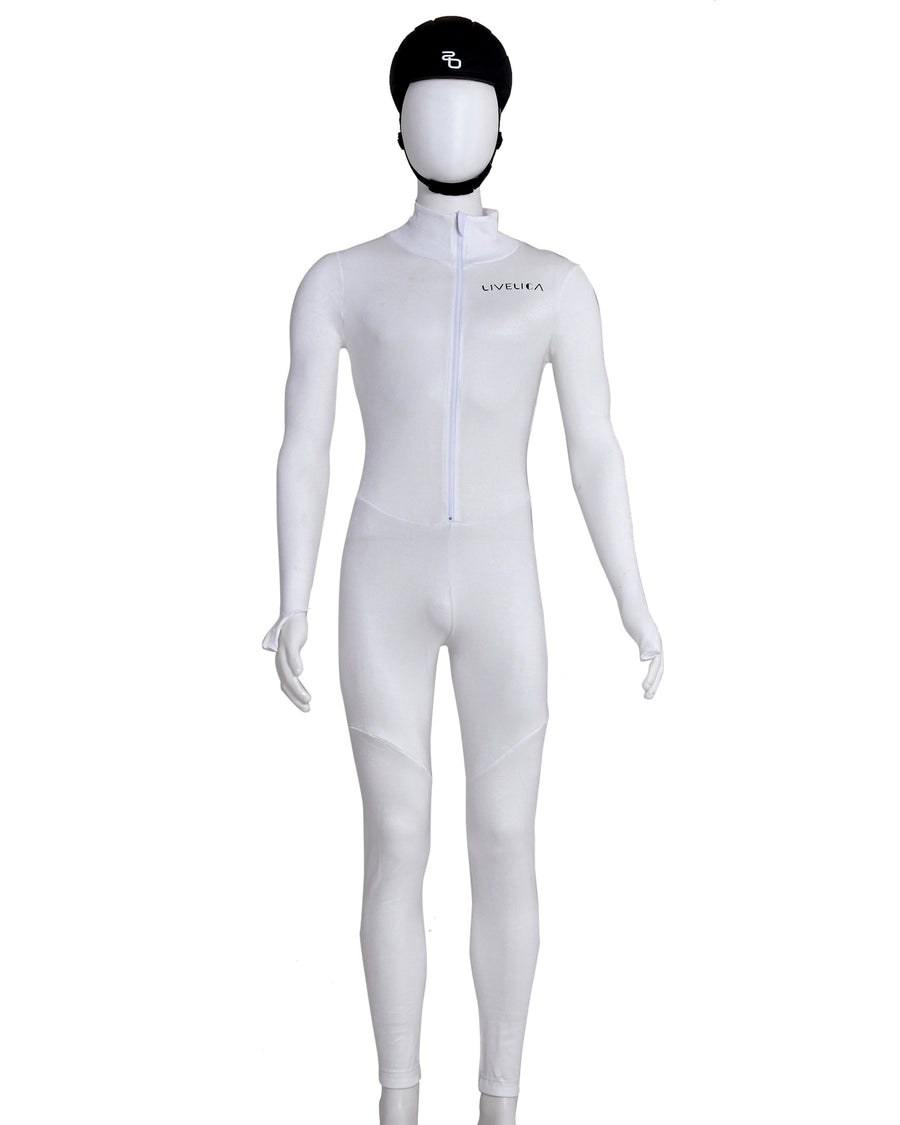
The LiveLica Short Track Lycra Suit is the aerodynamic outer layer built specifically to go over your cut resistant Kevlar undersuit. Made from a smooth, stretchy Lycra, it sits close to cut drag on the straights while stretching with you through crossovers, starts and corners. Its standout feature is a clever angled zipper that runs along the side of the neck rather than straight up the front.
That detail matters more than it sounds. In the deep, low short track position your chin drops toward your chest, and a front zip can dig in right where you need to stay relaxed. Moving the zip to the side of the neck removes that pressure point and leaves the throat free, so you can hold a deep tuck and commit fully to the corner. For skaters who want to squeeze the most out of their cornering, it is a real difference on the ice.
Dropping into the corner, a front zip presses the throat, while the angled side zip leaves the neck free to move.
How a race suit should fit
Whichever suit you choose, the fit rule is the same. A race suit should feel snug and close to the body, never loose. A loose suit flaps at speed, and every flap of fabric is drag that scrubs off the speed you worked to build. Snug does not mean uncomfortable, though. Both suits are cut for movement, so you should be able to sink into a full corner, reach through a crossover and swing your arms freely without the suit pulling or restricting.
Remember that a short track suit is almost never worn alone. With the Lycra suit especially, you must allow room for the cut resistant undersuit beneath it, so factor that layer in when you judge the fit. A suit that feels perfect over bare skin may be tight once the undersuit goes on, and a suit sized only for the base layer may bag once you are protected. The target is a clean, close fit with both layers on.
Sizing for juniors and the whole club
Both suits come in a full size run so an entire club can be kitted out together. The Lycra suit runs from junior 4 through 16 and on into senior small, medium and large. The cut resistant undersuit runs from junior small through to senior sizes as well, which makes it easy to protect a young skater moving up from recreational sessions into structured short track. If you are buying for a growing junior, resist the urge to size up for room to grow, because a suit that is too big flaps and slows them down. If you are ever between sizes, message the LiveLica team and we will help you choose.
Caring for your suit
A race suit rewards gentle care. Wash it gently and dry it flat, away from direct heat, to protect the panels, the stretch fabric and the zip. Avoid harsh detergents and tumble drying, both of which shorten the life of the materials and the finish. Give the cut resistant undersuit and neck guard the same treatment, rinsing off ice and grit after sessions, washing gently and drying flat, so the protective fibres last many seasons. Treated well, a good short track kit will see you through years of racing.
Frequently asked questions
Is a short track race suit cut resistant on its own?
The Lycra outer suit is not cut resistant by itself. The protection comes from the cut resistant Kevlar undersuit worn underneath. Together they give you speed on the outside and protection on the inside, which is exactly how short track kits are built.
Do I need cut resistant protection to race short track?
Most national federations require cut resistant protection for short track competition, so a proper undersuit, neck guard and cut resistant socks are part of racing safely and legally. Rules vary by event, so always confirm your own competition regulations.
What is the difference between the Pro suit and the Lycra suit?
The Pro suit uses firm body holding panels on the chest, upper legs and back with stretch fabric on the arms and lower legs, and a high mock collar with a full front zip. The Lycra suit is a smooth stretchy outer layer designed to go over your undersuit, with an angled side neck zip that keeps the throat free in the deep position.
Why is the Lycra suit zip on the side of the neck?
Because in the low short track tuck your chin drops toward your chest, and a front zip can press on the throat. The angled side zip moves that pressure away, so you can hold a deep position and commit to the corner in comfort.
How should the suit fit over my undersuit?
Snug and close, with just enough room for the cut resistant undersuit beneath. Judge the fit with both layers on, aiming for a clean profile that holds your position without flapping or restricting your movement.
Ready to build your kit? Browse the race suits and the full protection range in the short track accessories collection.