Most skaters train to go faster. Far fewer train to race better, and that gap is exactly where short track race tactics decide who moves on and who watches the next round from the bench. Short track is not a time trial. You do not get a medal for the quickest lap in the building. You get a medal for finishing in front of three or four other people who are all trying to stop you doing that, on a sheet of ice barely wide enough for two skaters side by side. A skater with an honest engine and a clear plan will beat a stronger skater who improvises every time.
This guide is about the plan. How a heat actually works, how to read the one you have been drawn into, the three tactical shapes that almost every short track race falls into, when to commit to your move, and how to manage a whole competition day rather than one brilliant race. None of it replaces fitness or technique. All of it makes the fitness and technique you already have count for more.
How a short track heat actually works
In most short track competitions you skate in small groups, commonly four or five skaters, and only the front runners carry on to the next round. In a great many formats that means the first two across the line advance and everyone else is finished for that distance. Referees can also advance a skater who was impeded through no fault of their own, so a clean race that was ruined by someone else is not always the end of your day. Formats do vary between national championships, club meets and international events, so always read the regulations published for the competition you have entered rather than assuming.
That structure has one enormous consequence, and it is the single most useful thing to understand about short track. In a heat, third place and last place are worth exactly the same. Nothing. There is no reward for a brave, exhausting, well fought third. This changes how you should race. Sitting safely in third, feeling comfortable, is not a safe position at all. It is a losing position that happens to feel pleasant.
In a typical four skater heat only the front two go through, so third place and fourth place are worth the same to you.
Read your heat before the whistle goes
You usually get several minutes between seeing the start list and standing on the line. Use them. There are four things worth knowing, and all of them are gettable at a club meet or a national championship.
- Who is the fastest skater in your group. If there is one clear favourite, your real race is for second place, and you should plan around that rather than trying to beat them at their own game.
- Who is the most aggressive starter. If somebody always throws themselves at the first corner, you want to know that before they arrive in your hip.
- Who is nervous or new. Skaters who are unsure tend to drift wide on corner exit, which opens the inside for a lap or two and then closes it unpredictably.
- Your own lane position on the start line. An inside draw gives you a shorter path to the first corner. An outside draw means you either win the sprint to the apex or you accept slotting in behind.
Watching the heats before yours is free information. Two minutes of attention tells you where the ice is chewed up, which corner people are getting wrong, and whether passes in this session are happening on the inside at the apex or on the exit. If you want the technical detail behind those moves, our guide to making a clean pass in short track covers the mechanics.
The three tactical shapes of a short track race
Almost every heat you will ever skate is a version of one of three plans. Pick one before you start. Skaters who have not chosen tend to default to following, which is the one plan that guarantees somebody else decides your race.
Lead from the gun
You win the start, take the front, and set a pace hard enough that nobody behind fancies a long run around the outside. This is the plan for skaters with a genuinely strong start and good corner speed, and it is the safest plan in terms of contact, because nothing can happen to you from in front. The cost is that you carry the air and the tempo for the whole race, and everyone behind is resting in your slipstream waiting to jump you on the last lap. If you lead, you have to lead properly. A soft lead is an invitation.
Sit and pounce
You take second, stay glued to the leader, save everything, and commit to one hard move in the final lap and a half. This is the classic short track plan and it works because the skater in second does measurably less work than the skater in front. The risk is that second place is a crowded address. If you leave your move too late, or the leader defends the inside well, you can find yourself needing a pass that the track will not give you.
Control from mid pack
You sit third early, let the front two burn each other, and move up as the race settles. This suits skaters with a strong second half and a weaker start. It is also the highest risk plan on the list, because you are relying on passing two people rather than one, and because third place is where crashes in front of you turn into your problem.
The skater in front spends steadily all race. The skater sitting behind saves it and spends it once, which is why the last lap so often decides a heat.
When to commit: counting laps to go
The most common tactical error in club racing is not choosing the wrong plan. It is choosing the right plan and then executing it at the wrong moment. Two rules of thumb are worth carrying in your head.
First, know the lap count of your distance cold, so you are never guessing where you are. Second, decide in advance the latest lap at which you will still have started your move, and treat it as a hard deadline rather than a suggestion. Many skaters plan to attack on the last lap, arrive at the last lap feeling boxed in, hesitate for half a corner, and finish third having never actually tried. A move started one lap earlier than felt comfortable would have worked.
If the leader is clearly stronger than you, go earlier rather than later. You cannot out sprint them off the last corner, so your only chance is to make the race long and uncomfortable before they can use their speed. If you are the stronger skater, go later, stay patient, and let your finish do the work.
Track position: what second and third can actually do
Your options at any moment are set by where you are relative to the skater in front as you enter the corner. From directly behind, you have the inside available at the apex if the leader drifts even slightly wide, and you have the outside on the exit if you carry more speed. From half a length back, the inside is usually gone, because you cannot get your shoulder ahead before the apex arrives and forcing it is how penalties happen.
From directly behind you still own both options. Half a length further back and only the outside exit move is realistically available to you.
Whichever you choose, commit fully. A half committed pass, where you show your nose and then back out, is the move most likely to end in contact and a penalty. Our article on short track penalties and racing clean explains where the line sits.
Racing a whole day, not one heat
A competition is heats, then semis, then a final, often with several distances stacked into one session. The skater who wins the heat by four metres and the skater who qualifies second by a skate blade both go through, but only one of them is fresh for the semi. Qualifying is a pass or fail examination, not a score, so take the cheapest qualification available to you every time.
- In a heat, do the minimum that safely secures a qualifying place.
- In a semi, expect the racing to be sharper and the gaps to be smaller, and plan your move a lap earlier than you would in a heat.
- In a final, spend everything. There is no round after it.
- Between rounds, get your skates off, keep your legs moving gently, and keep warm. The guidance in our piece on warming up and cooling down applies between rounds as much as before the first one.
When the race goes wrong
Someone falls in front of you. You are boxed on the outside with two laps left. The leader is fast, clean and not making a single mistake. These are normal short track experiences, not disasters, and each has a standard answer.
If a skater goes down in front of you, look for the gap rather than the body, and keep your feet moving. Skaters who stop pedalling lose far more places than skaters who pick a line and carry on. If you are boxed, the fix is usually to drop back deliberately for half a lap to create room, then attack with a clear run rather than trying to force an opening that is not there. And if the leader is simply better than you today, remember that you are racing for the second qualifying place, not for the win, and defend that place ruthlessly from the skater behind you.
The gear that lets you execute a plan
Tactics are decisions, but you can only execute a decision your equipment will let you make. Three things matter more than the rest when you are trying to change speed and line quickly.
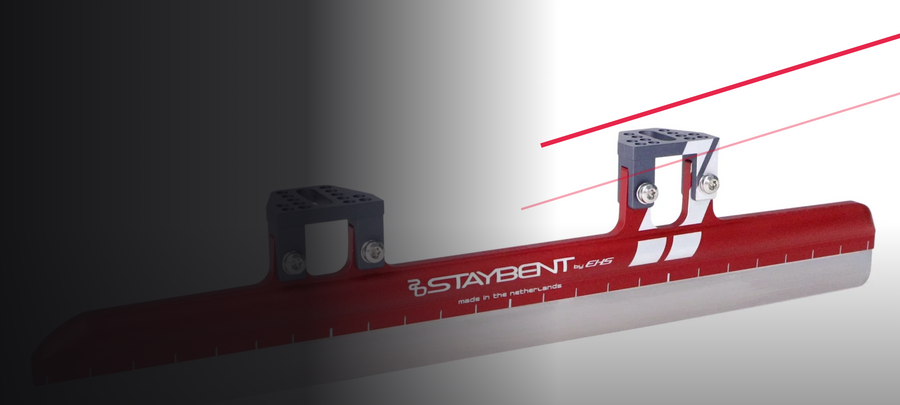
- A blade setup you trust to hold the corner when you step to the inside under pressure. We stock three StayBent short track blades, the StayBent JaeBee, the StayBent QCS and the StayBent XC Flex Weapon, and you can see the full range in the StayBent Blades collection.
- Glove tips that let you put the inside hand down confidently and slide it, because a hand that catches on the ice unsettles your lean exactly when you need it most. The StayBent Cut Resistant Gloves and StayBent Quick Tips are made for this.
- A suit that does not fight you when you get low and stay there for nine laps, such as the LiveLica Pro Short Track Speed Skating Suit.
If you are putting a first competitive setup together rather than upgrading one, the Short Track Setup collection gathers the blades, boots, gloves and tips in one place.
Frequently asked questions
Is it better to lead or to sit in second in short track?
Sitting in second costs less energy and gives you the last move, which is why it is the most popular plan. Leading is safer from contact and removes the risk of being trapped behind a slow leader. Choose by honest self assessment: lead if your start is your strength, sit if your finish is.
How early should I start my move in a heat?
Set a deadline before the race and treat it as firm. Against a stronger skater, go earlier than feels comfortable, because you will not beat them in a sprint off the final corner. Against an equal or weaker skater, patience pays.
Do I need to win my heat?
Usually not. In most formats the first two advance, and a comfortable second place leaves you fresher for the next round than a hard fought win does. Check the regulations for your specific competition.
What should I do if I get boxed in?
Create your own space rather than forcing a gap that is not there. Ease back for half a lap, get a clear run at the corner, and then commit. Forcing an opening is the most common route to a penalty.
How do I practise tactics if my club only does technique sessions?
Ask for short, four skater simulated heats at the end of a session, with a rule that only the first two count. Five minutes of that teaches more about racing than an hour of laps, and it costs no extra ice time.
Putting it together
Short track race tactics come down to a small number of decisions made in advance and then executed without hesitation. Know the format, read the group, choose one of the three shapes, set a deadline for your move, take the cheapest qualification on offer in the early rounds, and spend everything in the final. Skaters who race this way find they suddenly qualify from heats they used to lose, without having got any fitter in between. That is the whole point of thinking about tactics at all.