Short track is usually sold as an individual sport, but the relay is where a club really shows what it is made of. Four skaters, one clock, and a baton that is not a baton at all but a shove in the small of the back. The relay rewards teams who have drilled the exchange until it is boring, and it punishes teams who treat it as an afterthought on race day. If you have ever watched a smooth relay squad and wondered how they seem to gain a metre every lap while barely trying, this guide is for you.
We will walk through what the relay is, how the exchange zone works, how to deliver a clean push, how the resting skaters move around the track, and how to build a rotation order that suits your team. We will also cover the kit that keeps a relay safe and fast, because a relay puts skaters shoulder to shoulder at high speed far more often than an individual race does. This is a skater to skater guide, so expect practical detail rather than theory.
What the short track relay actually is
In a standard senior relay each team has four skaters who together cover a long distance, most commonly 3000 metres for a mixed or club event or 5000 metres at the top level. Only one skater from each team is racing at any moment. The other three circle slowly on the inside of the track, staying out of the racing line, waiting for their turn. When a resting skater is brought into the race, the tired skater who has just finished a stint pushes them into full speed. That push is the handover.
There is no fixed number of laps per skater. Teams can exchange as often or as rarely as they like, right up until the final laps, when the last exchanges are locked and the finishing skater takes it home. This freedom is what makes relay tactics rich. A team can bring a strong sprinter in for the closing laps, or spread the load evenly, or make a flurry of quick changes to keep fresh legs on the ice.
The exchange zone: where the handover happens
The exchange happens on the straight, or on the run into it, where there is room for the incoming skater to build momentum and slot into the racing line without cutting anyone off. The tired skater sweeps up behind their resting team mate, who has dropped down from the inside onto the racing line just ahead, and delivers the push. The moment the outgoing skater feels the shove, they explode forward, and the incoming skater peels up and off toward the inside to begin their own recovery.
The tired skater in blue pushes the fresh skater in green into the racing line, while the rest of the team circles slowly on the inside out of the way.
The push: how one skater launches the next
The push is the whole point of the relay, and it is where most time is won or lost. Done well, the outgoing skater barely has to accelerate from a standstill, because the incoming skater donates their remaining speed. Done badly, the outgoing skater is left flat footed and the team bleeds momentum every single change.
Where to place your hands
The incoming skater pushes on the hips or the lower back, never high on the shoulders where the contact would unbalance the receiver. Flat, firm hands on the top of the glutes or the belt line let you transfer force straight through the outgoing skater's centre of mass, which drives them forward rather than tipping them over. The outgoing skater helps by staying low and braced, so the push lands on a stable frame and turns cleanly into speed.
Timing the contact
Timing beats power every time. The incoming skater wants to be travelling faster than the outgoing skater at the moment of contact, so there is real speed to hand over. If you arrive at the same pace, there is nothing to give. The outgoing skater should already be rolling, matching the line and starting to build, so the push tops them up rather than starting them from zero. Think of it as a rolling handover, not a standing start.
Approach with more speed than your team mate, drive low through the hips, then release and peel toward the inside to recover.
Reading the track and choosing your moment
Good relay teams do not exchange at random. They pick moments when the track is clear, when the pace has settled, and when the incoming skater has had a lap or two to gather themselves on the inside. Exchanging into traffic is dangerous and slow, because the outgoing skater cannot commit to full power if there are bodies to avoid. A calm straight with clean air ahead is worth waiting half a lap for.
Late in the race the calculus changes. As the finish approaches, teams stop exchanging and lock in their finishing skater, usually the fastest closer, with enough laps to unleash a sprint. Knowing when to make your last change is a skill in itself, and it is worth rehearsing in training so nobody panics when the laps count down.
Team positioning and rotation order
While one skater races, the other three circle slowly on the inside, well clear of the racing line. Their job is to stay ready, watch the incoming skater, and drop onto the line at exactly the right instant to receive the push. Poor positioning here causes collisions and missed exchanges, so every resting skater needs to know where the next handover is coming from and keep glancing over the correct shoulder.
Rotation order should play to your strengths. A common approach is to let steadier skaters carry the middle stints and save an explosive skater for the final push to the line. Whatever order you choose, drill it until it is automatic, so that under race pressure the team flows through changes without hesitation.
Every skater cycles through the same loop: rest on the inside, take the push and race, launch the next skater, then recover and rejoin.
Kit that makes a relay team faster and safer
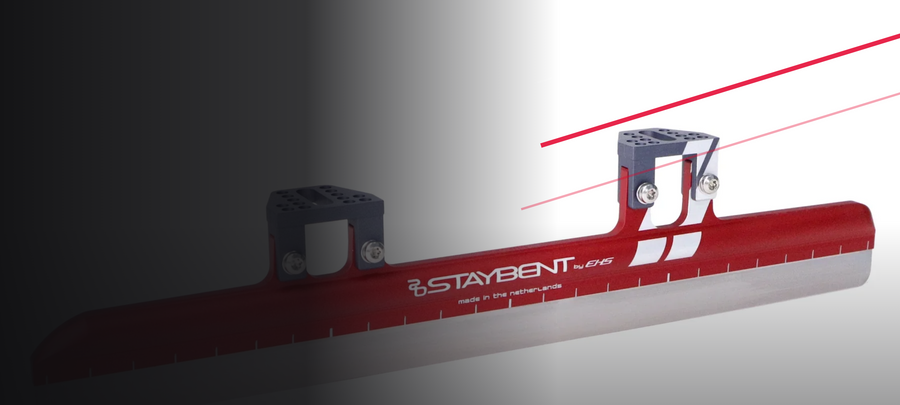
A relay asks more of your equipment than an individual race, simply because there is more contact and more full effort acceleration. Fast, well set blades matter because every exchange is a mini standing start, and a blade that grips and releases cleanly helps you rebuild speed after each push. If you are choosing or upgrading, the StayBent JaeBee is a sensible all round short track blade, and a stiff, supportive boot such as the EHS Short Track Boots transfers that push straight into the ice without wasting energy in flex.
Your hands are in constant contact during a relay, both on the ice through the corner and on your team mate during the push, so gloves earn their keep. A pair of StayBent cut resistant gloves protects your fingers if a blade comes near during a busy exchange, and a set of StayBent Quick Tips lets your leading hand skim the ice cleanly as you set up for the change.
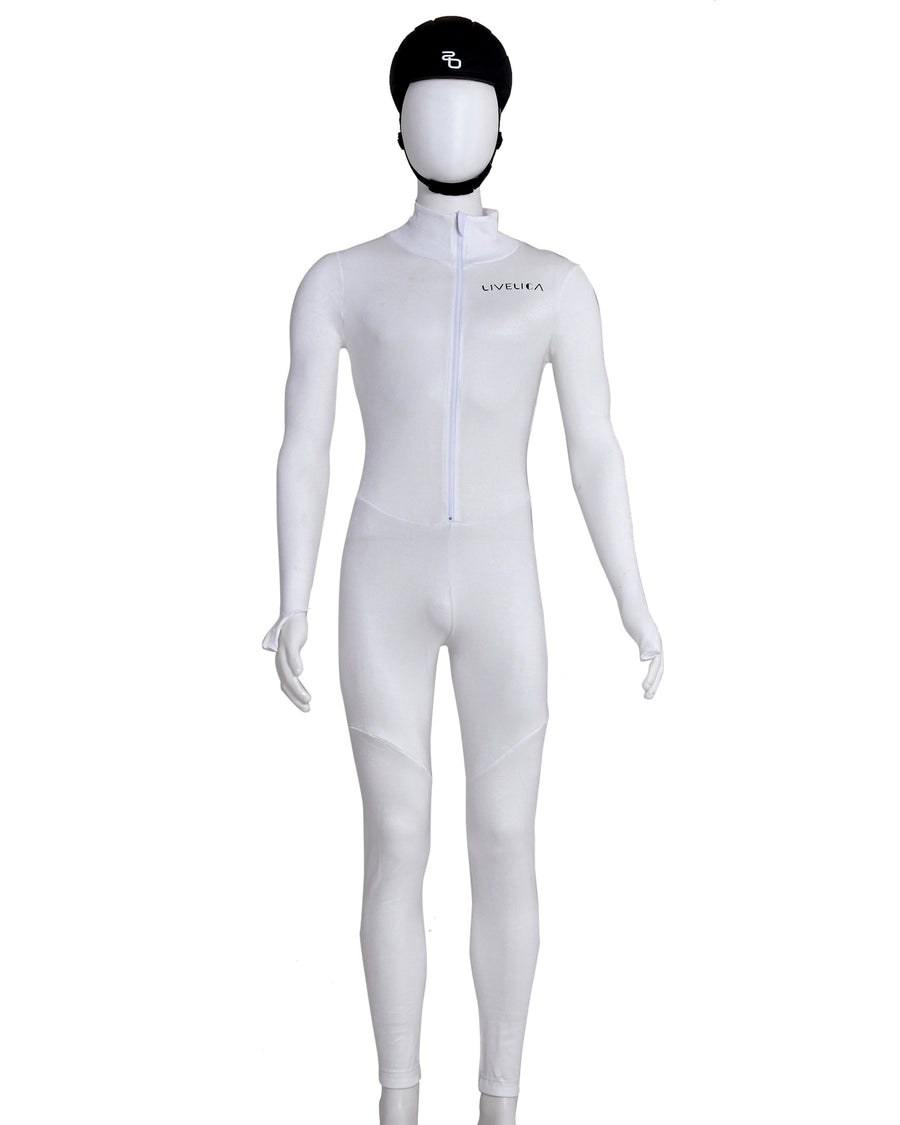
Because relays crowd skaters together at speed, protection is not optional. A Level 3 cut resistant Kevlar undersuit and a cut resistant neck guard give you real peace of mind in the exchange zone, where a fallen skater and a moving blade can end up far too close together. Kit that you trust lets you commit fully to each push, and commitment is exactly what a fast relay needs.
Common relay mistakes and how to fix them
The most common error is the standing exchange, where the outgoing skater waits flat footed and the incoming skater has to shove them from zero. The fix is simple: get the outgoing skater rolling before contact so the push adds to existing speed. The second common error is pushing too high on the back, which tips the receiver forward rather than driving them along the line. Aim lower, at the hips, and push horizontally. The third is exchanging into traffic, which forces a soft, cautious push. Wait for clean air and the change becomes twice as effective.
Drills to sharpen your exchanges
Start slow. Practise the push at half pace with both skaters rolling, focusing only on hand placement and a smooth transfer. Build up to full pace changes on a clear straight, then add the resting skaters circling on the inside so everyone learns to time their drop onto the line. Finish sessions with mock finishes, rehearsing your last exchange and the closing sprint, so race day holds no surprises. Repetition is what turns a shaky changeover into a weapon.
Frequently asked questions
How often should a relay team exchange?
As often as it keeps fresh legs on the ice without losing speed to the changes. Many teams change roughly every lap and a half in the body of the race, then lock in their finisher for the closing laps.
Is the push allowed to be that firm?
Yes. The relay push is a legal and essential part of short track. What matters is that it is a push and not a hold or a throw, and that it is delivered safely on the hips or lower back.
Which skater should finish?
Usually your strongest closer, brought in with enough laps to build a sprint. Decide this in training and rehearse the final change so the whole team knows the plan.
Do I really need cut resistant kit for relays?
It is strongly recommended. Relays put more skaters in close contact at speed, so a certified helmet, a cut resistant undersuit, a neck guard and good gloves are sensible protection for every training session and race.