Short track speed skating is one of the most thrilling sports on ice, and also one of the most demanding on your safety kit. Skaters race in a tight pack on tight radius corners at high speed, leaning so far that a hand brushes the ice, with long, sharp blades passing close to the body and to other skaters. Falls happen, and when they do, a skater can slide into the barrier or into another blade. That is why cut resistant protection is not an optional extra in short track, it is core equipment, and most national federations require it for competition.
The good news is that a complete protective kit is straightforward once you understand what each piece does. This guide explains the danger, what cut resistance levels actually mean, and how a certified helmet, a neck guard, a Kevlar undersuit, cut resistant gloves and cut resistant ankle socks each cover a specific part of the body. Read it through and you will know exactly how to build a set of gear that keeps you protected from head to ankle.
Why short track needs dedicated protection
Every part of short track raises the stakes. The corners are tight, so skaters spend a lot of the lap leaning hard and low. The blades are long and sharpened to a keen edge for grip on the ice. And the racing is close, often shoulder to shoulder, so a single fall can bring several skaters down together with blades moving in all directions. An ordinary base layer, a normal collar or a plain sock offers almost no defence against a passing edge. Cut resistant gear is built specifically to resist that slicing contact, which is why it has become standard equipment and a competition requirement.
The aim of a full kit is simple. You want cut resistant material covering the areas most exposed in a crash, a certified helmet protecting your head from impact, and everything fitting well enough that you forget you are wearing it and skate freely.
A full kit layers protection across every exposed zone, from the head down to the ankles.
Cut resistance levels, what the numbers mean
Cut resistant fabrics are rated by level, and a higher level means the material resists a slicing edge better. LiveLica short track gear uses level 3 and level 4 fabrics, which sit in the high bands of cut protection. In plain terms, a level 3 or level 4 material resists a passing blade far better than an ordinary base layer, collar or sock, which is what lowers the risk of a serious cut. You do not need to memorise a test standard to use this. The practical takeaway is that the higher the level, the more protection you carry, and the pieces below are rated where it counts.
LiveLica short track protection uses level 3 for the body and neck and level 4 for the ankles.
Protecting your head, the certified helmet
Your head needs impact protection, not cut protection, and for that you want a helmet built and certified to a recognised standard. The LiveLica Ventilated Skate Helmet is certified to CE EN1078, the European standard for skate and cycle helmets. Inside, a high density EPS foam liner absorbs and spreads the force of an impact, while a tough outer shell handles knocks and abrasion, the two bonded together with lightweight in mold construction. It weighs just 250 grams, carries a rear dial fit system so you can tune it to your head in seconds, and has removable, washable padding. It suits head circumferences of 55 to 58cm. A helmet that fits properly protects properly, so take a moment to set the dial before every session.
Protecting your neck
The neck sits above the race suit and is one of the areas most at risk in a crash, so it needs its own dedicated cover. The LiveLica Cut Resistant Neck Guard is made from level 3 cut resistant fabric and wraps the neck and throat, closing the gap a suit and boots leave open. It comes in sizes S, M and L, and can be worn under or over your suit collar. Choose a size that sits comfortably without restricting movement, so you can breathe and turn your head freely through starts, crossovers and corners. Cut resistant neck protection is a standard requirement in short track competition, so a proper guard is part of racing both safely and legally.
Protecting your body, the Kevlar undersuit
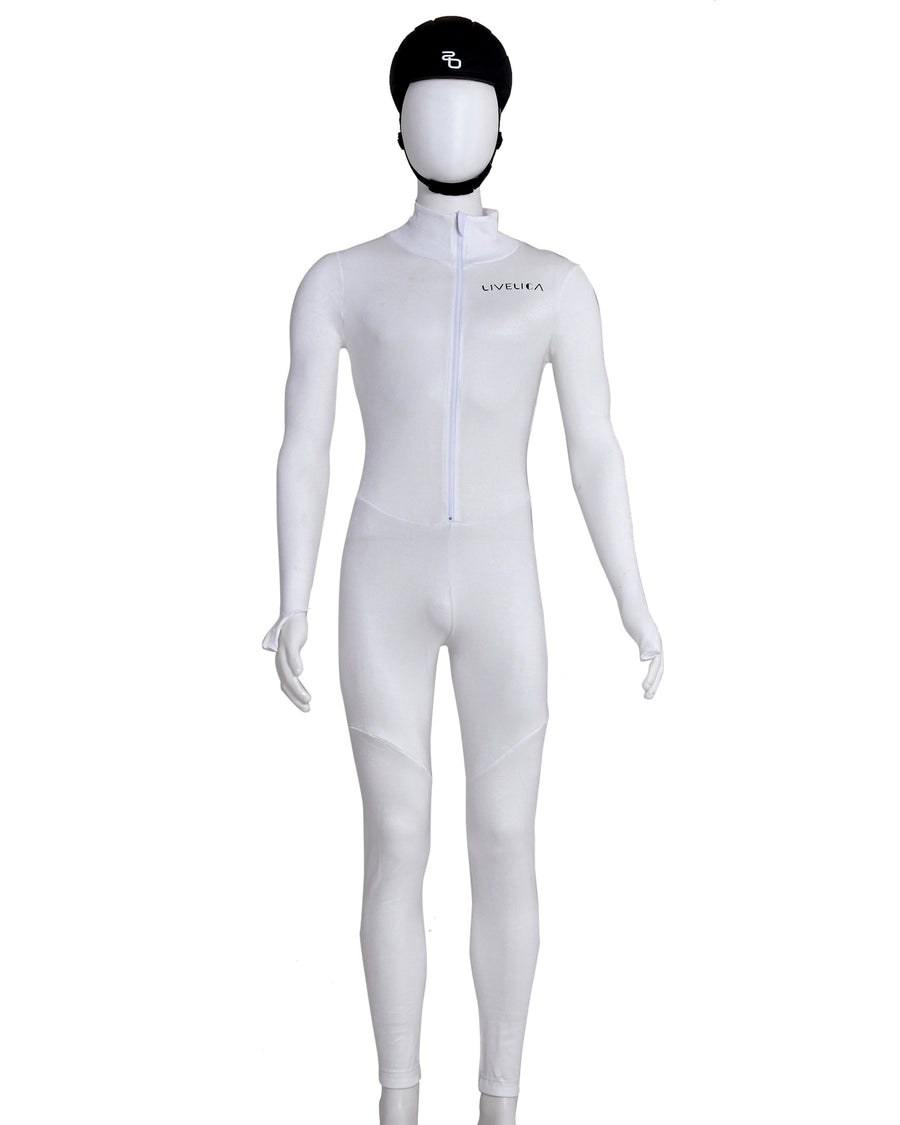
The centrepiece of a short track protective kit is a cut resistant undersuit. This is a base layer worn underneath your normal race suit, so it adds a hidden layer of protection without changing how your speed suit looks or fits. The LiveLica Level 3 Cut Resistant Kevlar Undersuit is built with Kevlar, one of the most trusted cut resistant fibres in the world, rated at level 3. Beyond the cut resistant body, it adds a warm higher collar for cold rink ice, reinforcement at the knees for the low, deep corner position short track demands, and extra coverage at the ankles where blades pass close in the pack.
The Kevlar layer sits between your race suit and your skin, resisting a blade before it reaches you.
The undersuit is cut close to the body so it layers cleanly without bunching, and it comes in a full size run from junior through to senior, so a whole club can be kitted out. Because it is worn underneath, pick a size that fits snugly against the body.
Protecting your hands
Hands touch the ice on almost every corner and are exposed whenever blades come close in a fall, so cut resistant gloves are essential. The StayBent Cut Resistant Gloves are designed for short track, putting cut resistant material around the hands so you can plant a hand on the ice through a deep corner and stay protected. They come in five sizes, XS, S, M, L and XL, so pick a pair that fits snugly without limiting your grip. Many skaters pair their gloves with hard glove tips on the fingers for grip and durability. If you want a deeper look at gloves and tips, we have a full guide on cut resistant gloves and glove tips.
Protecting your ankles
The ankle sits low, right where blades pass close to the ice in the pack, and a race suit and boot can leave it exposed. The LiveLica Cut Resistant Ankle Socks are labelled to the EN388 standard at cut resistance level 4, the highest level in this kit, and wrap the ankle and lower shin in cut resistant fabric. A silicone gripper band at the top holds each sock in place so it does not slide down mid session, they are one size to fit a wide range of skaters, and they come as a pair. They pull on under your race suit and over your boot line as you prefer.
Building a complete kit
Put the pieces together and you have protection from head to ankle. A certified helmet guards your head, a neck guard covers the throat, a Kevlar undersuit protects the body with reinforced knees and ankles, cut resistant gloves cover the hands, and level 4 socks shield the ankles. You do not have to buy everything at once. A helmet and an undersuit are the sensible first purchases for a skater moving into structured short track sessions, with the neck guard, gloves and socks completing the set. You can see the full range together in the short track accessories collection.
Caring for your protective gear
Cut resistant gear lasts many seasons if you look after it. Rinse off ice and grit after sessions, wash gently and dry flat away from direct heat. Avoid harsh detergents and tumble drying, which can shorten the life of the protective fibres and any silicone grippers. For the helmet, lift out the inner padding to wash it and wipe the shell with a damp cloth. A little care keeps both the protection and the comfort intact.
Frequently asked questions
Is cut resistant gear required for short track competition?
In most cases yes. Most national federations require cut resistant protection for short track racing, and cut resistant neck protection in particular is a standard requirement. Rules vary by event, so always check your own competition regulations, but a level 3 undersuit, a neck guard and a certified helmet are built to meet those needs.
Do I wear the undersuit over or under my race suit?
Under. The Kevlar undersuit is a base layer that sits against the body, beneath your normal race suit, adding a hidden layer of cut protection without changing how your suit looks.
What does cut resistance level 3 or level 4 mean?
They are high bands of cut protection. A higher level resists a slicing edge better, so the fabric protects far more than an ordinary base layer or sock. LiveLica short track gear uses level 3 for the body and neck and level 4 for the ankle socks.
What should I buy first?
Start with a certified helmet and a cut resistant undersuit, since they cover your head and body, the two priorities. Add a neck guard, cut resistant gloves and level 4 ankle socks to complete the kit as your budget allows.
How do I get the right helmet fit?
Measure around your head just above the ears, check it falls within the 55 to 58cm range, then use the rear dial to snug the helmet so it sits level without pressure points. A well fitted helmet protects far better than a loose one.