Every short track skater eventually asks the same quiet question in the boot room. Is this blade worn out, or does it just need a sharpen? It matters, because a fresh sharpen on a healthy blade brings a set back to life, while chasing a good edge on a blade that has run out of steel is a losing battle. Knowing the difference saves you money, keeps your setup consistent and stops you racing on an edge that has quietly gone off.
This guide walks through what actually wears out on a short track blade, how your choice of steel changes the timeline, and the clear signs that tell you it is time to sharpen versus time to replace. Everything here is written for the blades we stock at LiveLica, so the advice matches the steel and build you are likely skating on.
Why short track blades wear out at all
A short track blade does two jobs at once. It has to grip the ice hard enough to hold a deep corner at speed, and it has to glide cleanly on the straights. Both jobs happen at the very edge of the steel, where two finely ground sides meet to form your edges. Every corner, every push and every stop works that edge, and every sharpen removes a thin layer of steel to bring a clean edge back. Over a season of training and racing, those two forces slowly eat into the blade.
So a blade does not fail suddenly. It fades. The edge dulls between sharpenings, you sharpen it back, and each time the running steel sits a fraction lower than before. The blade is at its best for a long working life, then it reaches a point where there is simply not enough steel left to keep the rocker and the edge you need. Reading where your blade sits on that journey is the whole skill.
The two things that actually run out
People talk about a blade being worn out as if one thing wears, but really two separate things run down, and they run down at different speeds.
The first is edge quality. This is the sharpness and trueness of the two edges. It fades every time you skate and comes back every time you sharpen. Edge quality is a short cycle. You lose it in a session or two of hard skating and restore it on the jig.
The second is steel height. This is how much running steel sits below the tube, and it only ever goes down. Every sharpen takes a little, and you never get it back. Steel height is the long cycle, and it is the one that finally decides when a blade is finished.
Steel height only ever goes down, so the blade's real life is the distance between new steel and the low point.
How your steel choice changes the timeline
The steel your blade is built from has a big say in how long the set lasts between sharpenings and across a season. Take the StayBent JaeBee as an example, because it is offered in two steels that show the trade off clearly.
The bimetal option runs at 62 HRC. This is a slightly softer running steel that is easy to sharpen and forgiving day to day. It takes a keen edge quickly, which is lovely at the jig, but a softer edge also gives that sharpness back a little sooner, so you sharpen a touch more often. The full PM option runs at 64 HRC. This is a harder powder metallurgy steel that holds an edge longer between sharpenings, which is why it suits skaters who train most days and want fewer trips to the jig.
Neither steel is better in the abstract. A skater who trains lightly and enjoys sharpening might prefer the forgiving feel of 62 HRC bimetal. A skater grinding out heavy weeks will often lean toward the 64 HRC full PM so the edge survives longer sessions. What matters for this guide is that harder steel stretches the sharpen cycle, and a longer sharpen cycle means fewer grinds per season, which quietly extends the years you get before the steel runs low.
Harder full PM steel stretches the time between sharpenings, so heavy trainers reach the jig less often.
Signs it is time to sharpen, not replace
Most of the time, a blade that feels off just needs a sharpen. The tell tale signs are all about grip and glide rather than the amount of steel. Your edges feel slippy in the corner and you cannot set a hold. The blade chatters or skips when you load it. You look at the edge under a light and the fine bright line at the very tip has gone dull or rounded. In every one of these cases there is plenty of steel left, and a clean sharpen on a proper jig brings the blade straight back.
The routine is simple. Set the blade in a short track jig so the rocker and bend stay consistent, sharpen the sides back to a true edge, then knock off the burr with a stone such as the StayBent Diamond Deburr Stone for a clean, honest edge that grips well and lasts. This is normal maintenance, not a sign the blade is finished.
Signs it really is time to replace
Replacement is a steel height decision, not an edge decision. The clearest sign is that the running steel has dropped so low that there is very little material left below the tube. If you are getting close to the marked low point, or the steel simply looks thin from the side compared with a new blade, the working life is nearly over. A blade sharpened down that far loses its intended rocker, and once the rocker changes shape your corners and your push change with it.
Other honest signs of a finished blade include an edge that will not hold true even straight off a careful sharpen, a rocker that has flattened or gone uneven along its length, or visible damage such as a deep nick or a bend you cannot correct on the jig. Rust that has pitted deep into the steel is another one, because a pit at the edge means the edge cannot run clean no matter how much you sharpen. When the problem survives a good sharpen, the blade is telling you it is done.
A healthy blade keeps tall steel and a rounded rocker, a finished blade runs low and flat and stops holding a true edge.
How to make a set of blades last longer
You cannot add steel back, but you can slow how fast you use it up. The biggest lever is sharpening only when you need to and taking as little steel as the job requires. A skilled, light sharpen removes far less material than an aggressive one, so learning to sharpen well is the same as buying yourself more seasons. A tool like the EHS short track and long track sharpening jig keeps the rocker and bend consistent, which means you are not grinding away extra steel to fix an angle you wandered off.
The next lever is rust. Rust is the silent killer of blade life, because a pit at the edge forces you to sharpen deeper to reach clean steel. Wipe your blades down after every session, dry them fully, and store them in guards or soakers so they never sit wet. A blade that never rusts keeps its full stock of steel available for real sharpening rather than losing it to corrosion.
Choosing your next blade when the time comes
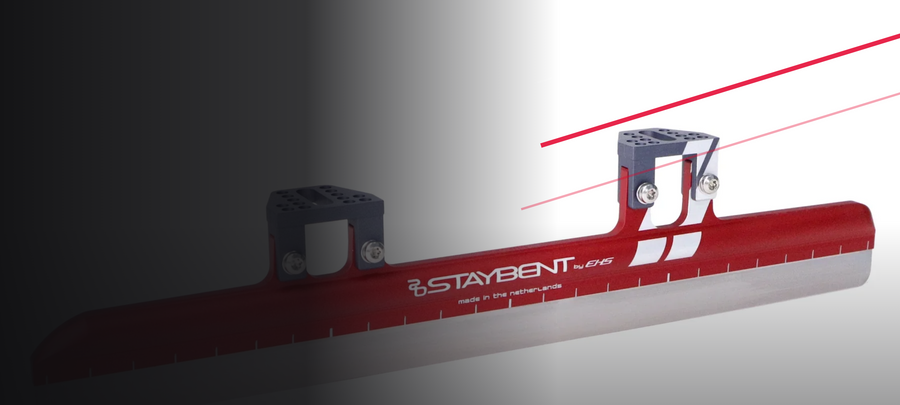
When a set finally runs out, it is a good moment to think about what you actually want from the next blade rather than simply repeating what you had. The StayBent JaeBee is the most flexible blade in the StayBent range, with highly flexible lips and a tapered tube that gives a progressive flex from the middle to the tips, so it rewards technical, creative skaters who read a corner and skate it with touch. The StayBent QCS sits a step firmer for skaters who want a more direct platform, and the StayBent XC Flex Weapon is the third option in the range. Match the length to your boot and your style, remembering that shorter blades feel quicker and more agile while longer blades track straighter and carry more speed on the straights.
Frequently asked questions
How do I know if my blade needs sharpening or replacing?
Sharpen if the edge feels dull or slippy but there is plenty of steel left, which covers most cases. Replace only when the steel has run low, the rocker has flattened, or a problem survives a careful sharpen on the jig.
Does harder steel last longer?
Harder steel such as full PM at 64 HRC holds its edge longer between sharpenings than bimetal at 62 HRC, so you sharpen less often. Fewer sharpenings over a season means the steel height lasts across more time, though the softer bimetal is easier and more forgiving to sharpen.
Can rust ruin a blade before the steel runs out?
Yes. A pit from rust at the edge means the edge cannot run clean, and reaching fresh steel below the pit costs you extra height. Keeping blades dry and stored in guards protects the life you paid for.
Will replacing one blade of a pair work?
It is usually better to keep a pair matched, because a new blade and a worn one can feel different underfoot. If you damage a single blade, talk to us about the best way to keep your left and right consistent.
Ready to look at your next set, or want a second opinion on a blade you are unsure about? Browse the full range in the StayBent blades collection and send us your boot size if you would like a length recommendation.