It is one of the most common questions we get from skaters in India who are curious about short track. You already own a pair of hockey skates, or your rink hires out figure skates by the hour, and the ice is right there. So why not just turn up to a short track session on what you have, learn the crossovers, and worry about proper kit later?
It is a fair question, and the honest answer has two halves. You can absolutely learn to skate on hockey or figure skates, and plenty of short track athletes started exactly that way. What you cannot do is skate short track properly on them, because the blade, the mount and the boot are all designed to do a different job. This guide explains what those differences actually are, what happens on the ice when you ignore them, and how to move onto a real short track setup without wasting money along the way.
The short answer, before we go deeper
Hockey skates and figure skates are perfectly fine for your first few hours of learning to balance, glide and stop on ice. They are not suitable for short track training or racing. The moment you start trying to hold a deep lean through a tight corner at speed, the equipment stops helping you and starts working against you. Every technique cue your coach gives you will feel wrong, because the tool in your hand is the wrong shape for the job.
If you are curious about the sport, go and skate on whatever you can borrow. Enjoy it. But once you decide you want to train short track seriously, put your money into a proper boot and blade before you put it into anything else. Our full short track setup collection is built around that first proper kit.
Why a hockey skate cannot do a short track job
Hockey is a game of acceleration, sudden stops, backwards skating and rapid changes of direction inside a fairly small space. Short track is a sustained, high speed sport where you spend most of the lap leaning hard into a corner and trying not to lose a single millimetre of edge. Those two demands pull the design of a blade in opposite directions.
The blade is short and heavily curved
A hockey blade is short relative to the boot and has a pronounced curve along its length, so only a small part of the steel touches the ice at any moment. That is exactly what you want when you need to pivot on the spot or throw a hockey stop. It is exactly what you do not want when you are trying to hold speed down a straight and carry it through a corner, because a small contact patch means more drag per unit of grip and far less stability.
A short track blade is long, with a much gentler curve along its running surface. That puts a long section of steel on the ice, which is what lets you glide efficiently and hold a stable, committed edge through a full corner. It is the difference between a tool built for agility and a tool built for speed.
The mount sits under the middle of the boot
Hockey and figure blades are mounted centrally under the boot, because you need to work both edges roughly equally. Short track blades are mounted with a deliberate offset toward the inside of the boot, and they are bent, so that when you lean into the corner the boot clears the ice and the blade stays flat on its edge. Take that offset and bend away and your boot cuff touches the ice long before you reach a proper racing lean angle.
The steel is not made to be sharpened the same way
Hockey blades are sharpened with a hollow ground into the bottom, which creates two aggressive edges for bite. Short track blades are sharpened flat and square on a jig, so both edges sit at a clean ninety degrees and the running surface stays true. These are genuinely different sharpening operations with different tools, and a rink shop machine set up for hockey will ruin a short track blade. If you want to see what the correct process involves, our guide on sharpening short track blades walks through it step by step.
The running surface tells the whole story. A hockey blade puts a short section of steel on the ice for agility, while a short track blade lays a long section down for stability and speed.
Figure skates and the toe pick problem
Figure skates share the hockey problems above and add one of their own. The toe pick at the front of the blade is a deliberate feature for jumps and spins, and it is a genuine hazard in a short track context. Short track technique involves a low, forward seated position with a lot of weight over the front of the foot, and pack skating means other skaters are close to your feet at all times. A toe pick that catches at speed will put you into the pads instantly.
Figure boots are also built with thick, stiff ankle support designed to hold the ankle rigid through landings. Short track needs controlled ankle flex, which is a different requirement entirely. Rental figure skates in particular are usually soft, badly broken down and blunt, which is fine for a family session and useless for training.
The offset mount and why short track blades lean
This is the single biggest thing that separates a short track skate from every other kind of ice skate, and it is the part that is hardest to appreciate until you have skated one. In short track you spend the majority of every lap in a left hand corner at a lean angle that would look absurd on any other ice discipline. To make that possible, three things happen at once.
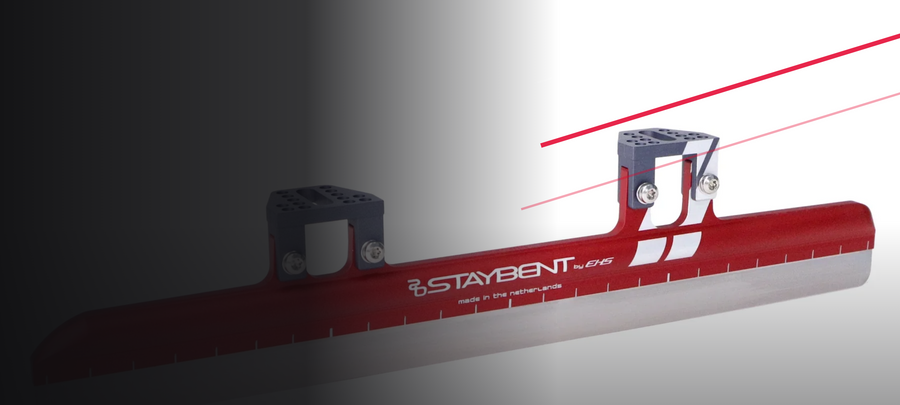
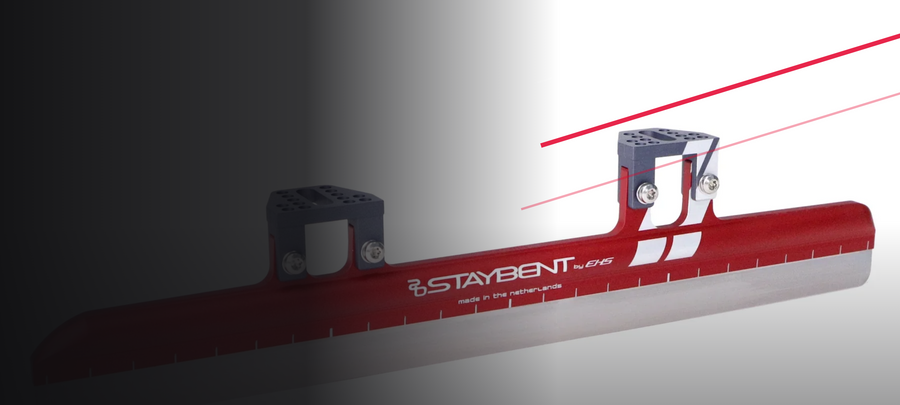
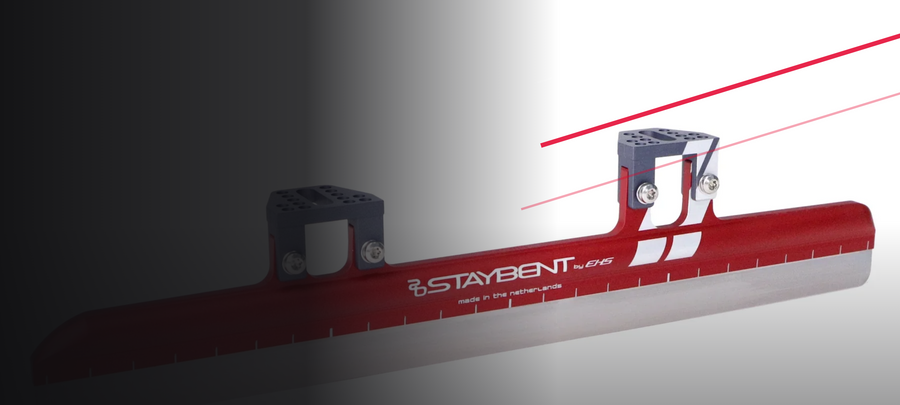
First, the blade is offset toward the inside of the boot rather than sitting centrally. Second, the blade is bent along its length to match the arc of the corner, so it wants to travel in a curve rather than a straight line. Third, the mounting cups raise the boot away from the ice, giving you clearance so you can lean further before anything touches down. Cup height is adjustable for exactly this reason. Our StayBent short track accessories range covers the cups, adapters and hardware that make this adjustment possible.
Offset and cup height are not cosmetic. They are what buys you the lean angle that short track cornering demands.
The boot supports you in a completely different direction
Hockey boots are heavily padded, tall and built to absorb impacts from pucks, sticks and other players. Figure boots are stiff through the ankle to survive landings. A short track boot is doing neither of those jobs. It is a rigid platform that transfers your push straight into the blade with as little loss as possible, while still allowing the ankle to flex forward so you can hold the low seated position.
That is why proper short track boots are made from carbon composites and heat moulded to the individual foot. The EHS Short Track Boots we stock use a carbon fibre and Diolene shell with a thermoplastic epoxy resin and Rhenoflex reinforcement, which is what makes them heat mouldable, and they are built on lasts developed specifically for short track so the ankle sits in the right position from the start. They come in sizes 32 to 48 and include Canadian waxed laces plus the mounting hardware, which is four hexagon M6 by 16 bolts and four M6 rings.
Short track asks the ankle to bend forward under load. A boot built to stop that motion will fight your basic position all session.
What actually happens if you try it anyway
Skaters who turn up to a short track session in hockey skates usually report the same handful of problems, and they are all predictable from the design differences above. The lean angle stops early, so you take the corner wide and slow. The short contact patch skids instead of gripping, so you feel like you are washing out even when your technique is fine. The boot cuff blocks the forward ankle bend, so you cannot get into a low seated position and your legs burn from standing too upright. You get tired faster than everybody else and you learn habits that you then have to unlearn.
None of that is a reflection of your ability. It is the equipment being asked to do something it was never built for.
What a real short track setup actually looks like
Short track kit is modular, which is good news, because it means you build it in sensible steps rather than buying one expensive sealed product.
The boot
Start here. A stiff, correctly fitted, heat moulded boot changes more about how you skate than any other single purchase. Fit matters far more than any specification on the page, so measure carefully and ask for help if you are between sizes.
The blade
Blades are chosen by length and by flex character, not just by price. The StayBent JaeBee, for example, is the most flexible blade in the StayBent range, using highly flexible lips and a tapered tube that gives progressive flex along the length of the blade. It comes in eight lengths from 14.5 up to 18, and in two steels, bimetal at 62 HRC which is easier to sharpen, or full PM at 64 HRC which holds an edge longer between sharpenings. Newer skaters often prefer a firmer, more forgiving blade first.
The cups and the hardware
Cups set your blade height and are sold separately from blades. The standard StayBent short track cups are machined from 6061 aluminium billet and come in twelve heights in one millimetre increments, engraved so you always know what is on your boot. If your boot and hardware use different mounting spacings, the StayBent EHS short track adapter set bridges a 195 mm inline pattern to the 165 mm spacing short track boots use, with no drilling required.
Protection
This is not optional in short track. Cut resistant kit exists because blades and bodies share a small oval at speed. A cut resistant undersuit, ankle socks and a cut resistant neck guard should go on your list at the same time as the skates, not later.
When hockey skates are still the right call
There is no shame in starting on borrowed steel. If you are still deciding whether you enjoy ice at all, use whatever you can get. Spend those first sessions learning to glide on one foot, to stop under control, and to hold a basic bent knee position. Every one of those skills carries straight over. Just be clear with yourself that you are learning ice skating, not short track, and set a point at which you will move onto proper kit if you want to keep going.
How to make the switch without wasting money
Buy the boot first and get the fit right. Choose the blade second, matched to your boot size and how settled your technique is. Buy cups and bolts alongside the blade, because a blade on its own will not mount. Add protection at the same time, not after your first fall. If you already skate inline, you will find plenty of your leg strength and pack awareness transfers over, and our guide on moving from inline to ice covers what does and does not carry across.
Frequently asked questions
Can I put short track blades on my hockey boots?
In practice, no. Hockey boots are not drilled for short track cups, the sole is not flat or stiff enough for a reliable mount, and the cuff will still block the ankle flex you need. Adapters solve mounting spacing between speed skating standards, not the underlying difference between a hockey boot and a short track boot.
Are figure skates safer for a complete beginner?
For general recreational ice, figure skates are fine and very common. For short track, the toe pick is a real risk in a pack and the stiff ankle stops you reaching the racing position, so they are not a sensible training tool for the sport.
How long can I keep training on hockey skates before it holds me back?
Roughly until you start doing structured corner work at speed. As soon as sessions are about lean angle, crossovers and holding an edge through a full turn, the equipment becomes the limiting factor rather than your fitness.
Can a normal rink sharpening service handle short track blades?
Usually not. Rink machines are set up to cut a hollow for hockey blades, whereas short track blades need a flat, square grind on a dedicated jig. Ask before you hand your blades over, and if in doubt learn to do it yourself.
What is the minimum I need to start short track properly?
A fitted boot, a blade in the right length, a set of cups with bolts, blade guards or soakers for storage, a certified helmet and cut resistant protection. Browse the full short track setup collection to see how those pieces fit together.
The bottom line
Hockey and figure skates are excellent tools for the sports they were designed for, and a perfectly reasonable way to spend your first few hours on ice. Short track asks for something very specific: a long, gently curved blade, an offset and bent mount, cup height for lean clearance, and a stiff boot that still lets the ankle work. Once you skate a setup built that way, the difference is not subtle. Everything your coach has been telling you suddenly becomes possible.