Almost every short track skater meets rust eventually. You finish a hard session, the ice comes off the steel as a fine film of water, the blades go into a warm bag, and two days later you pull them out to find a dusty orange bloom along the tube and creeping onto the edge. It is one of the most common questions we get at LiveLica, and the good news is that a rusty blade is very often not a ruined blade. Light surface rust can be taken off cleanly, the edge brought back, and the steel protected so it does not happen again.
This is a practical, skater to skater guide to removing rust from short track blades. We will explain why steel rusts, how to tell harmless surface rust from the pitting that actually costs you speed, the exact tools and order of work we trust, and the drying habits that keep expensive blades alive for years. Everything here is written for the humid conditions many Indian rinks and homes deal with, where rust can appear overnight.
Why short track blades rust in the first place
Short track blades are made from high carbon steel that is ground very hard so it holds a fine edge through a whole session of deep lean. That hardness is exactly what makes the steel vulnerable. Unlike stainless cutlery, blade steel has very little chromium, so it has almost no built in defence against moisture. When water sits on bare steel and oxygen is present, iron oxide forms, and that orange powder is rust.
Ice is frozen water, so the moment your blade touches the rink it is being wetted. As you skate, friction warms the contact point and a thin film of water forms under the edge. When you step off, that water is still there. If you wipe it away and dry the steel, nothing happens. If you leave it, or worse seal it inside a soft guard or a closed bag, the water has nowhere to go and rust begins within hours. Warm humid air speeds the whole process up, which is why a monsoon week can rust a neglected blade far faster than a dry winter one.
Surface rust sits on the steel and wipes back to bright metal, while pitting has eaten into the edge itself and leaves permanent craters.
Surface rust versus pitting: know what you are dealing with
Before you touch a stone, work out which of two very different problems you have. Surface rust is a thin orange or brown film sitting on top of otherwise solid steel. It looks alarming but it is cosmetic, and it usually cleans off to leave bright metal underneath. Pitting is what happens when rust is left long enough to dig into the steel and form small craters. On the flat of the tube pitting is ugly but harmless. On the running edge itself, pitting is serious, because each pit is a missing piece of your edge that no amount of sharpening can restore.
The quick fingernail and light test
Hold the blade under a bright light and tilt it slowly. Bright continuous lines running the length of both edges mean the edge is intact. Dark broken spots on the edge line are pits. Now run a fingernail very gently across the flat, away from the edge. If the orange lifts and leaves grey steel, that is surface rust you can remove. If your nail catches in tiny rough craters, the steel is pitted. Being honest with yourself at this stage saves you hours of polishing a blade that actually needs replacing.
What you need to remove rust safely
You do not need a workshop full of tools. A short track rust kit is small and lasts for years. We reach for a diamond deburr stone to break stubborn rust and knock back any raised roughness, a fine combination stone to refine the flat and bring the shine back, and a soft polishing triangle for the final finish. A drop of light machine oil and a clean cloth complete the set.
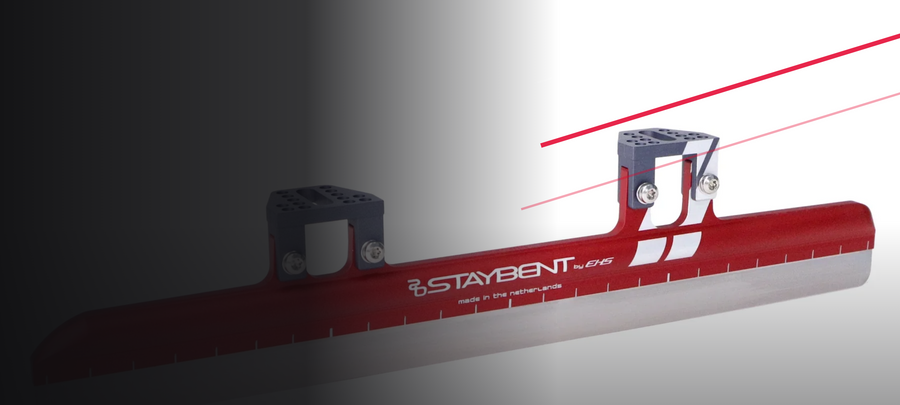
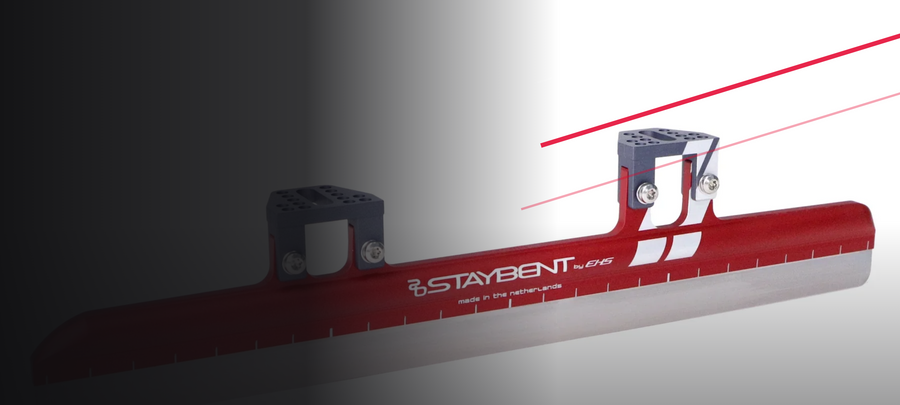
Our go to combination for this job is the StayBent Diamond Deburr Stone for the first pass, the Zandstra Foss Combination Sharpening Stone to smooth the surface, and the Zandstra 3M Polishing Triangle to leave a clean, water shedding finish. You can see the full range of short track steel these tools are meant to protect in the short track blades collection.
Step by step: taking rust off your blades
Work slowly and keep your hands away from the edge at all times. A rusty blade is still sharp. Rest the tube on a stable surface, keep the blade steady, and move the stone rather than dragging your fingers along steel.
Move from coarse to fine, checking the edge under light between each stage, and always finish by oiling the bare steel.
Step one, dry and assess
Wipe the whole blade down with a clean dry cloth and let it sit at room temperature for a few minutes. Then run the fingernail and light test above. Decide honestly whether you are dealing with surface rust or pitting on the edge. If the edge line is clean and only the flats are stained, carry on. If the edge is pitted, skip ahead to the section on when rust has gone too far.
Step two, break the rust with a deburr stone
Lay the diamond deburr stone flat against the rusted area of the tube, not the edge, and work it in small controlled strokes along the length of the blade. The diamond surface bites the orange film quickly and lifts it to bright steel. Keep the stone flat so you do not round anything over, and use very light pressure. Let the abrasive do the work. Wipe the loosened rust away with your cloth so you can see your progress.
Step three, refine with a combination stone
Once the heavy rust is gone you will usually be left with a slightly dull grey patch. Move to the combination stone and work the same area with the finer side to smooth the surface and blend it back into the surrounding steel. A little water on the stone helps carry the swarf away and keeps the finish even. This stage also lets you gently reset any tiny burr that formed while you were removing rust near the edge.
Step four, polish the flat
Finish the flats with the polishing triangle. This is not about sharpening, it is about leaving a smooth, closed surface that sheds water rather than trapping it. A polished flat rusts far more slowly than a scratched one, because there are fewer microscopic valleys for moisture to sit in. A few light passes are plenty.
Step five, oil and protect
Bare steel starts to oxidise the moment it is clean, so never leave a freshly cleaned blade unprotected. Put a single drop of light machine oil on your cloth and wipe a thin film over the whole blade, edges included. The film is invisible and does not affect your next skate, but it buys you time against moisture. Wipe the edge before you step onto the ice, and you are ready to go.
When rust has gone too far
Sometimes honesty is the kindest thing for your skating. If the running edge is pitted, if a pit sits right where you load the corner, or if a whole section of edge has crumbled, no stone can put steel back. Skating on a pitted edge feels vague and skips under load, and it will never hold a corner the way fresh steel does. At that point the blade has done its job and it is time to look at a new set from the short track blades collection. Deep pitting on the flats alone, well away from the edge, is only cosmetic and can be left or lightly cleaned, so do not throw a good blade away for a stain that is nowhere near the edge.
Stopping rust from coming back
Removing rust is a repair. The real win is never needing to do it again, and that comes down to a two minute habit after every session. The single biggest cause of rusty blades is putting wet steel into a bag inside a soft guard, because the guard holds the moisture against the edge like a wet sponge.
A hard guard is for walking, a fabric soaker is for the bag, and the blade must be dry before either goes on.
The routine is simple. As soon as you leave the ice, wipe every drop off the blade with a dry cloth, including into the corners of the tube. Use a hard guard only for walking around the rink, never for storage, because it traps water. For the bag, slide on an absorbent fabric soaker that wicks the last of the moisture off the steel. At home, take the soaker off and let the blades breathe in dry air, then wipe a light film of oil over them before longer breaks. A pair of StayBent Blade Soakers for the bag and a set of StayBent Blade Guards for walking cover both jobs, as long as you remember that neither one replaces drying the steel first.
Frequently asked questions
Can I use sandpaper or steel wool to remove rust?
It is better not to. Loose abrasives and steel wool leave scratches and stray grit that can round your edge or embed in the steel and cause fresh rust. A flat stone kept parallel to the surface gives you far more control and a cleaner finish.
Will removing rust ruin my sharpening?
Not if you work on the flats and keep the stone away from the edge. You are polishing the surface of the tube, not reshaping the edge. If the rust reached the edge itself you will need to touch up your sharpening afterwards, but light surface rust on the flats can be cleaned without changing your edge at all.
How quickly should I act when I see rust?
As soon as you can. Fresh surface rust wipes away in minutes, but if it is left for weeks it can dig in and start pitting, which is not repairable. Catching it early is the difference between a quick clean and a new set of blades.
Is a little orange staining on the flats a problem?
A faint stain well away from the edge is cosmetic and will not slow you down. Clean it if you like the blades to look sharp, but focus your worry on the edge line, because that is the only part of the blade that decides how you skate.
Rust is not the end of a blade, it is a warning that your drying routine slipped. Deal with surface rust early, be honest about pitting on the edge, and build the two minute habit of dry cloth, correct cover and a light film of oil. Do that and a good set of short track blades will reward you with years of clean, confident edges.