Decide your target pace before the start gun rather than letting the pack decide it for you. That is almost the whole of how to pace an inline speed skating race: hold the first third a shade easier than target, sit exactly on target through the middle, and spend whatever is left in the final third.
The fastest way to lose a race is to skate the opening laps harder than you can hold, and that sounds easy enough to avoid on paper. It is not, because everything at a start line pushes you the other way. Adrenaline is high, the skater beside you goes off like a rocket, and the first lap always feels effortless because you have not yet paid for it. This guide covers how to set a target you can actually hold, how to turn it into a lap split you can read at speed, how the shape of a race changes with distance, what pack racing does to a plan, and how to rescue a race you have already started too hard.
Why starting too fast costs far more than it gives
Work it through on a real race. A 3000m on a 200m track is fifteen laps. Go two seconds a lap quicker than target for the first three and you have gained six seconds. Pay for it over the remaining twelve at a typical three or four seconds a lap and you have lost thirty six to forty eight. The repayment rate varies by skater and by distance, but the direction of it never does. Early seconds are not banked. They are borrowed at a terrible rate.
The reason is simple enough without getting technical. Skating hard above the effort you can sustain produces fatigue faster than your body can clear it, and once that process is running you cannot stop it mid race. You can only slow down. The skater who looks composed on the last lap is almost never the one who led the first.
There is a second cost that is easy to miss. Technique collapses under fatigue before the legs do. A skater who has gone out too hard loses depth in the knee bend, shortens the push and starts skating high and choppy, which makes every remaining stride less efficient at exactly the moment efficiency matters most. You can see it in a recording. If you have never filmed yourself racing, it is worth doing once.
The top shape leads early and finishes slowest. The bottom two are what good races look like.
Work out a target pace you can actually hold
A target pace is useless if it comes from hope. It has to come from something you have already done. The most reliable source is a recent full effort over a similar distance, on a similar surface, in similar weather. Your best ever time from two seasons ago is not evidence of what you can hold next Sunday.
Here is a practical way to find a number you can trust.
- Skate a solo time trial over your race distance, or roughly half of it if the race is long, at a genuinely hard but controlled effort. Record every lap.
- Look at the lap you could have repeated indefinitely, not the fastest one. That lap is close to your sustainable race pace.
- Convert it into a lap time you can hold in your head, because during a race you will have time to read one number and nothing more.
- Rehearse that exact lap time in training. Tempo repeats at target pace, with short recoveries, teach your legs what the number feels like so you do not need a watch to find it.
- Check it again every few weeks. Fitness moves, and a target from six weeks ago may now be too soft or too ambitious.
Skaters who track their progress properly find this much easier, because they already have honest numbers to work from. If you have never set up a way to measure yourself, our guide on six tests that tell you whether you are actually getting faster is the place to start.
Turn the target into a lap split you can read
A target time is no use to you at speed. A lap split is. Divide your goal time by the number of laps and round it to something you can read in one glance.
- Fifteen laps of a 200m banked track makes a 3000m. A goal of 5 minutes is 300 seconds, so 20 seconds a lap.
- A 10km on a 400m road circuit is twenty five laps. A goal of 20 minutes is 1200 seconds, so 48 seconds a lap.
- On an open road course with no laps to count, split the distance into three roughly equal chunks and set a time for each. Thirds are easier to hold in your head than kilometres.
Write the number on your hand or your bottle. In a race you will not do arithmetic, you will only compare.
One local caveat. A target set in cool February morning training will not hold in a May afternoon race. Heat raises the effort cost of the same speed, so on a hot day set your pace through the first third by trained effort rather than start line adrenaline, and let the clock confirm it rather than lead it.
How to pace an inline speed skating race at each distance
Pacing advice is not one size for every event. A 300 metre time trial and a marathon demand opposite things from you in the first ten seconds. The table below is a starting framework, not a law, and it assumes you are racing for the best possible time rather than sitting in to win a tactical final.
| Distance | Shape to aim for | Most common error |
|---|---|---|
| 300m time trial | Everything you have from the first stride, accepting a small fade | Holding back out of caution and never reaching top speed |
| 500m | Hard start, then hold form rather than chase more speed | Fighting for extra pace at 300m and tightening up |
| 1000m | Strong but controlled opening, steady middle, drive the last lap | Treating it like a long sprint and dying on the final bend |
| 3000m and 5000m | First third a shade easier than target, middle on target, final third faster | Going with the first attack instead of your own plan |
| 10000m and points races | Steady base pace with deliberate, chosen surges | Responding to every surge somebody else starts |
| Marathon | Comfortable opening, settle into a group, save the effort for late | Leading the pack early because it feels easy |
If you are not sure which of these you will actually be skating, our breakdown of inline race formats explains what each event asks of you before you get to the line.
The same three part plan works from 1000m to a marathon. Only the size of the margin between the phases changes.
A pace that only works on clean corners is not a pace
A bad corner can cost you as much as a mispaced opening lap, and it takes the time much more quietly. If your splits swing by a second or more while your effort stays even, look at your corners before you look at your fitness. Carry speed into the bend and hold your line through it, rather than letting the corner take a second and then pushing harder down the straight to win it back, because that is how an even effort quietly turns into a series of small sprints. Our guide to cornering and carrying speed through the apex covers the technique itself.
Pacing in a pack is a different problem
Everything above assumes you control your own speed. In a pack you do not, and that changes the job from holding a number to choosing which surges to follow. Sitting in a group costs noticeably less effort than leading it, so a skater in the pack at target pace is working less hard than a skater alone at the same pace. That is free time, and it is the main reason experienced marathon skaters refuse to lead early.
The skill is deciding what to chase. A surge that opens a real gap has to be covered or the race is gone. A surge from somebody who attacks every third lap and comes back every time does not. Watch who is doing the attacking for the first few laps before you spend anything responding. Our guide to pack skating and drafting goes into position and timing in detail.
One warning for skaters new to pack racing. The group pace will feel easy for the first few laps and then suddenly will not. If you are only just holding on at the back while the pace is still steady, you are already over your limit, and dropping out of the group early to skate your own pace will almost always give you a better time than hanging on and exploding.
What to do when you have already gone out too fast
It happens to everybody. The race is not over, but the next lap or two decide how bad it gets.
- Back off gradually rather than stopping the effort dead. A sharp drop in speed in a pack is how crashes start, and it costs you more time than you need to give up.
- Go back to your technique checklist instead of your lap time. Get the knee bend back, lengthen the push, let the recovery leg relax. Form is what you can control.
- Give up on the original target. Chasing a time that is already gone turns a slightly disappointing race into a very bad one.
- Find a group going slightly slower than you were and sit in. Recovering behind somebody is far easier than recovering alone.
- Write the lap splits down afterwards. A race you paced badly is excellent data if you actually look at it.
The one gear decision that changes your pace
Pacing is a skill rather than a purchase, with one exception worth taking seriously. Race on the platform you did your pace work on. Wheel size changes how far each stride carries you, and therefore your stride count per lap, which is the rhythm your legs have actually memorised. Moving between the Aerolite 4x100, four 100mm wheels on a 12.1 inch platform, and the Aerolite 3x125, three 125mm wheels on a 12.6 inch platform and the largest wheel in the range, is a real change to that rhythm, and the week of a race is the wrong time to make it. If you are picking a platform for next season rather than next weekend, the LiveLica AI Frames range lays out the options.
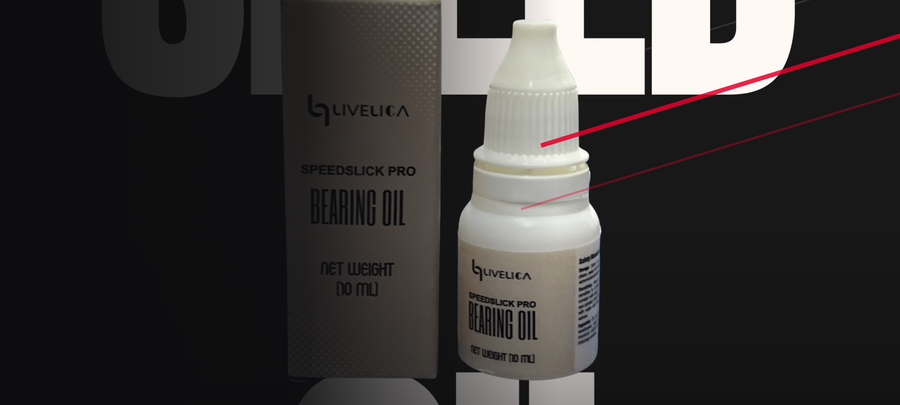
The other thing worth checking is that your roll is honest. If your bearings drag more as a session goes on, your lap times drift upward for reasons that have nothing to do with your legs, and you take the wrong lesson from your own splits. Clean bearings and a drop of Speedslick Pro bearing oil are what make a set of splits mean something, and the Power Bearings range covers steel and ceramic in 608, the size the Aerolite inline frames take.
Stride count per lap is worth writing down alongside your splits, because it tells you whether a slower lap came from a shorter push or a lower rate. Our article on stride rate against stride length explains how to read that.
Listen to your body as well as your watch
Hard racing is uncomfortable, and heavy breathing, burning legs and a thumping heart are all normal parts of an honest effort. A few things are not. Chest pain or pressure, dizziness or feeling faint, an unusually irregular heartbeat, or symptoms that do not settle once you have stopped and cooled down are reasons to stop the race and get checked by a doctor rather than to push through. The same goes for pain that lasts more than a few days after a race, or any swelling or numbness. None of that is pacing advice. It is just worth saying out loud in a sport where athletes are trained to ignore discomfort.
Frequently asked questions
Should I pace by lap times or by feel?
Use both, and let them check each other. Lap times are objective but they lag, so by the time the watch tells you the lap was too fast, you have already spent the effort. Feel is immediate but unreliable in the first few laps when adrenaline makes everything seem easy. Train with the watch so you learn what the right effort feels like, then race mostly on feel with the watch as a sanity check.
Is a negative split always the best strategy?
No. It is the best approach for most distance races, but it is wrong for short sprints and time trials, where there is no time to build and holding back costs you the race. It is also wrong in a tactical final where winning matters more than the clock.
How do I pace a race on a track I have never skated?
Pace by effort for the first part rather than by lap time, because an unfamiliar surface, a tighter bend or a headwind on one straight will all change what a given lap time costs you. Take your lap times for the first two laps, see what effort they correspond to, then set a realistic target from there.
How do I pace a heat when I have a final later the same day?
Qualify on the least effort that gets you through, which usually means racing for a position rather than for a time. Work out before the heat what place you need, and if you are safely inside it with two laps to go, hold there instead of contesting the win. A final is won by whoever has most left, not by whoever looked quickest in the morning.
Does pacing matter in an elimination race?
Less than in a timed race, because surviving each elimination matters more than your average speed. Even then you need a sense of your own sustainable effort, so that you know whether you can afford to make a move or whether you need to stay where you are and wait.
If you remember two things
Two things carry most of the value here. In a pack, choose which surges you follow instead of answering all of them. And if you have already gone out too fast, back off gradually, rebuild your technique and salvage the race rather than chasing a time that has already gone.
Pace a race well three or four times and you will stop needing the plan written down.